
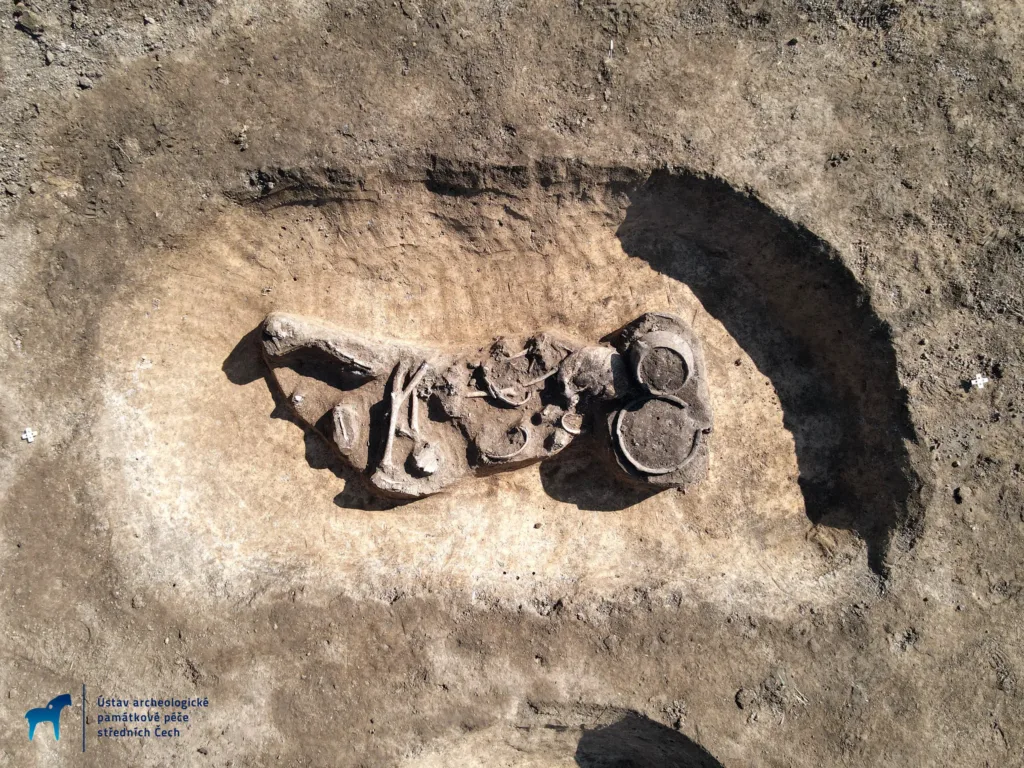
A woman who lived approximately 4,300 years ago has been discovered in a grave in Czechia, buried alongside a newborn in her arms. The woman was lying on her right side with her legs flexed, while the baby had been placed so that its face was turned toward her. Unearthed in Brandýs nad Labem, near Prague, archaeologists suggest this unusual burial may indicate a death occurring during or immediately after childbirth.
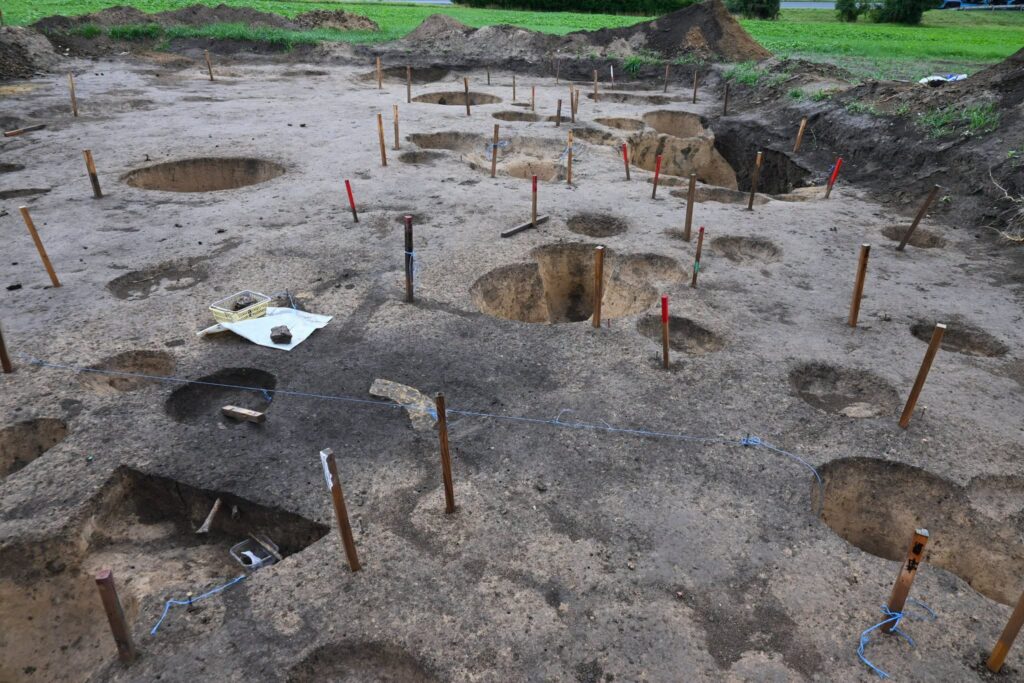
The discovery was made during rescue excavations carried out prior to the construction of the Brandýs nad Labem – Stará Boleslav bypass. The research, conducted by the Institute for the Preservation of Archaeological Heritage of Central Bohemia (ÚAPPSČ), revealed an Early Bronze Age cemetery as well as traces of a settlement from the Roman period.
Two Skeletons Facing Each Other
Based on preliminary evaluations, archaeologists date the cemetery to around 2300 BCE, the early phase of the Únětice culture. Experts, who determined the woman’s age to be approximately 30, found the skeleton lying on its right side with flexed legs.
The most striking detail was the placement of the newborn in the woman’s arms, with their faces turned toward each other. This arrangement suggests that the two individuals were consciously buried together in the same grave.
Researchers assess that the woman may have lost her life during or shortly after birth. However, detailed analyses to determine the cause of death and the biological relationship between the two individuals have not yet been completed.
Anthropologist Pavel Kubálek documented the grave in situ and removed the human remains for more comprehensive examinations. Laboratory studies are expected to provide new information regarding the individuals’ health status and the circumstances of their death.
Early Bronze Age Burial Traditions in Central Europe
The Únětice culture, to which the grave is dated, was influential across a large part of Central Europe from the end of the third millennium BCE to the first half of the second millennium BCE. Named after the Únětice settlement near Prague, this culture is recognized for its early bronze metallurgy, settlements, and cemeteries.
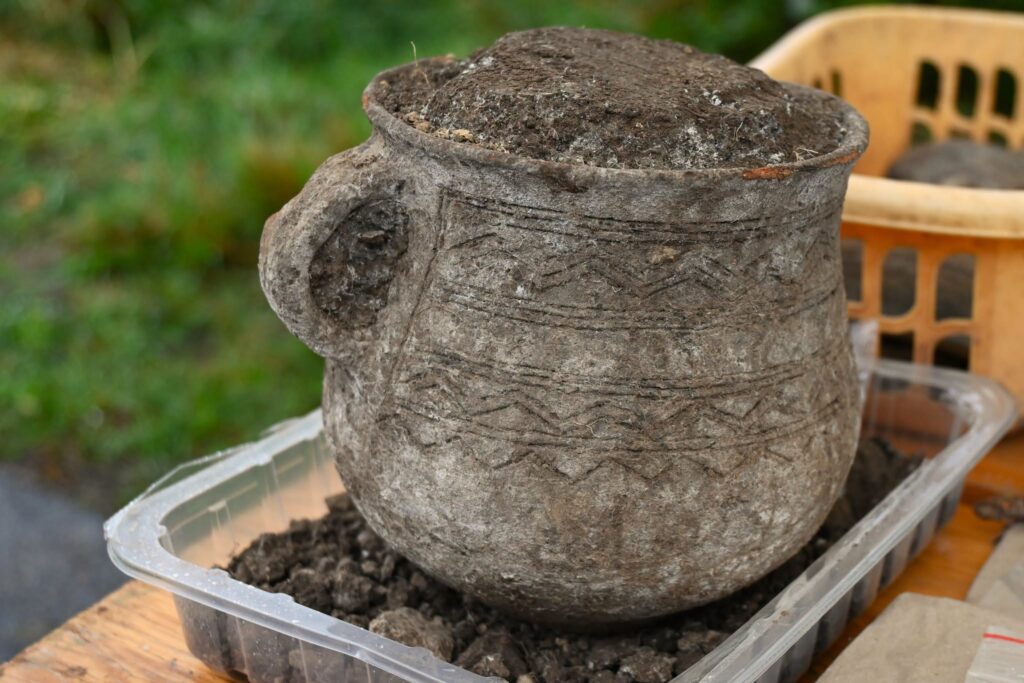
Únětice communities typically buried their dead in a flexed position. Ceramic vessels, bronze ornaments, and other personal items were often found in the graves. However, the layout of the graves and the objects left with the deceased varied by region and period.
The area around Brandýs nad Labem had previously yielded significant finds for the study of these burial traditions. In an Early Bronze Age burial mound researched in the region, two burials thought to have occurred at different times were identified. This example allows the newly discovered grave of the woman and baby to be evaluated within a broader archaeological framework.
Archaeogenetic research conducted in other Únětice cemeteries has shown that individuals buried in the same grave are not necessarily members of the same biological family. Therefore, the assumption that the two people in the Brandýs grave are mother and child remains an interpretation that is yet to be verified.
Traces of Settlement and Craftsmanship from the Roman Period
The rescue excavations, which began in January 2026, were completed at the end of September. Researchers examined a road route of approximately two kilometers extending from near Zápy to Pražská Street.
During the work, the remains of a Germanic settlement used between the 1st and 3rd centuries CE were identified. Archaeologists found dozens of animal horn fragments, unfinished tools, and production waste. These materials indicate that artisans specializing in hornwork lived in the settlement.
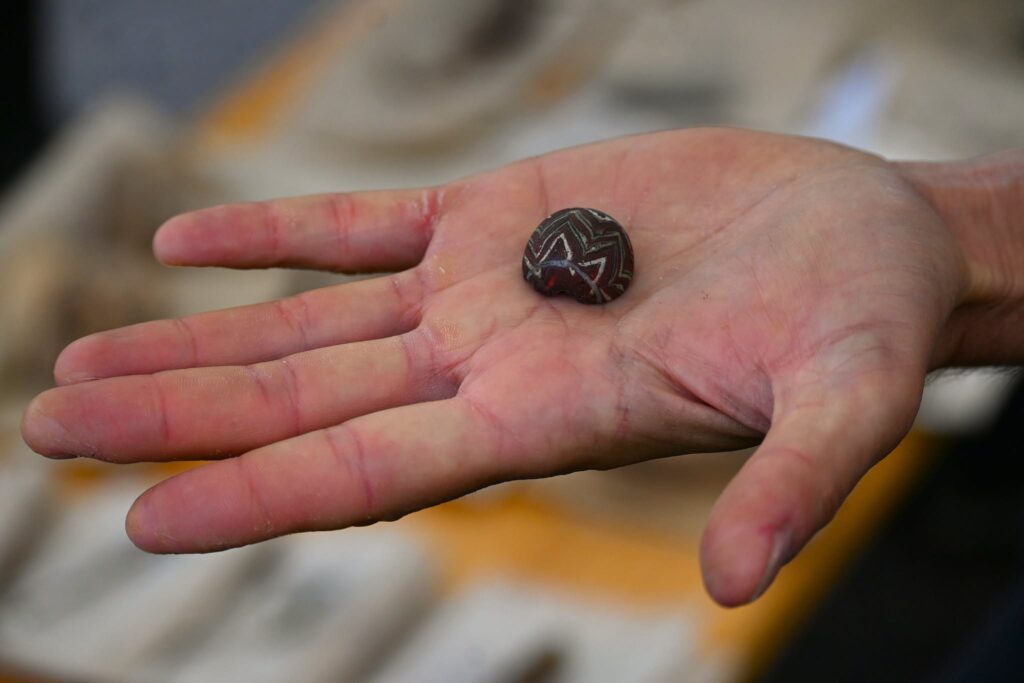
The research team also detected another woman’s grave, potentially from the same period, 50 small blue glass beads, and two iron objects. Traces of later Medieval settlements were also recorded along the excavation route.
Previous research around Brandýs nad Labem had revealed that the region was used across different periods, from prehistory to the Middle Ages. This area near the Elbe River is recorded in Czechia’s official archaeological inventory as containing multi-period settlement and cemetery remains.
Laboratory examinations of the finds from the new excavations are ongoing. In particular, research on the skeletons of the woman and the newborn may provide a better understanding of the conditions surrounding this shared burial from 4,300 years ago.
