
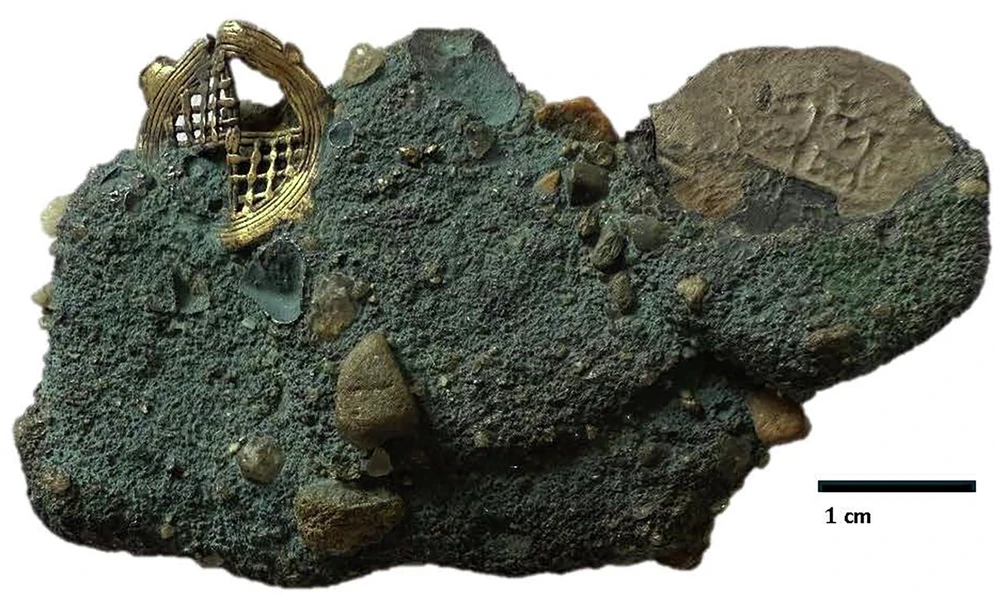
A groundbreaking scientific study analyzing gold recovered from an infamous pirate shipwreck is reshaping long-held assumptions about African trade, challenging centuries-old European claims that West African gold was routinely adulterated.
The research, published in npj Heritage Science, focuses on a remarkable archaeological treasure: hundreds of gold artifacts recovered from the wreck of the Whydah Gally, a pirate ship that sank off the coast of Massachusetts in 1717. By applying advanced analytical techniques to these artifacts, scientists have delivered a decisive verdict—one that contradicts historical accusations and repositions West African gold as a product of natural purity rather than systematic fraud.
A Treasure Frozen in Time
The Whydah Gally offers a rare and uniquely reliable window into early 18th-century Atlantic trade. Unlike most Akan gold artifacts housed in museums—often lacking clear provenance or dating—the gold recovered from this shipwreck is tied to a precise historical moment.
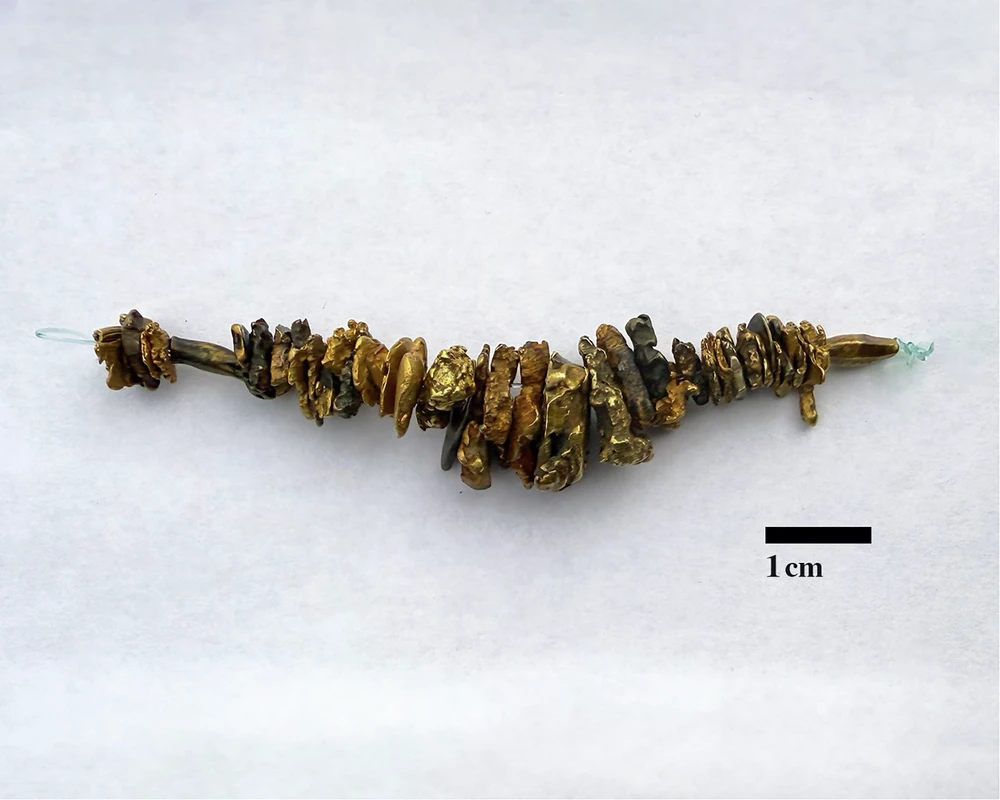
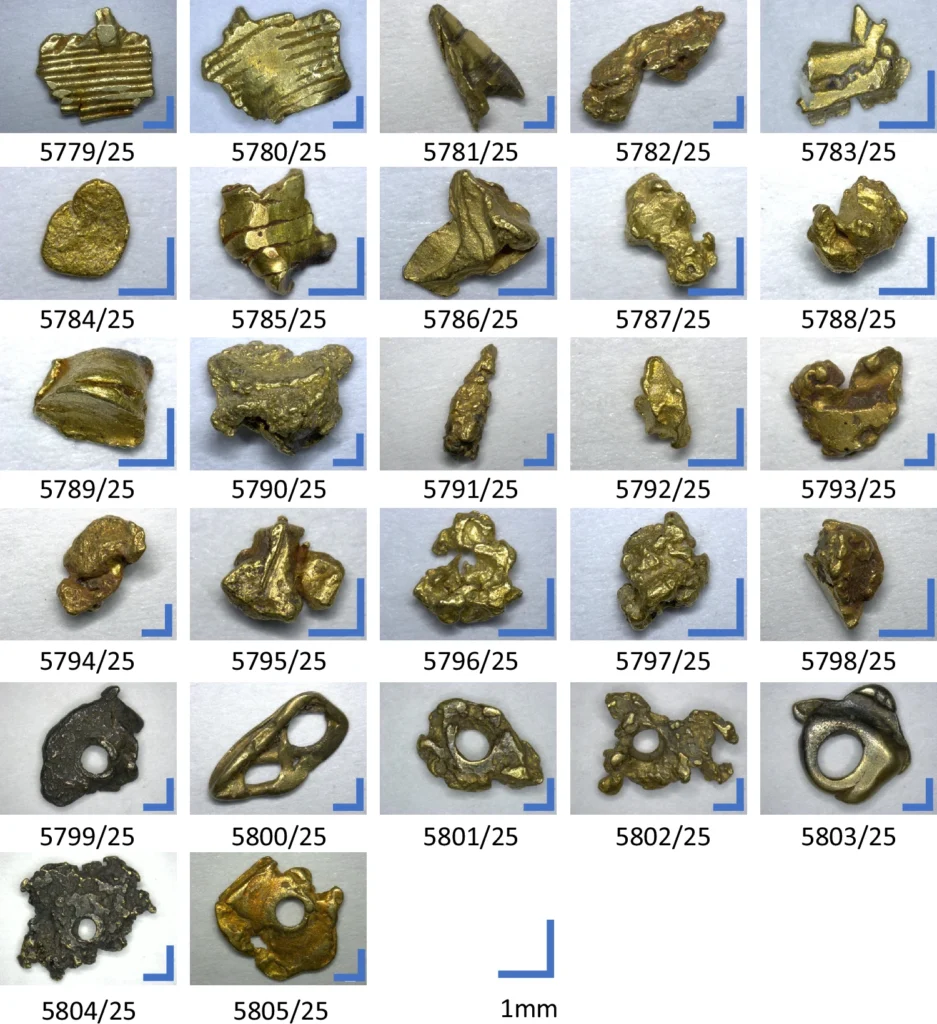
More than 300 gold objects were salvaged from the site, including beads, nuggets, jewelry fragments, and casting debris. For researchers, this collection represents the largest and best-dated assemblage of Akan gold ever studied.
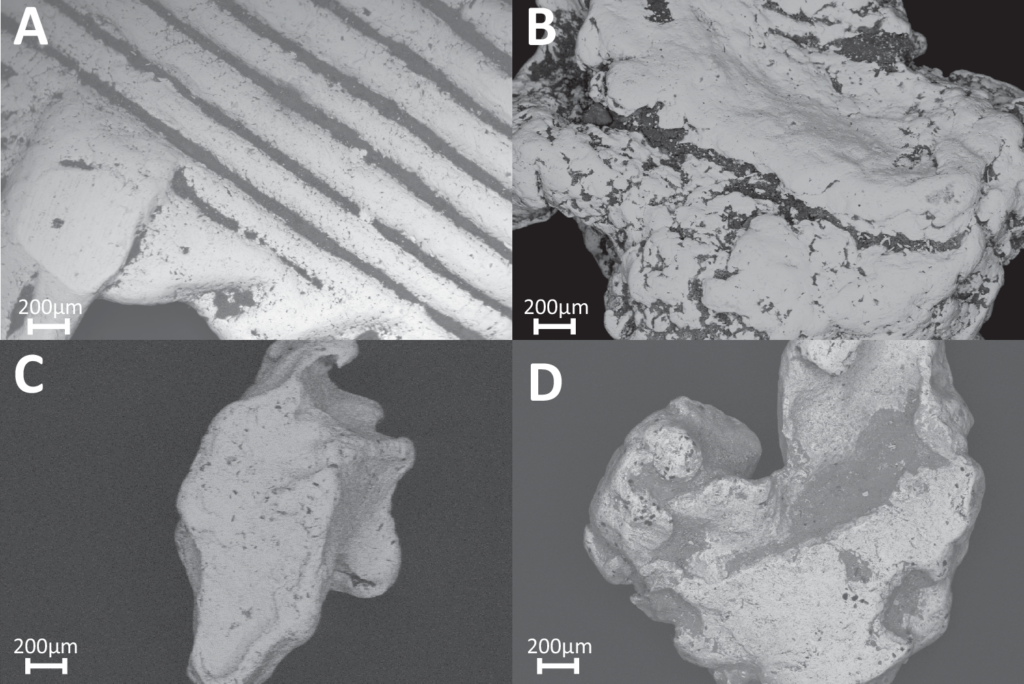
Using a subset of 27 samples, scientists conducted elemental analysis through portable X-ray fluorescence (pXRF) and scanning electron microscopy (SEM-EDS). Their goal: to determine whether the gold traded along West Africa’s “Gold Coast” was indeed diluted with other metals, as European traders had long claimed.
Science vs. Colonial Narratives
For centuries, European merchants and chroniclers insisted that Akan traders—West African merchants from the Akan cultural groups of present-day Ghana—adulterated gold with silver, copper, brass, or even non-metallic substances like sand or glass. These accusations appeared repeatedly in trade records and travel accounts from the 17th through 19th centuries.
However, modern analysis tells a very different story.
“The observed elemental patterns do not support claims of systematic heavy adulteration of Akan gold,” the researchers conclude. Instead, most samples fall within the natural compositional range of gold from West Africa.
In practical terms, this means that the presence of silver or trace metals—once cited as evidence of fraud—likely reflects the natural geological composition of gold deposits in the Ashanti Gold Belt, a major gold-producing region in present-day Ghana.
Understanding the Composition
The study found that gold content in the analyzed samples ranged broadly, with silver as the primary accompanying element. However, these variations closely match known geological data from West African mines.
Copper was detected in slightly higher amounts in cast objects compared to natural nuggets, but still in minimal quantities—typically below 4 percent. Researchers suggest this may result from either minor contamination during metalworking or intentional additions to improve durability, not to deceive buyers.
Crucially, there was no consistent evidence of deliberate dilution aimed at reducing gold value.
Even zinc—sometimes cited in historical accounts as a sign of tampering—was determined to be the result of surface contamination after centuries underwater, not part of the original metal composition.
The Problem with Historical Sources
The study also highlights a key issue in interpreting historical trade narratives: bias.
European accounts, long treated as authoritative, often lacked empirical testing and relied heavily on repetition or hearsay. While methods for assessing gold purity—such as chemical testing—did exist at the time, there is little evidence they were systematically applied.
Instead, suspicion appears to have been shaped by cultural misunderstandings, economic competition, and the complexities of cross-cultural trade.
Researchers emphasize that these sources “cannot be taken at face value,” noting that some authors simply copied earlier claims without verification.
A Broader Historical Context
For over a millennium, West African gold played a central role in global commerce. It fueled trans-Saharan trade routes and later became the backbone of European maritime expansion along the Atlantic coast.
From the 15th century onward, European powers—including the Portuguese, Dutch, and British—constructed dozens of forts along what is now Ghana, all aimed at securing access to this valuable resource.
Yet despite its importance, the true nature of the gold itself remained poorly understood—until now.
The findings also shed light on a transformative period in West African history. The early 18th century saw the rise of powerful states like the Asante Kingdom and the emergence of an African merchant class. At the same time, global gold markets were shifting due to new supplies from the Americas.
These dynamics may have influenced both the circulation of gold and European perceptions of its quality.
Limits and Future Research
While the study provides strong evidence against widespread adulteration, researchers caution that it reflects a specific time and context. The Whydah cargo represents only one snapshot of a complex and centuries-long trade network.
Additionally, contamination from seawater and corrosion posed challenges for analysis, requiring careful interpretation of results. Even advanced techniques like SEM-EDS have limitations when dealing with surface-level measurements.
Future studies using more precise methods—such as isotope analysis or inductively coupled plasma mass spectrometry (ICP-MS)—could help pinpoint the exact origins of the gold and further refine our understanding of ancient trade networks.
Rewriting the Narrative
Despite these limitations, the implications of the study are profound.
The long-standing narrative of widespread African gold adulteration—used for generations to justify distrust and unequal trade practices—now faces compelling scientific rebuttal.
What Europeans once interpreted as evidence of deceit may, in reality, have been a misunderstanding of natural mineral composition.
In the end, the gold from the Whydah Gally tells a powerful story—not just of piracy and shipwreck, but of historical misjudgment corrected by modern science.
More than three centuries after it sank beneath the waves, the ship’s treasure has resurfaced to challenge assumptions, restore reputations, and illuminate a more accurate history of global trade.
And in doing so, it confirms a simple truth: Akan gold was not a product of deception, but of nature itself.
Skowronek, T.B., Clifford, B. & DeCorse, C.R. Pirate gold provides new insights into West African trade using pXRF and SEM EDS analysis. npj Herit. Sci. 14, 169 (2026). https://doi.org/10.1038/s40494-026-02441-7
Cover Image Credit: A cire perdue cast gold bead in situ is visible in the upper left of the photo. Flakes of gold dust and a silver coin (upper right) are also visible. T.B. Skowronek et al. 2026, npj Herit. Sci.
