
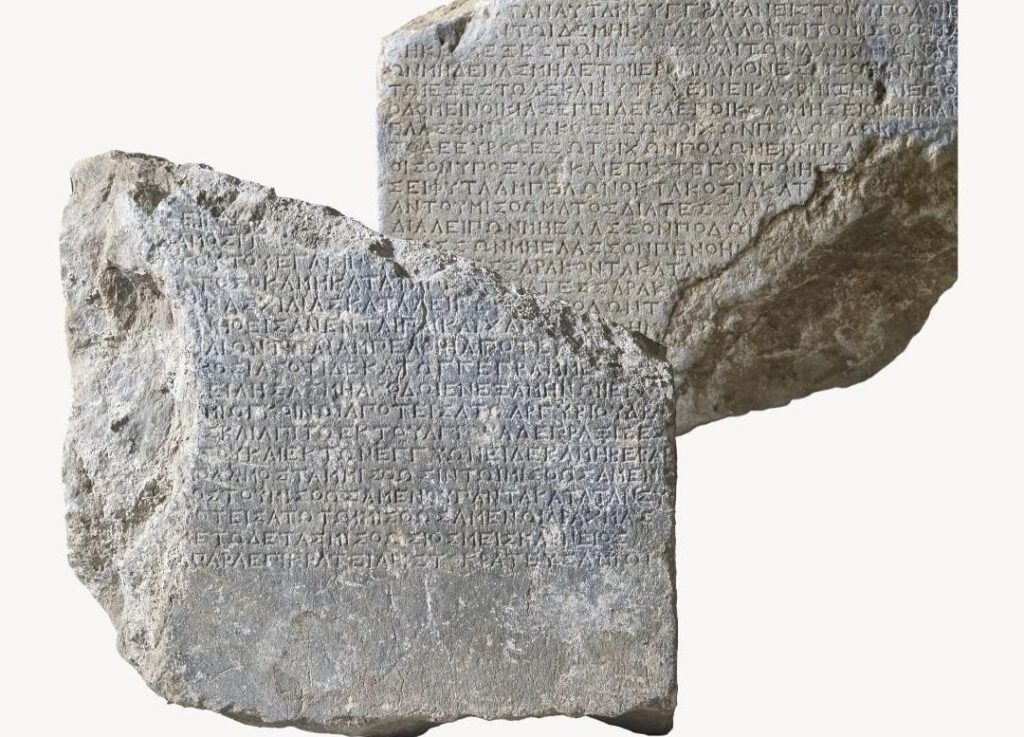
A remarkable 2,200-year-old land lease contract uncovered near Fethiye is shedding new light on the socio-economic and agricultural systems of the Hellenistic world. The inscribed stone fragment, now preserved by the Fethiye Archaeology Museum, provides rare and detailed insights into ancient land management practices connected to the historic Amos Ancient City.
Discovery and Historical Context
The artifact was identified during archaeological work on Şövalye Island near Fethiye. Originally part of a larger stele, the inscription dates back to approximately 220–200 BCE, placing it firmly in the Hellenistic period following the fragmentation of Alexander the Great’s empire after the Death of Alexander the Great.
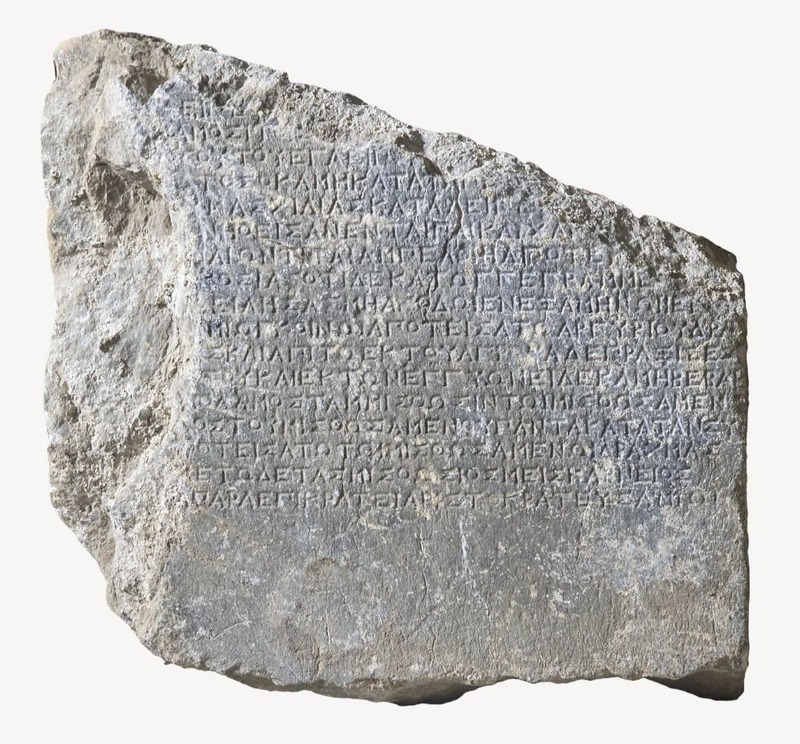
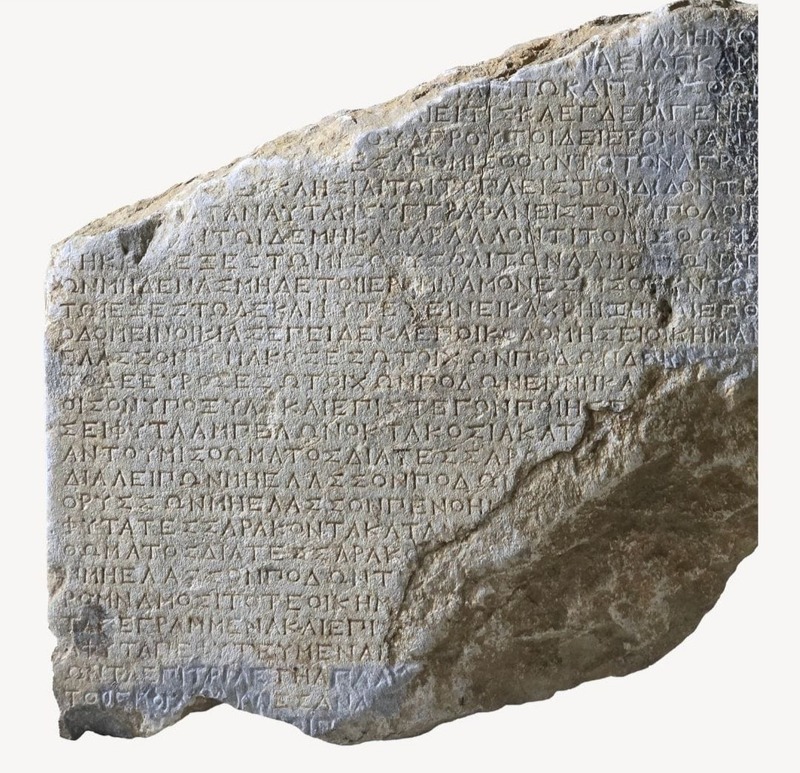
Epigraphic analysis revealed that both sides of the stone were inscribed, indicating its importance as an official public document. Scholars have confirmed that the text represents a detailed agricultural land lease agreement originating from Amos, an ancient Carian city strategically located along the southwestern coast of Anatolia.
Amos Ancient City: A Hellenistic Hub
The Amos Ancient City was an important settlement in the region of Caria, established in antiquity during the early development of coastal communities along the southwestern Anatolian shoreline. The city rose to prominence in the Hellenistic era, when it became a thriving coastal center integrated into eastern Mediterranean trade networks. Its greatest period of prosperity occurred between the 3rd and 2nd centuries BCE, when maritime commerce and regional political shifts significantly enhanced its economic importance.
Positioned on a hillside overlooking the sea, Amos controlled vital trade routes and maintained economic ties with neighboring cities such as Rhodes. During the Hellenistic period, the region often came under the influence of larger powers, including the Ptolemies and later the Rhodians, especially after the Treaty of Apamea, which reshaped political control across Anatolia.
Details of the Ancient Lease Agreement
The newly studied inscription provides an extraordinary level of detail regarding agricultural and legal practices. According to the text, tenants were required to pay annual rent and adhere to strict cultivation rules. For every 100 drachmas of rent, lessees had to plant 800 grapevines and 40 fig trees.
Even more striking are the precise agricultural instructions included in the contract. The depth at which each sapling had to be planted was specified, demonstrating an advanced understanding of farming techniques and land productivity in Hellenistic society.
Additionally, the inscription outlines legal clauses, including penalties and compensation rules. These provisions reveal a structured legal system that regulated land use and protected both landowners and tenants—evidence of a highly organized economic framework.
From Sacred Ground to Ship Ballast
Originally, the stele stood in the sanctuary of Apollo Samnaios in Amos, an important religious center dedicated to Apollo. The sanctuary would have been a focal point for civic and religious life, where official decrees and agreements were publicly displayed.
However, during the medieval period, the stone was removed from its original location and transported to Şövalye Island, likely used as ballast in ships to stabilize cargo during voyages. This secondary use reflects how many ancient artifacts were repurposed long after their original cultural significance had faded.
Modern Preservation and Research
Today, the artifact is carefully preserved in the Fethiye Archaeology Museum, where it has been cataloged and studied extensively. The inscription gained international attention following its publication in the academic journal Chiron by Fatih Onur, contributing valuable data to the field of ancient epigraphy.
Ongoing excavations at Amos continue to uncover additional fragments believed to belong to the same group of contracts. These discoveries are helping archaeologists reconstruct a broader picture of land ownership, agriculture, and legal systems in the Hellenistic eastern Mediterranean.
A Window into Ancient Economic Life
This 2,200-year-old lease agreement is more than just an isolated artifact—it is a rare documentary record that illustrates the complexity of ancient economies. It highlights how agricultural production, legal frameworks, and religious institutions were interconnected in cities like Amos.
As excavations progress, the Amos Ancient City continues to reveal its historical richness, offering invaluable insights into life during the Hellenistic period and beyond, including its transition into Roman and Byzantine rule.
This discovery underscores the importance of preserving cultural heritage, ensuring that pieces of the ancient world continue to inform and inspire future generations.
Onur, F. (2025). A new fragment of an Amian lease contract. Chiron, 55, 279–311. https://doi.org/10.1515/9783112216491-010
Cover Image Credit: Republic of Türkiye General Directorate of Cultural Heritage and Museums via X
