
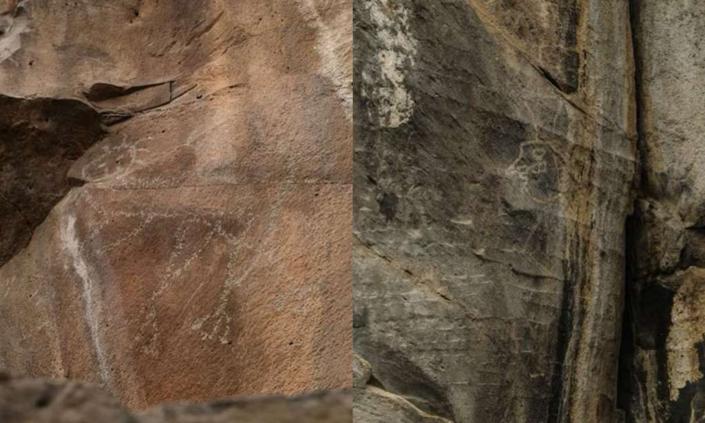
A newly documented set of prehistoric and Postclassic rock art in central Mexico is offering rare insight into ritual life and symbolic expression across thousands of years. Archaeologists working with Mexico’s National Institute of Anthropology and History (INAH) have identified 16 previously unrecorded petroglyphs and pictographs at El Venado, a site in Hidalgo closely linked to the cultural sphere of ancient Tula.
The discovery was made as part of a large-scale archaeological salvage project tied to the construction of the Mexico–Querétaro passenger railway—an initiative that continues to reveal unexpected traces of the region’s deep past.
Rock Art Spanning Millennia
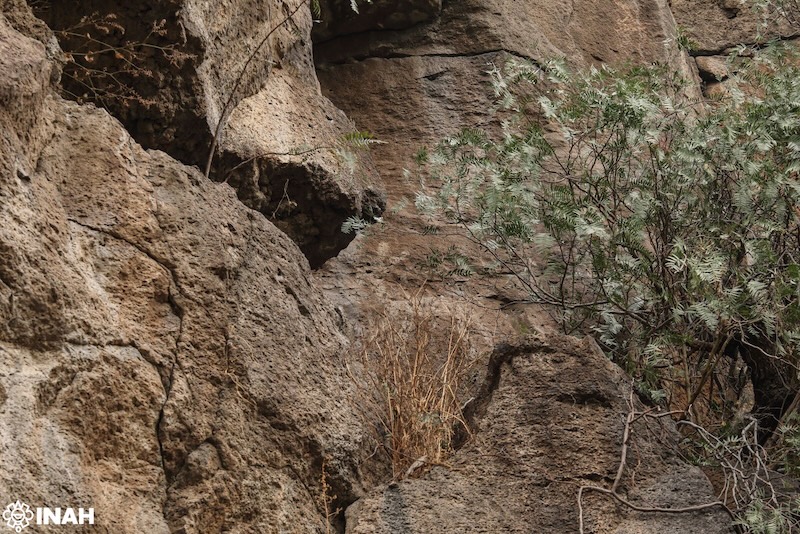
The newly recorded images are located on two rocky cliffs overlooking the Tula River and the La Requena reservoir, near modern communities in Hidalgo. Based on stylistic analysis, specialists believe the artworks span a vast chronological range—from prehistoric periods more than 4,000 years ago to the Mesoamerican Postclassic era (900–1521 CE).
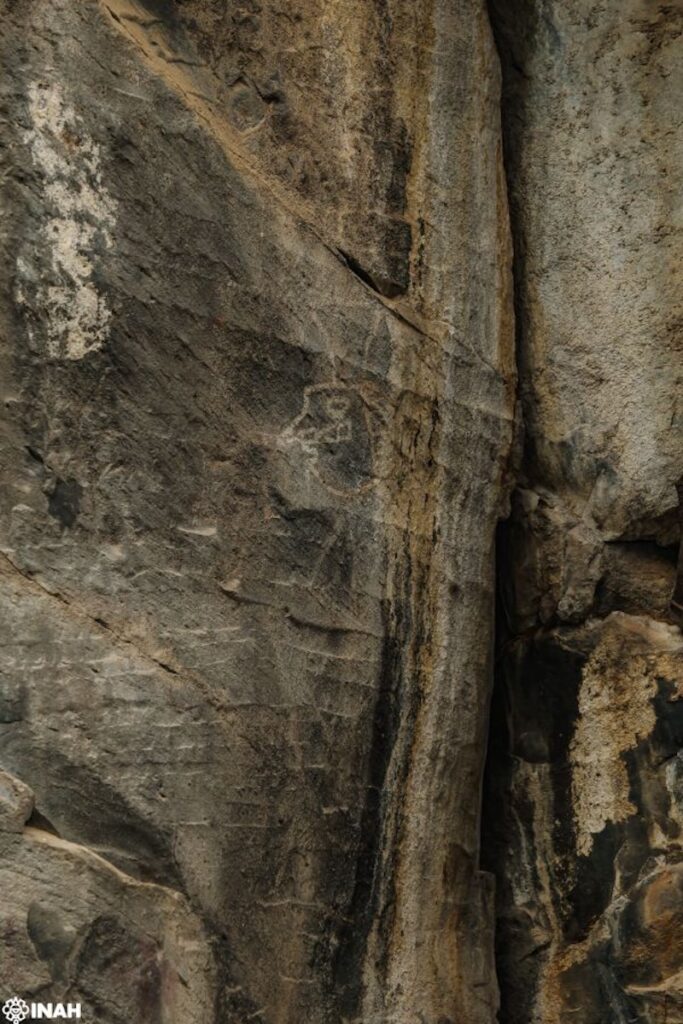
Among the most striking figures are human-like representations adorned with elaborate headdresses, shields, and symbolic body motifs. One figure appears in profile, bearing a stepped geometric design across the chest and holding a chimalli, a traditional Mesoamerican shield. Another figure features circular eye elements reminiscent of the rain god Tlaloc, alongside what may be a macuahuitl, a weapon used by pre-Hispanic warriors.
Additional imagery includes a stylized quadruped—possibly a deer, which gives the site its modern name—alongside abstract motifs, anthropomorphic faces, and a red-painted figure that may represent a serpent or lightning strike.
Symbolism, Ritual, and the Landscape
Archaeologists suggest that the placement of the rock art was not arbitrary. Instead, the location likely held mythological or ceremonial significance, potentially tied to astronomical cycles or seasonal rituals.
This interpretation aligns with broader patterns seen across Mesoamerica, where rock art often functioned as a visual language connecting human communities with sacred geography. Elevated landscapes, water sources, and cliffs were frequently imbued with cosmological meaning.
The proximity of El Venado to Tula, the former capital of the Toltec civilization, further strengthens this interpretation. Tula flourished between the 10th and 12th centuries CE and played a key role in shaping later Mesoamerican cultures, including the Aztecs, who viewed the Toltecs as cultural ancestors.
Artistic Techniques and Cultural Connections
According to project coordinator Víctor Francisco Heredia Guillén, the petroglyphs were created using a pointillist engraving technique, while the pictographs were likely produced with mineral or plant-based pigments.
Despite exposure to the elements, many of the paintings remain remarkably well preserved, allowing for detailed documentation through photography and photogrammetry. These digital records will enable further comparative analysis with other rock art traditions across the region.
Interestingly, some figures appear to share stylistic traits with imagery associated with the Mogollon culture, which flourished in what is now the southwestern United States and northern Mexico. This suggests the possibility of long-distance cultural interactions or shared symbolic systems extending across northern Mesoamerica.
Layers of History, Including Spanish Contact
Not all the imagery belongs to the distant past. One figure—depicting an anthropomorphic face combined with four animal-like limbs—may date to the early colonial period, shortly after Spanish contact in the 16th century.
If confirmed, this would indicate that the site remained culturally active across major historical transitions, reflecting a continuity of symbolic expression even during periods of profound upheaval.
Preservation Over Development
The significance of the site has already influenced modern infrastructure planning. Originally, the railway project route would have passed directly through the area containing the rock art. However, following the discovery, Mexican authorities opted to reroute the railway to ensure the preservation of the site.
This decision highlights a growing recognition that heritage preservation and development can coexist, provided that archaeological research is integrated into planning processes.
A Site Known, Yet Newly Understood
El Venado was first recorded in the 1970s during the Tula Archaeological Project led by renowned archaeologist Eduardo Matos Moctezuma. At the time, only a single deer-related image had been identified.
The latest findings dramatically expand the site’s significance, transforming it from a minor reference point into a complex and multi-period ritual landscape.
A Ritual Landscape Written in Stone
Beyond the visual appeal of the rock art, the discovery underscores a broader reality: much of Mesoamerica’s cultural history remains embedded in the landscape, often hidden in plain sight.
Each newly documented figure contributes to a growing understanding of how ancient communities perceived their world, encoded beliefs, and interacted with their environment. In the case of El Venado, these markings tell a story not of a single moment, but of thousands of years of human presence, belief, and adaptation.
Cover Image Credit: Gerardo Pena – INAH
