
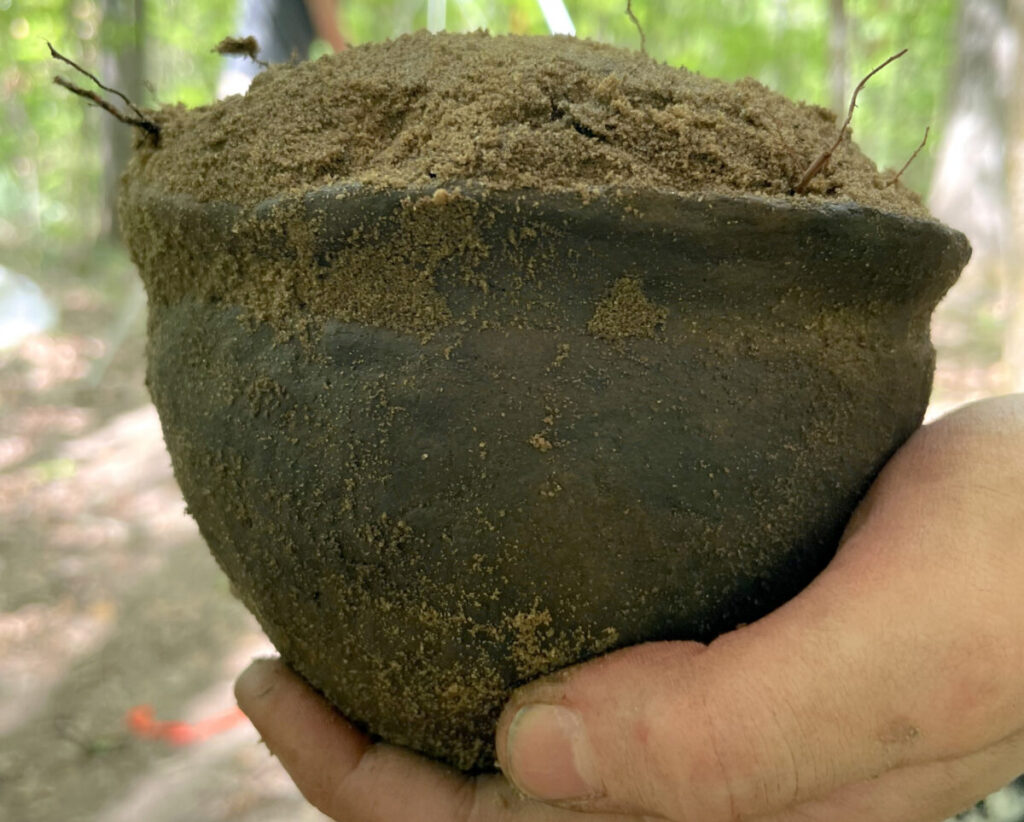
Archaeology is usually a game of piecing broken things back together. So when students digging near Gainesville, Florida, hit something that had survived four centuries without a single crack, it stopped everyone in their tracks.
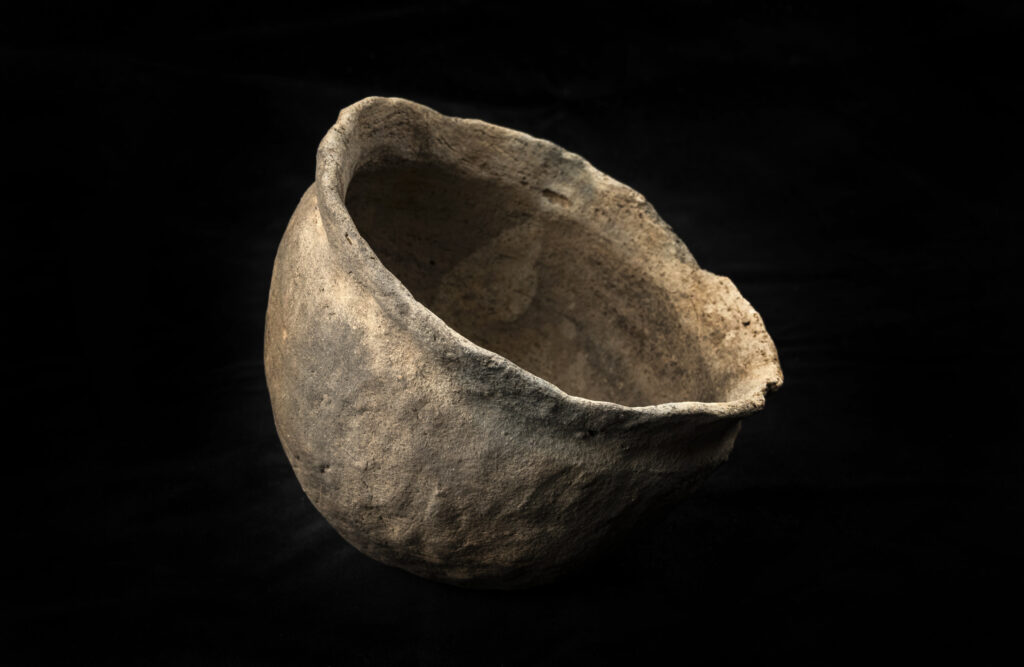
The find came during a University of Florida field course at Mission San Francisco de Potano, once home to the Potano-Timucua people. What they pulled from the ground was small enough to cup in one hand — a plain grey clay pot, no decoration, nothing flashy. But according to the Florida Museum of Natural History, that plainness is beside the point. What matters is that it’s whole. Pots buried in the ground almost never survive intact — they crack before burial, get crushed under the weight of soil, or get shattered later by plows and construction. Finding one in one piece is close to a fluke.
“Typically, we find things that were broken and discarded,” said Gifford Waters, the museum’s collections manager for historical archaeology. “It’s very unique.” He’d never seen anything like it in his own career — this was his first fully intact vessel pulled straight from the earth, not salvaged from a shipwreck, where conditions are kinder to fragile things.
Nobody’s quite sure why this one made it. Faint scorch marks on the outside hint at two very different stories — maybe they’re leftover from the original firing, or maybe the pot once sat near a hearth, warming food without ever touching flame. There’s no charcoal or burnt food residue inside, so it probably wasn’t a cooking pot in the everyday sense. For now, it’s a puzzle with no clean answer.
How the Potano ended up here
To make sense of the find, it helps to know whose land this was. The Potano were a Timucua-speaking people native to northern Florida, pushed off their original homeland — somewhere between what’s now Paynes Prairie and Orange Lake — by Spanish incursions. They resettled here around 1585. Two decades later, in 1606, a Franciscan friar planted a mission in the middle of their village, and it went on to become one of the oldest permanent Spanish missions in Florida’s interior, eventually serving as an administrative hub for other Timucua missions nearby.
But here’s the thing worth sitting with: despite the mission’s religious purpose, this was still, overwhelmingly, an Indigenous place. At its peak, several hundred Potano lived there — while the mission itself usually had just one European friar in residence.
Since 2006, digs at the site have turned up more than 7,000 artifacts — mostly pottery fragments, but also glass beads, stone tools, iron nails, and animal bones from turtle, freshwater fish, and turkey. Piece by piece, that debris has let archaeologists map out where people cooked, where they dumped trash, where they lived, and where the Spanish built their own structures.
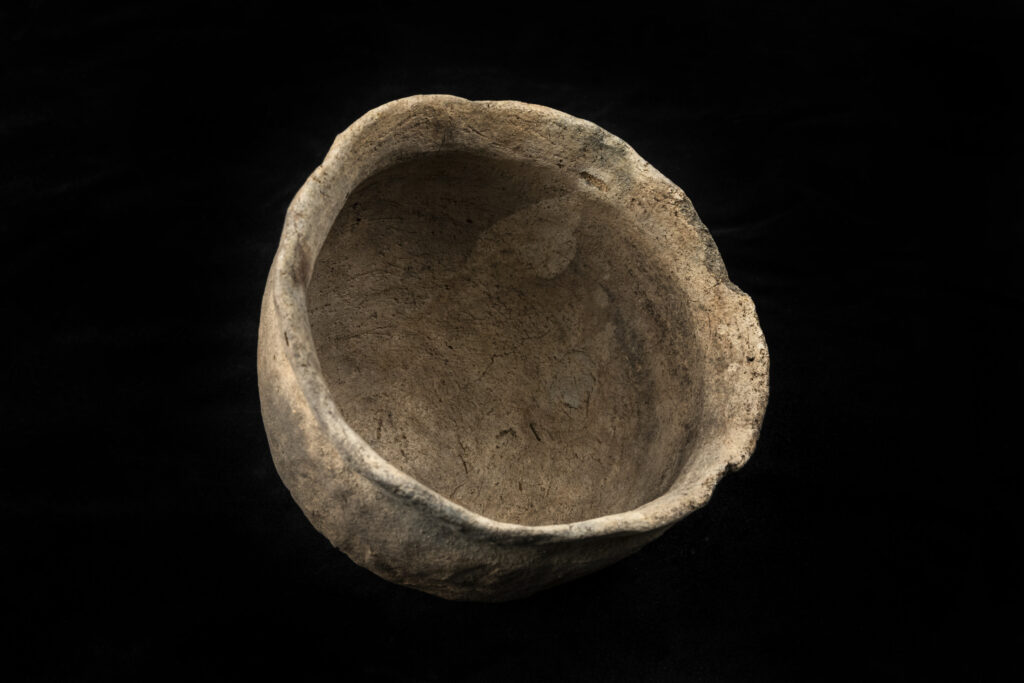
Since 2006, archaeologists and students have collected more than 7,000 artifacts at the site, the vast majority of which are pieces of Native American pottery. Credit: Florida Museum Photo by Kristen Grace
Was this a soldiers’ barracks?
The intact pot, as it turns out, came from one of those Spanish-built areas — though nobody’s pinned down exactly what the building was for. Historical records show soldiers were stationed at missions like this one in the early 1700s, as British-backed raids on Spanish territory picked up. Archaeologists had already found a gun’s rear sight and part of a musket plate nearby, which is why the “barracks” theory keeps coming up. It’s still just a working theory, though — more digging will be needed before anyone can say for sure.
That instability, honestly, fits the mission’s whole story. It was abandoned once already, during the Timucua rebellion of 1656, then rebuilt — only to become a refuge for people fleeing disease, slave raids, and attacks from English Carolina and its allies. By 1706, it was abandoned for good, and most of its people moved on toward the Spanish settlements around St. Augustine.
A second pot tells a different story
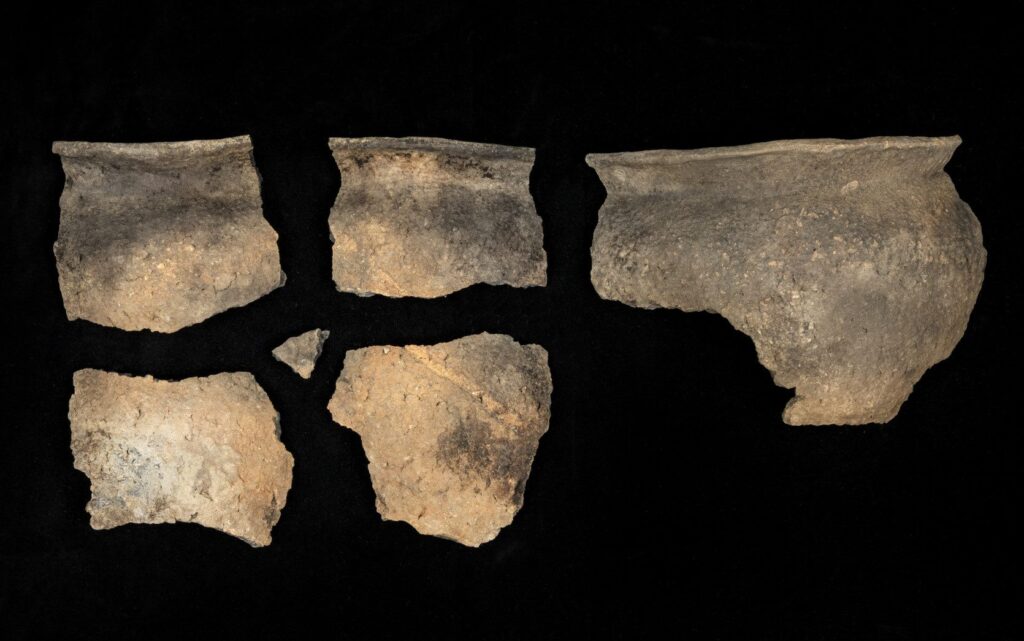
Not long after the first pot came out of the ground, students found fragments of a second, much bigger vessel in the same spot. This one’s rougher, and its style doesn’t match anything local — which has archaeologists wondering if it arrived through trade with communities near St. Augustine or Jacksonville, or if it belonged to someone who’d moved to the mission from elsewhere in Florida.
Either way, it fits the later chapters of this mission’s history, when displaced people from several different Indigenous communities converged here as violence upended older ways of life across the region.
We may never know what that first little pot once held. But maybe that’s not really the point. Its real value is in where it was found — a place where Native tradition, Spanish colonization, trade, and forced migration all collided, over and over, across a single turbulent century.
