
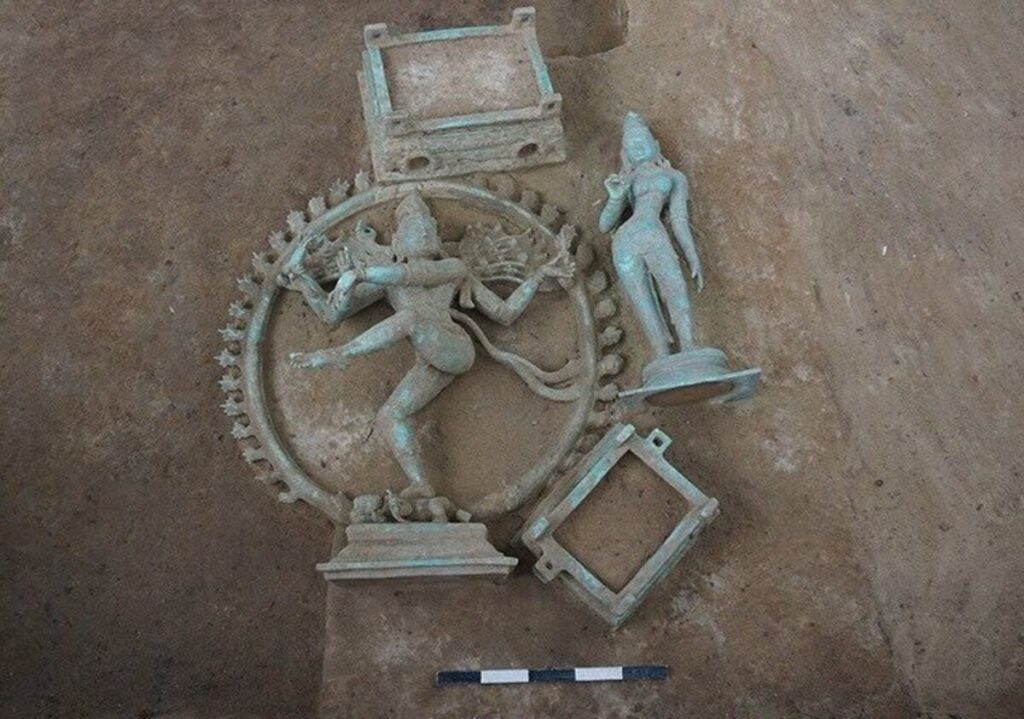
Two bronze statues depicting the Hindu deities Shiva and Sivakami have been discovered during archaeological excavations in Nagapattinam, a historic port city in southern India.
Dating to approximately the 12th century CE, the sculptures were found about one metre below ground with their original pedestals. The discovery offers new evidence of religious life and bronze craftsmanship under the Chola dynasty, which ruled much of southern India for centuries.
The excavation is being conducted by the Tamil Nadu State Department of Archaeology. Minister Rajmohan Arumugam announced the discovery on October 30, identifying the figures as Nataraja, the dancing form of Shiva, and Sivakami Amman. According to archaeological officials, these are the first bronze statues of this kind recovered during an excavation conducted by the department itself.
Two Bronze Statues Buried Together
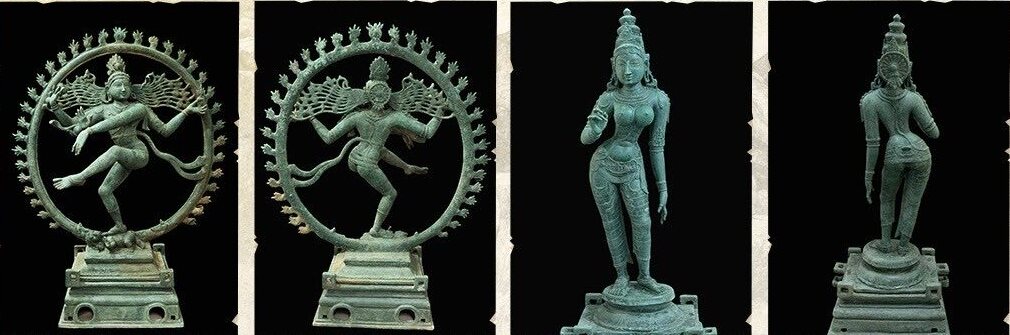
The larger sculpture depicts Nataraja and stands 110 centimetres tall and 100 centimetres wide. It shows Shiva in the Ananda Tandava, or dance of bliss, with four arms and one leg raised. The other foot rests on a small figure traditionally associated with ignorance.
The second statue represents Sivakami, a form of the goddess Parvati and consort of Shiva. Measuring 82 centimetres in height and 23 centimetres in width, she stands in a gently curved posture known as tribhanga, in which the body bends at three points. Both statues retain their supporting pedestals.
The figures were uncovered during an excavation programme that began in August 2026. Six trenches had been opened at the site when the discovery was reported. Archaeologists provisionally date the statues to the 12th century based on their style, iconography and craftsmanship, rather than on a laboratory determination.
The Meaning Behind Shiva’s Cosmic Dance
To understand the importance of the larger statue, it helps to understand what Nataraja represents. In Hindu religious tradition, Nataraja is Shiva as the cosmic dancer, whose movements express the forces of creation, preservation, and transformation.
The objects held in his hands are part of this symbolism. A small drum represents the rhythm of creation, while a flame is associated with destruction and renewal. His lower right hand makes a gesture of reassurance, and his raised foot is traditionally linked with liberation. Beneath the other foot lies a small figure known as Apasmara, representing ignorance.
Sivakami is closely associated with this dancing form of Shiva. She represents the goddess Parvati and appears alongside Nataraja in South Indian religious art and temple worship. Finding representations of the two deities together is therefore consistent with a well-established religious tradition, although their original location and precise use remain to be determined.
Bronze sculptures reached a particularly sophisticated level under the Chola rulers. Images of Hindu deities were not simply decorative objects. Many were created for worship and could be carried in religious processions, allowing divine images to move beyond the inner spaces of temples. Whether the newly discovered statues served such a purpose has not yet been established.
Why Were the Statues Buried?
One of the principal unanswered questions concerns why the sculptures were placed underground. Professor K. Rajan, an adviser to the Tamil Nadu archaeology department, has suggested that they may have been buried for safekeeping.
That possibility fits a wider question being investigated at Nagapattinam. Excavation director K. Vasanthakumar said researchers are seeking to understand why numerous Chola-period bronze objects have been found buried in the area. Retired maritime archaeology professor V. Selvakumar has also suggested that religious images may have been concealed during periods of invasion or insecurity.
For now, the reason the statues were buried remains unknown. Archaeologists suggest they may have been hidden for protection during a period of unrest, but there is not yet enough evidence to link their burial to a specific event.
தமிழ்நாடு அரசு தொல்லியல் துறை சார்பில் நாகப்பட்டினத்தில் அகழாய்வுப் பணிகள் நடைபெற்று வருகின்றன. இதில், தமிழர்களின் தொன்மையையும் வரலாற்றுச் சிறப்பையும் பறைசாற்றும் சான்றுகள் கிடைத்து வருகின்றன. ஆம், சோழர் காலத்தைச் சேர்ந்த வெண்கல நடராஜர் மற்றும் சிவகாமி அம்மன் சிலைகள் உள்ளிட்ட பல சிலைகள் கண்டெடுக்கப்பட்டுள்ளன என்பதை மகிழ்ச்சியுடன் தெரிவித்துக் கொள்கிறேன். மாண்புமிகு முதல்வர் @CMOTamilnadu அவர்களின் நல்லாட்சியில், தமிழர்களின் தொன்மை, பண்பாடு மற்றும் வரலாற்றைப் பறைசாற்றும் தொல்லியல் ஆய்வுப் பணிகள் மென்மேலும் சிறப்பாக நடைபெற்று வருகின்றன.
— Rajmohan (@imrajmohan) October 30, 2026
A Discovery in a Former Chola Port
Nagapattinam was an important coastal centre during the Chola period, connecting southern India with maritime trade routes across the Bay of Bengal. Its busy harbour attracted merchants, pilgrims and diplomats, while the city supported workshops, religious institutions and trading communities.
The city’s connections extended as far as the Srivijaya kingdom in Southeast Asia. In the early 11th century, a Srivijaya ruler established a Buddhist monastery at Nagapattinam, which received support from Chola king Rajaraja I. Hundreds of Buddhist bronze sculptures have also been recovered from the area, showing that the port was home to religious traditions beyond Hinduism. The newly discovered Nataraja and Sivakami statues belong to this broader history of religious life in the city.
Both bronzes have been transported to Chennai for chemical conservation. Researchers also plan metallurgical analyses to examine the materials used in their manufacture.
