
10 November 2025 The Future is the Product of the Past

Divers Uncover Over 1,000 Spanish Coins Worth $1 Million from Florida’s 1715 ‘Treasure Fleet’ Shipwrecks

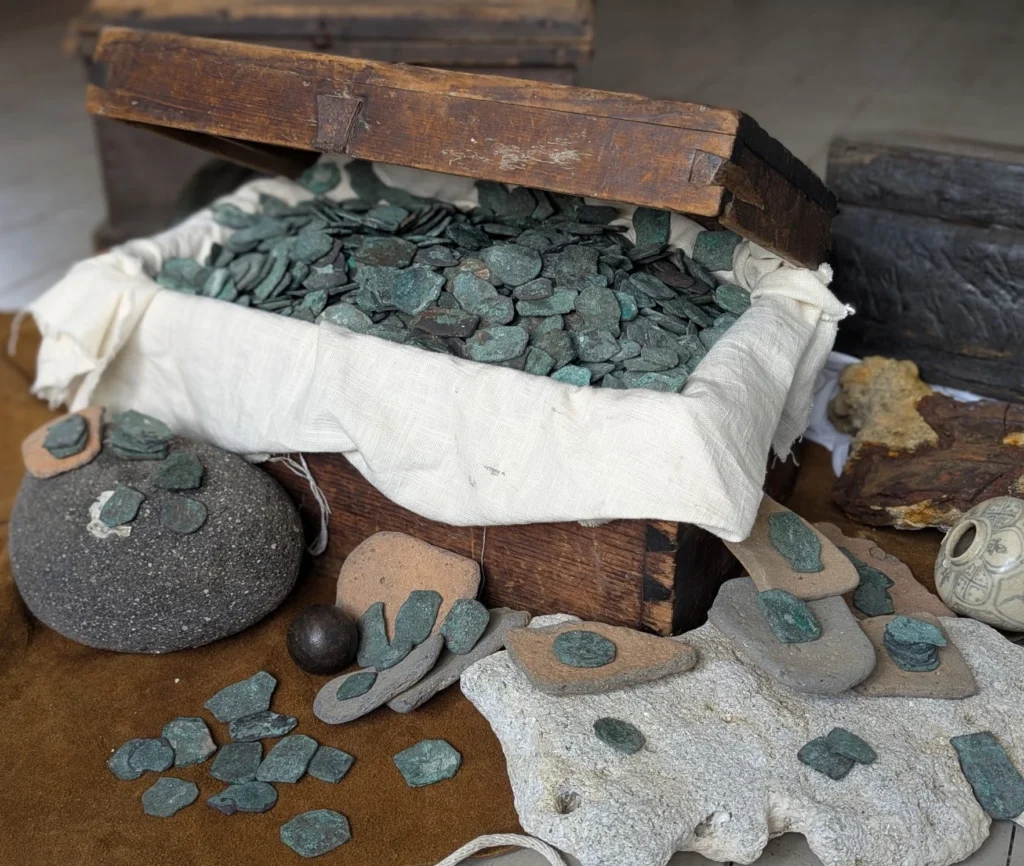
More than three centuries after one of the most devastating maritime disasters of the Americas, divers off Florida’s east coast have recovered over 1,000 Spanish coins from the wreckage of the legendary 1715 Treasure Fleet. The discovery, valued at around $1 million, includes silver reales—commonly known as “pieces of eight”—and rare gold escudos, along with additional artifacts that once formed part of the vast wealth Spain extracted from its colonies in the New World.

A Fortune Lost to the Sea

The 1715 fleet, also known as the “Plate Fleet,” set sail from Havana on July 24, 1715, bound for Spain. Laden with treasures from Mexico, Peru, and Bolivia—including silver bars, gold coins, and royal jewels—the convoy of 12 ships represented the riches of an empire at its height. But within a week, disaster struck. A powerful hurricane slammed into Florida’s coast, sinking 11 ships across a 50-mile stretch of ocean. Historians estimate that as much as $400 million in treasure was lost, making it one of the greatest maritime tragedies in colonial history.

Some of the wreckage was salvaged in the immediate aftermath, but vast portions of the treasure remained buried beneath sand and sea for centuries. Over time, the waters off Vero Beach became known as Florida’s “Treasure Coast,” where divers and salvage experts continue to make remarkable finds.
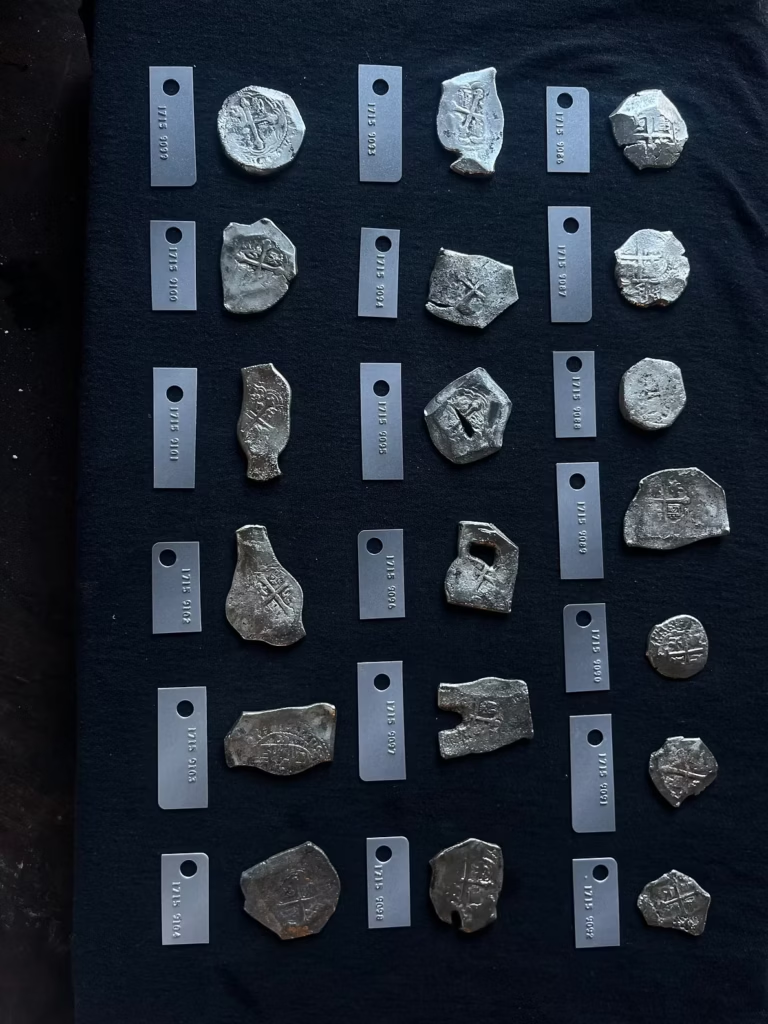
Divers off Florida’s east coast have recovered over 1,000 Spanish coins from the wreckage of the legendary 1715 Treasure Fleet. Credit: 1715 Fleet - Queens Jewels
Divers off Florida’s east coast have recovered over 1,000 Spanish coins from the wreckage of the legendary 1715 Treasure Fleet. Credit: 1715 Fleet – Queens Jewels

This Summer’s Extraordinary Recovery

The latest discovery was made during the 2025 summer salvage season by Captain Levin Shavers and the crew of the M/V Just Right, operating under the authority of 1715 Fleet – Queens Jewels, LLC, the company that holds exclusive rights to the shipwrecks. More than 1,000 silver reales and five gold escudos were lifted from the seabed. Many coins still bear legible mint marks and dates, offering historians vital information about Spanish colonial mints in Mexico, Peru, and Bolivia.

“The condition of these coins suggests they were part of a single chest or shipment that spilled when the ship broke apart,” the company stated. Such concentrated recoveries are rare, given the centuries of ocean currents and storms that typically scatter artifacts.


📣 Our WhatsApp channel is now LIVE! Stay up-to-date with the latest news and updates, just click here to follow us on WhatsApp and never miss a thing!!


“Each Coin is a Piece of History”

For 1715 Fleet – Queens Jewels, the significance of the discovery extends beyond monetary value. “This discovery is not only about the treasure itself, but the stories it tells,” said Sal Guttuso, Director of Operations. “Each coin is a piece of history, a tangible link to the people who lived, worked, and sailed during the Golden Age of the Spanish Empire. Finding 1,000 of them in a single recovery is both rare and extraordinary.”

These so-called “pieces of eight” were the backbone of global trade during the 17th and 18th centuries, circulating across Europe, Asia, and the Americas. Their influence was so widespread that they are often considered a predecessor to modern currency systems.
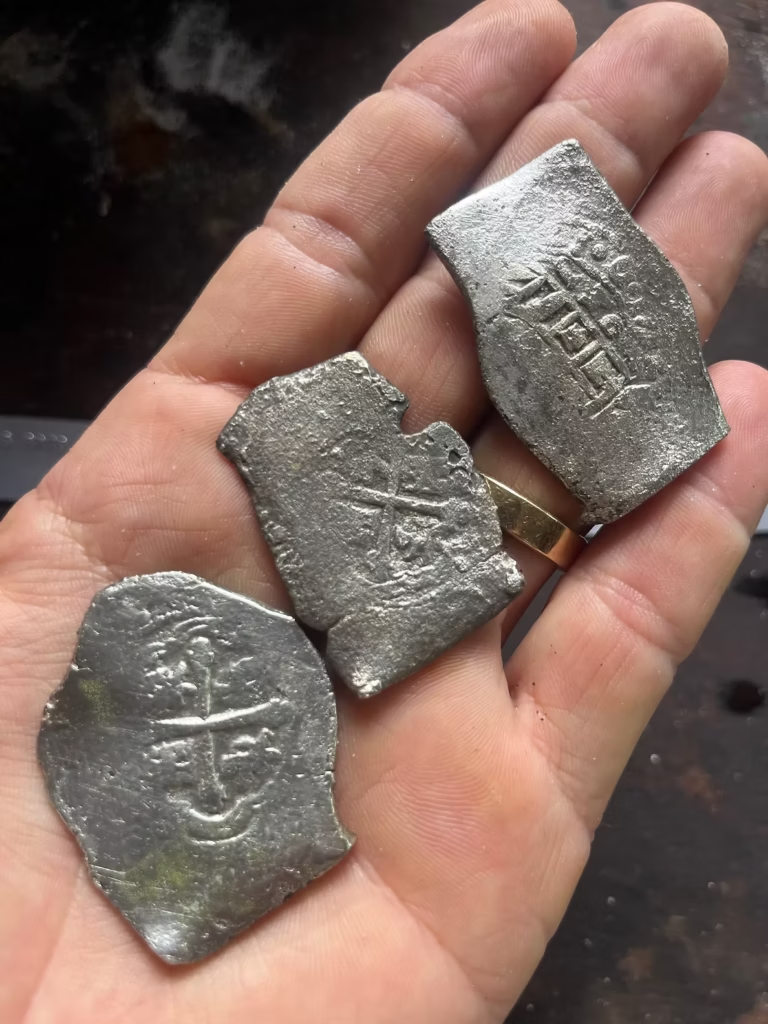
Over 1,000 Spanish silver reales and gold escudos recovered from the 1715 Treasure Fleet shipwreck, valued at $1 million. Credit: 1715 Fleet - Queens Jewels
Over 1,000 Spanish silver reales and gold escudos recovered from the 1715 Treasure Fleet shipwreck, valued at $1 million. Credit: 1715 Fleet – Queens Jewels

Treasure and Tragedy

The 1715 fleet carried more than just monetary wealth. Historical records suggest that jewels belonging to Queen Elisabeth Farnese, the second wife of King Philip V of Spain, were among the cargo. Her dowry reportedly included a 74-carat emerald ring and a pair of 14-carat pearl earrings—treasures still missing today.

Such legends continue to fuel both academic interest and public fascination. Yet the salvage operations are strictly regulated. Under Florida law, unauthorized removal of shipwreck artifacts is illegal. Only 1715 Fleet – Queens Jewels and its subcontractors are permitted to explore and recover items from the wrecks, operating under state archaeological oversight.
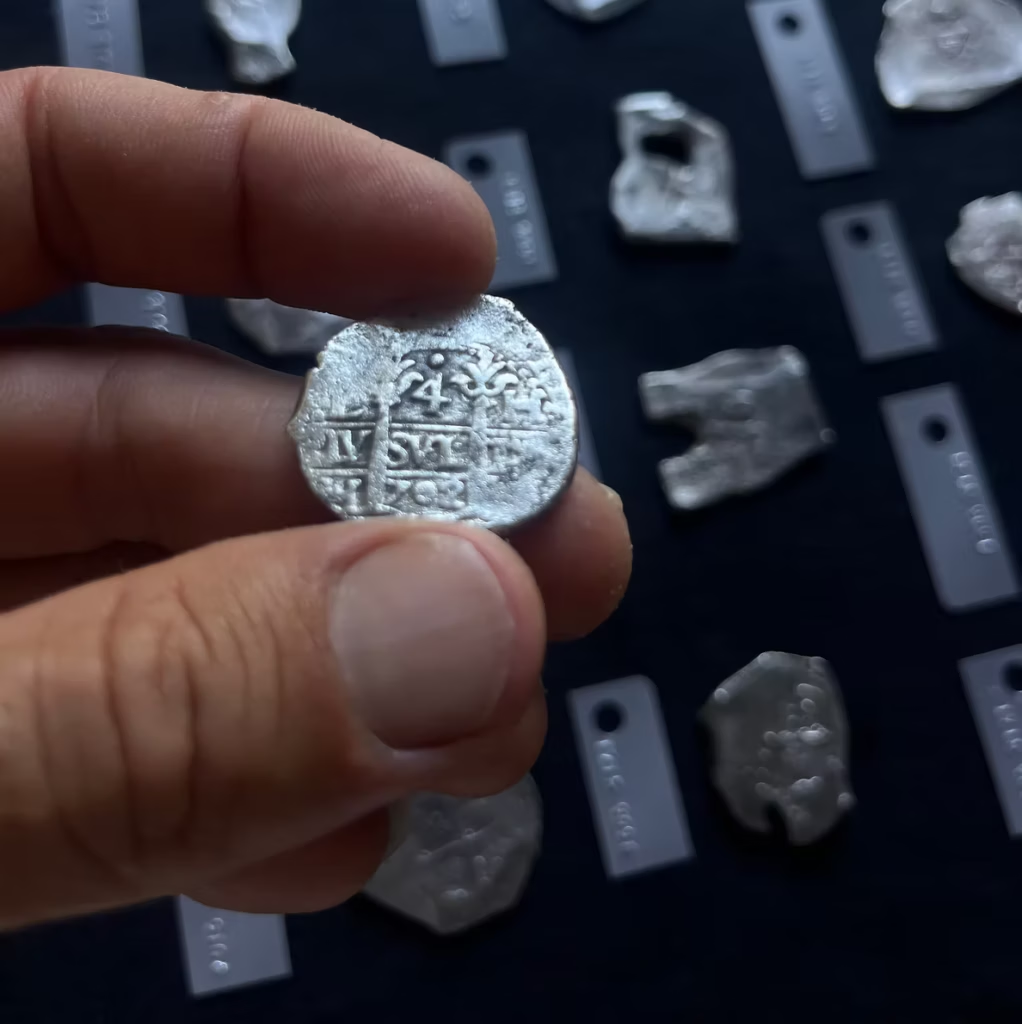
Over 1,000 Spanish silver reales and gold escudos recovered from the 1715 Treasure Fleet shipwreck, valued at $1 million. Credit: 1715 Fleet - Queens Jewels
Over 1,000 Spanish silver reales and gold escudos recovered from the 1715 Treasure Fleet shipwreck, valued at $1 million. Credit: 1715 Fleet – Queens Jewels

Preserving the Past

The recovered coins are undergoing careful conservation before they will be displayed to the public. Plans are in motion for local museums on Florida’s Treasure Coast to exhibit select pieces, offering both residents and visitors a direct encounter with the maritime history that shaped the region.

“Every find helps piece together the human story of the 1715 fleet,” Guttuso emphasized. “We are committed to preserving and studying these artifacts so future generations can appreciate their historical significance.”

As the Atlantic continues to guard its secrets, archaeologists and divers remain convinced that much of the fleet’s treasure still lies undiscovered beneath the shifting sands. Each recovery not only revives the glitter of Spanish gold but also illuminates the lives of sailors, colonists, and royals caught in the tides of empire and disaster.

1715 Fleet – Queens Jewels

Cover Image Credit: 1715 Fleet – Queens Jewels

Related Articles

Archaeologists Discover Clay Figurines from Early Iron Age in Ukraine

17 December 2024

17 December 2024

Archaeologists have discovered clay figurines of young bulls from the Early Iron Age near the Metropolitan Chambers in the village...

Anglo-Saxon monasteries were more resilient to Viking attacks than thought

31 January 2023

31 January 2023

Researchers from the University of Reading’s Department of Archaeology have found new evidence that Anglo-Saxon monastic communities were more resistant...

The Splendor of the Seven Descending Gods of Tulum Resurfaced

11 February 2024

11 February 2024

The National Institute of Anthropology and History (INAH) says the splendor of the seven Descending Gods of Tulum has resurfaced....

New study: Humans engaged in large-scale warfare in Europe 5,000 years ago ‘1,000 years earlier than previously thought’

3 November 2023

3 November 2023

Hundreds of human remains unearthed from a burial site point to a  warfare between Stone Age people long before the...

4,000-year-old Rock Art From A Previously Unknown Ancient Culture uncovered in Venezuela

4 July 2024

4 July 2024

An archaeological team in Venezuela has uncovered 20 ancient rock art sites in Canaima National Park in the southeastern part...

Ritual Sacrifice of Pregnant Woman: Ecuador may Reflect the Community’s Fear of Her Power

28 January 2025

28 January 2025

In a remarkable archaeological find in Ecuador, researchers have uncovered the rich burial of a pregnant woman and her fetus,...

The Mountain of Shemharus, King of the Ginn: Toubkal

14 August 2022

14 August 2022

Towering over the Atlas Mountains, Mount Toubkal is the highest peak in Morocco. Toubkal, the highest mountain in all of...

1300-year-old stone sculpture from the ancient Turkish era found in Kazakhstan

3 August 2021

3 August 2021

A 1,300-year-old stone sculpture from the early Turkish period was discovered in Kazakhstan’s south, around 250 kilometers (155 miles) from...

When Stones Speak of Faith: The Most Significant Religious Archaeological Discoveries of the Last Decade

13 July 2025

13 July 2025

In a world where ancient faith still echoes beneath our feet, the most significant religious archaeological discoveries of the last...

45,000 years ago, Neanderthals in the Swabian Jura used complex tool-making techniques

13 September 2021

13 September 2021

Findings that will change our perception of Neanderthals’ sophistication A team from the University of Tübingen have proved that Middle...

Marmore, the Highest and Oldest Artificial Waterfall in Europe, Created by the Romans

4 March 2024

4 March 2024

Approximately eight kilometers away from the town of Terni in Umbria, Italy, there is a waterfall that is one of...

A Medieval Necropolis Discovered During Excavations at the site of the Future Bus Station in Sozopol, Bulgaria

4 April 2024

4 April 2024

A medieval necropolis was discovered during excavations at the construction site of a bus station in the old seaside town...

From Toy to Treasure: Detectorist’s ‘Lucky Mistake’ Reveals 2,000-Year-Old Roman Brooch in Dorset

25 September 2025

25 September 2025

A metal detectorist in Dorset, southwest England, has unearthed a 2,000-year-old Roman brooch. Initially mistaken for a child’s toy, the...

A 1700-year-old Roman water tunnel dug into the mountain was discovered in Adıyaman province in southeastern Türkiye

13 September 2023

13 September 2023

It was revealed that in the Besni district of Adıyaman province, located in the Southeastern Anatolia Region of Turkey, the...

Crusade period grave field and a sword discovered in Finland

15 October 2023

15 October 2023

A large cemetery from the time of the Crusades was discovered near a medieval stone church in Salo Perttel, a...