
China plans to introduce more advanced technologies into archaeological research, with artificial intelligence, remote sensing, ancient DNA analysis, and underwater robotics among the priorities of its new five-year program.
The National Cultural Heritage Administration (NCHA) released its archaeology work plan for 2026–2030 in October. According to the South China Morning Post, the strategy includes developing specialized AI models for virtual artifact restoration while expanding research into ancient human populations and historic maritime trade routes.
The program also outlines international archaeological cooperation, including joint research with institutions in Egypt, Greece, Saudi Arabia and Tunisia. China intends to expand its research infrastructure through a national-level archaeological laboratory and the National Museum of Maritime Archaeology, currently under construction in Qingdao.
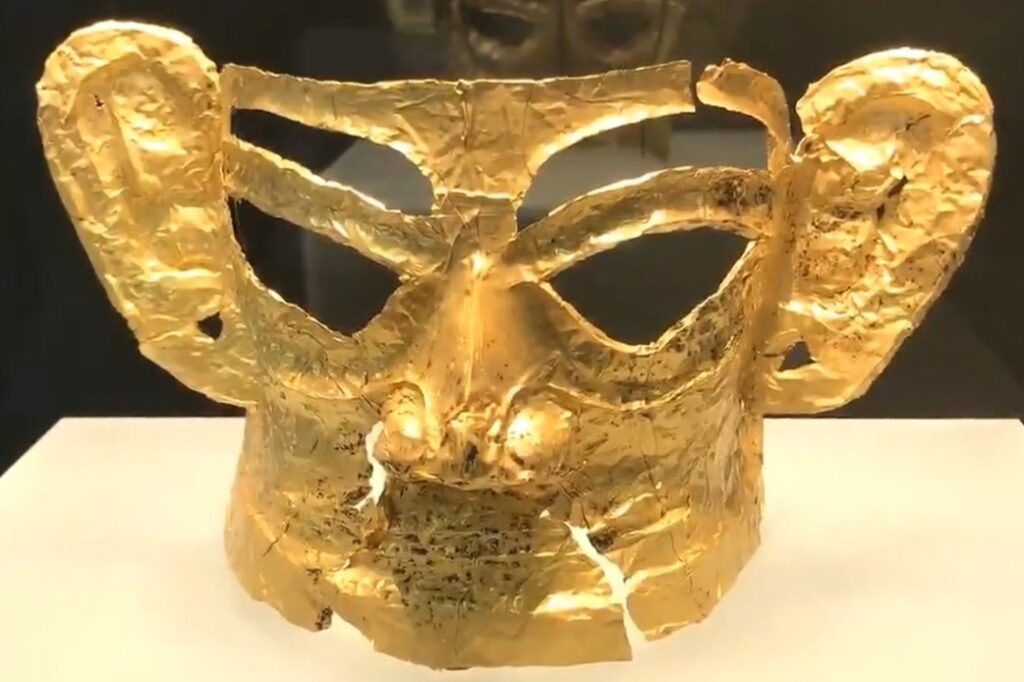
Some of the technologies highlighted in the plan have already been tested in Chinese archaeological projects. AI-assisted reconstruction at Sanxingdui, for example, has demonstrated how computer vision and 3D modeling can help researchers examine damaged artifacts.
Developing AI Models to Reconstruct Ancient Artifacts
Excavations often uncover thousands of damaged or fragmented objects. Researchers must examine these pieces to determine which fragments belong together, particularly when they come from different excavation areas.
The proposed AI systems would analyze archaeological data, recognize individual fragments, and identify possible connections, helping researchers create digital reconstructions without physically altering the original objects.
China has already explored this approach at the Sanxingdui archaeological site in Sichuan, where Tencent’s Digital Culture Laboratory collaborated with the Sichuan Institute of Cultural Relics and Archaeology. The team combined AI, computer vision, and 3D modeling to examine bronze artifacts and determine how their fragments fit together.
One example involved a bronze sculpture depicting a mythical four-legged beast carrying a kneeling worshipper. Its two main components were discovered in separate excavation pits in 2021. Researchers identified markings on the beast’s back and the worshipper’s knees that suggested they belonged together.
Using 3D modeling and AI-assisted calculations, the team compared their dimensions, proportions, weight, and balance. The results supported the conclusion that both components originally formed part of the same sculpture. Computer vision also helped straighten damaged features and digitally reconstruct missing sections, including an ear and an arm.
The team also tested a 3D deep-learning algorithm to identify connections between multiple fragments, including when some pieces were missing. Tencent evaluated the approach using simulated datasets.
The new national plan aims to extend these capabilities to archaeological research across China.
Combining AI and Remote Sensing to Identify Archaeological Remains
Another important area involves using artificial intelligence to examine remote-sensing data collected from aircraft and other observation platforms.
Satellite images and aerial photographs can cover extensive geographical areas, allowing researchers to examine archaeological landscapes that would otherwise require considerable fieldwork.
AI-based image recognition can help process these images by identifying patterns associated with ancient structures, walls, and other archaeological features.
A practical example comes from a 2022 study published in the International Journal of Applied Earth Observation and Geoinformation.
Researchers developed an improved DeepLabv3+ deep-learning model to identify remains of the Han Dynasty Great Wall in northwest China using very-high-resolution aerial imagery.
The model incorporated a ResNet101 feature extraction network and an improved training method to recognize the long, narrow structures of the ancient wall.
During testing, the system achieved an accuracy of 98.37%, a recall of 98.92% and an F1 score of 98.64%.
The researchers also tested the model in a geographical area that had not been included in its training data. It correctly identified 70.82% of the Great Wall remains in that separate test area, demonstrating its potential to assist archaeological surveys across different landscapes.
The research provides a concrete example of how deep learning can help archaeologists examine large collections of remote-sensing images and identify features that might otherwise require extensive manual interpretation.
China’s new archaeology program also identifies remote sensing as an important research tool. However, the Great Wall study predates the plan and should be understood as an existing scientific example rather than a project announced under the new strategy.
Beyond AI – Ancient DNA and Deep-Sea Robotics
Although artificial intelligence is an important part of the program, the NCHA’s plans extend beyond digital reconstruction and automated image analysis.
Ancient DNA research is another priority. Scientists will investigate early human populations, their movements, and their relationships with other groups across East Asia and Eurasia.
One example of the scientific potential comes from Baishiya Karst Cave on the Tibetan Plateau. In 2019, researchers identified a mandible at least 160,000 years old as belonging to a Denisovan-related population through ancient protein analysis. A separate study published in 2020 recovered Denisovan mitochondrial DNA from sediments inside the cave.
These discoveries show how molecular techniques can reveal details about ancient populations that researchers cannot always determine from skeletal remains and artifacts alone.
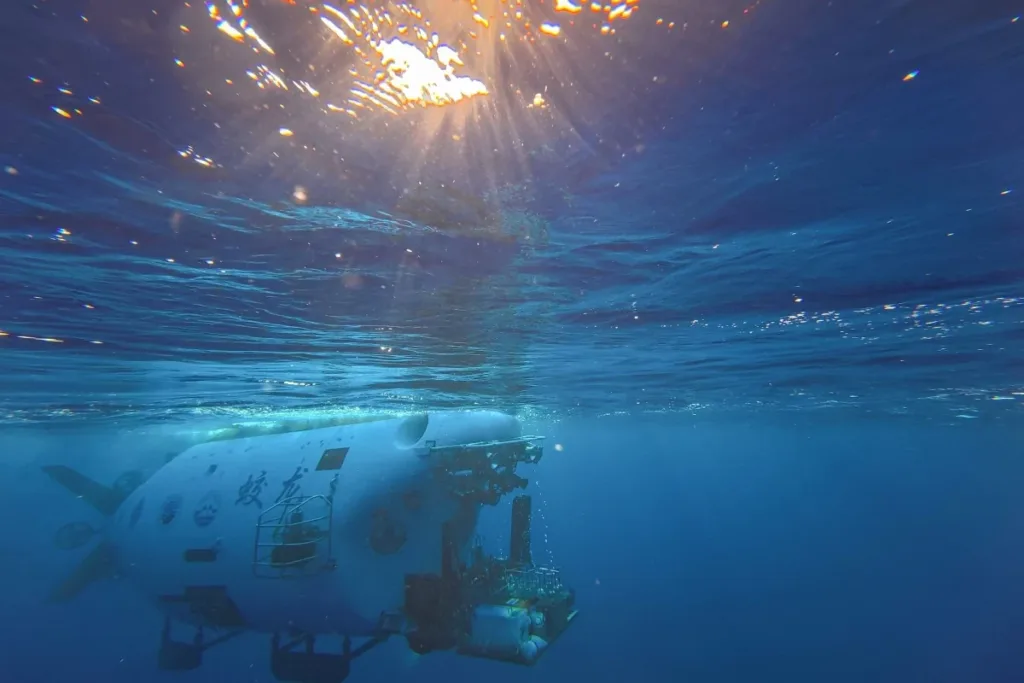
The plan also highlights underwater robotics and deep-sea excavation equipment, particularly for investigating historic shipwrecks.
In October 2022, Chinese researchers discovered two Ming dynasty shipwrecks in the South China Sea, approximately 1,500 meters below the surface.
Researchers used the crewed submersible Shenhai Yongshi (Deep Sea Warrior), alongside uncrewed submersibles and specialized imaging equipment, to investigate the wrecks.
By June 2024, more than 900 artifacts had been recovered. Earlier assessments estimated that the first wreck contained more than 100,000 objects, mainly porcelain and ceramics. The estimated number of objects at the site should not be confused with the number actually recovered.
The two wrecks also provide evidence of maritime trade and cultural exchanges along the ancient Maritime Silk Road.
Building on these investigations, the new program calls for further development of underwater robotics, deep-diving equipment and specialized subsea excavation tools.

Expanding International Archaeological Cooperation
China’s archaeology strategy also extends beyond its own territory.
The NCHA plans to expand international partnerships through archaeological fieldwork across Asia, including the Austronesian-speaking regions, the Himalayan area, and historical Silk Road and Maritime Silk Road routes.
In the Mediterranean and Middle East, Chinese research teams will cooperate with institutions in Egypt, Greece, Saudi Arabia and Tunisia.
These partnerships will focus on studying ancient civilizations, developing underwater survey equipment, conducting deep-sea exploration and improving cultural heritage preservation.
The strategy also includes establishing a national-level archaeological laboratory to support scientific research and technological development.
China is also building the National Museum of Maritime Archaeology in Qingdao. Alongside the National Base of Underwater Archaeology in the South China Sea, the museum will strengthen the country’s ability to investigate and preserve underwater cultural heritage.
What the Plan Means for Archaeology
China’s 2026–2030 program outlines several technological and scientific priorities that could influence how archaeological research is conducted over the coming years.
AI-assisted reconstruction could help researchers examine fragmented objects, while deep-learning systems may make it easier to identify archaeological features across large remote-sensing datasets. Ancient DNA analysis and underwater robotics will provide additional methods for investigating evidence that conventional excavation cannot easily reach.
International cooperation could also expand access to archaeological sites and encourage research into historical connections between different civilizations.
However, these technologies still have limitations. AI-generated reconstructions require archaeological verification, remote-sensing systems can produce incorrect identifications, and molecular research depends on the preservation of suitable material.
The strategy therefore represents an expansion of existing archaeological methods rather than their replacement.
How effectively China can turn these technologies into practical research tools will become clearer as the 2026–2030 program progresses.
Sources
South China Morning Post – Chinese archaeologists set for hi-tech excavations with AI and deep-sea robots, October 31, 2026.
Tencent – An Ancient Statue Digitally Restored, December 27, 2023.
Auto-identification of linear archaeological traces of the Great Wall in northwest China using improved DeepLabv3+, International Journal of Applied Earth Observation and Geoinformation, 2022.
A Denisovan mandible from the Tibetan Plateau, Nature, 2019.
Denisovan DNA in Late Pleistocene sediments from Baishiya Karst Cave, Science, 2020.
Xinhua – More than 900 artifacts recovered from South China Sea shipwrecks, June 13, 2024.
Xinhua – China to advance joint archaeological initiatives, July 30, 2026.
