
16 January 2026 The Future is the Product of the Past

2,000-Year-Old Graves Found in Kyrgyzstan Reveal Hidden Chapter of Silk Road History

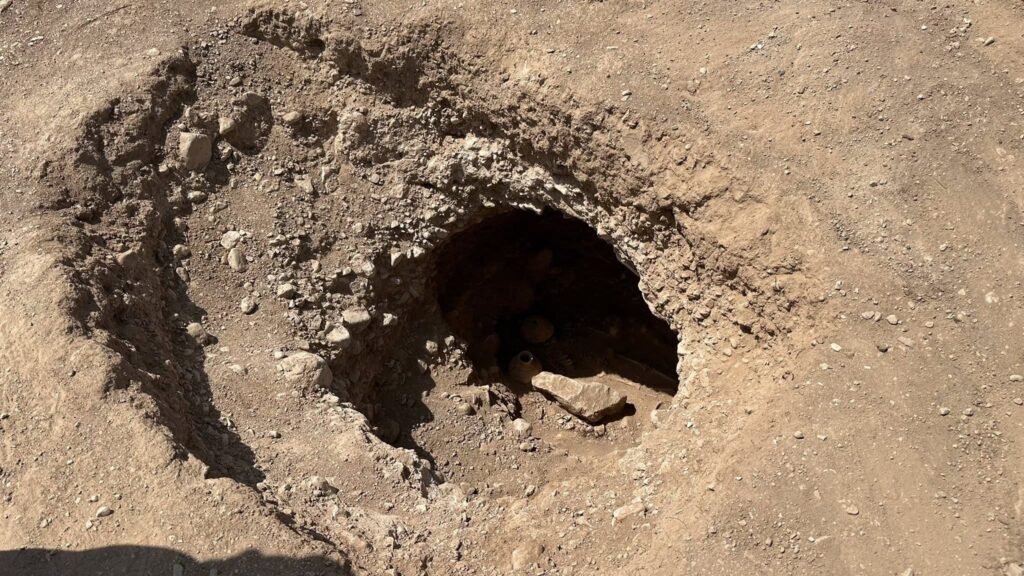
Archaeologists have discovered graves dating back approximately 2,000 years in the village of Kyzyl-Koshun-1, located in the Batken district of southern Kyrgyzstan. This significant finding is opening a new chapter in understanding the rich history of the Silk Road and the ancient civilizations that once thrived in the region.

The ongoing excavations are part of a joint project between the Institute of History, Archaeology, and Ethnology of the National Academy of Sciences of the Kyrgyz Republic and Batken State University. This collaborative effort brings together local researchers and international experts, including specialists from the Czech Republic, to investigate one of the most important archaeological sites in the area.

Unveiling Batken’s Archaeological Treasure

Batken region, situated near the borders of Tajikistan and Uzbekistan, is a historically strategic area along the ancient Silk Road trade routes. Despite its importance, archaeological excavations in Batken had not been conducted since the 1950s, leaving much of its ancient past unexplored until recent years.

Systematic archaeological work began in 2023 at the Kyzyl-Koshun-1 cemetery. Initial efforts involved aerial drone surveys and creating detailed site maps, which led to the identification of numerous burial mounds. In 2024, researchers cataloged 119 burial mounds and commenced full-scale excavations. The work continues actively in 2025, building on these earlier discoveries.

Archaeologists have discovered graves dating back approximately 2,000 years in the village of Kyzyl-Koshun-1, located in the Batken district of southern Kyrgyzstan. Credit: Batken State University

Discoveries Dating Back Two Millennia

The unearthed remains are believed to date back around 2,000 years, potentially belonging to ancient nomadic communities that once traversed the Fergana Valley and surrounding highlands. Archaeologists suggest that the site may have been part of a larger settlement or ritual area, serving both as a burial ground and a place of cultural significance.


📣 Our WhatsApp channel is now LIVE! Stay up-to-date with the latest news and updates, just click here to follow us on WhatsApp and never miss a thing!!


Alongside the skeletal remains, archaeologists have already uncovered numerous artifacts, including pottery fragments, metal tools, and decorative ornaments. These findings offer valuable clues about the daily lives, trade connections, and spiritual practices of the region’s ancient inhabitants, painting a clearer picture of the culture that thrived in Batken over two millennia ago.

Public Engagement and Historical Awareness

A unique aspect of the excavation is its openness to the public. Visitors are encouraged to observe the archaeological process, fostering community involvement and raising awareness of the region’s heritage. This approach supports both education and tourism, highlighting Batken’s role as a vital link in Central Asia’s ancient history.
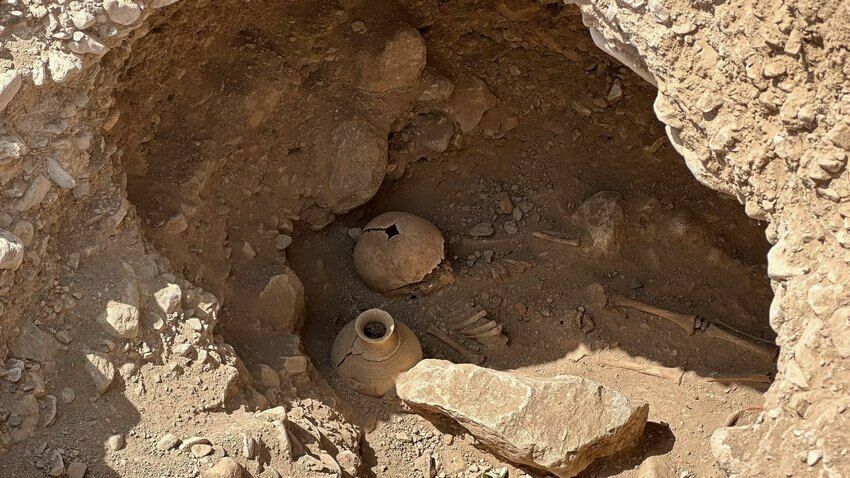
Alongside the skeletal remains, archaeologists have already uncovered numerous artifacts, including pottery. Credit: Batken State University

Significance for Kyrgyzstan’s History

Experts believe that these findings will shed light not only on Batken’s history but also on the broader narrative of Kyrgyzstan’s ancient past. The region has long served as a crossroads of civilizations, with trade routes and cultural exchanges linking Central Asia to China, Persia, and beyond.

By studying these ancient burials, researchers hope to better understand migration patterns, burial customs, and the socio-political dynamics of early Central Asian societies. Such discoveries may also reveal connections between the Batken region and other archaeological sites across the Silk Road.
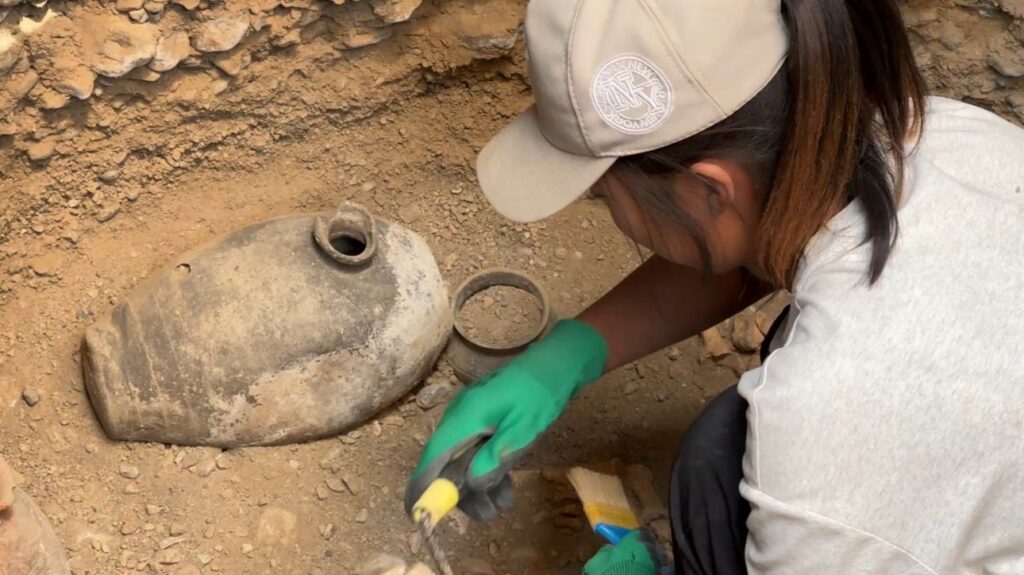
Alongside the skeletal remains, archaeologists have already uncovered numerous artifacts, including pottery. Credit: Batken State University

Looking Ahead

As excavations continue, scientists remain optimistic that the site will yield further discoveries, potentially rewriting parts of Kyrgyzstan’s early history. The collaboration between local institutions and foreign experts ensures that the work meets international research standards while contributing to the training of a new generation of Kyrgyz archaeologists.

For now, the ancient voices of Kyzyl-Koshun-1 are beginning to be heard once more, offering a rare glimpse into a time when nomadic cultures shaped the landscapes of Central Asia.

Batken State University

Cover Image Credit: Batken State University

Related Articles

A Gold Belt Weighing 432 Grams Unearthed During Excavations in Ani Ruins is on Display

2 July 2024

2 July 2024

The gold belt discovered 22 years ago during excavations in the ancient city of Ani, often referred to as the...

Contemporaneous with ancient Egypt and Mesopotamia the Indus Valley Civilization city of ‘Mohenjo Daro’: Skilled urban planners with a reverence for the control of water

10 September 2022

10 September 2022

The Indus River Valley (or Harappan) civilization (3300-1300 BCE) lasted 2,000 years and spanned northeast Afghanistan to Pakistan and northwest...

A 1,600-year-old church has been discovered in Turkey’s ancient city of Priene

19 October 2021

19 October 2021

A 1,600-year-old historical church was unearthed during the excavations in the Ancient City of Priene, located in the western province...

Jordan Valley Reveals Earliest Cotton Use in the Ancient Near East

18 December 2022

18 December 2022

During excavations at Tel Tsaf, a 7,000-year-old town in the Jordan Valley, Israeli archaeologists discovered the earliest evidence of cotton...

Remains of ‘female vampire’ found with sickle across her neck and a padlocked toe in Poland

2 September 2022

2 September 2022

A skeleton of what archaeologists believe may have been a 17th-century female vampire has been discovered near Bydgoszcz in Poland....

14th-century inscription found on Turkey’s Giresun Island

4 January 2022

4 January 2022

On Giresun Island, which is 1.2 kilometers (0.7 miles) off the Turkish province of Giresun on the Black Sea’s southeastern...

A 1,100-year-old lead amulet of Bulgarian soldiers sieges Constantinople found

31 March 2023

31 March 2023

A lead plate amulet bearing an inscription in Cyrillic dating from the times of Tsar Simeon the Great was discovered...

Pictish ring believed to be more than 1,000-years-old found during Burghead fort dig in Scotland

5 September 2024

5 September 2024

A “remarkable” Pictish ring thought to be more than 1,000 years old has been unearthed by an amateur archaeologist on...

Unique 2700-year-old mosaics unearthed in illegal excavations

17 November 2021

17 November 2021

Two 2700-year-old mosaics, which are thought to belong to a Roman rich man and symbolize magnificence, were found in a...

The ancient necropolis area in Turkey’s Antalya becomes a museum

22 July 2023

22 July 2023

The East Garage Necropolis Area, which was once a public market in the southern province of Antalya and where archaeological...

600 Years Old Sword and Equipment Found in Olsztyn

22 April 2021

22 April 2021

Aleksander Miedwiediew, a history buff, and detectorist discovered a bare sword, a sheath, and a knight’s belt with two knives...

Rare Langsax fighting blade with Viking origins discovered in Poland

20 August 2021

20 August 2021

Archaeologists working in the Wdecki Landscape Park in Poland’s Kujawsko-Pomorskie Voivodeship have discovered a rare langsax long knife with potential...

Scientists Ancient Landscape Not Seen For 14 Million Years Discovered Beneath Antarctic Ice

26 October 2023

26 October 2023

Researchers have uncovered an ancient landscape that remained hidden beneath the East Antarctic Ice Sheet (EAIS) for at least 14...

Archaeologists Find the Missing Link of the Alphabet

15 April 2021

15 April 2021

Researchers believe that Tel Lachish pottery is the oldest of its kind found in the region, and could explain how...

2000-Year-Old Roman Origins Confirmed for Elche’s Monumental L’Assut de l’Argamassa Dam

17 May 2025

17 May 2025

An archaeological research project has unveiled that the imposing L’Assut de l’Argamassa dam in Elche, Spain, long suspected to be...