
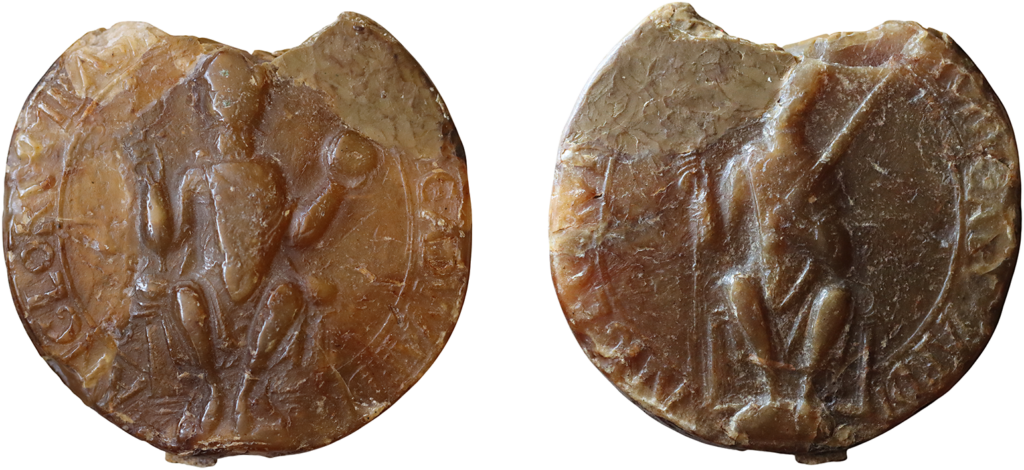
A rare royal seal belonging to Edward the Confessor, the last Anglo-Saxon king of England, has been rediscovered in Paris more than four decades after it was declared lost—offering fresh insight into the political ambitions and international connections of pre-Norman England.
The wax impression, known as the Saint-Denis seal, had vanished in the 1980s from the French National Archives, where it had been preserved for nearly two centuries. Its unexpected rediscovery is now being hailed as one of the most significant recent finds in early medieval diplomatic history.
A “Lost” Royal Seal Hidden in Plain Sight
The seal was identified in 2021 by Guilhem Dorandeu, a doctoral researcher at the École française de Rome, while reviewing detached seal collections in Paris. The object had not been stolen or destroyed—it had simply been misclassified and stored separately from its original document.
According to the study published in Early Medieval England and its Neighbours, the seal had been considered missing for decades, prompting concern among historians worldwide.
Its rediscovery resolves a long-standing mystery and restores access to what is widely regarded as the best-preserved example among only three known authentic impressions of Edward’s royal seal.
A Window Into Anglo-Saxon Power and Identity
The artifact dates to approximately 1053–1057, during the final phase of Edward’s reign. Unlike earlier English administrative practices, this seal was attached to a writ-charter, a relatively new form of royal document used to grant rights and enforce decisions across the kingdom.
What makes the seal especially remarkable is its design.
It is a double-sided (bifacial) wax seal, showing the king enthroned on both sides—holding symbols of authority such as a scepter, orb, and sword. This format was unprecedented in England and reflects a deliberate shift toward more formalized and visually powerful expressions of kingship.
Scholars emphasize that this was not merely decorative. The seal played a crucial role in legitimizing royal authority, marking a turning point in how English rulers communicated power.
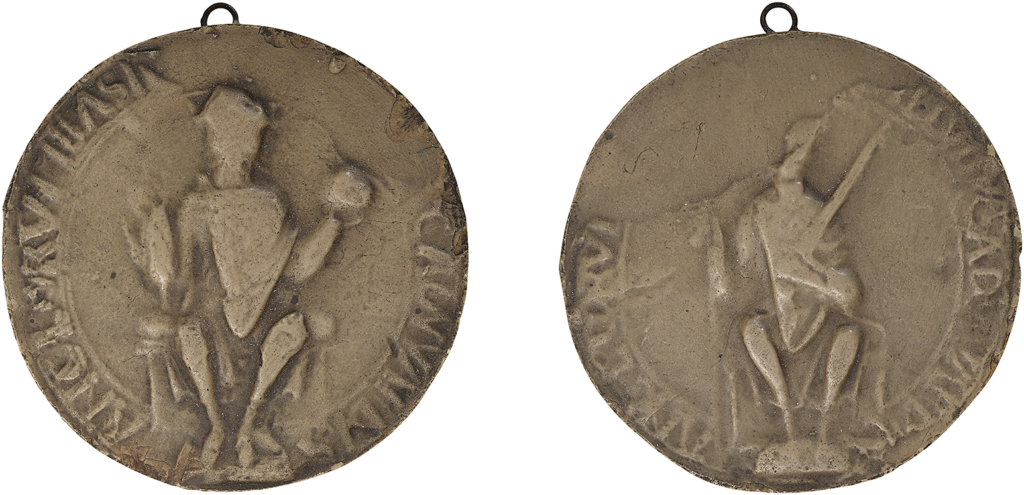
Byzantine Influence and a Global Vision of Kingship
One of the most striking aspects of the seal is its inscription: “Anglorum basileus”—meaning “King of the English,” but using the Greek word basileus, traditionally reserved for Byzantine emperors.
This choice is not accidental.
The research suggests that Edward consciously adopted elements from Byzantine and continental European political culture, signaling an ambition to align English kingship with broader imperial traditions.
The imagery reinforces this interpretation. The presence of a sword—rare in Western royal iconography of the time—parallels contemporary Byzantine coinage, where emperors began depicting themselves armed as symbols of authority and divine protection.
Together, these elements point to a ruler deeply engaged with the international political language of the 11th century.
The Birth of a New Administrative System
Beyond its artistic and symbolic value, the seal also sheds light on a major administrative transformation.
The study links it directly to the emergence of the sealed writ-charter, a new document type that combined legal authority with practical governance. These documents allowed the king to issue orders that were both legally binding and widely recognizable, thanks to the attached seal.
This innovation marked a departure from earlier Anglo-Saxon traditions, where documents were authenticated primarily through witness lists rather than seals.
In this sense, Edward’s seal represents more than a royal object—it is evidence of a systemic shift toward bureaucratic governance, bringing England closer to continental European administrative models.
Who Was Edward the Confessor?
Edward the Confessor (reigned 1042–1066) was the last king of England from the House of Wessex before the Norman Conquest. Known for his deep religious devotion, he was later canonized as a saint, which earned him the epithet “the Confessor.”
His reign is often seen as a transitional period. Politically, it bridged the Anglo-Saxon and Norman worlds; culturally, it connected England to wider European and Byzantine influences.
Although Edward left no direct heir, his legacy shaped the events leading up to 1066, when William the Conqueror seized the English throne. The administrative and symbolic innovations of Edward’s reign—including the use of seals like this one—continued to influence governance long after his death.
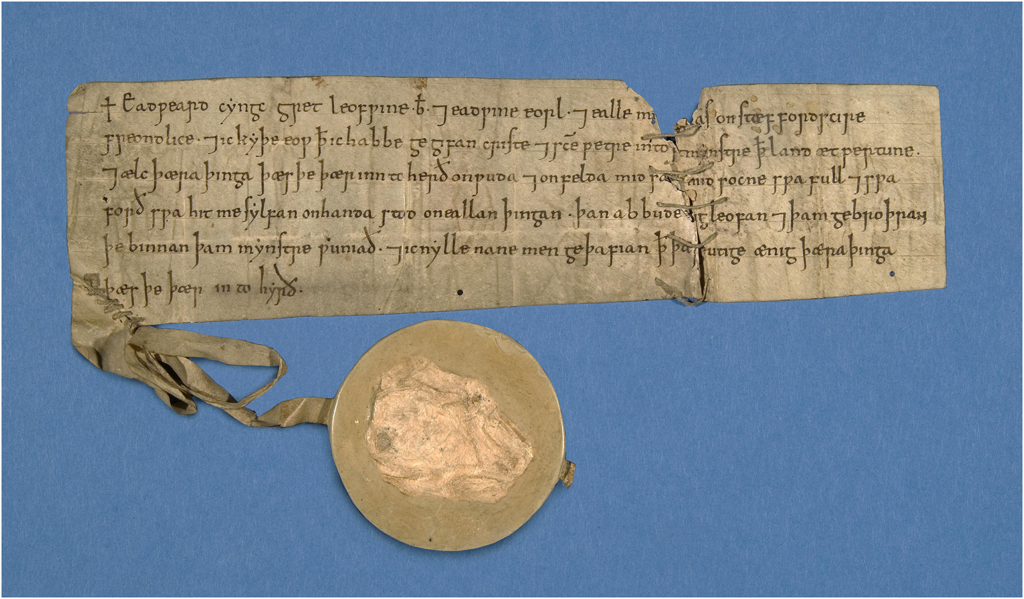
Westminster Writ and Seal Impression of Edward the Confessor. S 1140 (1062 × 1066). © London, Westminster Abbey, W. A. M. XII. Credit: Dorandeu, G. & Roach, L., Early Medieval England and its Neighbours (2026)
A Small Object With Big Historical Implications
The rediscovery of the Saint-Denis seal does more than restore a missing artifact—it reshapes how historians understand the evolution of English kingship.
It reveals a ruler who was not isolated at the edge of Europe, but actively engaging with its intellectual and political currents. It also highlights how even small administrative tools, like a wax seal, can reflect broader transformations in power, identity, and statecraft.
As historian Levi Roach emphasizes, the find is not only significant for what it preserves, but for the questions it reopens—questions about authority, influence, and political ambition that have remained unresolved for decades.
Dorandeu G, Roach L. Lost and Found: the Saint-Denis Seal Impression of Edward the Confessor (1053 × 1057) and the Development of the Early English Writ-Charter. Early Medieval England and its Neighbours. 2026;52:e8. doi:10.1017/ean.2025.10014
Cover Image Credit: Saint-Denis Seal Impression of Edward the Confessor (1053 × 1057). © Paris, Archives nationales, Sc/x/832. Dorandeu, G. & Roach, L., Early Medieval England and its Neighbours (2026)
