
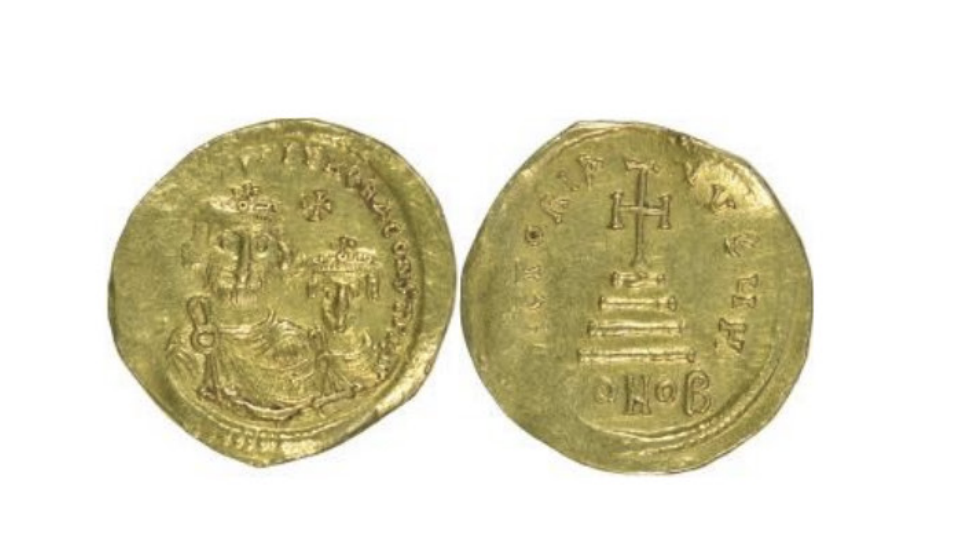
A remarkable collection of Byzantine gold coins, known as the “Sivas Hoard,” is shedding new light on one of the most turbulent periods in early medieval history. Preserved today at the Sivas Archaeological Museum, this rare 7th-century treasure offers historians and archaeologists a unique glimpse into the economic, political, and social realities of the Byzantine Empire during a time of crisis and transformation.
A Mysterious Discovery with No Known Origin
The hoard entered the museum’s collection in 2009 through confiscation, but its exact discovery location remains unknown—adding an element of mystery to its historical significance. Despite this uncertainty, experts have identified the coins as a coherent and chronologically consistent group, minted between 602 and 668 AD.
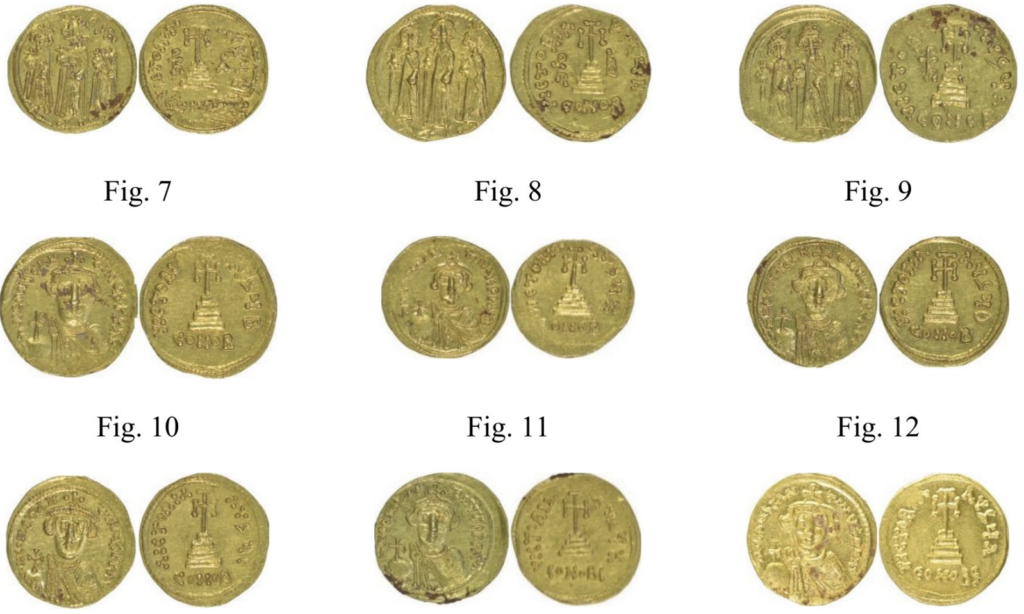
The collection consists primarily of gold solidi and a single tremissis, issued during the reigns of three Byzantine emperors: Phocas, Heraclius, and Constans II. This continuity makes the hoard especially valuable for numismatic research, as it reflects a clear timeline of monetary production across successive rulers.
More Than Coins: Windows into Crisis and Survival
Coin hoards like the Sivas treasure are not merely collections of currency—they are historical snapshots. Scholars believe such hoards were often buried during times of uncertainty, including wars, invasions, or economic instability. The 7th century was particularly chaotic for the Byzantine Empire, marked by conflicts with the Sasanian Persians, territorial losses, and internal unrest.
These coins may have been hidden in response to imminent danger, possibly by someone hoping to retrieve their wealth later. However, like many hoards from this period, the owner never returned—leaving behind a silent testimony to upheaval and survival strategies in a volatile world.
The Solidus: “The Dollar of the Middle Ages”
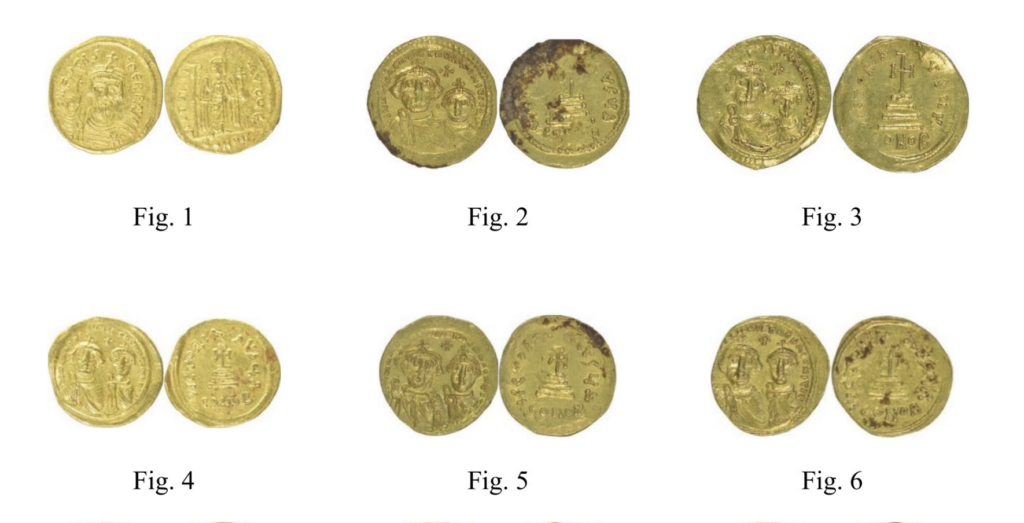
At the heart of the hoard is the solidus, the gold coin that served as the backbone of the Byzantine economy for centuries. First introduced under Emperor Constantine I, the solidus became a symbol of monetary stability and was widely used across Europe and beyond.
Historians often refer to it as the “dollar of the Middle Ages” due to its reliability and international acceptance. Weighing around 4.5 grams of high-purity gold, the solidus maintained its value remarkably well, even during periods of economic strain.
Interestingly, the Sivas Hoard includes variations of the solidus that reflect subtle changes in weight and purity—evidence of shifting economic policies and pressures within the empire.
Art, Power, and Propaganda on Gold
Beyond their economic role, the coins also served as powerful tools of imperial propaganda. Each coin features detailed portraits of emperors, showcasing evolving artistic styles and political messaging.
During the reign of Phocas (602–610), coin portraits became more realistic, abandoning earlier idealized imagery. His depiction—with rough hair and a pointed beard—signals a shift toward individualized representation.
Under Heraclius (610–641), a new trend emerged: coins began to feature multiple figures, including the emperor’s heirs. This visual strategy reinforced dynastic continuity and political stability during uncertain times.
Religious symbolism also became more prominent. Christian imagery, such as crosses and later depictions of Christ, replaced earlier pagan motifs, reflecting the empire’s deepening Christian identity. These designs were not merely decorative—they reinforced the emperor’s role as God’s representative on Earth.
Economic Insights from Gold Hoards
The Sivas Hoard also provides valuable clues about the Byzantine economy. Coin hoards are often used to study monetary circulation, inflation, and wealth distribution. The relatively small number of coins in later periods suggests a decline in economic activity, likely tied to territorial losses and reduced state resources.
In times of inflation or currency devaluation, high-quality gold coins were often withdrawn from circulation and stored as savings. This behavior is evident in the Sivas Hoard, where well-preserved coins indicate deliberate accumulation rather than everyday use.
A Declining Empire Reflected in Coinage
The 7th century marked a turning point for Byzantium. As the empire lost key regions and faced mounting external threats, its economic and administrative systems began to shift. Even the number of active mints declined significantly, with production increasingly centralized in Constantinople.
The coins in the Sivas Hoard reflect this transformation with striking clarity. Their consistent gold content suggests a deliberate effort to preserve monetary stability, even as the empire’s broader structure weakened. At the same time, subtle variations in weight and style hint at mounting fiscal pressure and a system adapting under strain.
Seen together, the hoard is more than a collection of well-preserved coins—it is a compressed historical record. It captures how imperial authority projected strength through currency, how economic confidence was maintained despite crisis, and how individuals responded by safeguarding wealth in uncertain times.
For modern researchers, this makes the Sivas Hoard exceptionally valuable. It helps reconstruct patterns of circulation and trade, reveals shifts in minting practices, and offers rare insight into the survival strategies of those living through one of Byzantium’s most unstable centuries.
What remains unknown—where exactly the hoard was buried, and by whom—only deepens its significance. Like many treasures of its kind, it stands as a quiet but powerful testimony to a moment when security collapsed, and gold became both protection and memory.
Sözcü, S. (2026). Sivas Arkeoloji Müzesi’ndeki 7. Yüzyıl Altın Sikke Definesi. PROPONTICA, 4(7), 1-44. https://doi.org/10.56170/propontica.1746821
Cover Image Credit: Sözcü, S. (2026), PROPONTICA
