
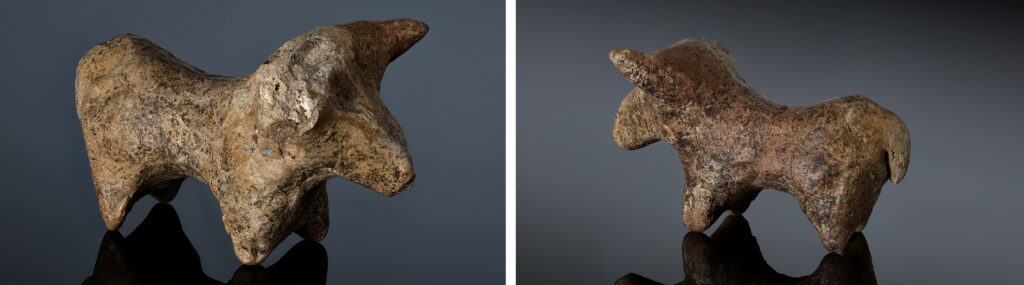
Archaeologists from the Institute of Archaeology of the Russian Academy of Sciences (RAS) have announced one of the most significant discoveries of 2025: a 7,000-year-old settlement in southern Dagestan. The site, named Dagogninskoe-2, provides unique insight into the Eneolithic period—also known as the Copper Age—and sheds light on how early farming and herding communities spread across the Caucasus.
Discovery Near the Caspian Sea
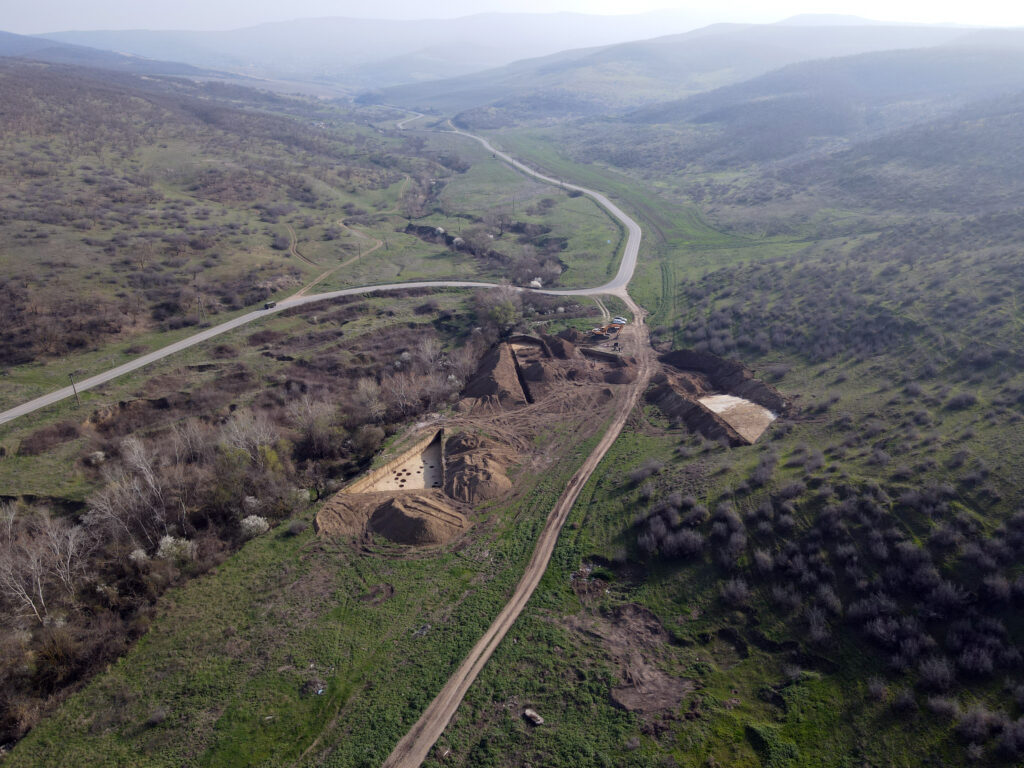
The settlement was uncovered near the coastal town of Dagestanskiye Ogni, during rescue excavations ahead of the expansion of the R-217 “Caucasus” highway north of Derbent. Although the site was first identified in 2022, only recent large-scale excavations confirmed its extraordinary age and cultural significance.
Archaeologists found two distinct cultural layers. The upper stratum dates to the Bronze Age (3rd–2nd millennium BCE), while the lower stratum, lying about two meters deep, belongs to the Eneolithic period (5th millennium BCE). This transitional era bridges the Stone Age and the Bronze Age, when people learned to smelt copper but still relied heavily on stone, bone, and wooden tools.
Connections Across the Caucasus
According to Professor Khizri Amirkhanovich Amirkhanov, head of the Stone Age Archaeology Department at RAS, the findings confirm that communities of the Shulaveri-Shomutepe culture, previously known only in the South Caucasus, also spread northwards into Dagestan:
“This settlement is one of the brightest archaeological discoveries of 2025. Never before have Eneolithic sites in Dagestan been studied on such a large scale using modern documentation methods. The finds help us understand how ancient cultures developed in the North and South Caucasus, how they migrated, and how their way of life evolved.”
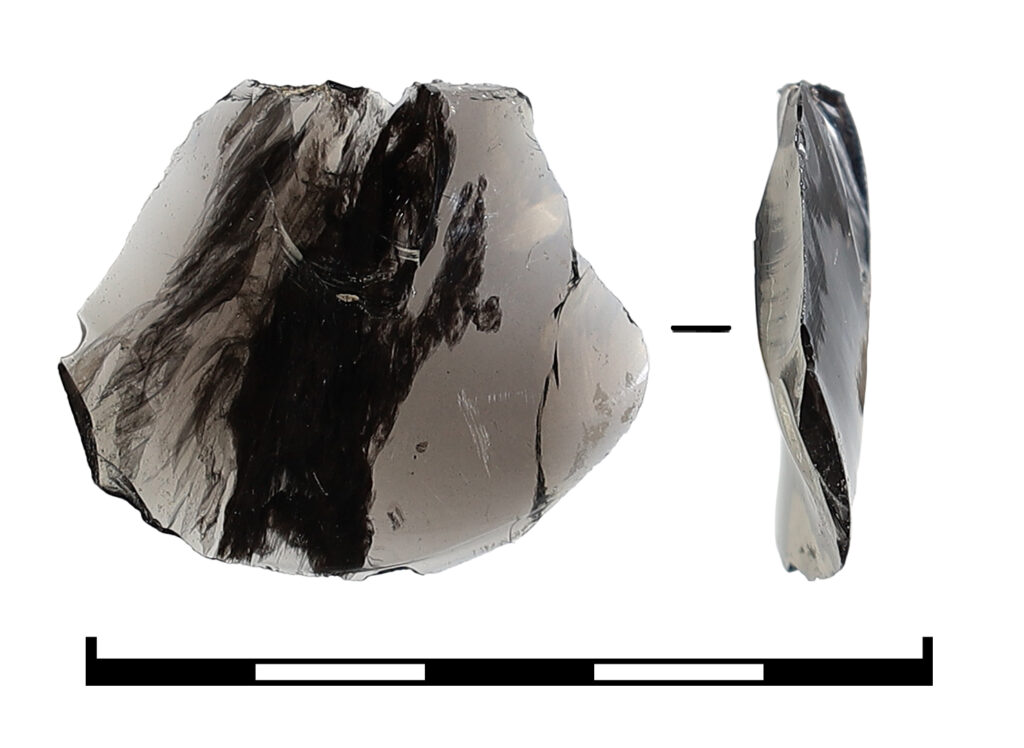
Among the artifacts are obsidian tools, which link the site to the volcanic regions of the South Caucasus, hundreds of kilometers away. The presence of this imported volcanic glass suggests long-distance contacts or migration routes along the Caspian Sea coast.
Life in a 5th Millennium BCE Village
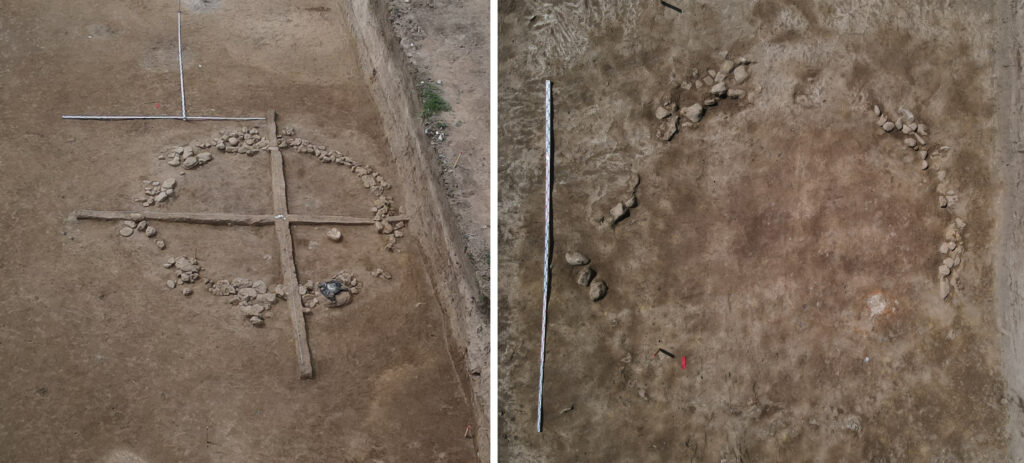
Excavations revealed traces of dwellings, food-storage pits, burial sites, and everyday tools. Unlike their southern neighbors, who built mudbrick houses, the Dagestan settlers may have constructed circular semi-spherical huts resembling yurts, adapted to the steppe environment.
Archaeological remains show that inhabitants practiced early agriculture and animal husbandry. They raised cattle, sheep, and goats, cultivated wheat, millet, oats, and legumes, and possibly grew grapes. Funerary practices also emerged, with human remains buried in crouched positions, reflecting early spiritual or ritual traditions.
Artifacts recovered include:
Stone axes and flint blades
Bone tools and horn implements
Clay figurines of bulls, symbolizing fertility or ritual practices
Pottery fragments decorated with Eneolithic patterns
These discoveries provide a vivid picture of daily life in a settlement thriving around 5,000 BCE.
Filling a Historical Gap
The research team emphasizes that Dagogninskoe-2 will become a key reference site for understanding the Eneolithic in the North Caucasus. According to archaeologist Roman Mimokhod, senior researcher at the Bronze Age Department of RAS:
“Our next stage involves detailed analysis of the finds—archaeobotanical, zooarchaeological, and radiocarbon studies. This will help fill the chronological gap in the cultural sequence of the Caspian lowlands and make Dagogninskoe-2 a benchmark Eneolithic site for the entire region.”
Radiocarbon dating is expected to refine the chronology further, but initial evidence places the lower settlement firmly in the first quarter of the 5th millennium BCE.
Why the Discovery Matters
This find transforms scholars’ understanding of how early farming communities spread into the North Caucasus. The Eneolithic era was a turning point in human history, as societies moved from stone-based economies to metallurgy, developed stable farming, and laid the foundations for complex cultures of the Bronze Age.
For Dagestan, this marks the first time such an extensive Eneolithic settlement has been excavated. It confirms that the Caspian coastal corridor served as a migration and cultural exchange route between the South Caucasus and the steppe regions to the north.
A New Chapter in Caucasus Archaeology
The discovery of Dagogninskoe-2 not only enriches the history of Dagestan but also connects the region to the broader narrative of human development in Eurasia. The settlement highlights how ancient peoples adapted to new environments, adopted innovations, and interacted across vast distances.
As further studies continue, this 7,000-year-old village promises to become a cornerstone for understanding the origins of agriculture, animal husbandry, and early metallurgy in the Caucasus—a region that has long been a cultural crossroads between Europe and Asia.
Institute of Archaeology of the Russian Academy of Sciences
Cover Image Credit: Clay bull figurine from the 7,000-year-old Eneolithic (Copper Age) settlement in Dagestan. Timur Gatsaev – Institute of Archaeology of the Russian Academy of Sciences
