
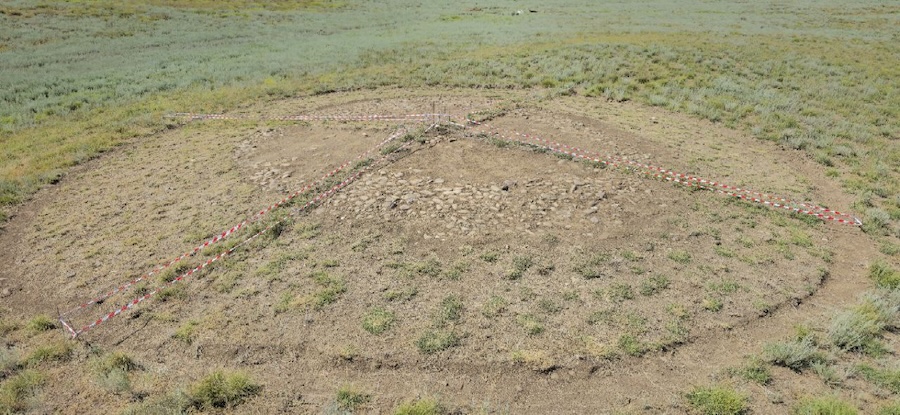
A monumental discovery has emerged from the windswept plains of Ceyranchol in western Azerbaijan: a 3,800-year-old Middle Bronze Age kurgan, believed to be the burial site of a towering warrior, has been unearthed during the “Scientific-Archaeological Excavations and Summer School-5 at Keshikchidagh” project.
This groundbreaking excavation is part of a long-standing joint initiative between the Cultural Heritage Protection, Development and Restoration Service under the Ministry of Culture of the Republic of Azerbaijan and the Institute of Archaeology and Anthropology of ANAS (Azerbaijan National Academy of Sciences).
Now in its fifth year, the project has become one of the country’s premier archaeological summer schools, drawing nearly 2,000 participants and producing discoveries that are reshaping understandings of early civilization in the South Caucasus.
What is a Kurgan?
A kurgan is a type of ancient burial mound, often constructed by Eurasian nomadic cultures such as the Scythians, Sarmatians, and early Turkic peoples. These tombs typically contained the remains of warriors or high-ranking individuals, often accompanied by personal belongings, weapons, pottery, animals, and ritual offerings.
Kurgans are more than graves—they are ritual spaces reflecting beliefs in the afterlife, social structure, and spiritual symbolism.
The Yovşanlıdere Kurgans: Azerbaijan’s Bronze Age Legacy
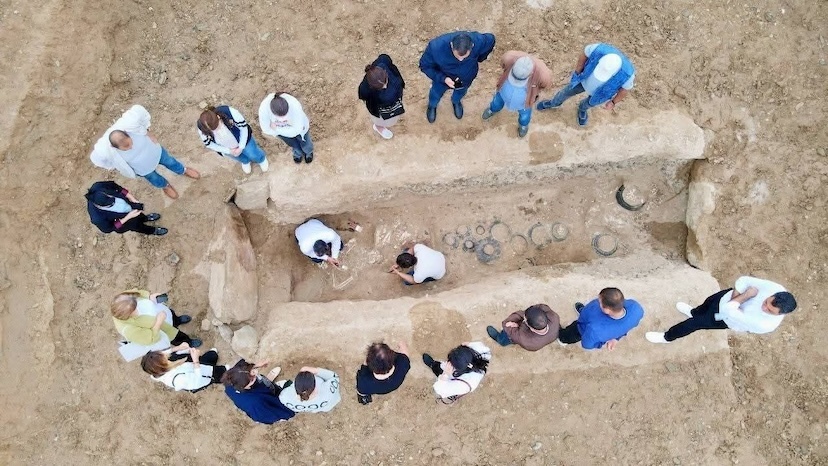
The recent discovery was made in the Yovşanlıdere area of the Ceyranchol plain, a region now gaining international attention for its Middle Bronze Age kurgan cemeteries. Under the leadership of Dr. Shamil Najafov, a senior researcher at ANAS, a monumental kurgan measuring 28 meters in diameter and 2 meters in height was excavated.
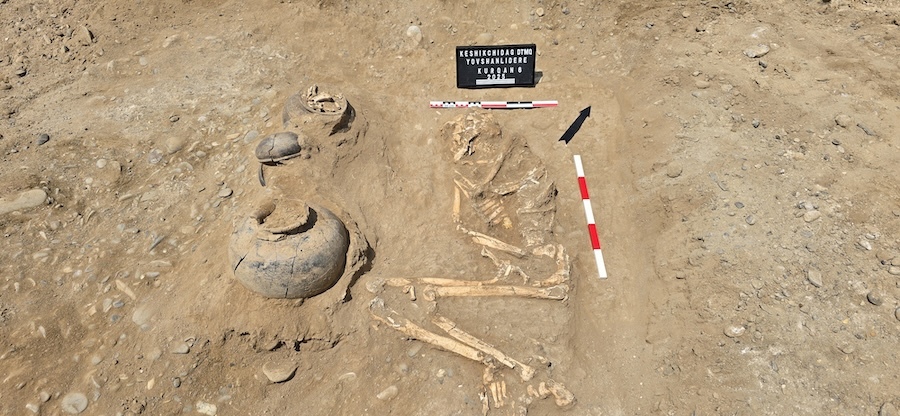
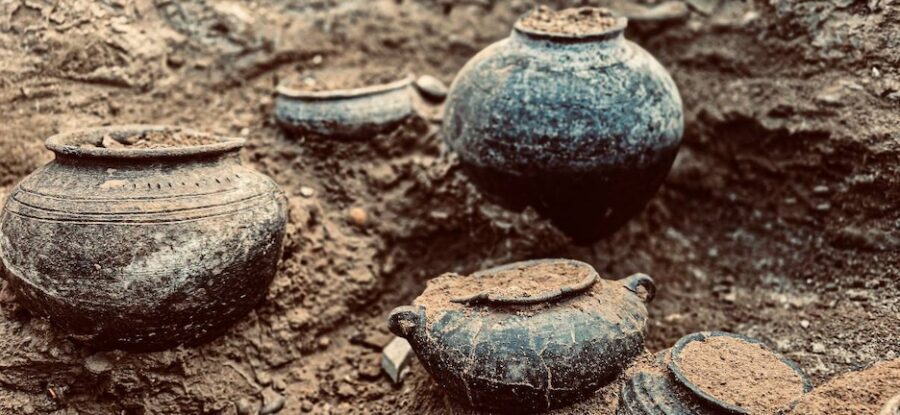
At the heart of this burial mound, a richly furnished tomb was revealed. The burial chamber—2 meters wide, 6 meters long, and 3 meters deep—was divided into three symbolic sections: one for the human remains and weaponry, another for ceramic vessels, and a third intentionally left empty, possibly reflecting ritual beliefs about the soul’s journey in the afterlife.
The Warrior of Keshikchidagh
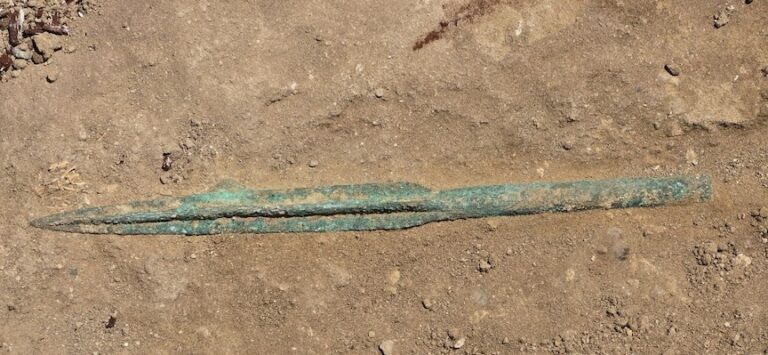
The remains belonged to an individual over 2 meters tall, laid in a semi-flexed position. Most notably, a rare four-pronged bronze spearhead was found in the warrior’s hand—an exceptional weapon type not only in Azerbaijan but across the entire South Caucasus.
Other grave goods included:
Bronze ankle adornments
Obsidian tools
Paste beads
Twelve elaborately decorated ceramic jugs, featuring white inlays and intricate motifs
Cooked animal bones (goat, horse, cow, and boar), likely as ritual food offerings
Above the tomb, 14 massive limestone slabs (each approx. 1 ton) were discovered, alongside a bull-shaped stone idol and a circular limestone seal—suggesting advanced concepts of spiritual symbolism and possibly early administrative control or property marking.
From Field to Science: Global Implications
Each artifact was graphically documented and professionally sketched in situ, while fragmented items were carefully restored on-site. The discovery of the “Keshikchidagh Kurgans”—a new term now entering academic discourse—marks a turning point in Azerbaijan’s archaeological scholarship.
The Director of the Institute of Archaeology and Anthropology, Associate Professor Farhad Guliyev, emphasized the importance of this site during a recent visit and highlighted the potential for international collaboration. Plans are underway for advanced scientific analysis, including:
Carbon-14 dating
Isotope studies
Metallography
Mineralogical composition tests
These studies aim to publish findings in leading archaeological journals, and a dedicated monograph featuring photographs, sketches, and detailed interpretations is currently in preparation.
Education and Heritage Combined
The success of the excavation is also educational. Participants included students and faculty from Baku State University, ADA University, and regional institutions, along with local museum staff and history teachers. The project is praised as a model for integrating academic research, heritage conservation, and public engagement.
The 3,800-year-old warrior’s kurgan in Keshikchidagh is not just a burial site—it’s a time capsule offering invaluable insights into the military technology, social structure, and ritual beliefs of the Middle Bronze Age South Caucasus. As this site continues to unfold its secrets, it firmly places Azerbaijan at the center of Eurasian archaeological scholarship.
Ministry of Culture of the Republic of Azerbaijan
Cover Image Credit: Ministry of Culture of the Republic of Azerbaijan
