
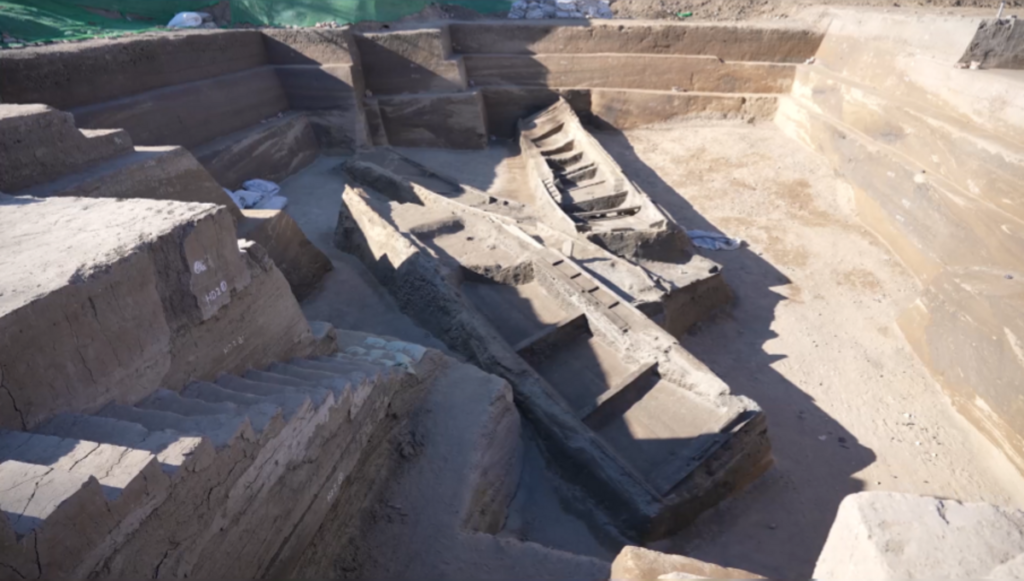
Three wooden boats found seven meters below an ancient riverbed in Beijing have been identified as the largest inland waterway vessels of their period discovered in North China to date. Ten government stamps identified on one of the approximately 1,800-year-old boats provide significant evidence regarding the organization of river transport during the Han and Jin dynasties.
The Beijing Municipal Institute of Archaeology unearthed the three boats during excavations carried out in the Fengtai district in late 2025. The findings were announced to the public in March 2026; researcher Ding Lina re-evaluated the results of the discovery at the closing event of the Beijing People’s Archaeology Season held on October 31.
The discovery tells a story about a very different Beijing. Today, the Fengtai district is part of a densely developed metropolis, but some 1,800 years ago, a major river route passed through this area. According to Ding Lina, the ancient Yongding River connected northern China with the Central Plains and supported navigation during the Han and Jin periods.
Three Boats in an Ancient Riverbed
The excavations were conducted as part of an urban transformation project in Wanquansi Village in the Fengtai district of Beijing. Archaeologists named the three boats, found side-by-side at a bend in the ancient bed of the Yongding River, Yongding River 1, 2, and 3.
Their discovery provides the first direct archaeological evidence of ancient inland shipping in the Beijing region, suggesting that the waterway played a larger role in transportation than previously documented.
All three are flat-bottomed wooden boats with their bows facing southwest. With lengths exceeding 10 meters, the third boat is the largest at 15 meters. The second boat, which is the best preserved, measures 14 meters in length. Ten transverse structural elements in its hull divide the interior into nine separate compartments.
Preliminary radiocarbon dating indicates that the boats date back to the late Eastern Han Dynasty and the Wei and Jin periods. These results reveal that the findings date back approximately 1,800 years.
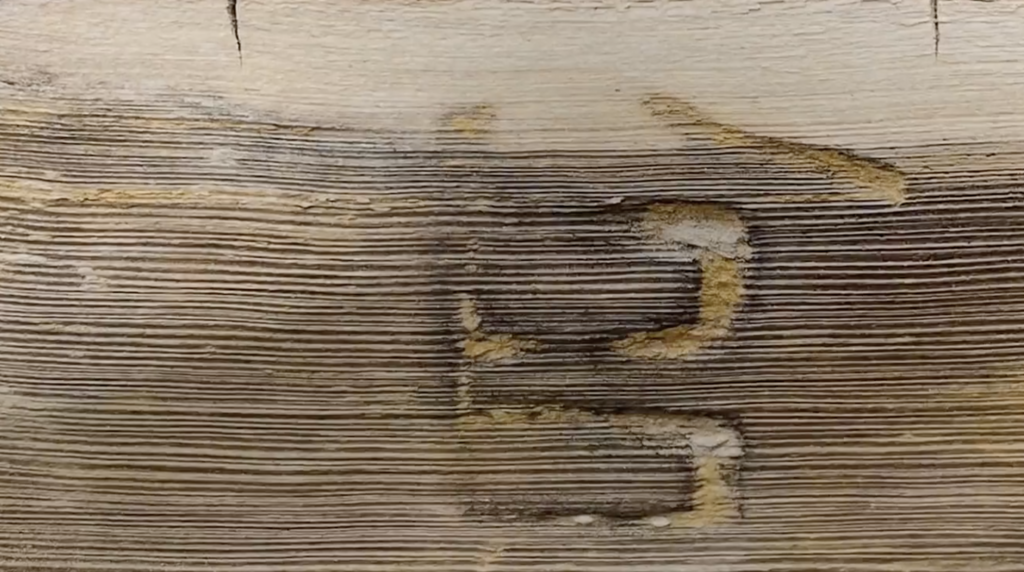
Ten Government Stamps Carved into the Wooden Hull
The most striking detail of the discovery is the stamps found on different wooden parts of the second boat. Archaeologists identified a total of ten “官” (guan) characters carved in an ancient Chinese script. These marks, which carry meanings associated with the state or official institutions, suggest that the boat served a public function.
The excavation team considers the stamps to be strong evidence of the boat’s official nature. However, it has not yet been fully clarified whether the boat was commissioned directly by the state or used in transport activities under state supervision.
The markings may also help researchers better understand the organization of river transport during the Han and Jin periods, when waterways carried passengers, grain, and other supplies. The find in Beijing provides a concrete example for researching how these activities were regulated by the state.
Wooden Pegs and Iron Fasteners
The methods used in the construction of the boats show that shipbuilders of the period combined different materials according to specific functions. While the floorboards of the hull were joined with wooden joints and pegs, iron nails were used for some of the upper connections.
Researchers note that the joining method of the floorboards bears similarities to the ancient boat known as Silk Road No. 1 discovered in Xi’an. This comparison is important for researching the boat-building techniques used in different regions of China.
Chinese experts also mention that some connection methods may show similarities to ship-building techniques used in the Mediterranean during the Roman period. Whether these similarities reflect any exchange of knowledge remains uncertain, however, and there is currently no evidence of a direct technological connection between the two regions.
Human and Animal Remains Around the Boats
The findings at the excavation site are not limited to wooden boats. Archaeologists also detected human remains as well as bones belonging to animals such as horses, cattle, sheep, pigs, and dogs in the surrounding area. The examination of these materials may help in understanding the activities along the riverbank and the history of the site’s usage.
Analyses of the wood types also provided information about the materials used in boat construction. It was determined that pine species were predominantly preferred for the hulls, while trees of the mulberry genus were used for some connections and support elements.
Researchers believe these differences show that boat builders selected materials based on durability and intended use. The technical examinations contribute to evaluations of the transport requirements of the period, in addition to the woodwork.
Preserving the Ancient Riverboats
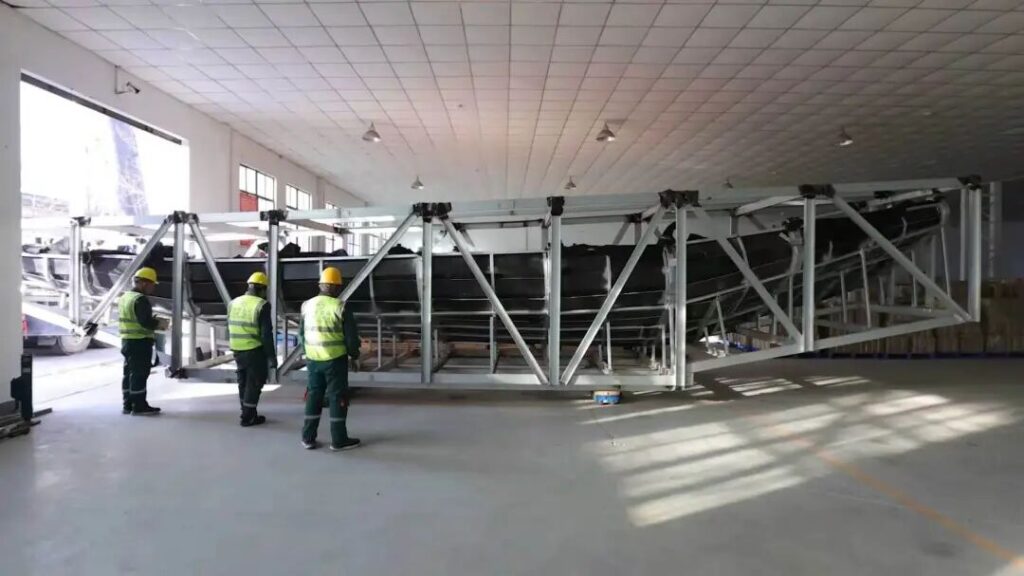
Following the excavation, the three wooden vessels were carefully reinforced with steel supports and lifted from the site for conservation. After spending nearly 1,800 years buried in river sediments, their waterlogged timber requires specialized treatment to prevent deterioration.
Further examination of the vessels will focus on their construction methods, the types of wood used, and the official markings found on one of the boats. Researchers also hope to establish how the vessels were used and whether their design can reveal more about the organization of river transport during the Han and Jin periods.
