
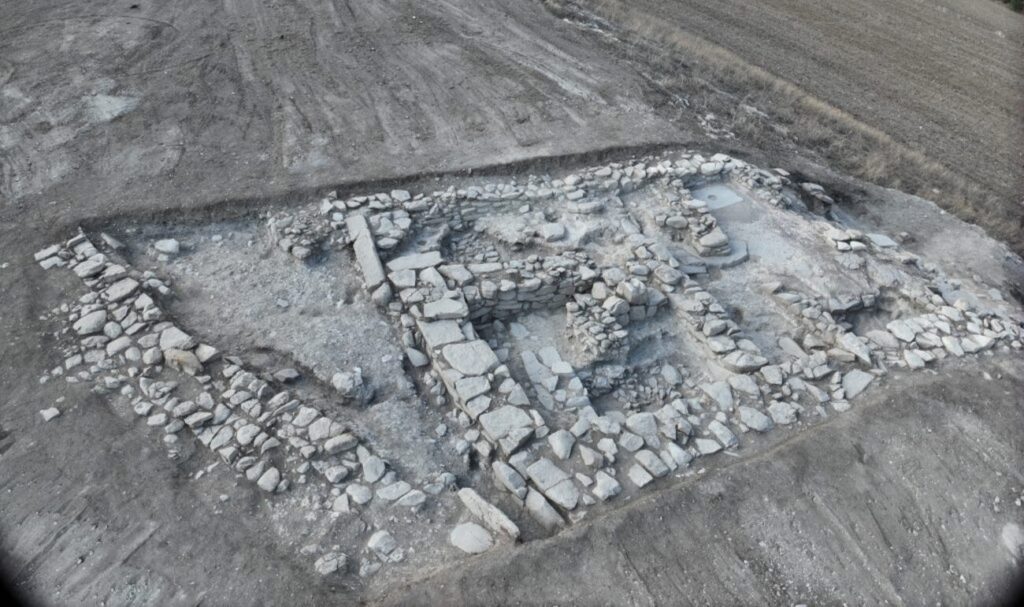
Archaeologists working at the ancient settlement of Sidi Saïd in Tunisia have documented nearly the entire plan of a multi-room Numidian house dating back to the 4th century BCE. Built adjacent to the settlement’s defensive walls, the structure provides new insights into the residential architecture and urban planning of local communities in North Africa prior to Roman dominance.
The house, constructed approximately 2,400 years ago, offers significant details on how the Numidians organized daily life within their walled settlements. Documenting nearly the complete plan of the multi-room structure, archaeologists determined that the house was built abutting the defensive wall surrounding the settlement and underwent several modifications throughout its period of use.
The discovery took place at the Sidi Saïd archaeological site, located in the Bargou region of Tunisia’s Siliana province. The excavations, conducted jointly by the National Heritage Institute of Tunisia (INP) and the Catalan Institute of Classical Archaeology (ICAC), aim to understand the architectural traditions and settlement patterns of the Numidian communities inhabiting North Africa before Roman rule.
A 2,400-Year-Old House Adjacent to Defensive Walls
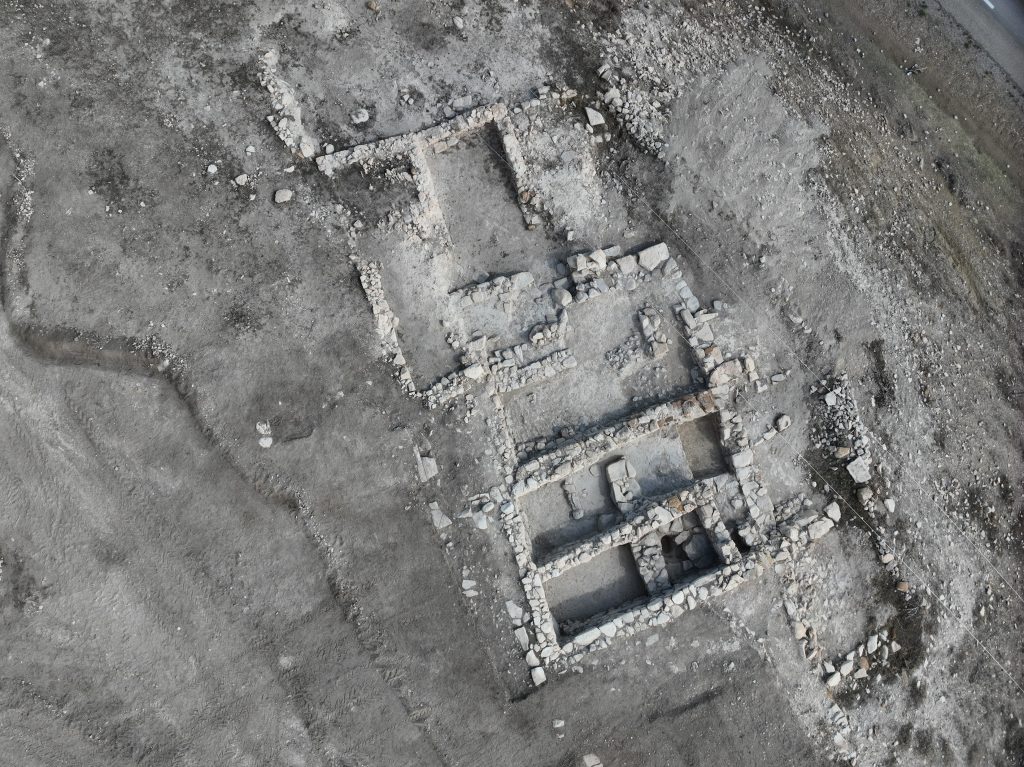
The most significant result of the second excavation season, conducted between September 16 and October 6, 2026, emerged in the third working area in the northeast of the settlement. Here, researchers documented nearly the complete plan of a multi-room house dating to the 4th century BCE, and possibly earlier.
The architectural layout of the structure indicates that the residence did not consist of a single construction phase. Modifications made during its usage suggest that the house was reorganized over time to meet different needs. However, research continues regarding the exact sequence of these changes and the specific function of each room.
One of the most striking features of the house is its direct adjacency to the defensive wall encircling the settlement. Archaeologists examined another section of the same wall system during the 2025 excavations. These new findings demonstrate that defensive structures and residences were not independent elements but should be considered together within the architectural layout of the settlement.
This connection is vital for reconstructing how the streets, residences, and defensive structures of Sidi Saïd were organized. Researchers state that the newly documented house allows for a more detailed understanding of the settlement plan from the Numidian period.
Hearths, Ceramic Vessels, and Daily Life
Another important part of the excavations focused near an area where rescue excavations were previously carried out in 2017–2018. Research in the first working area provided new information about the materials used in house construction and, specifically, arrangements related to daily life, such as hearths.
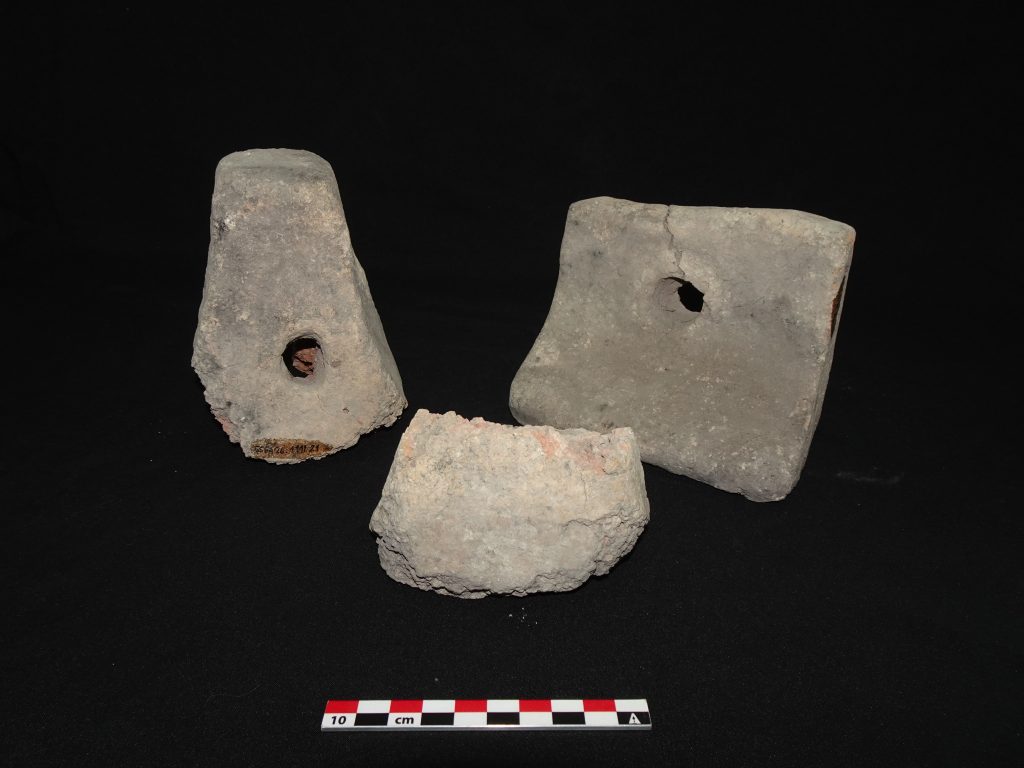
Archaeologists found numerous ceramic vessels and household items. The near-perfect preservation of some objects allows for a detailed examination of their forms and functional characteristics.
The finds include locally produced ceramics as well as vessels of Carthaginian origin. Researchers also identified supports used to hold pots over fire. Such objects provide concrete archaeological evidence of how daily activities, such as food preparation and hearth usage, were carried out in Numidian homes.
The presence of Carthaginian ceramics indicates that the settlement was not limited to its own local production traditions. However, a more comprehensive evaluation is required to understand the routes through which these objects reached the region and the nature of the relationship between the local communities and Carthage.
A Settlement in Pre-Roman North Africa
The history of archaeological work at Sidi Saïd dates back to a road expansion project. When work on the GP4 highway, connecting El Fahs and Siliana via Bargou, affected the southern border of the ancient settlement, rescue excavations were conducted between December 2017 and April 2018.
These initial interventions revealed a more complex settlement layout than expected. Thanks to the defensive walls, residential remains, and well-preserved archaeological materials, it was understood that the site was a significant settlement in the mid-1st millennium BCE.
Recent research reveals that Sidi Saïd was occupied from the second half of the 5th century BCE until the end of the 3rd century BCE. This timeframe places the settlement in an important position for understanding the history of North Africa prior to Roman dominance.
It is also noteworthy that there is no evidence of the settlement being re-inhabited in later periods. This provides researchers with the opportunity to study a Numidian settlement that has been less affected by subsequent phases of construction.
At Least 85 Funerary Monuments Near the Settlement
The research is not limited to residences. The excavation team has continued to examine a pre-Roman necropolis through land surveys around Sidi Saïd.
In the cemetery area identified during surface surveys that began in 2025, at least 85 funerary monuments have been found. This extensive funerary community offers opportunities to research the burial traditions of the settlement’s inhabitants and how they utilized the surrounding land.
However, it has not yet been confirmed whether all the graves date to the same period or were used exclusively by the residents of Sidi Saïd. The chronological and cultural relationships between the settlement and the necropolis require more detailed investigation.
Joint Research to Understand Numidian Architecture
The excavations at Sidi Saïd are carried out under the joint direction of Yamen Sghaïer and Chokri Touihri from the National Heritage Institute of Tunisia, and Maria Carme Belarte and David Montanero from the Catalan Institute of Classical Archaeology. Tunisian and Catalan researchers, conservators, and students participate in the studies.
Supported by the Palarq Foundation, the project evaluates the residential architecture, defensive systems, and material culture of Numidian communities. Researchers specifically aim to better understand the relationships between local architectural traditions and the Phoenician-Punic world.
The newly documented house serves as a significant starting point for these studies. Its nearly complete plan allows for the evaluation of room layout, structural changes, and the relationship with the defensive system within a single structure—elements that had previously been studied through fragmented remains of Numidian residential architecture.
