
15 February 2026 The Future is the Product of the Past

Nature Strikes—and History Answers: Could lost Punic-Roman city of Neapolis Be Resurfacing in Tunisia?

A violent storm surge in Nabeul, Tunisia, exposed ancient stone ruins along the coast, sparking speculation that the lost Punic-Roman city of Neapolis may be resurfacing.

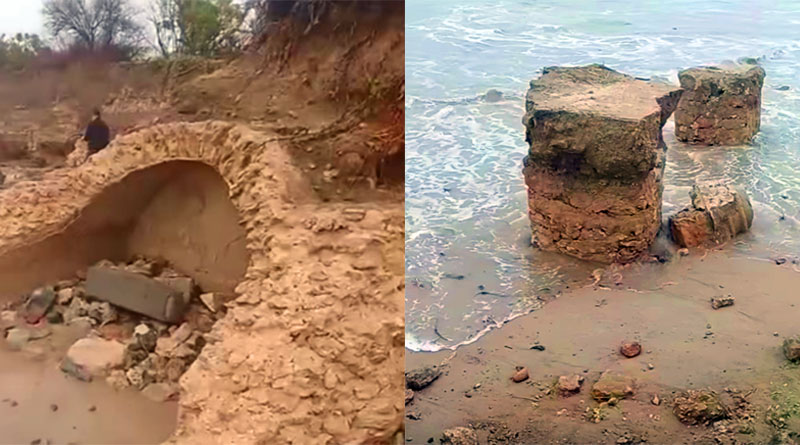
The violent passage of Storm Harry across Tunisia between Monday night and Tuesday, January 20, 2026, left behind scenes of destruction, flooding, and coastal damage. Yet amid the chaos, the storm delivered an extraordinary and unexpected revelation: what may be long-lost remnants of the ancient city of Neapolis, suddenly exposed along the beaches of Nabeul.

Storm Harry, marked by unusually powerful winds and intense atmospheric pressure, triggered a dramatic rise in sea levels along the Cap Bon peninsula. This phenomenon, known as a storm surge, pushed seawater several meters inland, flooding roads, damaging homes, and accelerating coastal erosion. When the waters finally receded, large sections of beach had been stripped of sand, revealing what appeared to be worked stone structures beneath.

In the Sidi Mahrsi area of Nabeul, residents began noticing columns, carved stone blocks, and fragments of walls protruding from the exposed shoreline. Videos and photographs rapidly circulated on social media, sparking amazement and debate. To many observers, the remains bore a striking resemblance to ancient architectural elements rather than modern debris.

Speculation quickly turned toward Neapolis, the ancient city that once stood in the region. Founded as a Punic settlement and later flourishing under Roman rule, Neapolis was an important coastal city renowned for its production of garum, the fermented fish sauce prized across the Roman Empire. Archaeological research over the past decades has shown that Neapolis was a prosperous urban center, complete with streets, baths, and industrial facilities, before part of the city disappeared beneath the sea.


📣 Our WhatsApp channel is now LIVE! Stay up-to-date with the latest news and updates, just click here to follow us on WhatsApp and never miss a thing!!


Historians believe Neapolis suffered catastrophic damage in the 4th century AD, when a massive earthquake in the eastern Mediterranean triggered a tsunami that struck the North African coast. Ancient texts describe widespread devastation across the region, and underwater surveys conducted in recent years have confirmed the existence of submerged ruins off the coast of Nabeul. These discoveries included streets, walls, and vats used for fish processing, preserved under layers of sediment.

What makes the aftermath of Storm Harry remarkable is the possibility that sections of this lost city may now be visible on land, rather than underwater. While erosion regularly reshapes coastlines, it is rare for storms to uncover archaeological remains so clearly that they can be observed by the public without excavation.

Experts urge caution. As of now, there has been no official confirmation that the newly exposed structures belong to Neapolis. Specialists from Tunisia’s National Heritage Institute are expected to conduct on-site assessments to document the remains, determine their age, and evaluate their historical significance. It is also possible that the structures belong to later periods of coastal occupation, reused materials, or defensive installations linked to the long maritime history of the region.

Regardless of the outcome, the event highlights the fragile relationship between climate, heritage, and coastal landscapes. Rising sea levels, stronger storms, and accelerated erosion are increasingly reshaping Mediterranean shorelines, sometimes destroying archaeological sites—but occasionally revealing them. Storm Harry stands as a powerful reminder that much of human history remains hidden just beneath the surface, vulnerable to both natural forces and neglect.

For the residents of Nabeul, the storm has offered a rare and humbling encounter with their city’s deep past. Between climate drama and archaeological intrigue, the sands of Cap Bon have briefly opened a window into antiquity—one that now demands careful study and preservation before it disappears once more beneath the waves.

Cover Image Credit: Screenshots from the shared videos

Related Articles

3,000-Year-Old Conical Axe Believed to Have Fallen from the Sky: Possibly Made from Meteorite

27 August 2025

27 August 2025

A rare Bronze Age conical axe, over 3,000 years old and possibly crafted from meteorite metal, has been recently discovered...

“Mosaic of the Wine Harvest” mosaic to be exhibited in November in Turkey’s Hatay

26 October 2021

26 October 2021

The mosaic depicting the grape harvest, which is considered to date from the Late Roman period, equivalent to the 5th...

Archaeologists Discovered Remarkably Preserved Shrines inside the Assyrian Temple of Ninurta, in Nimrud

29 December 2024

29 December 2024

Recent archaeological work in Nimrud, led by the Penn Museum in collaboration with Iraqi archaeologists, has uncovered two remarkably well-preserved...

Thousand-year-old bone skate discovered in Czech Republic

20 March 2024

20 March 2024

Archaeologists from the central Moravian city of Přerov, Czech Republic have announced a unique discovery. While carrying out excavations in...

Archaeologists find a 3,000-year-old bronze sword in Germany

15 June 2023

15 June 2023

Archaeologists discovered a bronze sword more than 3,000 years old during excavations in the town of Nördlingen in Bavaria, Germany....

The Splendor of the Seven Descending Gods of Tulum Resurfaced

11 February 2024

11 February 2024

The National Institute of Anthropology and History (INAH) says the splendor of the seven Descending Gods of Tulum has resurfaced....

The Largest Circular Tomb of the Ancient World Is Opening

16 February 2021

16 February 2021

The restoration of Augustus’ colossal tomb, which is expected to be opened in 2014, has been completed. The Augustus mausoleum...

Remains of ‘female vampire’ found with sickle across her neck and a padlocked toe in Poland

2 September 2022

2 September 2022

A skeleton of what archaeologists believe may have been a 17th-century female vampire has been discovered near Bydgoszcz in Poland....

Urartian graves in eastern Turkey pointing out novel burial traditions

21 September 2021

21 September 2021

The excavations in Cavuştepe castle continue with the excavations in the necropolis this year. Two new tombs from the Urartian...

Discovery in Georgia Reveals How Bronze Age Smelters Sparked the Iron Age

1 October 2025

1 October 2025

A groundbreaking study from Georgia’s Kvemo Bolnisi site reveals that Bronze Age metallurgists were experimenting with iron oxides long before...

Researchers Examine 4,000 Bricks to Solve the Secrets of an Ancient Roman Metropolis of Trier

12 April 2025

12 April 2025

Trier, once a significant economic and political center in the northern provinces of the Roman Empire, is set to be...

A 7,500-year-old settlement has been discovered in Turkey’s Domuztepe Mound

11 September 2021

11 September 2021

During the most recent excavations at Domuztepe Mound in the Türkoğlu district of southern Turkey’s Kahramanmaraş province, a settlement and...

Tajik Buddha in Nirvana – the Largest in the World: 42 feet long and 9 feet high

31 December 2023

31 December 2023

In the past, while Taliban soldiers in Afghanistan destroyed two immense statues of Buddha, art historians in neighboring Tajikistan meticulously...

Archaeologists discover a new megalithic monument in heart of Andalusia in southern Spain – 5,000-year-old secret

5 May 2023

5 May 2023

Archaeologists in Spain uncovered a previously overlooked tomb while investigating the formation of La Peña de los Enamorados, also known...

The Entire Genome Of 35,000-Year-Old Skull From Romania Sequenced “Peştera Muierii 1”

24 May 2021

24 May 2021

Researchers have successfully sequenced the whole genome from the skull of Peştera Muierii 1, women who lived in today’s Romania...