
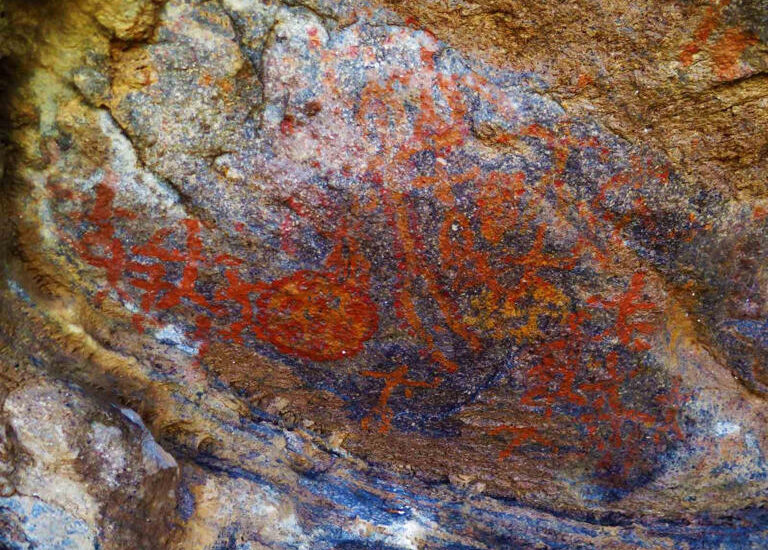
An extraordinary archaeological discovery in Kayseri’s Develi district has revealed 8,000-year-old rock art engravings, offering new insight into how early Anatolian societies expressed symbolic thought long before the rise of the Hittites or the arrival of Assyrian cultural influence.
A Discovery Older Than the Hittites
Archaeologists in Central Anatolia have uncovered a remarkable window into humanity’s deep past—rock engravings estimated to be around 8,000 years old in the Develi district of Kayseri, Türkiye. The discovery, currently awaiting official registration, is being hailed as one of the most significant prehistoric finds in the region in recent years.
The engravings—scientifically referred to as petroglyphs—were found carved into dark volcanic rocks scattered across the foothills south of Mount Erciyes, one of Anatolia’s most prominent volcanic landmarks. Early analysis dates these carvings to the Late Neolithic or Early Chalcolithic period (circa 6000 BCE), long before the rise of the Hittite Empire and the Assyrian trade colonies that would later define the region’s Bronze Age.
“These stone surfaces are among the earliest canvases of the human imagination,” said archaeologists involved in the documentation. “Every incision—whether depicting animals, humans, or abstract shapes—reflects a symbolic consciousness that predates writing by millennia.”
A Window into Prehistoric Belief and Identity
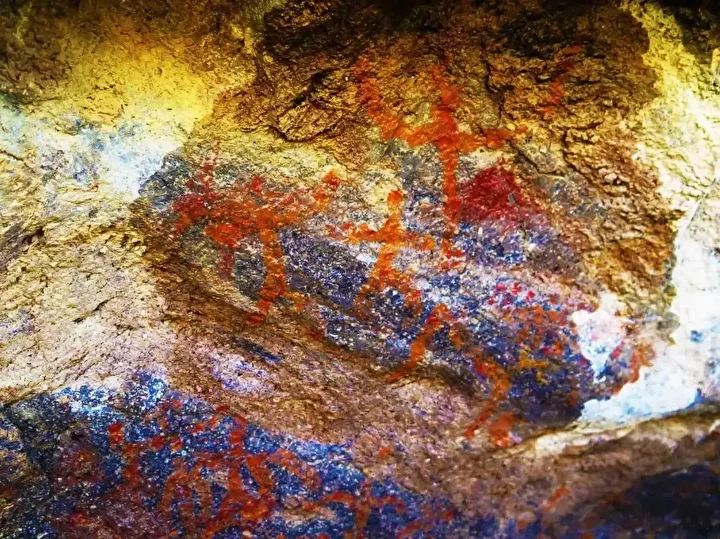
The site’s position near ancient water sources and migration routes suggests that it may have served as a gathering or ritual area for early farming and herding communities. Researchers believe that the engravings were more than mere decoration—they likely represented early expressions of belief, identity, or social connection.
The figures of humans and animals, as well as geometric motifs, provide a glimpse into how prehistoric communities viewed their world and their place within it. Such depictions may symbolize hunting rituals, communal gatherings, or early mythological narratives.
Comparable examples of prehistoric rock art exist in southeastern and eastern Anatolia—such as the Hakkari stelae or the Niğde volcanic plateau carvings—but finds in Central Anatolia remain extremely rare. The Develi discovery therefore bridges an important gap in the archaeological record, illuminating how symbolic and spiritual traditions spread across Anatolia during the transition to settled life.
Official Registration and Scientific Analysis Underway
Following the discovery, the Kayseri Provincial Directorate of Culture and Tourism, together with the Kayseri Museum Directorate, initiated the official registration process to ensure the site’s protection. Once registered, the area is expected to be declared an archaeological conservation zone, paving the way for systematic excavation and detailed scientific analysis.
Upcoming studies will include photogrammetric mapping, microscopic wear analysis, and 3D modeling to determine the age, tool marks, and carving sequences of the engravings. These studies could shed new light on the tools, techniques, and even the cognitive processes of Neolithic artisans.
Experts emphasize that this discovery could reshape the understanding of early symbolic behavior in Central Anatolia. “This is clear evidence that organized symbolic expression existed here thousands of years before the Hittite civilization,” one researcher noted. “It suggests that Central Anatolia was not only a cradle of agriculture but also a cradle of thought.”
Kayseri: A Crossroads of Civilizations
The discovery adds yet another layer to Kayseri’s deep historical identity. Located at the crossroads of ancient trade routes, Kayseri (ancient Mazaka and later Caesarea) has been inhabited continuously for thousands of years.
During the Assyrian Trade Colonies Period (circa 2000 BCE), Kayseri—particularly the nearby site of Kültepe-Kanesh—served as a major commercial hub where Mesopotamian merchants established trading posts. Centuries later, the Hittites made the region part of their vast empire, leaving behind cuneiform tablets and monumental architecture.
The newly discovered Develi petroglyphs, however, push Kayseri’s story far deeper—into a time when writing did not yet exist and when belief, art, and communication were first carved into stone.
A New Chapter in Anatolia’s Prehistoric Heritage
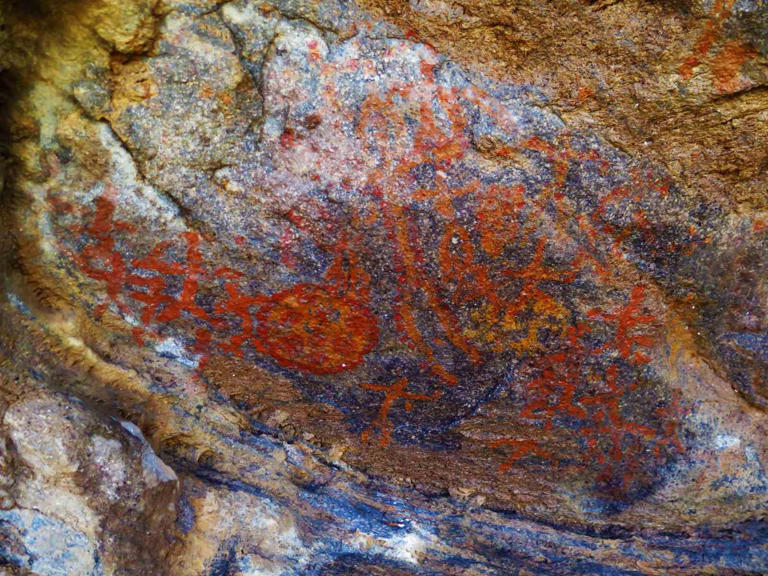
Archaeologists believe that the Develi rock art will help piece together the broader puzzle of human settlement and symbolic development across Anatolia. The engravings not only highlight the creativity of early Anatolian communities but also underscore their role in the global story of human consciousness.
As studies progress, the site may become an open-air archaeological park, allowing visitors to witness the earliest traces of symbolic thought etched onto the stones of Central Anatolia.
“The Develi petroglyphs remind us that long before temples and empires, there were stories carved into stone—stories that connected people to nature, to one another, and to something greater than themselves,” researchers concluded.
Cover Image Credit: İHA
