
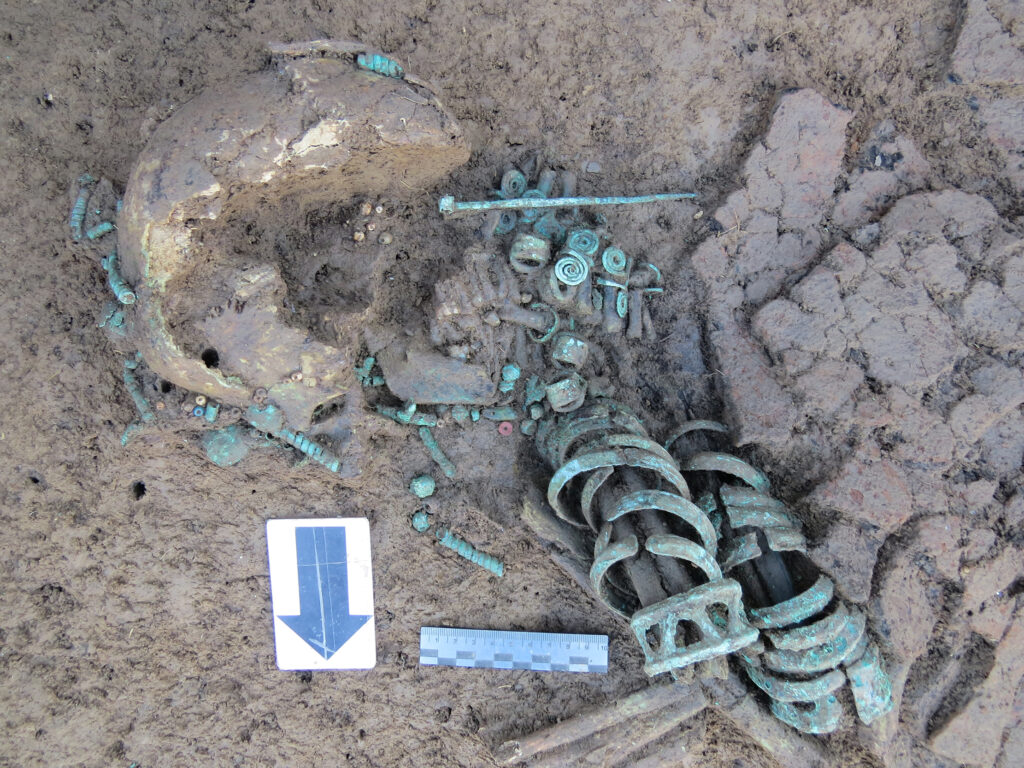
A remarkable archaeological discovery in the Chechen Republic is drawing global attention—not only for its scientific significance, but for the striking image of one ancient woman buried with extraordinary wealth: 19 bronze bracelets and eight rings adorning her hands.
The find comes from large-scale rescue excavations conducted in 2025 by the Institute of Archaeology of the Russian Academy of Sciences (RAS), ahead of the reconstruction of the Novogrozny–Serzhen-Yurt gas pipeline. What began as a preventative measure has evolved into one of the most important archaeological campaigns in the North Caucasus in recent decades.
A Burial That Stands Out
Among 160 graves excavated at the Khumyk-2 burial ground—part of a much larger necropolis that may contain up to 2,000 burials—one stood apart.
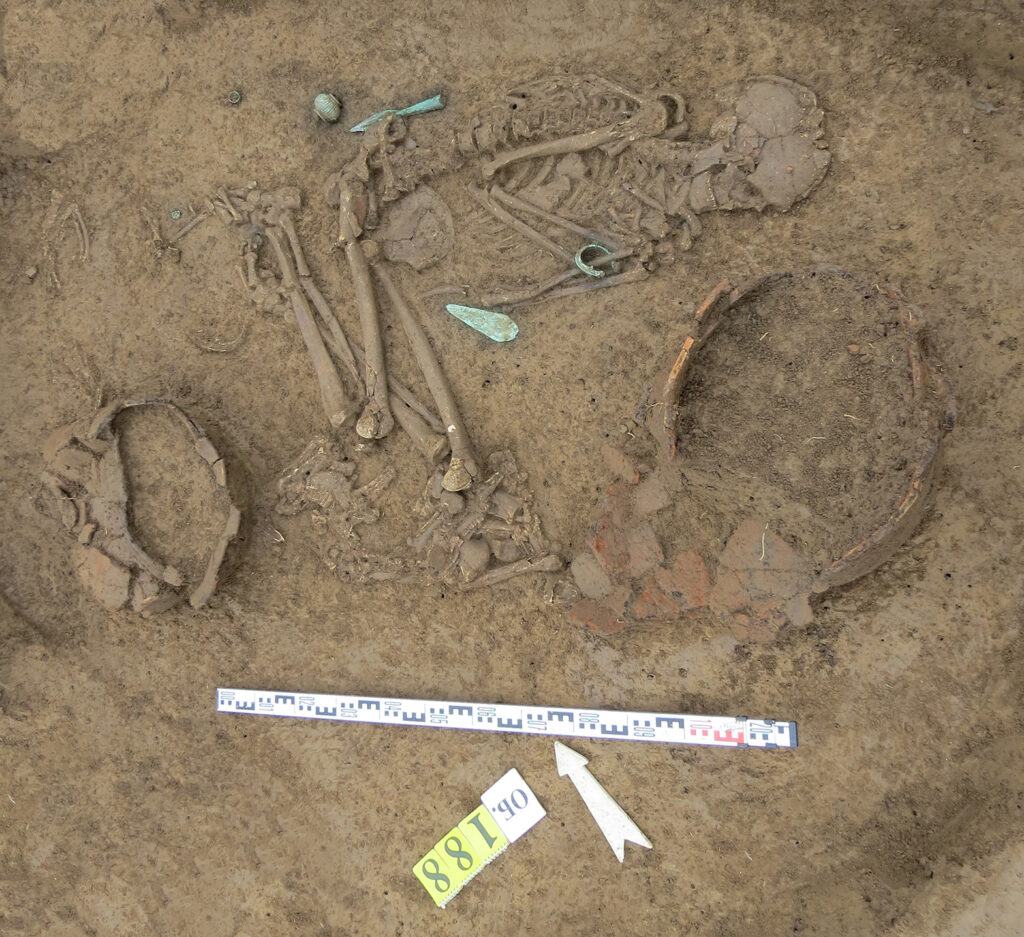
The woman, buried according to the customs of the Eastern Koban culture (dating from the 10th to the first half of the 8th century BCE), was found lying on her side, accompanied by an array of grave goods. On her arms alone were 19 bronze bracelets, while eight rings adorned her fingers. Her burial inventory was part of a broader pattern: some graves contained up to 60 items, including jewelry, ceramics, and personal ornaments.
This level of adornment suggests more than aesthetic preference—it hints at social status, identity, and possibly ritual significance. Archaeologists believe such richly furnished burials may indicate elite standing or specific cultural roles held by women in ancient Caucasian societies.
A Window into Ancient Life
The Khumyk-2 site is just one of four major locations studied during the 2025 campaign. Together, they span a vast timeline—from the Chalcolithic period (4th millennium BCE) to the late Middle Ages (15th century CE)—offering an unprecedented look at how human life evolved in this region.
At the Tyalling-2 settlement near modern-day Kurchaloy, researchers uncovered traces of one of the easternmost known Late Chalcolithic cultures in the North Caucasus. The site revealed domestic structures, ritual spaces, and artifacts that paint a vivid picture of early settled life.
Among the most intriguing discoveries were nine structures believed to have had sacred functions: clay platforms, hearths, altars, and ritual complexes containing broken pottery and animal bones. These finds suggest that spiritual practices were deeply integrated into daily life.
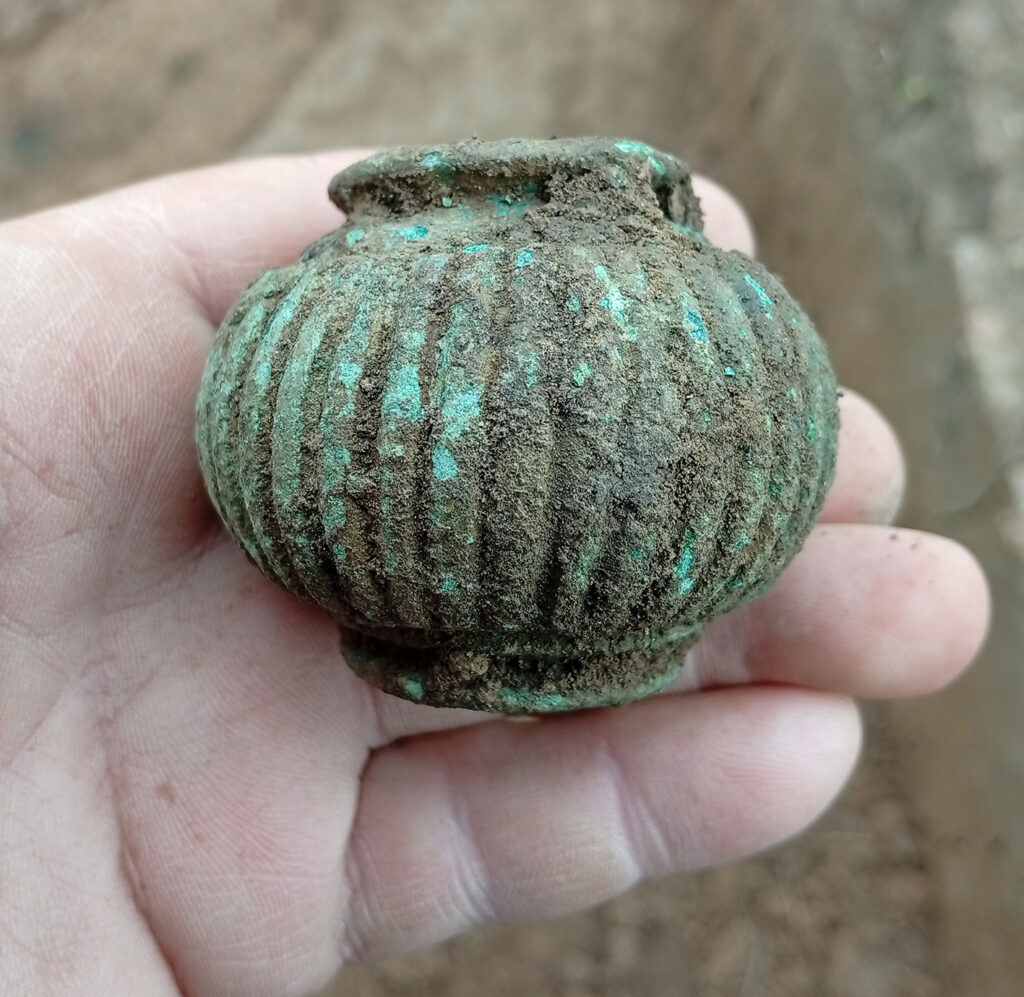
Clay figurines shaped like humans and animals, along with tools made of stone and bone, carnelian beads, and ornaments, further illustrate the creativity and symbolic world of these early communities.
Bronze Age Industry and Innovation
Equally compelling is the discovery of a Bronze Age settlement at Iskrinskoye-1, located near the Isnerk River. Initially thought to be medieval, deeper excavation revealed an even older layer beneath a landslide deposit—dating back to the mid-to-late 3rd millennium BCE.
Here, archaeologists uncovered a metallurgical complex, including casting molds, clay nozzles, and furnaces. The presence of oxidized copper splashes—tiny remnants of molten metal—provides clear evidence of advanced metalworking techniques.
One large structure, measuring 12.5 by 7 meters, contained two different types of furnaces and several tandoor-style ovens. This suggests that industrial production was not isolated but integrated into everyday domestic life.
The settlement appears to have been destroyed by a major fire, which paradoxically helped preserve many details. Collapsed walls and roofs formed sealed environments where tools, pottery, and household items remained undisturbed for millennia.
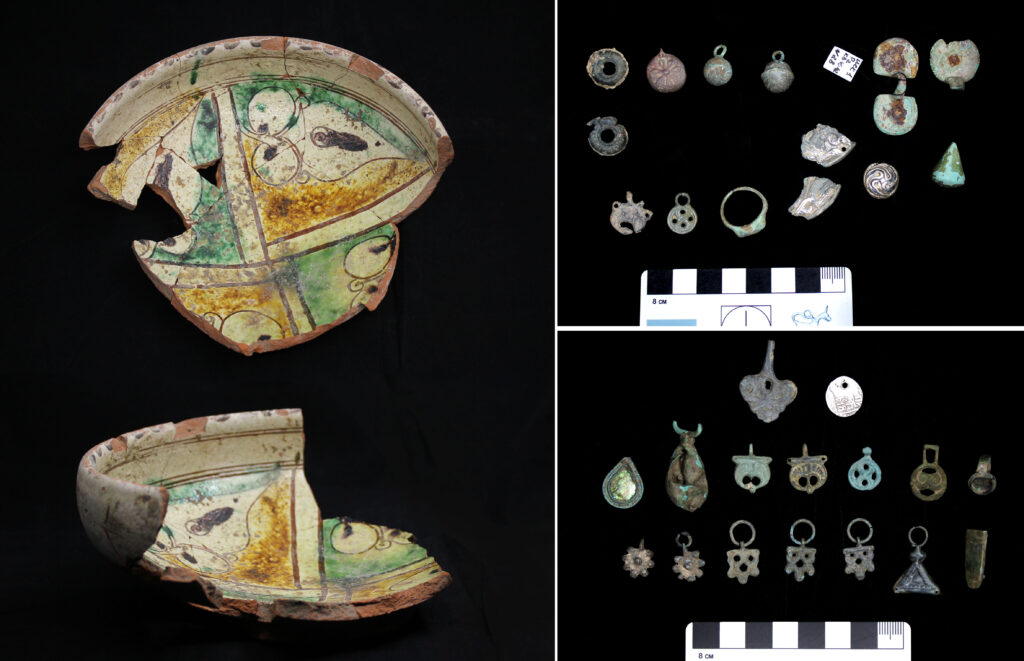
Golden Horde–period finds from the Iskrinskoye-1 settlement: on the left, a 14th-century imported glazed bowl; on the right, jewelry and elements of costume. Credit: Institute of Archaeology of the Russian Academy of Sciences (RAS)
Layers of History at Mayrtup
Another key site, the Mayrtup settlement and burial complex, adds yet another dimension to the story. Spanning from the 6th to the 13th centuries CE, it reveals a dynamic period of migration, cultural exchange, and adaptation.
Archaeologists identified over 250 features, including burial mounds, catacomb graves, and domestic structures. Some graves, linked to early Alanian culture, were surrounded by square ditches and contained distinctive burial chambers.
Although many of the graves had been looted, the team still recovered nearly 1,000 ceramic fragments and over 900 everyday objects, offering valuable insights into medieval life in the region.
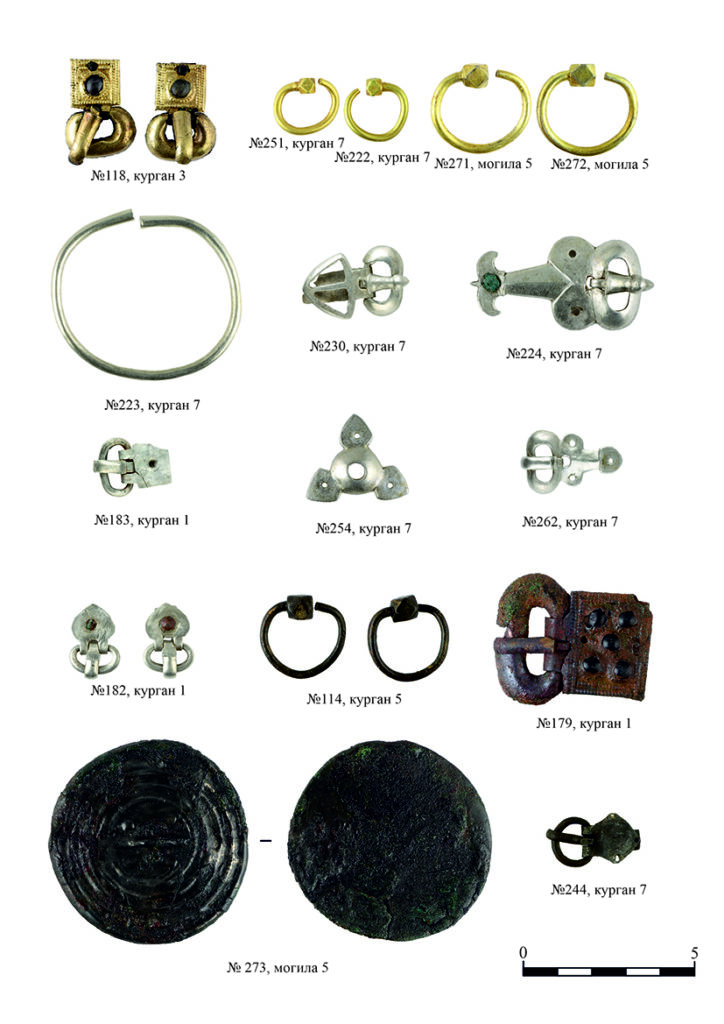
Costume elements and jewelry from 6th-century AD burial complexes at Mayrtup. Credit: Institute of Archaeology of the Russian Academy of Sciences (RAS)
Clues to Social Hierarchy in the Ancient Caucasus
What makes these findings particularly significant is their contribution to understanding daily life—not just burial practices. Much of what archaeologists know about ancient societies comes from cemeteries, but settlements like Tyalling-2 and Iskrinskoye-1 provide rare glimpses into how people lived, worked, and interacted.
The integration of metallurgy into domestic spaces, the presence of ritual architecture, and the richness of burial goods all point to complex, highly organized communities.
And then there is the woman with 19 bracelets and eight rings.
Her burial is more than a curiosity—it is a powerful symbol of identity, status, and craftsmanship in the ancient Caucasus. Each bracelet and ring tells a story of resource access, artistic skill, and cultural expression.
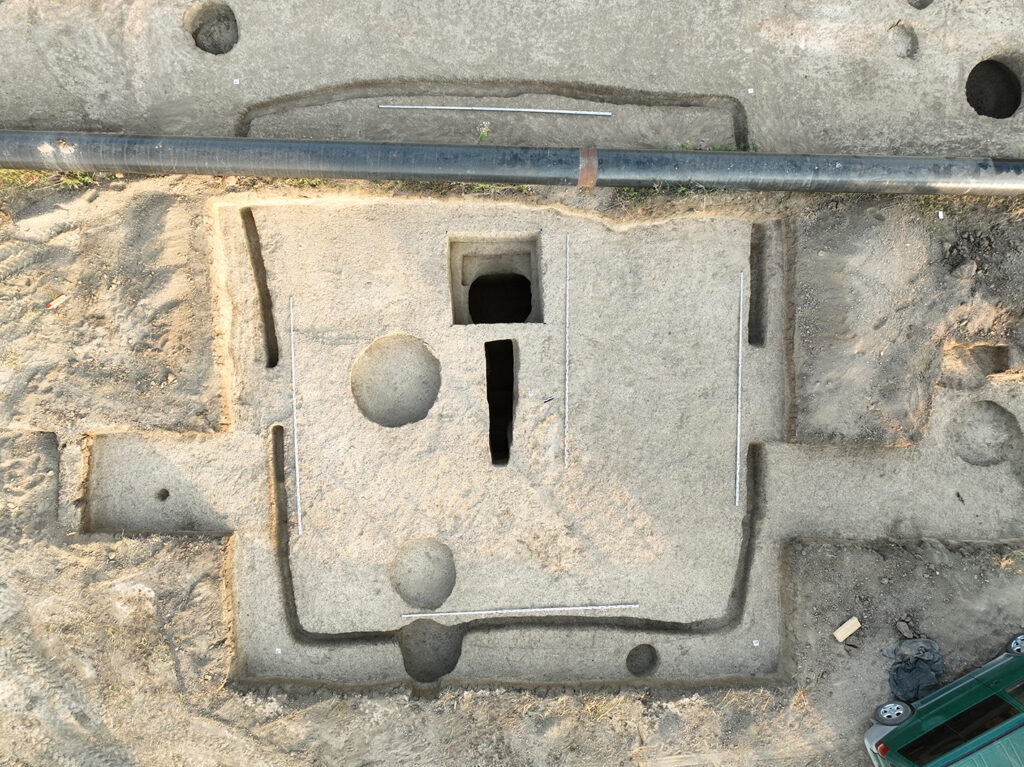
Preserving the Past
All artifacts recovered during the excavations will undergo laboratory analysis before being transferred to the National Museum of the Chechen Republic, where they will be preserved for future study and public display.
Researchers emphasize that this is only the beginning. With vast areas still unexplored, the region holds enormous potential for further discoveries.
As modern infrastructure projects continue to expand, rescue archaeology like this ensures that the past is not lost beneath the future—but instead brought back to light, one bracelet at a time.
Institute of Archaeology of the Russian Academy of Sciences (RAS)
Cover Image Credit: Bracelets and rings on the hands of the buried woman. Institute of Archaeology of the Russian Academy of Sciences (RAS)
