
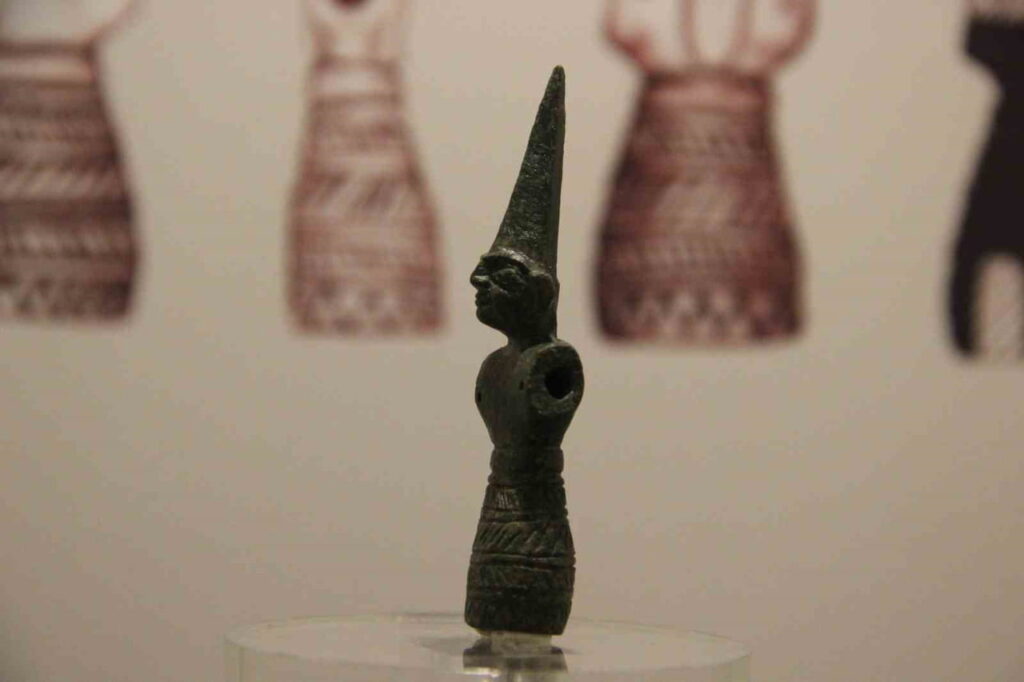
A remarkably small yet technically sophisticated Hittite storm god figurine, dating back approximately 3,500 years, is now on public display for the first time at the Boğazköy Museum. The artifact, discovered by chance by a local resident in central Türkiye, is already drawing strong attention from archaeologists due to its rare craftsmanship and cultural significance.
A Chance Discovery in the Heart of Hittite Lands
A local resident in the Alaca district of Çorum province discovered the figurine. While official statements reference slightly different village names, all sources agree that the find comes from a rural area within this historically significant region. What remains undisputed is the responsible action taken by the finder, who delivered the object to museum authorities, allowing it to be preserved and studied under professional supervision.
Following detailed conservation and documentation processes, the artifact was officially added to the museum’s collection and unveiled to the public during Türkiye’s Tourism Week celebrations. The exhibition marks the first time visitors can encounter this unique object, which originates from the core territory of the ancient Hittite Empire.
A Miniature Masterpiece of Hittite Metallurgy
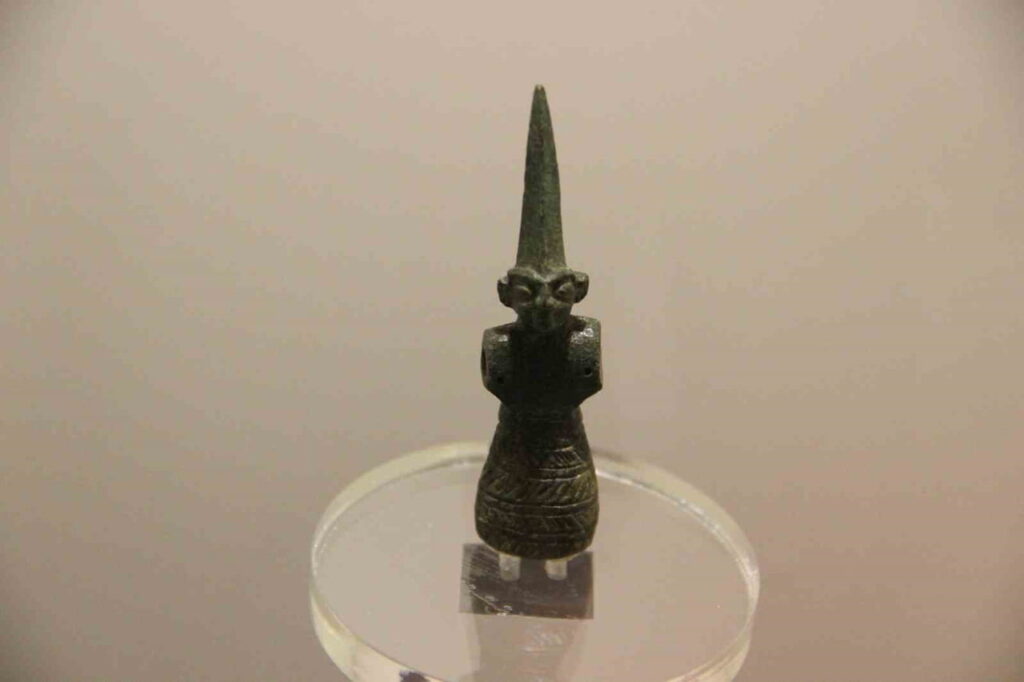
Measuring just 7.65 centimeters in height, the figurine is cast from arsenical copper, a material commonly used in Bronze Age metallurgy but rarely preserved in such refined form. Its small size is not its only distinguishing feature.
What sets this piece apart is the use of a highly advanced riveted limb technique, a method developed by Hittite metalworkers. Structural details—such as mortise sockets and pinholes visible at the shoulders and lower garment—indicate that the arms and legs were originally produced separately and later attached to the body.
This level of technical complexity, especially at such a small scale, makes the object one of the smallest known examples of its kind among Hittite metal figurines. Specialists describe it as a rare demonstration of both artistic precision and engineering knowledge in Late Bronze Age Anatolia.
The Storm God: Power, Fertility, and Divine Authority
In Hittite religion, the storm god occupied a central and dominant role, often described as the “King of the Gods.” Associated with rain, fertility, and the forces of the sky, this deity was essential to agricultural cycles and political symbolism alike.
Known under different names across Anatolia and neighboring cultures—Taru (Hattian), Tarhunza (Luwian), Teshub (Hurrian), and Tarhuna (Hittite)—the storm god was typically depicted in human form or occasionally associated with bulls, symbolizing strength and cosmic power.
The newly displayed figurine is therefore more than a decorative object. It provides a rare physical representation of religious belief, offering insight into ritual practices and symbolic expression within Hittite society.
From Scientific Circles to Public Display
Before its public debut, the figurine had already entered academic discussions. Museum officials confirmed that its image was previously presented in an international Hittite exhibition in South Korea and later introduced to scholars at the 8th Çorum Excavation and Research Symposium.
Its transition from academic visibility to public exhibition reflects a broader effort to make Anatolia’s archaeological heritage more accessible while reinforcing the region’s importance in global Bronze Age studies.
Cultural Heritage and Growing Tourism Potential
The official unveiling ceremony brought together regional authorities and cultural representatives, highlighting not only the artifact itself but also Çorum’s broader ambitions in cultural tourism.
Local officials emphasized ongoing restoration initiatives and international promotion efforts aimed at strengthening the region’s profile—particularly given its proximity to Hattusa, the ancient Hittite capital and a UNESCO World Heritage Site.
There is a clear expectation that the figurine will become a focal point for visitors, both domestic and international, contributing to increased interest in Hittite archaeology and Anatolia’s deep historical layers.
A Rare Glimpse into Hittite Craft and Belief
The significance of this artifact lies in its combination of scale, craftsmanship, and cultural meaning. Small metal figurines from the Hittite period are already rare; examples demonstrating such advanced assembly techniques are even rarer.
At the same time, the object bridges multiple dimensions of ancient life—technology, religion, and artistic expression—making it a compact yet powerful testament to the sophistication of the Hittite world.
As it now takes its place in the museum gallery, this 3,500-year-old figure quietly tells a larger story: one of innovation, belief, and the enduring legacy of one of Anatolia’s most influential civilizations.
Cover Image Credit: İHA
