
6 June 2026 The Future is the Product of the Past

1,400-Year-Old Elite Avar Warrior Buried with His Horse, Gold and Silver Objects Unearthed in Romania

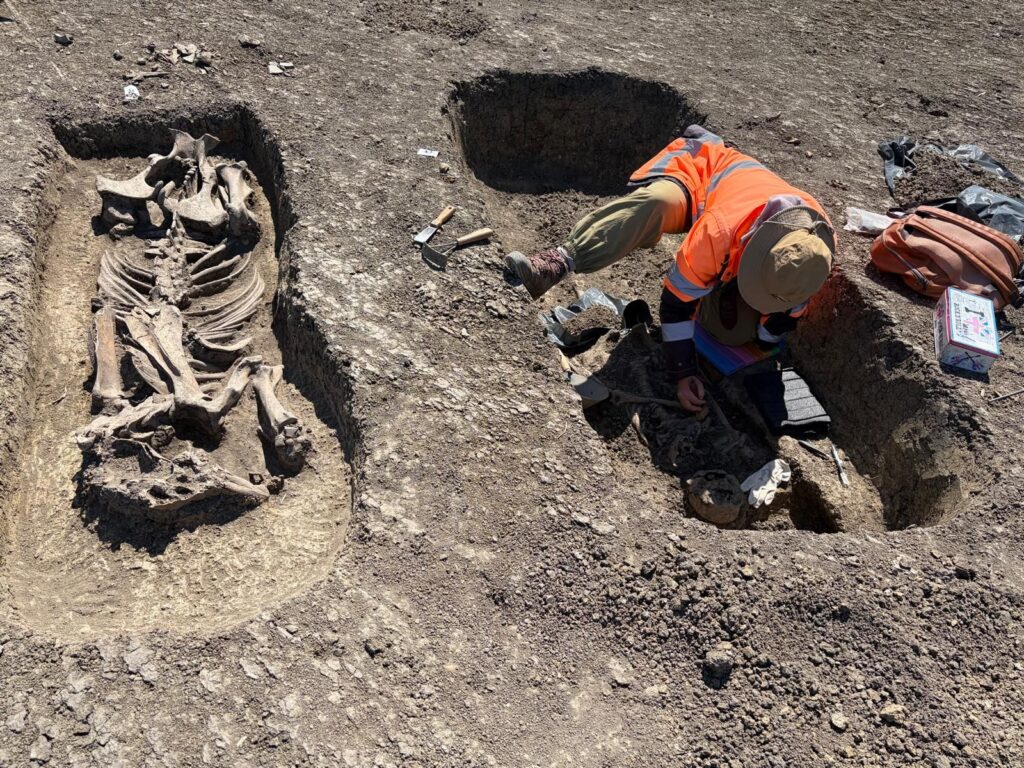
A 1,400-year-old Avar warrior buried alongside his horse has been discovered during archaeological research on the route of the Timișoara West Bypass in western Romania, offering a rare glimpse into the world of mounted elites who shaped Central and Eastern Europe during the early Middle Ages.

The funerary complex, dated to the 6th–7th centuries CE, was identified during preventive excavations carried out ahead of infrastructure works. According to DRDP Timișoara, the burial is attributed to Avar populations, a group of horse-riding warriors active across the region during a period of intense migration, warfare and political change.

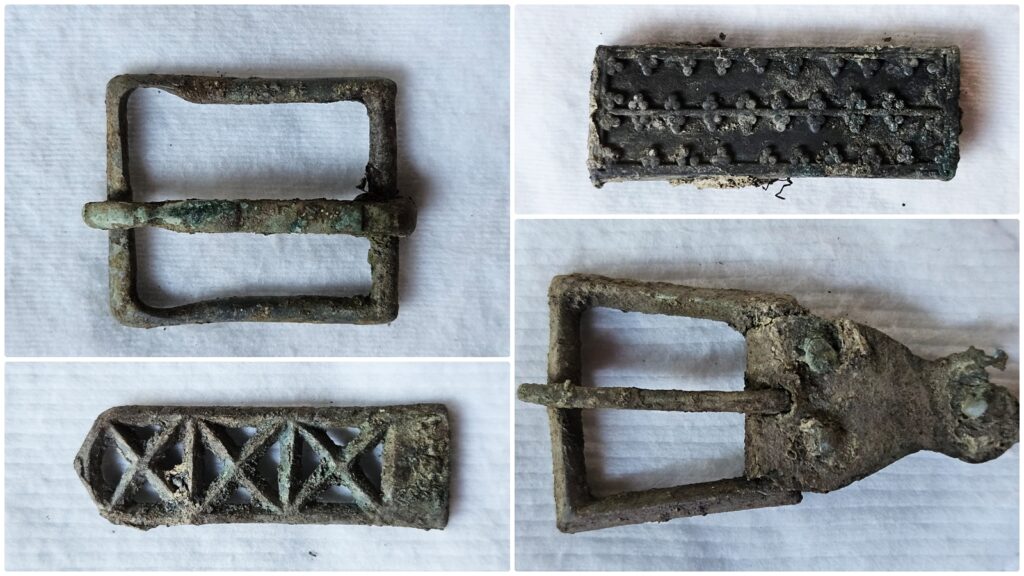
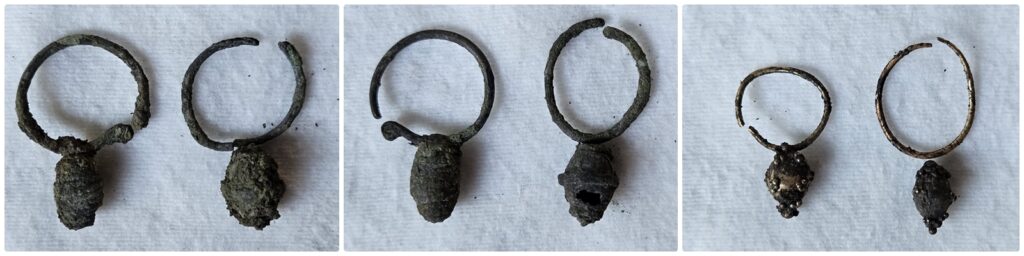
The most striking feature of the grave is the joint burial of a rider and his horse. Archaeologists also found objects made of gold, silver and bronze, a combination that points to the elevated social status of the deceased. Such graves are not ordinary burials. In the Avar world, the horse was more than transport; it was a marker of military identity, rank and mobility.
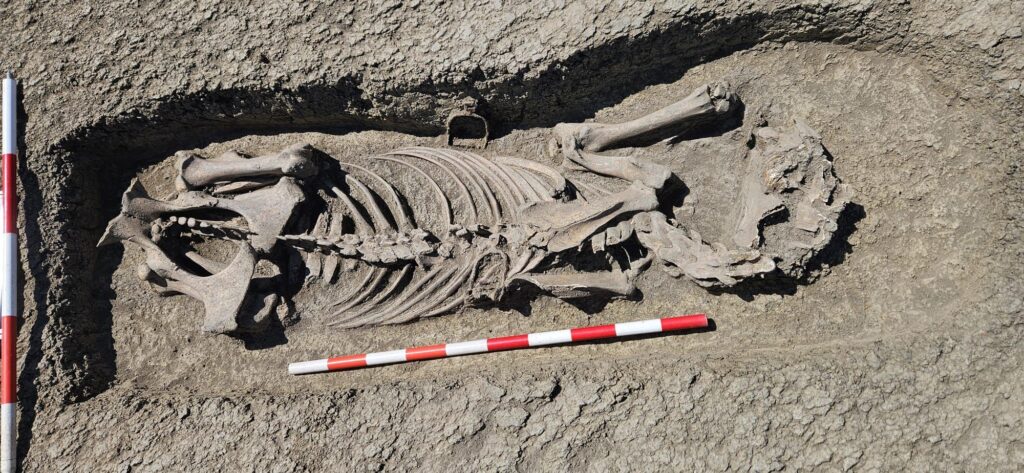
In early medieval steppe traditions, the horse could accompany the dead as a symbol of status and possibly as part of beliefs about the afterlife. Credit: DRDP Timișoara

A warrior’s grave on a modern road route

The discovery was made on the planned route of the Timișoara West Bypass, where archaeological investigations are continuing in parallel with preparatory construction work. The research is being conducted by specialists from the History Museum of Satu Mare under Romania’s legal framework for heritage protection.

Infrastructure projects across Europe have often revealed buried traces of earlier worlds, and this case appears to follow that pattern. What was planned as a modern transport corridor has exposed a much older route through history, one connected to the Avar presence in the Carpathian Basin and the lower Danube region.


📣 Our WhatsApp channel is now LIVE! Stay up-to-date with the latest news and updates, just click here to follow us on WhatsApp and never miss a thing!!


Earlier excavations on the same bypass route reportedly revealed Roman remains dating from the 2nd to 4th centuries CE, showing that the area around Timișoara remained significant across several historical periods.
Credit: DRDP Timișoara

Who were the Avars?

The Avars were a steppe-origin power that entered European history in the second half of the 6th century. By around 600 CE, they had established control over much of the Carpathian Basin, ruling over a diverse population that included Slavic and other local groups. Their political center lay in the same broad region that includes parts of modern Hungary, Slovakia, Austria, Serbia and Romania.

They left no written records of their own, so much of what is known about them comes from archaeology and outside sources, especially Byzantine accounts. Their graves, however, speak with unusual clarity. Horse burials, weapons, decorated belts, stirrups and precious ornaments reveal a society in which military rank, mobility and elite display were closely connected.

Archaeologists have documented more than 60,000 Avar-period inhumations in the Carpathian Basin, making burial evidence one of the strongest sources for understanding Avar society. Yet each richly furnished grave can still add important detail, especially when it includes both a mounted warrior and high-status objects.
Credit: DRDP Timișoara

Why the horse burial matters

In early medieval steppe traditions, the horse could accompany the dead as a symbol of status and possibly as part of beliefs about the afterlife. A rider buried with his horse suggests that the deceased was not simply remembered as an individual, but as a warrior whose identity was inseparable from mounted life.

The gold, silver and bronze objects found in the Timișoara grave strengthen that interpretation. They may have belonged to personal adornment, riding equipment, clothing or status display, though full identification will depend on conservation and specialist analysis.

For now, the grave stands out as an important discovery for western Romania. It links the Timișoara area to one of the most dynamic periods of early medieval Europe, when steppe groups, Byzantine diplomacy, local communities and frontier politics reshaped the map after the fall of Roman authority.

The ongoing excavation may still reveal more. But even at this stage, the burial of the Avar rider and his horse gives archaeologists a powerful image of status, movement and memory from a world that rarely left written testimony behind.

DRDP Timișoara

Cover Image Credit: DRDP Timișoara via Facebook

Related Articles

Significant Archaeological Discovery on Failaka Island: Hellenistic Courtyard and Building Unearthed

17 February 2025

17 February 2025

The National Council for Culture, Arts and Letters (NCCAL) has announced a remarkable archaeological find on Failaka Island, revealing a...

An Unusual Artifact Points to Roman Britain Rituals Linked to Fertility, Painted Dog Penis Bone Found in England

9 January 2025

9 January 2025

In a Roman quarry shaft in Surrey, England, archaeologists have discovered one of the most unusual human and animal remains...

Çatalhöyük Unearths New Secrets: Social Change and the “House of the Dead” in One of the World’s Oldest Cities

30 August 2025

30 August 2025

Nestled in the Konya Plain of central Türkiye, Çatalhöyük, a 9,000-year-old Neolithic settlement and UNESCO World Heritage Site, continues to...

A Connection Between Viking Knots And Quantum Vortices Discovered

14 December 2022

14 December 2022

Scientists demonstrated how three vortices can be linked in such a way that they cannot be dismantled. Although this study...

“Last Rhodes shipwreck” of Roman period found in Turkey’s Fethiye

5 March 2022

5 March 2022

Turkish researchers, a Rhodes shipwreck from the third century A.D. was discovered in the depths of the Gulf of Fethiye...

Urfa Castle Yields Mysterious Rock-Cut Tomb Possibly Tied to Abgar Dynasty—Early Christian Allies of Jesus

5 July 2025

5 July 2025

A recent archaeological breakthrough in southeastern Turkey has stirred excitement in the academic world. Deep within the inner citadel of...

A Byzantine Princess, a Mongol Khan, and a Church: The Bloody Church and Its Unknown History

13 May 2025

13 May 2025

Nestled at the base of the imposing Phanar Greek Orthodox College, a landmark intrinsically linked to the panoramic vistas of...

9,300-year-old Gre Filla Mound in southeastern Turkey to be relocated

20 September 2022

20 September 2022

While public criticism continues due to the fact that Gre Filla, known as Diyarbakır’s Göbeklitepe, is under the dam, Diyarbakır...

Israeli Archaeologists discover two shipwrecks filled with treasure

22 December 2021

22 December 2021

Israeli archaeologists have been discovered ancient artifacts and treasures amid the wrecks of two ships on the seafloor off the...

Archeologists find a 3,500-year-old mosaic in central Turkey

16 September 2021

16 September 2021

Archaeologists have discovered a 3,500-year-old mosaic in central Turkey, which might be one of the world’s oldest. The impressive power...

The inner wall was reached during the excavations of the tomb of the poet Aratos in the Soli Pompeiopolis Ancient City

13 August 2021

13 August 2021

The inner wall was reached during the excavations of the tomb of Aratos, the famous poet and astronomer of the...

In the 1,900-year-old underground temple of Mithras religion in Zerzevan Castle, an area where participants of secret rituals stayed was unearthed

23 July 2024

23 July 2024

Excavations at the  Zerzevan Castle in Diyarbakır province in the southeastern part of Türkiye have uncovered an area where participants...

Neanderthals used glue to make stone tools 40,000 years ago, a new study suggests “Earliest evidence of a multi-component adhesive in Europe”

22 February 2024

22 February 2024

More than 40,000 years ago, Neanderthals in what is now France used a multi-component adhesive to make handles for stone...

Ruins of China’s earliest state academy found in east China

21 February 2022

21 February 2022

The ruins of ancient China‘s first government-run institution of higher learning, built in 374 BC, have been discovered in the...

Archaeologists found 5 unique sculptures representing the Kakatiya art style in Siddipet

19 July 2021

19 July 2021

13th-century statues were found near a temple tank in the Siddipet district in the northern province of Telangana, India. On...