
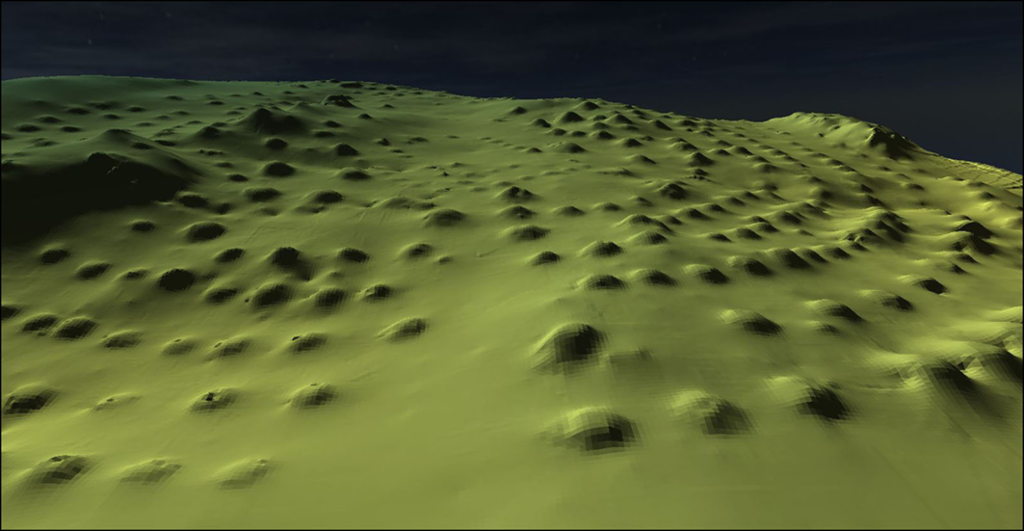
Due to the absence of large pyramids and grand stone structures, southern Central America was long considered secondary in terms of monumental architecture. However, a massive geometric arrangement of 372 mounds in Nicaragua is challenging these assumptions about the region’s past. Furthermore, archaeologists have yet to find evidence of a powerful ruler or central political authority capable of managing such a large-scale construction.
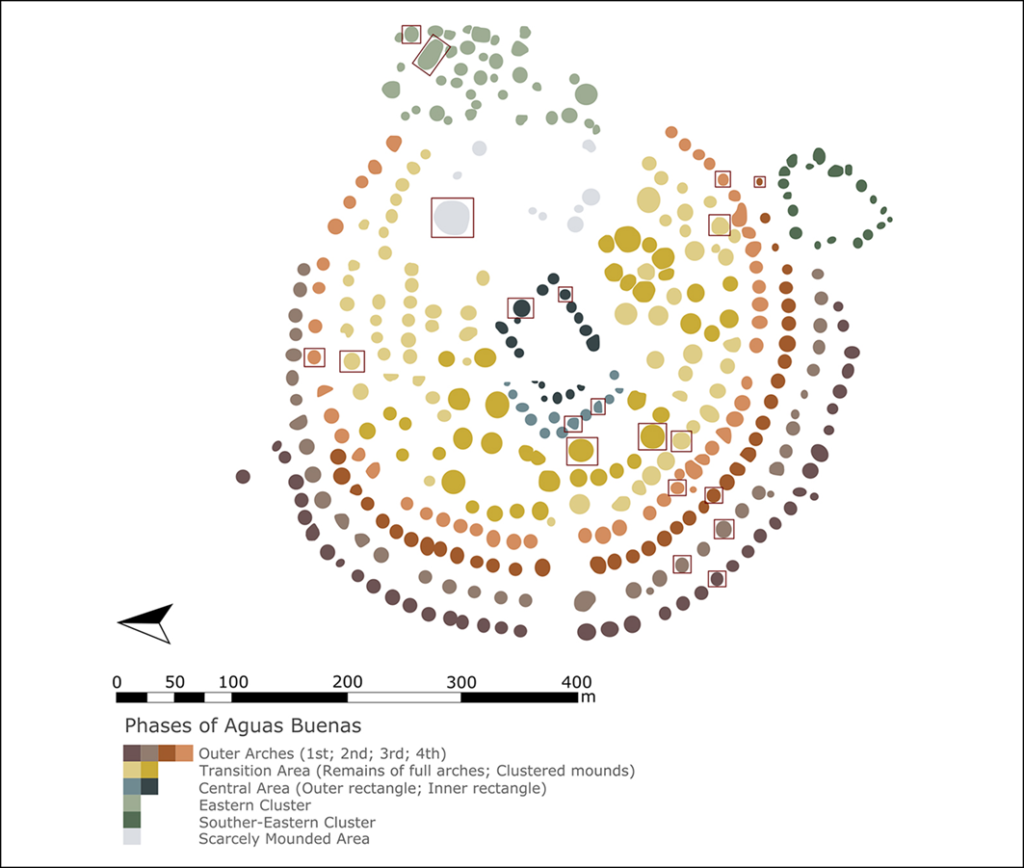
New research published in the journal Antiquity by Cambridge University Press reveals the results of excavations conducted in 2025 at the archaeological site of Aguas Buenas. An international team led by Dita Auziņa from Leiden University determined that the hundreds of mounds were not the product of a single large construction project, but rather that people expanded and renovated the area over different periods.
Massive Monumental Layout in a Region Without Pyramids
The Maya pyramids of Mesoamerica or the great stone structures of the Andes are among the first examples that come to mind when discussing the monumental architecture of ancient American societies. For years, these structures were associated with political power, social organization, and large-scale labor forces.
In southern Central America, however, a different architectural tradition developed. Instead of towering monuments, the societies in this region reshaped vast areas using earth and stone. Aguas Buenas represents one of the most striking examples of this horizontal monumental architecture.
Located in the Chontales region of Nicaragua, the archaeological site spans an area of over 30 hectares. At least 372 earth and stone mounds form a large geometric layout extending in a semi-circle. However, the vegetation makes it difficult today to distinguish this layout from the ground or from surrounding hills.
Researchers estimate that approximately 50,000 cubic meters of stone were moved to create the site. Estimates based on previous studies indicate that this work alone required at least 426 person-years of labor. How such a massive undertaking was organized remains unexplained.
Can Such a Site Be Built Without a Powerful Ruler?
The construction of large monumental structures is typically linked to strong political authorities who direct the workforce. For example, pre-Columbian settlements in Costa Rica’s Diquís Delta are known for their artificial mounds, stone-paved areas, and large stone spheres. UNESCO associates these sites, dated between 500–1500 AD, with the advanced political and social organization of hierarchical chiefdom societies.
Aguas Buenas presents a different picture. Archaeologists found no distinct evidence of an elite class or central political administration managing the construction of the hundreds of mounds. This strengthens the theory that the structures may have been created through the collective effort of communities.
Nevertheless, researchers are not claiming that political authority was absolutely absent. The significance of Aguas Buenas lies in providing an alternative example to the notion that large-scale monumental architecture necessarily requires centralized management.
Excavations of 20 Mounds Reveal Construction Spanned a Long Period
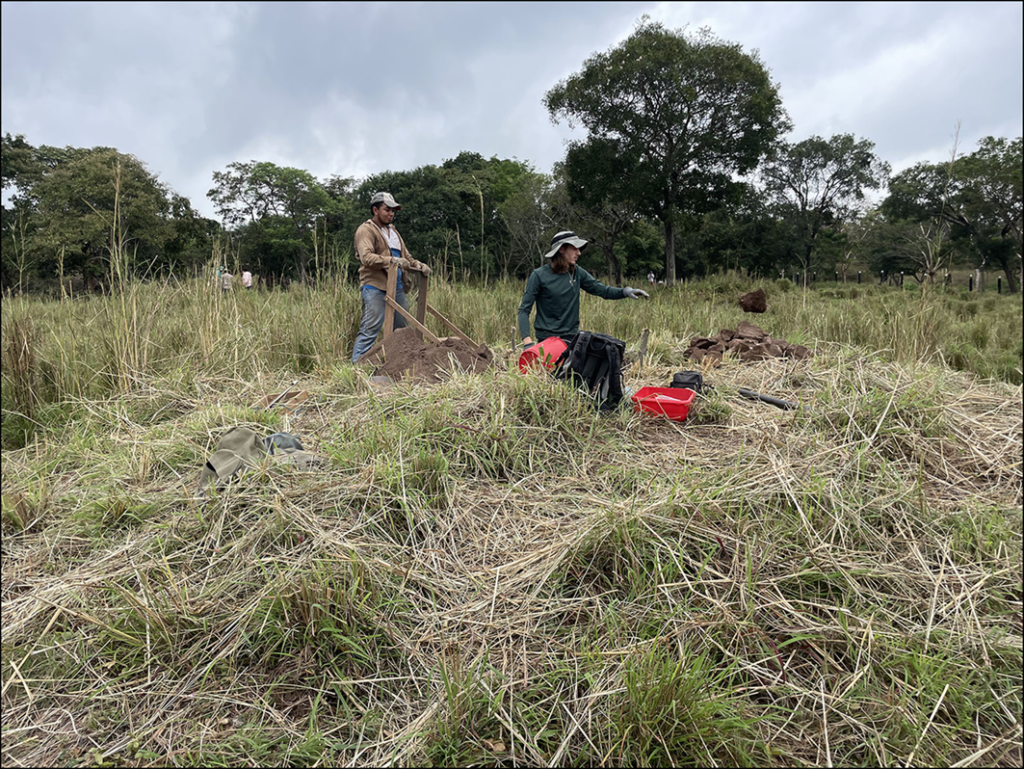
Aguas Buenas had been the subject of archaeological research previously. However, excavations between 2011 and 2013 provided limited information regarding the site’s purpose and construction process. Researchers attempted to fill this gap in 2025 by examining 20 mounds selected from different architectural groups.
The team identified between six and 14 soil layers in small excavation pits dug at the peaks of the mounds. By analyzing soil characteristics, the researchers utilized the portable optically stimulated luminescence (pOSL) method to understand the sequence of stone and sediment layers.
The results showed that the mounds were not completed in a single stage. People added new materials, modified existing structures, and resurfaced some areas over different periods. Natural processes also contributed to the current shape of the mounds.
It was discovered that the upper coverings, consisting of white rhyolite stone, were repeatedly renewed in at least 10 mounds. Researchers believe this practice may be linked to a desire to maintain the appearance of the mounds.
Ceramics and Volcanic Layers Beneath the Mounds
Excavations also revealed that different parts of the site may not have been used for the same purpose. Beneath four of the 15 mounds in the outer sections, accumulations of large ceramic vessels were found. These vessels may be associated with communal dining or intentionally left offerings.
In the inner section, more ceramics, stone tools, adobe-like building materials, and charcoal were uncovered. Researchers state that these findings may indicate a more intensive human presence during construction and maintenance activities.
Layers consisting of volcanic ash and materials were detected beneath nine mounds. These layers suggest that volcanic events in the region may have altered the environment before the site was used. However, new analyses are required to understand the relationship between volcanic activity and the construction of the mounds.
A Monumental Site Developed Over Centuries
While previous radiocarbon analyses dated some activities at Aguas Buenas to between 404–666 AD, ceramic comparisons suggest the site was used approximately between 300–900 AD. However, researchers have not yet been able to determine the exact construction dates of individual mounds.
Ongoing laboratory analyses aim to reveal in more detail how long the different construction phases lasted and at what intervals the mounds were renewed.
The new research on Aguas Buenas demonstrates that monumental architecture is not solely about building massive structures. Here, communities may have created a monumental landscape by using, modifying, and reorganizing the same area over a long period. This process offers a new direction for research in understanding the organization of ancient societies in southern Central America.
Auziņa, D., Egberts, E., Cerón González, A., Martínez, M., & Geurds, A. (2026). Revealing slow monumentality: luminescence and soil narratives from Aguas Buenas, central Nicaragua. Antiquity, 1–8. doi:10.15184/aqy.2026.10480
