
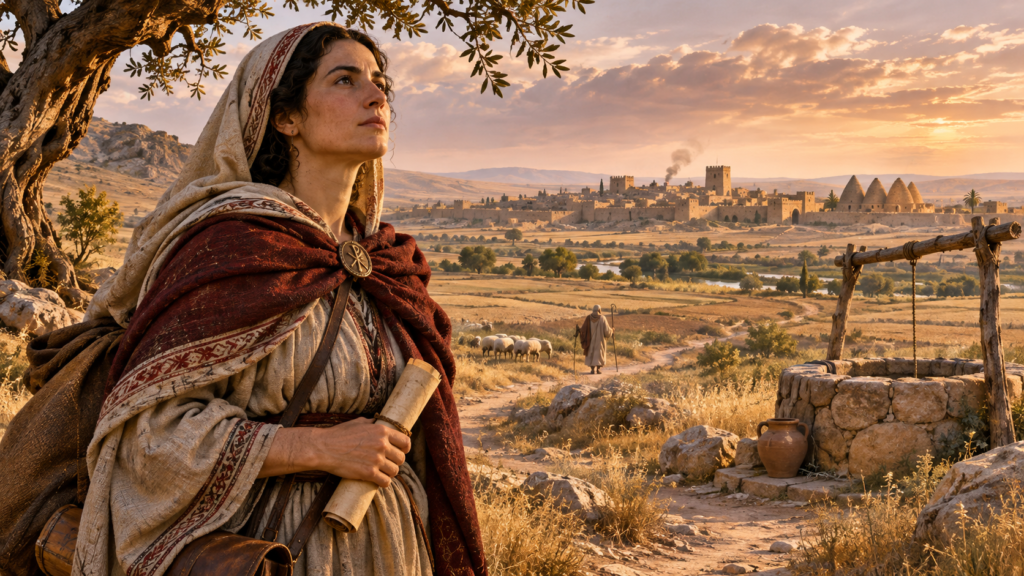
Approximately 1,600 years ago, a female traveler who wished to see the places she had read about in sacred texts came to Harran. In this ancient city, located within the borders of Şanlıurfa in southeastern Türkiye today, she visited a structure believed to be the home of Abraham, Jacob’s Well, and the village of Fadana, which is associated with narratives in the Torah. The diary kept by this woman, named Egeria, during her journey has carried remarkable details about the religious life of Harran in the late antique period to the present day.
A Woman on the Roads of the Roman Empire
Embarking on a long pilgrimage in the late 4th century AD, Egeria traveled thousands of kilometers across the eastern territories of the Roman Empire. On her route extending from Jerusalem to the Sinai Peninsula, and from Egypt to Mesopotamia, she sought to locate the places she had read about in sacred texts.
In that era, such a journey was not an ordinary undertaking, especially for a woman. Although Egeria’s identity and social status are still debated, her relationships with religious leaders and her travel capabilities suggest that she possessed certain financial resources and powerful connections.
Her journey was not always easy. She traveled through dangerous stretches of Egypt, where Roman soldiers escorted her and her companions between military outposts. Once they reached safer territory, the soldiers returned to their posts, and Egeria continued her travels.
Egeria’s goal was not merely to see cities. She spoke with clergy in the places she visited, read sacred texts, and recorded the traditions told by the local people. This curiosity eventually brought her to Harran, which is associated with the life of Abraham in the Torah.
Searching for Abraham’s House in Harran
Upon arriving in Harran, Egeria first went to the city’s church. The bishop she met there agreed to show her the places she wished to see.
One of the first stops was the area believed to be Abraham’s house. According to the bishop, the church outside the city had been built upon the foundations and stones of the old house. Egeria participated in prayers there and listened to passages from the Book of Genesis.
Subsequently, the bishop showed her the well where it was believed that Rebecca gave water to the camels of Abraham’s servant. Egeria did not settle for merely observing these sites; she asked questions about Abraham’s family and compared what she was told with what she had read in the sacred texts.
The traveler’s visit to Harran also witnessed an unexpected encounter. Monks from different regions of Mesopotamia had gathered for a religious commemoration day in the city. Among them were clergymen whose fame she had previously heard of and who emerged from seclusion only on certain days. Egeria wrote in her diary how pleased she was to meet these people.
Jacob’s Well and the Biblical Story of Fadana
After spending two days in Harran, the bishop took Egeria to another well approximately six Roman miles from the city. Egeria reached this well that local Christians associated with one of the most memorable encounters in the Book of Genesis: the meeting of Jacob and Rachel. The bishop who accompanied her explained that Jacob had watered Rachel’s sheep at this very spot. By the fourth century, a large church stood beside the well, drawing visitors who wished to see the landscape of the biblical story for themselves.
According to Genesis, Jacob had travelled to the land of his mother’s relatives after leaving his family behind. When he arrived at a well where shepherds gathered with their flocks, he met Rachel, the daughter of his uncle Laban. She had come to water her father’s sheep, but a heavy stone covered the opening of the well.
Jacob rolled the stone aside, watered the animals and introduced himself to Rachel. The biblical account describes an emotional encounter: Jacob kissed Rachel and began to weep. Rachel then hurried home to tell her father that a relative had arrived.
For Egeria, this was no longer simply a passage she knew from Scripture. The bishop showed her an enormous stone lying beside the well, which local tradition identified as the one Jacob had moved. He also led prayers inside the nearby church, where the congregation listened to the relevant passage from Genesis and sang a psalm.
The story continued beyond the well, and so did Egeria’s journey.
Fourteen Years of Work for Rachel
Genesis recounts how Jacob entered Laban’s household and fell in love with Rachel. Laban agreed to let him marry his younger daughter in exchange for seven years of work. Jacob accepted, and the biblical narrative describes how his affection for Rachel made those years seem remarkably short.
But when the wedding finally arrived, Laban deceived him. Instead of Rachel, he gave Jacob his older daughter, Leah. Jacob discovered the substitution the following morning and confronted his uncle, who explained that local custom required the older daughter to marry first.
Laban then offered Rachel in exchange for another seven years of service. Jacob agreed, married Rachel after completing Leah’s wedding week, and continued working for her father. What began as a meeting beside a well developed into a complicated family history involving two sisters, their children, disputes over livestock and growing tensions between Jacob and Laban.
Eventually, Jacob decided to leave with his family and possessions. That departure brought another episode into the story, one that would become particularly important to Egeria’s visit to Fadana.
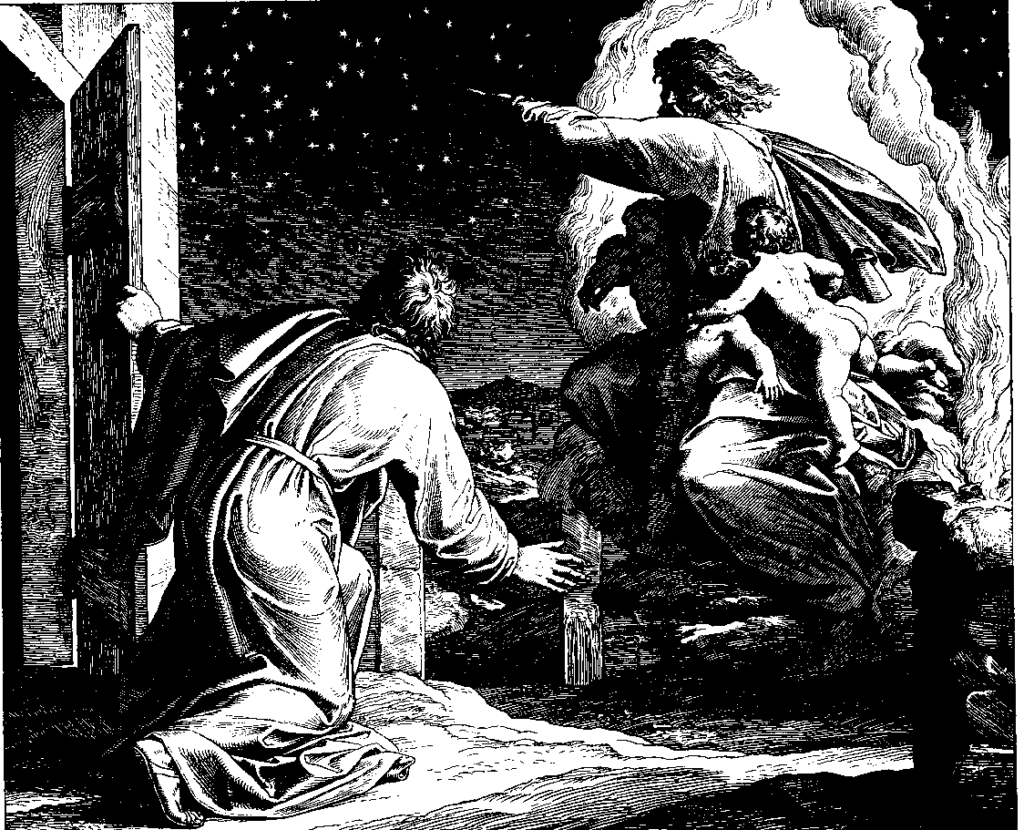
The Village Where Rachel Took Her Father’s Idols
After visiting the well, Egeria travelled approximately 500 paces across a broad plain to a large village called Fadana. The bishop told her that the settlement had once belonged to Laban, whom the biblical narrative identifies as Jacob’s father-in-law.
There, he showed her a memorial associated with Laban and another place connected to Rachel’s departure from her father’s household. According to local tradition, this was where Rachel had taken Laban’s household idols before leaving with Jacob.
Genesis 31 recounts that Rachel secretly removed objects known as teraphim, usually understood as household cult images. When Laban discovered that Jacob and his family had departed, he pursued them and accused them of taking his gods.
Jacob, unaware of Rachel’s actions, allowed Laban to search their possessions. Rachel had hidden the objects inside a camel saddle and sat upon them. She told her father that she could not stand because she was menstruating, and Laban failed to find what he sought.
The episode reveals a complicated religious world in which household cult objects appeared alongside the traditions associated with the ancestors of Israel. Their exact significance remains a subject of scholarly discussion, but the objects clearly mattered enough for Laban to demand their return.
For Egeria, the village offered something extraordinary: a place where local Christians connected these familiar biblical characters to identifiable features in the landscape. She could visit a well associated with Jacob and Rachel, examine a stone linked to their first meeting and walk through a settlement that people connected with Laban’s household.
Her account also records how local religious communities kept these stories alive. At the well, clergy and monks welcomed visitors, while prayers and readings transformed the biblical narrative into a shared religious experience.
Fadana was therefore not simply another village along Egeria’s route. It formed part of a sacred geography in which the stories of Jacob, Rachel, Leah and Laban remained attached to places that fourth-century Christians could visit. Egeria’s observations preserve that tradition at a particular moment in history, centuries before modern archaeologists began investigating the ancient settlements of the Harran Plain.
Where are the Traces of Fadana Today?
The identity of Fadana, mentioned in Egeria’s diary, and which modern settlement it corresponds to remains a subject of debate.
Local history research published on Şanlıurfa associates the name Fadana with Yukarı Beydaş in the Akçakale district. Surface research conducted on the mound near the village, whose old name was Tell Fiddan, indicates settlement traces extending back to the Ubaid period and the Early Bronze Age.
However, Ancient Near East researcher Edward Lipiński suggests a different location. Based on the distance given by Egeria, he associates Fadana with the Tell Feddan settlements to the west of Harran. Therefore, it is not possible to definitively identify the ancient village with Yukarı Beydaş.
From Balıklıgöl to Soğmatar: Thousands of Years of Belief
The traditions Egeria encountered constitute only one part of Şanlıurfa’s multi-layered religious history. Today, Balıklıgöl in the city center is one of the most well-known sites associated with the narrative of Abraham being cast into the fire. According to local tradition, the fire turned into water and the wood into fish, and the lake became sacred.
The narrative of Balıklıgöl should be considered in a different historical context than the traditions Egeria recorded in Harran. There is no record of the traveler visiting Balıklıgöl. However, both examples show the importance of the religious memory centered around Abraham gained in the geography of Şanlıurfa.
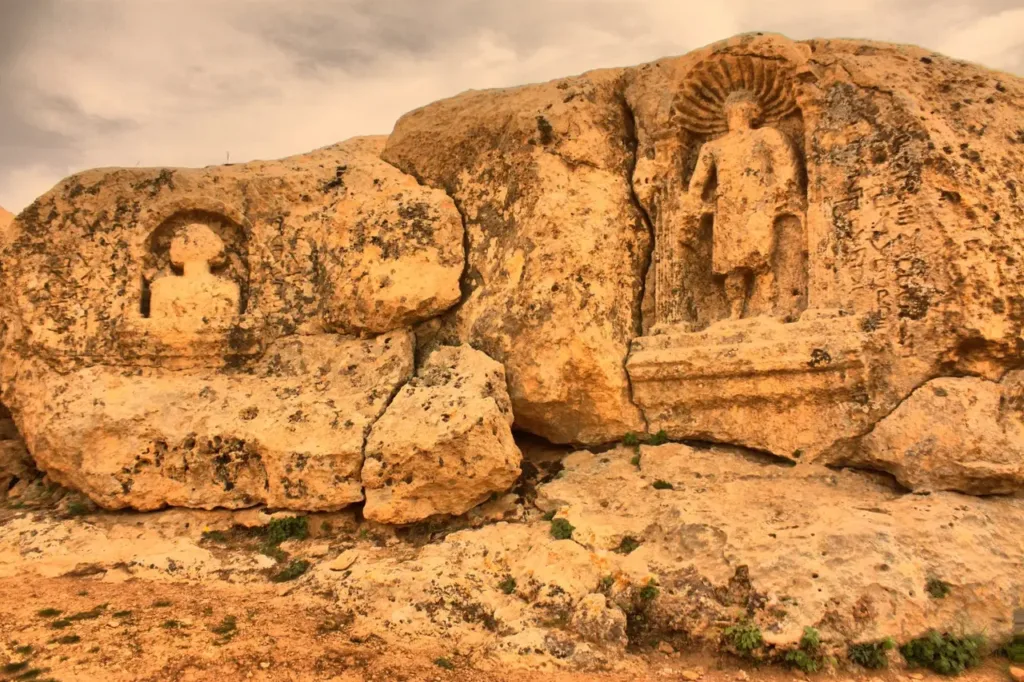
The belief history of the region extends back to before Christianity. Near Harran, in Soğmatar, archaeologists researched traces of the worship of the Moon God Sin, particularly in the 2nd century AD. God depictions carved into rocks, inscriptions, and sacred areas reveal that different belief traditions existed here before Egeria.
An even older period in Şanlıurfa’s archaeological history is encountered with Göbeklitepe. Approximately 11,500 years ago, people built monumental stone structures adorned with animal reliefs here. Researchers believe these structures were associated with social gatherings and ritual activities.
There is no evidence of an uninterrupted tradition of belief between Göbeklitepe, Soğmatar, and the Harran described by Egeria. However, these centers show that the same broad geography carried very different religious and social meanings across different ages.
Sources: Egeria – Itinerarium Egeriae
Edward Lipiński – Aram and the Hebrew Forefathers
ŞURKAV – Selahattin E. GÜLER, İspanyalı Rahibe Egeria’nın Hac Günlüklerinde Urfa Ve Harran, Şanlıurfa Kültür Sanat Tarih ve Turizm Dergisi, sayı 29 (2017)
