
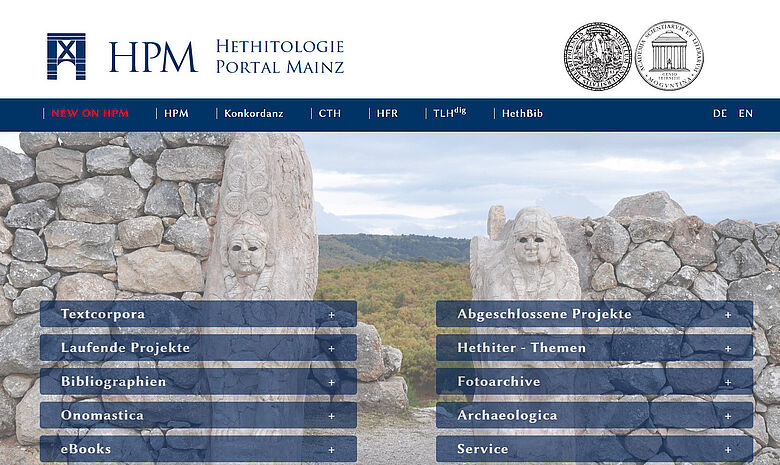
A groundbreaking project is opening new digital routes to the ancient world of the Hittites. Under the title “Digital Pathways to the Hittite World,” researchers from Julius-Maximilians-Universität Würzburg (JMU) are revolutionizing how scholars access, analyze, and connect thousands of clay-tablet fragments left by one of Anatolia’s most powerful Bronze Age empires. Combining archaeology, philology, and artificial intelligence, the initiative aims to make the Hethitologie-Portal Mainz (HPM) a next-generation digital research hub for Hittitology.
The project is led by Professor Daniel Schwemer, head of Ancient Near Eastern Studies at JMU, together with Stephanie Döpper, Martin Gruber, and Andreas Schachner from the German Archaeological Institute in Istanbul. On the technical side, experts from the Center for Philology and Digitality (ZPD) and the Center for Artificial Intelligence and Data Science (CAIDAS) provide key infrastructure and AI expertise.
From Thousands of Clay Tablets to a Modern Digital Resource
The Hethitologie-Portal Mainz already contains digital images and records of all known Hittite clay-tablet fragments. Yet, as the JMU team notes, a targeted and structured search for complex scholarly questions often remains difficult and time-consuming. “Because excavations at Boğazköy-Ḫattuša have been ongoing since 1906, we have a wide discrepancy in data quality,” says Döpper. The first step of the project therefore, is data cleansing: improving the metadata, standardizing fund-locations, improving how fragments are linked and described, especially in regard to archaeological find-spot, joining of fragments, and associated typologies.
Better Searchability, Deeper Queries
On top of data quality improvement, the team plans extended search-capabilities by connecting datasets. Users of the portal will be able to ask far more specific research questions. For example: a researcher studying Hittite rituals could search not only for ritual texts, but also for all associated artefacts-objects mentioned in those texts, and then find all finds of those objects, all occurrences in tablets, and link them to the archaeological context. As Döpper explains: “If someone researches Hittite rituals, they can also search for ritual-tools and then have all finds displayed that refer to them.” This level of inter-dataset linking—from text to archaeology to object typology—marks a major step forward for Hittite studies.
Artificial Intelligence Enters Hittitology
In collaboration with CAIDAS (and under the guidance of Andreas Hotho, Professor of Data Science), the project will incorporate advanced language-modelling. Their language model “LLäMmlein” (a large language model trained exclusively in German) will be extended to learn Hittite. The goal: enable the model to support linguists and archaeologists by recognising linguistic patterns in Hittite, especially in fragmentary tablets. The model will help predict which text segment is likely to follow, supporting the reconstruction of sentences and the assembly of more complete tablets from multiple fragments. For texts preserved only in fragments, this could be a considerable boost in terms of speed and efficiency.
Archaeological Context & Object-Typology
Important questions for archaeologists—such as “Where exactly was a fragment found?” or “How many tablets were located in that deposit?”—are often hampered by inconsistent legacy records. In older excavation logs each researcher used their own system and abbreviations: what researcher A calls “fund-location A” might be the same place that researcher B calls “fund-location B”. The team intends to evaluate excavation-daybooks and standardise these references in the portal, so that users will have detailed deposit information for each tablet. Furthermore, the team aims to facilitate the assignment of ceramic sherds to typologies: the shape of a vessel often helps date when it was produced. Usually this is done manually. “Even digital approaches currently used are still faulty. For example some systems use the preserved length of a sherd as the most important feature for classification, which is only a random result of preservation,” says the junior professor. The JMU-scholars therefore plan to develop improved classification methods and automate typologisation.
Project Scope and Funding
The “Digital Pathways to the Hittite World” project builds on nearly 25 years of the Hethitologie-Portal Mainz (HPM) providing open-access to digital editions, media, photographic and 3D-models of Hittite texts, bibliographies, genealogical databases and more. HPM was created between 2001 and 2007 with funding from the Deutsche Forschungsgemeinschaft (DFG) and has since become the digital home for numerous research-projects in Hittitology. The new phase of expansion is supported by a grant from the VolkswagenStiftung. Among the planned enhancements are: the introduction of Linked Open Data (LOD) standards, geolocation of tablets and seals for spatial-analysis, and improved form-recognition (shape recognition) for automatic classification of Hittite ceramics.
Why It Matters – Digital Humanities Meet Ancient Worlds
The civilisation of the Hittites—a major power in the Late Bronze Age in Anatolia (c. 1650-1200 BCE)—left behind thousands of cuneiform tablets at their capital Boğazköy-Ḫattuša and other sites. These tablets document state treaties, decrees, myths, rituals, cult inventories, administrative and economic texts, in Hittite (an early-attested Indo-European language) as well as Luwian, Hurrian, Akkadian and other Anatolian languages.
By transforming this heritage into a state-of-the-art digital infrastructure, the project will allow researchers worldwide to pose new queries, to connect data across disciplines (philology, archaeology, digital humanities, AI), and to accelerate knowledge about these ancient people and their world.
What’s Next?
The initial tasks—cleaning and enhancing the datasets, linking data across text, object and space, training the AI model in Hittite—are underway. The next milestones include the rollout of the improved portal functions, launch of user-interfaces for advanced search and cross-data-queries, integration of the LOD/semantic web modules, and full coverage of all published tablets. With the next version of the thesaurus (Thesaurus Linguarum Hethaeorum Digitalis, TLH^{dig} 1.0) expected in late 2025 to offer complete coverage of all published texts, the “Digital Pathways” project will significantly deepen the digital reach of Hittitology.
As Döpper succinctly puts it: “By unifying and enhancing the data of the Hettitologie-Portal, we spare researchers the tedious chasing of scattered records—and instead we enable them to ask sophisticated questions and get meaningful results in much less time.”
In short, the digital path to an ancient Anatolian world is becoming clearer—and richer.
Cover Image Credit: Hethitologie Portal Mainz (Screenshot)
