
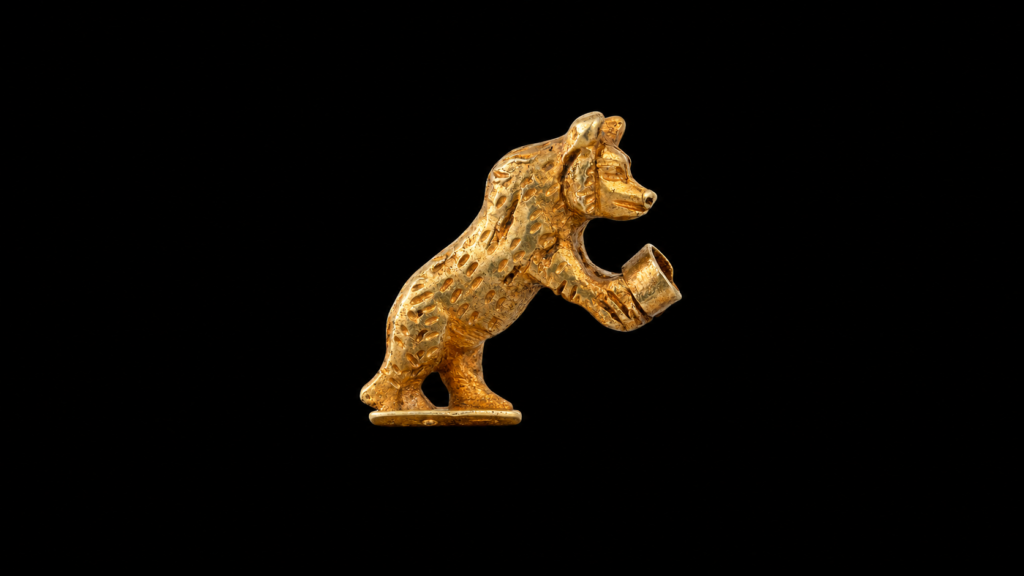
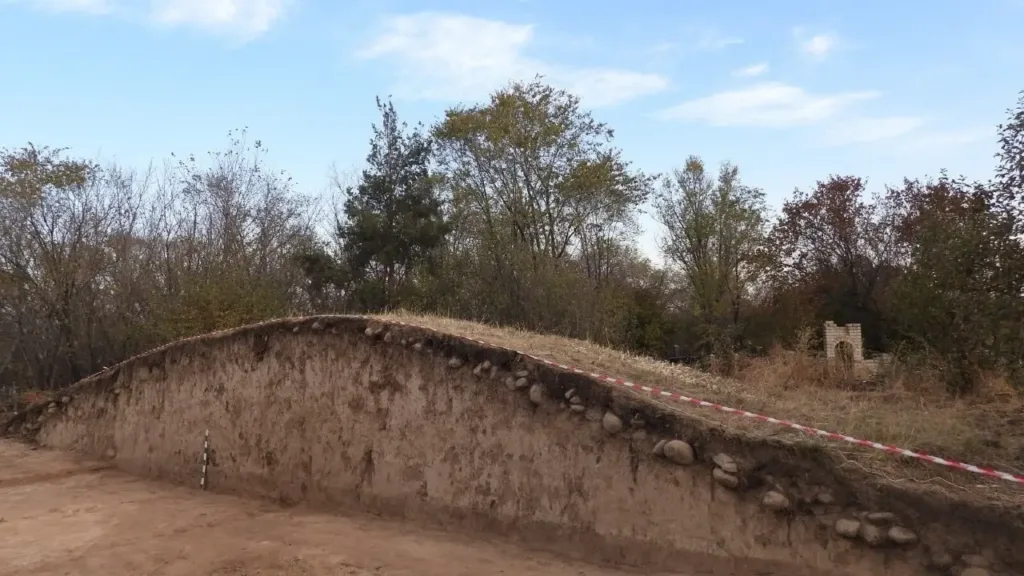
Archaeologists studying a 2,300‑year‑old Sska kurgan in Almaty, Kazakhstan, that was robbed in antiquity have uncovered a small gold bear figurine and many human remains. Preliminary research suggests the tomb may contain four adults and three children—an unusual number for kurgans of similar size in the region.
The excavations, conducted by the Almaty Museum Union, took place at the Karagayly cemetery in the city’s Nauryzbay district. With a diameter of approximately 25–26 meters and a height of 2.5 meters, the kurgan is dated to the 4th–3rd centuries BCE, corresponding to the Saka period of the Early Iron Age.
The Golden Bear Left Behind by Looters
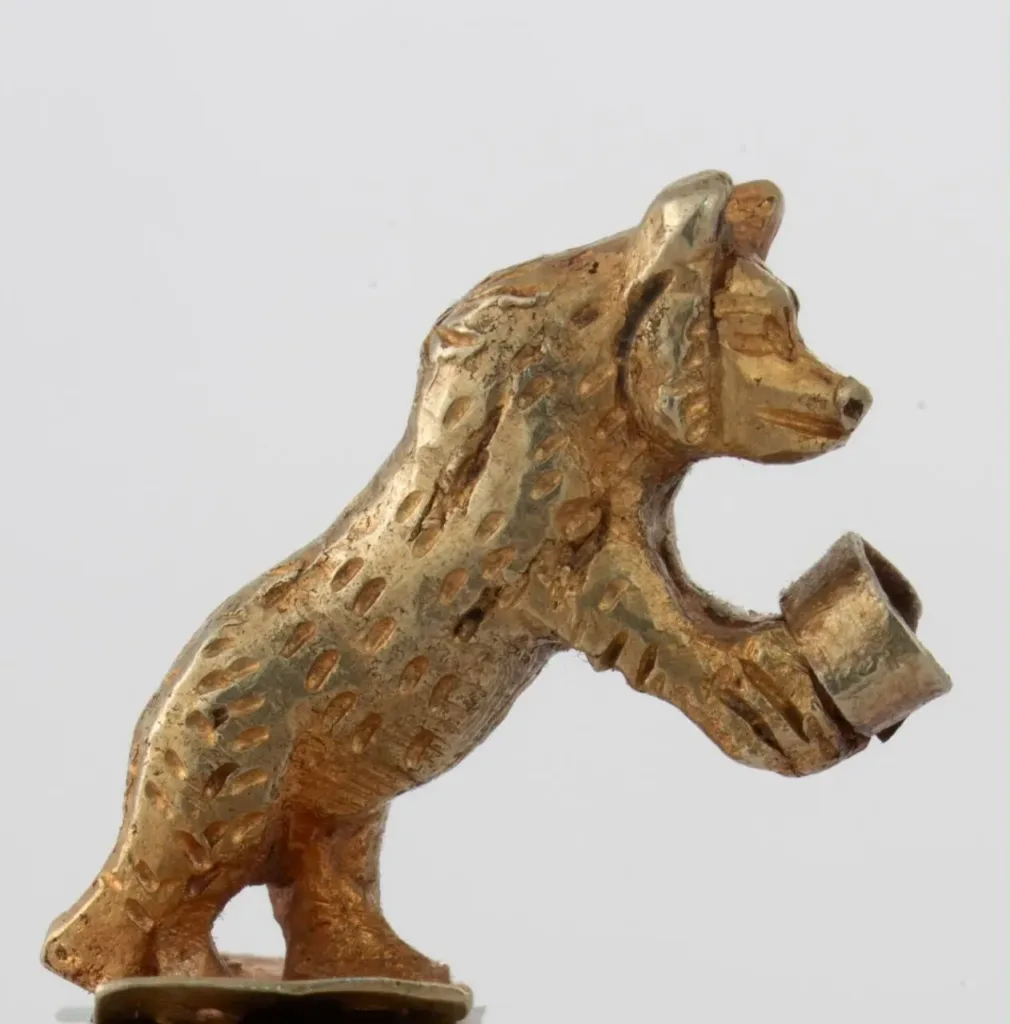
At the center of the tomb lies a looter’s pit approximately three meters deep. Archaeologists determined that the kurgan was plundered in ancient times, leaving most of the grave goods scattered. However, a small golden artifact left behind by the looters became the most significant find of the excavation.
The golden figure, produced using a casting technique, depicts a bear. Small holes on the piece suggest it may have been sewn onto a headdress for decoration. Headdresses adorned with animal figures were striking elements of the clothing culture among Saka communities.
Lyazzat Sagyndykova, Director of the Almaty Museum Union, states that the find is unique in the context of Kazakh archaeology. According to Sagyndykova, no similar golden bear figure has been found in the country before. The piece may also contribute to research on cultural similarities seen across a wide geography stretching from the Black Sea region to the Altai Mountains.
Other examples of such decorations are known from Saka tombs in Kazakhstan. A golden ornament in the shape of a mountain sheep was found on the headdress of the famous Golden Man, and a leopard figure discovered in 2014 at the Kok-Kaynar cemetery was also considered a headdress decoration. However, the bear figure from Karagayly represents a previously unknown example of this tradition.
Seven People Buried in One Kurgan?
The second major finding of the excavation was the number of human remains found in the tomb. Based on an initial evaluation of the bones, archaeologists believe that four adults and three children may have been buried here. However, due to the confusion caused by ancient looting, the exact number of people in the tomb has not yet been finalized.
Marat Nurpeisov, a senior researcher at the Almaty Museum Union, considers the presence of so many human remains in a single kurgan to be unusual. According to Nurpeisov, kurgans of similar size in Kazakhstan were generally prepared for the burial of one or two people.
Along with the bones, ceramic fragments from the Saka period were found in the tomb. However, the interference of looters largely altered the original positions of the finds. Consequently, researchers have not yet been able to determine whether the burials took place simultaneously or at different times.
New examinations involving anthropologists aim to clarify the exact number of individuals in the tomb and the burial conditions. Researchers will also try to understand why the kurgan has a burial arrangement different from similar structures.
Animal Figures in Saka Art
The Sakae were communities who lived across vast sections of the Central Asian steppes in the 1st millennium BCE. Known especially for their gold craftsmanship, animal depictions, and monumental tombs, the Saka culture holds an important place in Kazakhstan’s archaeological heritage.
In the artistic tradition defined as the “animal style,” deer, predatory cats, mountain sheep, and various birds are frequently seen. These figures were used not only in jewelry but also on weapons, horse harnesses, and ceremonial clothing.
The bear figure found at Karagayly adds a new example to this broad artistic tradition. However, it is not yet possible to determine the symbolic meaning of the piece. For now, researchers are focusing on the figure’s form, production characteristics, and similarities to other Saka artifacts.
Research to Continue at Karagayly Excavations
The rescue excavations, carried out with the support of the Almaty Municipality, are part of efforts to protect the Saka heritage around the city. The Almaty Museum Union has been conducting independent archaeological research in the region since 2022.
Previous work by the institution has also yielded important finds. In 2022, an unlooted Saka warrior’s grave dating to the 5th–2nd centuries BCE was found in a kurgan in the Alatau district. Parts of a sword with gold inlay, gold decorations in the animal style, and silver artifacts were identified during the excavation.
Research at Karagayly is not yet complete. Scientists aim to reveal the usage history of the tomb in more detail through anthropological examinations of the human remains.
After the scientific studies are completed, the Almaty Museum Union intends to display the valuable discoveries at the Almaty Museum.
