
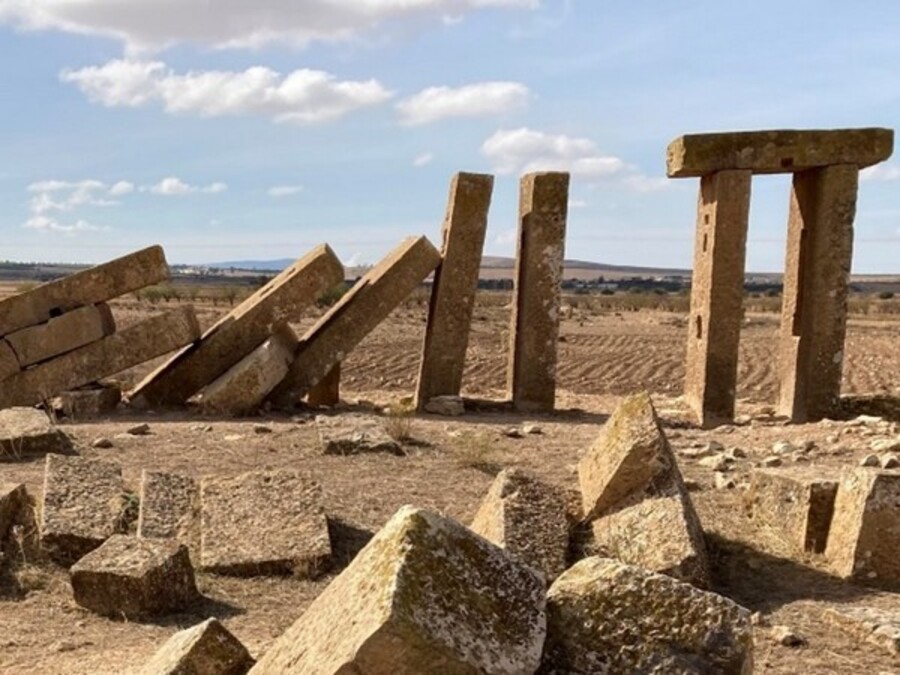
A groundbreaking archaeological mission in Tunisia has revealed one of the most significant Roman industrial sites ever uncovered: the second-largest olive oil mill in the entire Roman Empire. The discovery, led jointly by Ca’ Foscari University of Venice, Université La Manouba, and the Complutense University of Madrid, is offering unprecedented insight into the economic engine that powered Roman Africa.
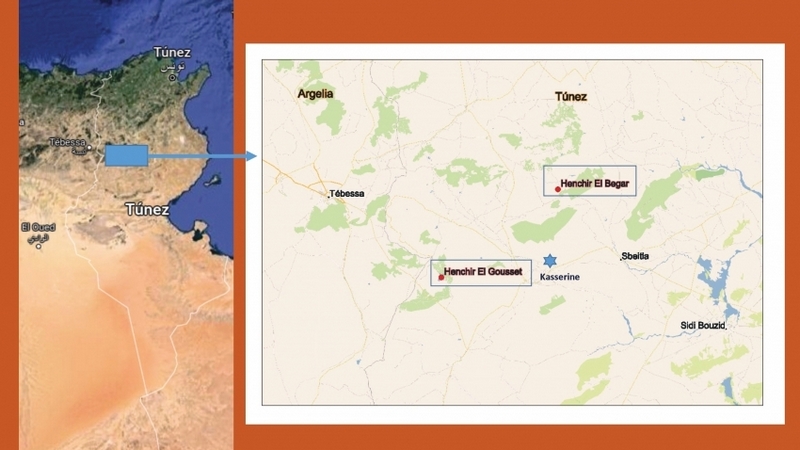
Since 2025, Ca’ Foscari’s Prof. Luigi Sperti, Deputy Director of the Department of Humanities and Director of CESAV, has served as co-director of the international mission. The excavation takes place in the Kasserine region, within the ancient Roman territory of Cillium, near today’s border with Algeria.
A Landscape Built for Oil Production
The international mission, active since 2023 and strengthened in 2025 by the co-direction of Prof. Luigi Sperti, focuses on the ancient Roman settlement of Cillium, near the modern Algerian border.
The area was once a strategic frontier zone where Roman authorities, veteran colonists, and Numidian communities mingled, traded, and shaped a dynamic cultural landscape.. The region’s high steppe terrain and continental climate—with dramatic temperature swings and limited rainfall stored in wells—created ideal conditions for olive cultivation. In antiquity, this environment made Tunisia one of the most important oil producers in the Mediterranean.
Roman Africa was not just a local agricultural hub; it was the primary supplier of olive oil to Rome itself. Oil fueled daily cooking, athletic body care, medicines, and even lamps when lower-quality batches were used as lighting fuel. Understanding how such an essential commodity was produced and distributed is key to understanding the broader Roman economy.
Henchir el Begar: A Rural Giant of Roman Industry
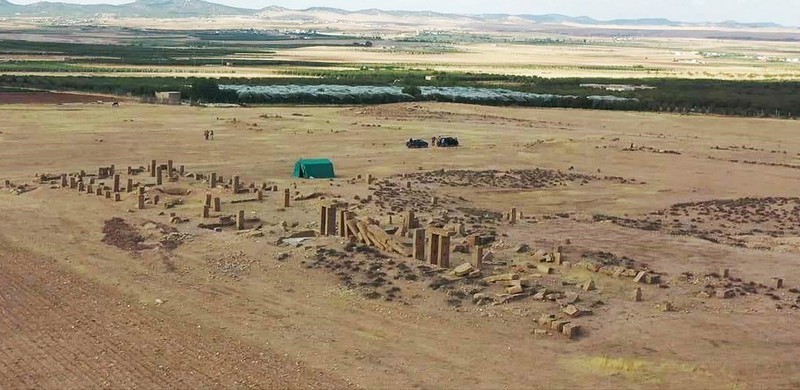
A major focus of the mission is the site of Henchir el Begar, identified with the ancient estate Saltus Beguensis. Spanning roughly 33 hectares, the settlement represents one of the most sophisticated rural production complexes known from Roman Africa.
The site is divided into two major sectors:
Hr Begar 1, home to a monumental torcularium containing twelve massive beam presses—the largest oil mill ever discovered in Tunisia and the second largest in the entire Roman Empire.
Hr Begar 2, featuring an additional eight presses, confirming that the estate maintained an industrial-scale production line operating for centuries.
Both complexes were active from the 3rd to the 6th century AD, demonstrating a remarkable continuity of agricultural activity through Roman, Vandal, and early Byzantine periods.
A Marketplace Authorized by the Roman Senate
Henchir el Begar was not only a production site but also a social and economic hub. A famous Latin inscription found here records a 138 AD senatorial decree authorizing a bimonthly market, underscoring the estate’s strategic importance for regional trade. This market created a vital meeting point for Roman officials, veteran settlers, and the indigenous Musulamii, communities of Numidian origin who had inhabited the region long before Rome’s expansion.
Recent geophysical surveys, including ground-penetrating radar, have revealed an intricate network of houses, storage facilities, roads, and agricultural installations—evidence of a densely organized rural settlement far more complex than previously assumed.
Rare Artifacts and Cross-Cultural Traces
The excavation has also brought to light several valuable finds spanning centuries of occupation, revealing how different cultures shaped and reshaped the site over time. Among the most remarkable discoveries is a decorated bracelet crafted from copper and brass, a piece that reflects the artistic sensibilities and craftsmanship of the region’s ancient inhabitants. Researchers also uncovered a white limestone projectile, an object that hints at defensive practices or hunting activities in the area.
In addition to these artifacts, fragments of architectural sculpture have emerged from the soil, offering clues about the aesthetic traditions and structural techniques employed across various historical periods. Particularly fascinating is the discovery of parts of a Roman press that were later incorporated into a Byzantine wall. This adaptive reuse demonstrates the continuity and transformation of building practices as successive communities repurposed existing materials to suit new needs.
Together, these finds illustrate a multilayered history in which Roman, North African, and Byzantine cultures left tangible evidence of coexistence, interaction, and economic resilience. The artifacts not only deepen our understanding of the site’s long-term occupation but also highlight the cultural dialogue that shaped this frontier landscape.
A Model of International Collaboration
The mission began in 2023, initiated by Prof. Samira Sehili (Université La Manouba) and Prof. Fabiola Salcedo Garcés (Complutense University of Madrid). Ca’ Foscari’s formal involvement—recognized by Italy’s Ministry of Foreign Affairs—has strengthened a growing network of collaboration between Tunisia, Spain, and Italy.
This partnership aligns with rising scholarly interest in the archaeology of production, a field that examines how ancient societies organized industry, agriculture, and trade. Olive oil, a quintessential Mediterranean product, sits at the center of this research movement.
New Light on Roman Africa’s Economic Power
For Prof. Sperti, the mission opens a rare window into the dynamics of frontier life in one of Rome’s most economically vital provinces.
“This mission offers an unprecedented view of the agricultural and socio-economic organization of Roman Africa’s border regions,” Sperti explains. “Reconstructing how olive oil was produced, marketed, and transported on such a massive scale gives us exceptional insight into ancient life—and reinforces the value of archaeology as a tool for cultural and economic development.”
As excavations continue, archaeologists anticipate further discoveries that could reshape our understanding of Roman Africa’s agricultural networks. With its colossal oil mills, complex rural settlements, and layers of intercultural history, Henchir el Begar may yet prove to be one of the most important archaeological sites in North Africa.
Ca’ Foscari University of Venice
Cover Image Credit: Ca’ Foscari University of Venice
