
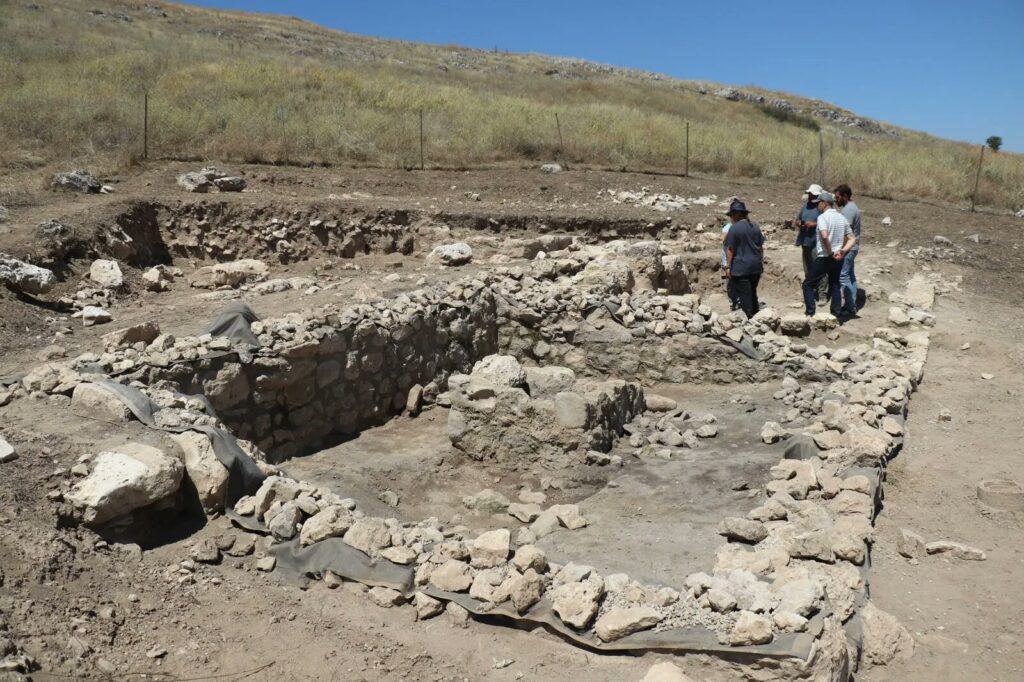
Archaeologists excavating Seleukeia Sidera in southwestern Türkiye have uncovered a remarkably well-preserved blacksmith workshop dating to the fifth century AD. Complete with a forge, an anvil area, a cooling basin and a charcoal store, the 1,500-year-old workshop offers an unusually detailed view of ironworking in a Late Roman city.
The discovery is particularly significant because the ancient city’s name carries a direct association with iron. The epithet Sidera derives from a Greek term connected with iron, and researchers have long suspected that metal production played a central role in the settlement’s economy.
The newly excavated workshop now provides physical evidence supporting that connection.
A Complete Ironworking Space
The workshop was identified after surface surveys revealed kilograms of ironworking slag scattered across the site. Archaeologists subsequently used geophysical surveys to locate structures beneath the ground before beginning targeted excavations.
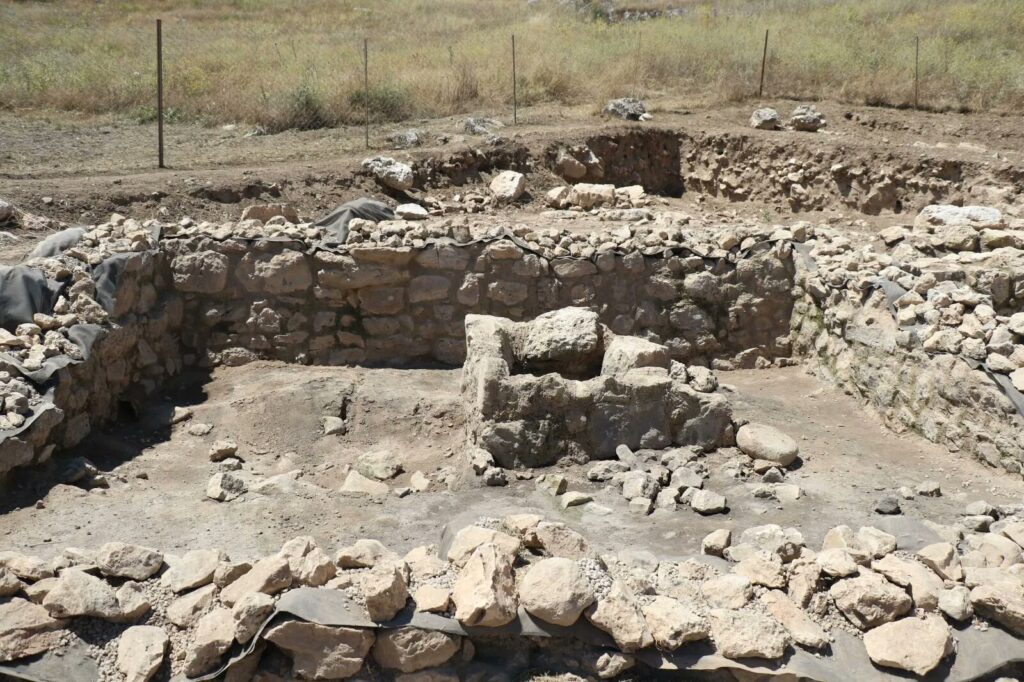
Inside the building, the team uncovered a central furnace where iron was repeatedly heated before being moved to a nearby anvil and hammered into shape. A basin used to cool the metal was also identified, along with a storage area for the charcoal needed to maintain high temperatures inside the forge.
According to excavation director Prof. Bilge Hürmüzlü Kortholt of Süleyman Demirel University, the arrangement preserves nearly every component expected in a functioning ancient blacksmith’s workshop.
“The entire architectural division and spatial organization of a complete blacksmith workshop has been identified here,” Kortholt said, noting that so few comparable examples survive in such good condition in Anatolia.
The archaeologists also recovered unfinished horseshoes, nails, knives and thick pieces of iron. These objects indicate that the smiths were producing and repairing a range of practical goods rather than manufacturing a single specialized product. The finds have been transferred to the Isparta Museum for conservation and further study.
Workshops Inside an Ancient Industrial Quarter
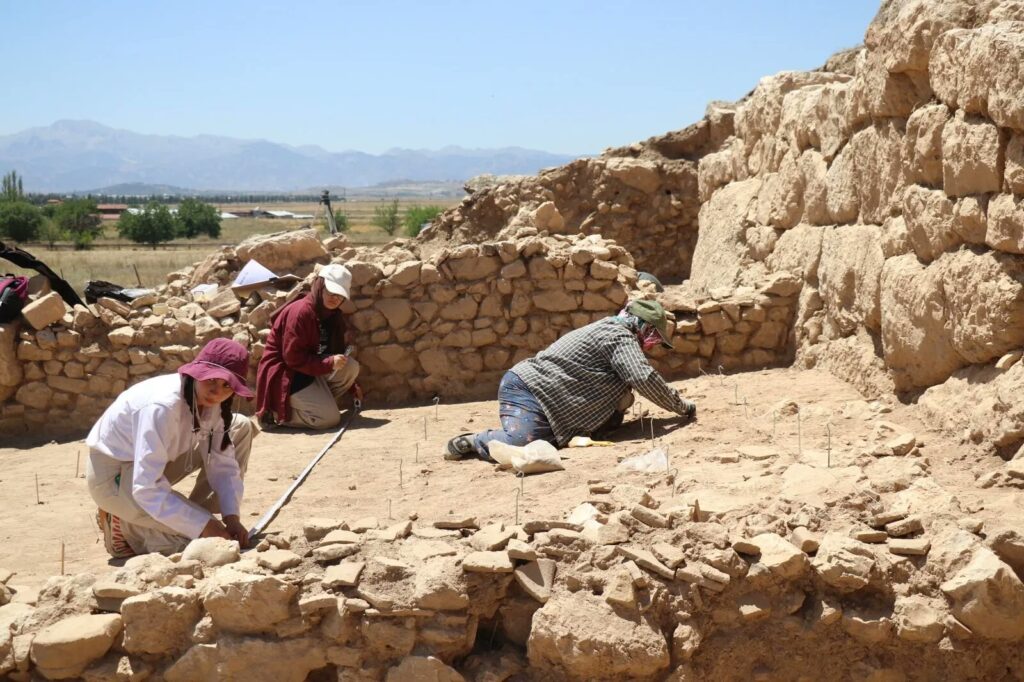
The blacksmith’s workshop was not an isolated building. Excavations revealed adjoining rooms, shops and areas connected with bone working, suggesting that it formed part of a broader production district within the city.
The combination of blacksmithing, bone processing and commercial spaces could help archaeologists reconstruct how craftspeople, traders and customers interacted in Seleukeia Sidera during Late Antiquity.
Rather than being conducted in temporary structures on the settlement’s margins, manufacturing appears to have occupied an organized urban quarter with spaces assigned to different stages of production.
Kortholt said the evidence suggests that Seleukeia Sidera possessed strong industrial districts and considerable production capacity. Its economy was also supported by agriculture and animal husbandry in the surrounding landscape, which benefited from nearby water sources and extensive plains.
Why Seleukeia Was Known as the “Iron City”
Seleukeia Sidera stands near Bayat village in the Atabey district of Isparta Province, approximately 16 kilometres north of the modern city of Isparta. The settlement occupied Hisartepe and overlooked the Kuleönü Plain, a position that allowed it to control important routes through northern Pisidia.
The city was founded during the Seleucid period, probably in the first half of the third century BC under Seleucus I Nicator or his successor Antiochus I. It appears to have functioned initially as a military colony established to protect a major east–west route passing through the region.
Its location between the Burdur and Eğirdir lake basins also gave the settlement access to north–south traffic moving across the broad plain below the city. This strategic position helped Seleukeia develop beyond its original military function into an urban and economic centre.
The city came under Roman control during the second century BC. During the reign of Emperor Claudius in the first century AD, it was restored and became known as Claudioseleukeia. Public buildings were reorganized during the Roman Imperial period, while the settlement gradually expanded from its fortified hilltop centre onto the lower slopes and surrounding plain.
Archaeological evidence indicates occupation in the area from the Iron Age through Late Antiquity. Surviving remains include defensive walls, a Hellenistic theatre, a temple podium, rock-cut burial chambers, cisterns and sacred or public buildings extending around the acropolis.
Researchers had already documented extensive slag deposits at Seleukeia Sidera, strengthening the theory that its Sidera epithet reflected the city’s relationship with iron production and processing. Earlier research projects specifically examined whether metallurgy provided the economic foundation for Seleukeia’s development as a regional centre.
The fifth-century workshop transforms that theory into something tangible: a carefully organized working environment in which iron was heated, hammered, cooled, stored and turned into objects required by the city’s inhabitants.
Excavations Continue Throughout the Year
Archaeological work at Seleukeia Sidera began in cooperation with the Isparta Museum in 2017 and 2018. Since 2019, excavations have continued on behalf of Süleyman Demirel University under the direction of Kortholt and with permission from Türkiye’s Ministry of Culture and Tourism.
The project operates under a year-round excavation permit and was incorporated into the ministry’s “Legacy to the Future” program in 2024. The current research team includes archaeologists, specialists and university students working across the settlement’s public, commercial and production areas.
Further analysis of the slag, iron objects, furnace remains and surrounding workshops may reveal whether the smiths relied on locally obtained raw materials and how widely their products circulated.
For now, the discovery provides one of the clearest archaeological snapshots of ironworking in Late Roman Anatolia—and adds new meaning to the name Seleukeia Sidera, the ancient city associated with iron.
