
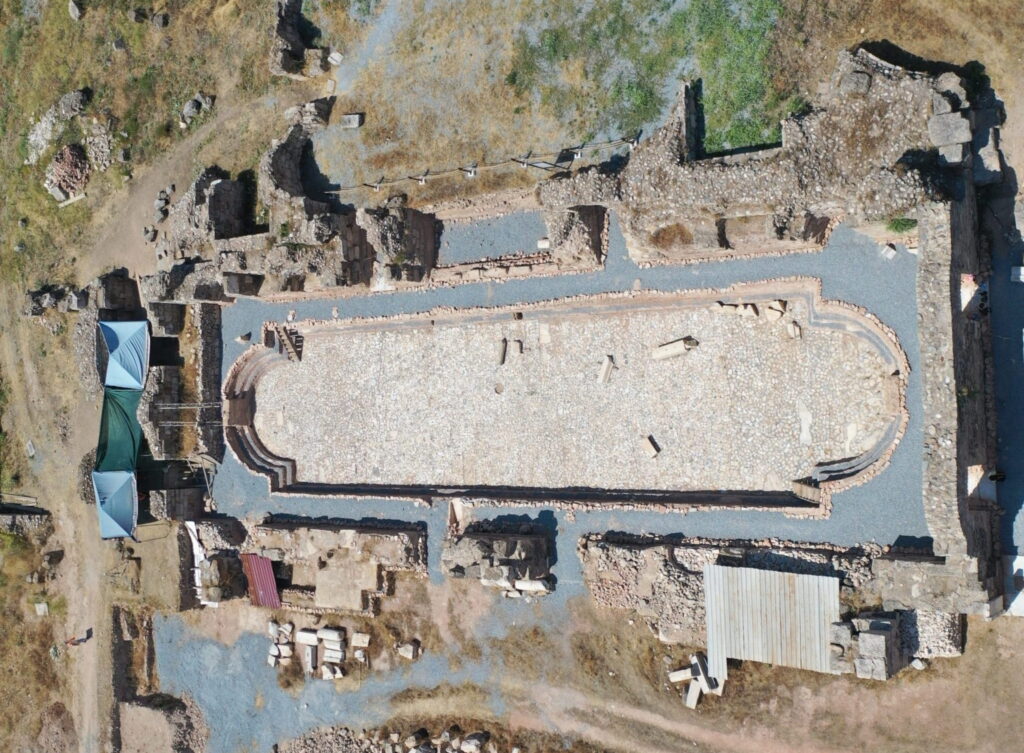
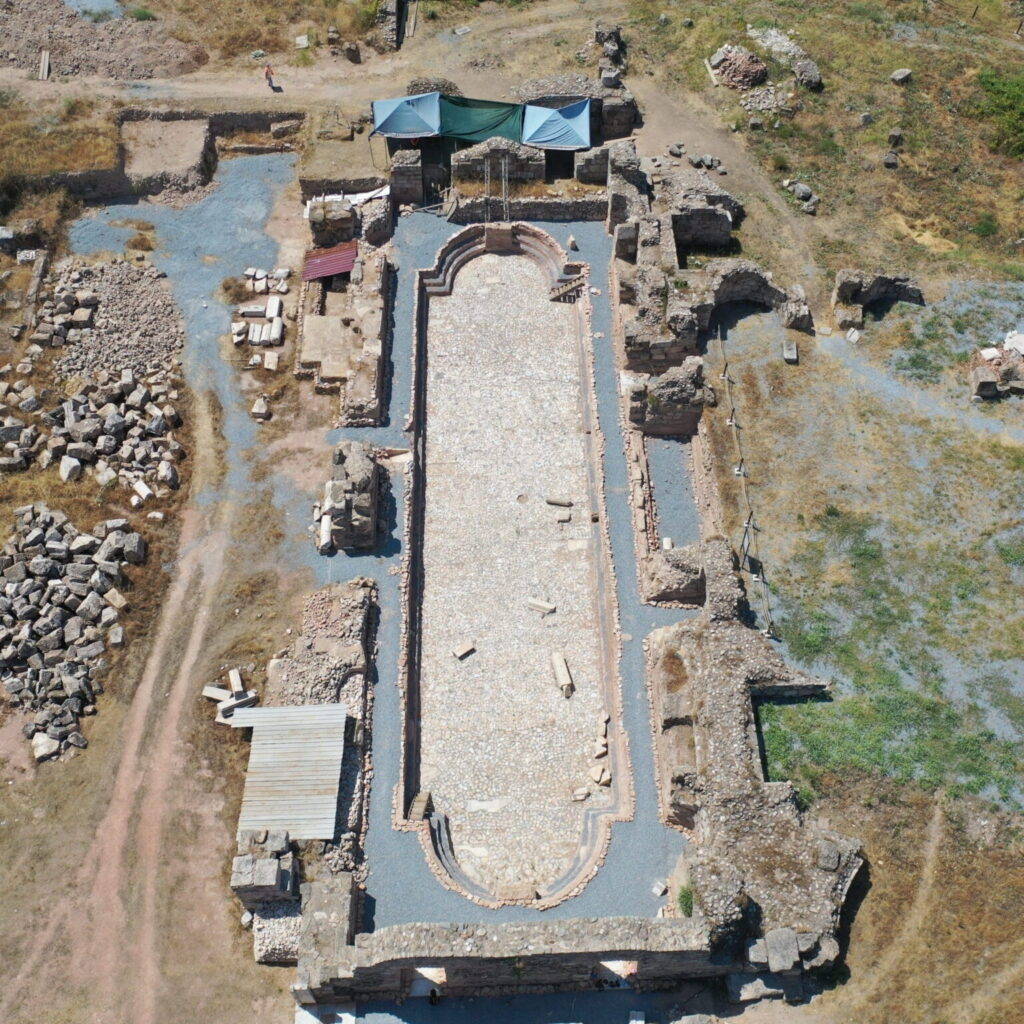
Archaeologists have fully uncovered a 2,000-year-old swimming pool at the ancient city of Tralleis in western Türkiye. Measuring 37 metres long and 12 metres wide, the monumental pool could accommodate approximately 300 people.
The structure lies within a vast bath-gymnasium complex covering about 40,000 square metres near the modern city of Aydın. Professor Murat Çekilmez of Aydın Adnan Menderes University directs excavations.
Work on the pool began during the previous excavation season. With the remaining deposits now removed, archaeologists can examine its complete plan, water infrastructure and relationship with the surrounding athletic and bathing facilities.
A monumental cold-water pool
The rectangular structure has been identified as a cold-water swimming pool positioned near the centre of the bath complex. Such pools, sometimes known by the Latin term natatio, allowed visitors to swim or cool down after using the heated rooms of Roman baths.
At Tralleis, the pool is approximately 1.5 metres deep. Çekilmez described its dimensions as “Olympic” in scale for antiquity because of its size and its likely connection with organised athletic training.
The description does not mean that the structure followed the dimensions of a modern Olympic pool. Instead, it reflects the unusually large capacity of the Tralleis pool compared with examples documented at neighbouring ancient cities.
Researchers believe it was used both by ordinary bathers and by young people receiving physical education in the adjoining gymnasium. In Greek and Roman cities, gymnasia were not simply exercise grounds. They functioned as institutions where young citizens received athletic, intellectual and social training.
Çekilmez estimates that between 3,000 and 5,000 people may have passed through the bath-gymnasium complex in a single day. Students trained there were expected to develop athletic skills and could later represent Tralleis in competitions held elsewhere in the ancient world.
Water travelled 56 kilometres to Tralleis
The excavation has also exposed part of the infrastructure that supplied and maintained the pool.
Spring water was transported from mountains north of the city through a water system extending for approximately 56 kilometres. Archaeologists found drainage channels designed to empty the pool rapidly once its water became dirty.
This arrangement meant that the basin could be drained, cleaned and refilled without leaving stagnant water inside the heavily used complex. The pool appears to have remained uncovered rather than being enclosed beneath a roof, making it particularly suitable for cooling off during the hot summers of western Anatolia.
The combination of long-distance water transport, controlled filling and rapid drainage demonstrates the scale of engineering required to operate a public facility serving hundreds of people at once.
Once conservation and restoration work has been completed, the excavation team plans to refill the ancient pool with water. The project is being conducted under Türkiye’s Heritage for the Future programme.
Tralleis was a major centre of Roman western Anatolia
Tralleis stands on a plateau near Aydın, overlooking the fertile Büyük Menderes Valley. Ancient traditions associated its foundation with Thracians and settlers from Argos, although the city developed through several distinct phases.
Following its capture by Alexander the Great in 334 BCE, Tralleis passed between the kingdoms that emerged after his death. It later became an important urban centre under Roman rule, benefiting from its position along regional trade and communication routes.
The city was renowned for sculpture during the Hellenistic and Roman Imperial periods. Its bath-gymnasium had earlier roots but was damaged by an earthquake in 26 BCE and restored with assistance from Emperor Augustus. During the Early Roman Imperial period, Tralleis was temporarily renamed Caesarea in recognition of that support.
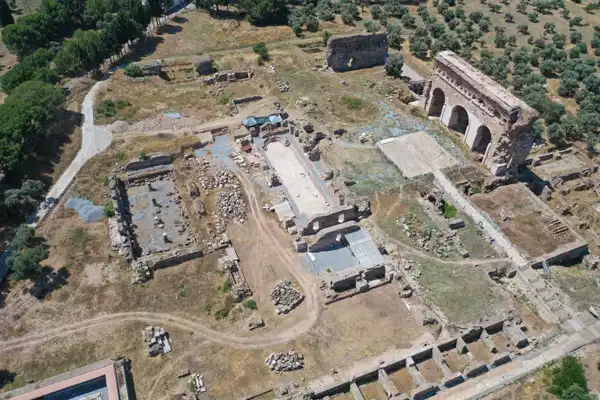
The best-known surviving section of the complex is a monumental three-arched structure locally called Üçgözler, meaning “Three Eyes.” Other remains identified across the site include a marble-paved street, an agora, theatre, stadium, temples, residences, churches and necropolises.
The newly exposed swimming pool adds a clearer picture of daily life within this wealthy ancient city. Beyond its monumental dimensions, the structure shows how bathing, education, exercise and competitive sport were brought together inside one of Tralleis’ most important public complexes.
Cover Image Credit: AA
