
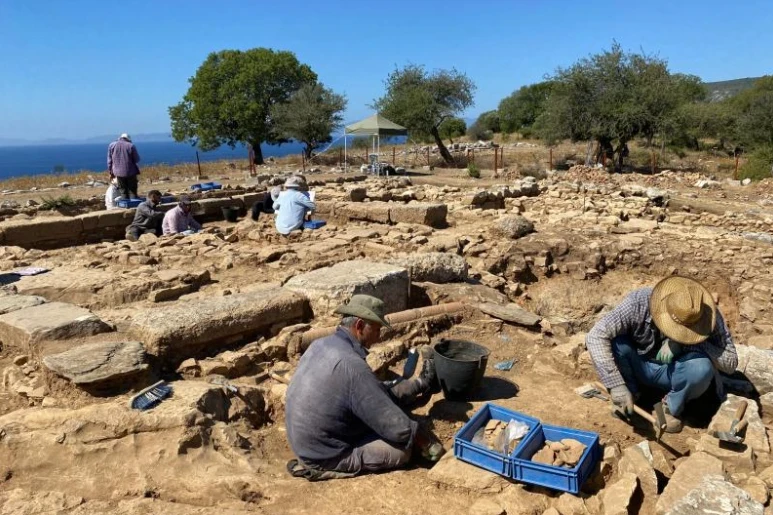
A small ceramic vessel buried beneath an ancient building at Notion in western Türkiye contained 50 Persian gold coins dating back around 2,500 years. According to information reported by the Turkish newspaper Sözcü, the hoard was uncovered in 2023 by the University of Michigan-led Notion Archaeological Project near Ahmetbeyli in İzmir’s Menderes district.
The coins, found beneath the courtyard of a later Hellenistic house, may have been connected to military payments during a period when Persian and Athenian forces competed for control of the Aegean coast.
Gold Coins Hidden Beneath a Hellenistic House
Archaeologists found the coins inside a small ceramic vessel placed against the wall of an older building. The structure had later been buried beneath the courtyard of a large Hellenistic house.
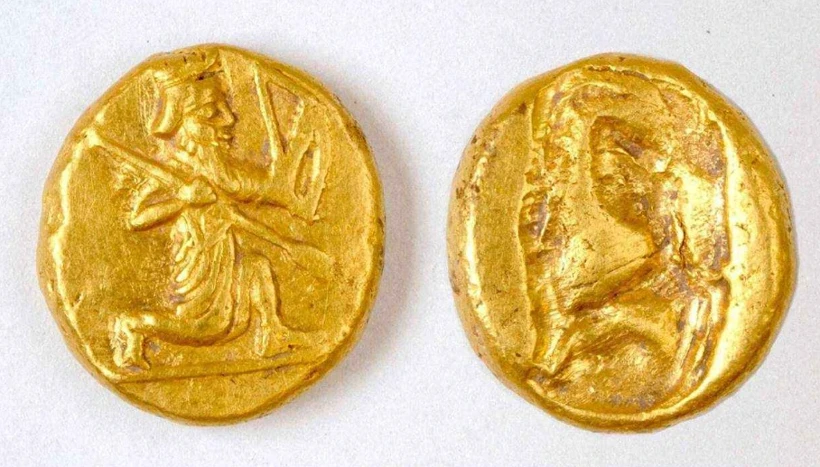
The excavation report identifies the coins as Persian darics dating to the late fifth or early fourth century BCE. Each bears the characteristic image of a kneeling archer associated with Achaemenid Persian coinage. Darics were probably minted at Sardis, an important administrative and economic centre northeast of Notion.
Christopher Ratté, director of the Notion Archaeological Project, said the coins were most likely concealed for safekeeping. Their owner apparently never returned to recover them, possibly because of an unexpected death, military defeat or forced departure.
Could the Coins Have Paid Mercenary Soldiers?
According to the ancient Greek historian Xenophon, one daric was roughly equivalent to a soldier’s monthly pay. The 50 coins found at Notion could therefore have covered the wages of 50 soldiers for one month.
Darics are often associated with payments to mercenary forces operating within the Persian Empire. The hoard may have belonged to a military commander, a wealthy resident or an official responsible for financing local operations. Archaeologists have not connected it to a specific battle or historical event.
Its discovery during a controlled excavation is particularly significant. Many known daric hoards were uncovered without documented archaeological contexts, limiting what researchers can learn about when and why they were buried.
Notion: A Strategic Harbor on the Aegean Coast
Notion was an Ionian Greek city overlooking the Aegean Sea, around 50 kilometres south of İzmir. Its military harbor and proximity to Colophon and the Sanctuary of Apollo at Claros gave the city strategic importance in antiquity.
The city passed between Persian and Athenian spheres of influence during the Classical period. Persian-backed mercenaries occupied part of Notion in the fifth century BCE, while Athens later used the harbor as a naval base. The city returned to Persian control in the early fourth century BCE and remained under the empire until Alexander the Great’s campaign in 334 BCE.
The coins are now held by the Ephesus Archaeological Museum, where further study may provide a more precise date for the hoard and clarify the circumstances surrounding its burial.
Credit: Notion Archaeological Project
