
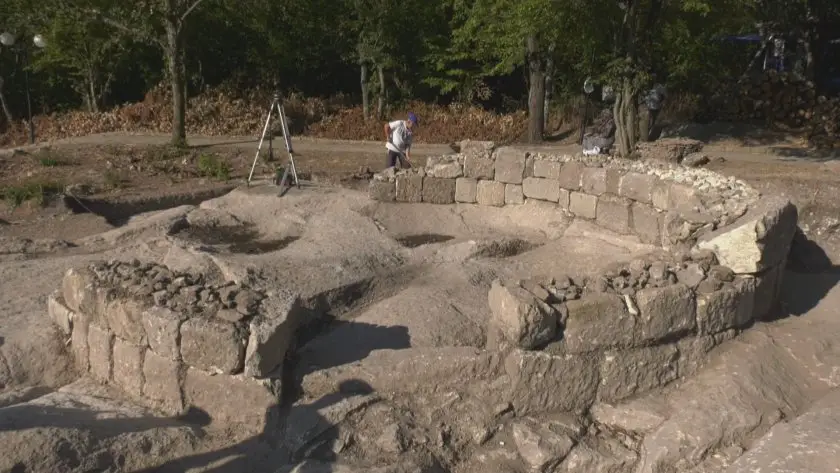
Archaeologists at Perperikon in southern Bulgaria have uncovered an eight-metre-wide circular mausoleum beside rock-cut tombs associated with the cult of a deified Thracian ruler, adding another unusual funerary complex to the ancient city’s sacred southern quarter.
The newly exposed mausoleum dates broadly from the third to fifth centuries AD. Built on a perfectly circular plan, it has a carefully constructed entrance facing east and decorated with finely worked stone elements.
It is the eleventh circular mausoleum identified at Perperikon during the past six excavation seasons. Rather than standing in isolation, the monuments form a striking procession along the principal road that once climbed toward the city’s fortified acropolis.
Prof. Nikolay Ovcharov, director of the Perperikon excavation, said the concentration of Late Roman rotunda mausoleums has no known parallel elsewhere in the Roman world. The claim remains the excavation team’s interpretation, but the number and arrangement of the structures clearly distinguish Perperikon from more conventional provincial cemeteries.
A Necropolis Reserved for Perperikon’s Elite
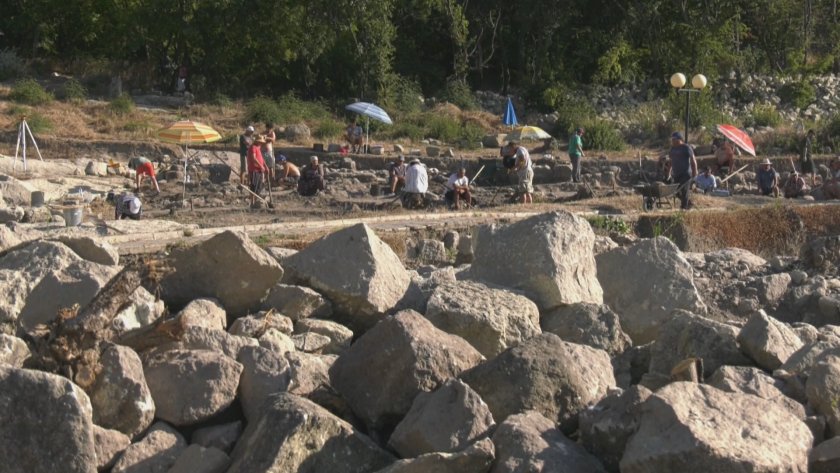
The circular buildings formed part of the so-called Area Sacra, or Sacred Zone, in Perperikon’s southern quarter. Excavations have shown that this district was not primarily residential during the Roman period. It contained temples, monumental tombs and ceremonial buildings positioned beside the road leading into the heart of the city.
Earlier investigations had identified ten Late Roman tombs in this area, apparently built for members of the local aristocracy and governing families. Ordinary inhabitants were buried in a separate cemetery at the eastern foot of the hill. This separation transformed the approach to the acropolis into a highly visible landscape of religion, ancestry and social power.
The arrangement recalls the use of roads outside major Roman cities, where the tombs of prominent families were positioned to be seen by travellers. At Perperikon, however, the repeated use of circular architecture appears unusually concentrated.
Ovcharov has suggested that the preference for rotundas may have reflected the shape of a circular sanctuary at the site traditionally associated with Dionysus. He has stressed that this connection remains hypothetical.
The wider Sacred Zone also includes structures interpreted by the excavation team as temples dedicated to Mithras, the Thracian Horseman, wine and a solar deity. A large double-ringed rotunda uncovered in 2025 contained a central hearth, ash and a place for burning incense, leading archaeologists to associate it with solar worship during the Roman period.
A Tomb for a Ruler Who Became a Hero
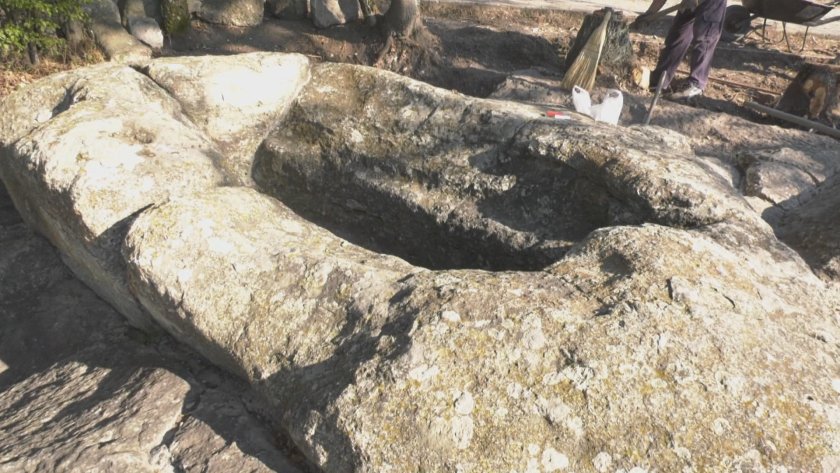
Near the new Late Roman mausoleum, archaeologists reported two much older graves cut directly into the summit of a projecting rock. Their form resembles the monumental rock-cut complex at Tatul, popularly known as the Tomb of Orpheus.
Such monuments are often interpreted as heroa—shrines built around the burial or symbolic resting place of a ruler, priest or ancestral hero who was worshipped after death.
For the Thracians, royal authority could extend beyond the grave. A dead ruler might be transformed into a heroic intermediary between the human and divine worlds, while rituals conducted at his tomb preserved both his sacred status and the legitimacy of later elites.
Comparable rock-cut tombs discovered at Perperikon in 2010 were dated through pottery to the 11th or 10th century BC. Evidence from that complex indicated that ceremonies continued for centuries; a coin of Alexander the Great suggested that the cult remained active during the Hellenistic period. The newly reported excavation has not yet established whether the latest structures are separate tombs or a further investigation of the previously known complex.
Perperikon occupies a 470-metre-high rocky hill in the Eastern Rhodope Mountains, around 20 kilometres northeast of Kardzhali. Its streets, chambers, sanctuaries and defensive works were repeatedly carved into the bedrock as the site developed from a prehistoric ritual centre into a Thracian sanctuary, Roman city, early Christian episcopal centre and medieval fortress.
The juxtaposition of prehistoric-style royal tombs and Late Roman aristocratic mausoleums now reveals something more enduring: for generations separated by more than a millennium, Perperikon’s southern approach remained a place where political authority, sacred memory and the commemoration of the powerful converged.
