
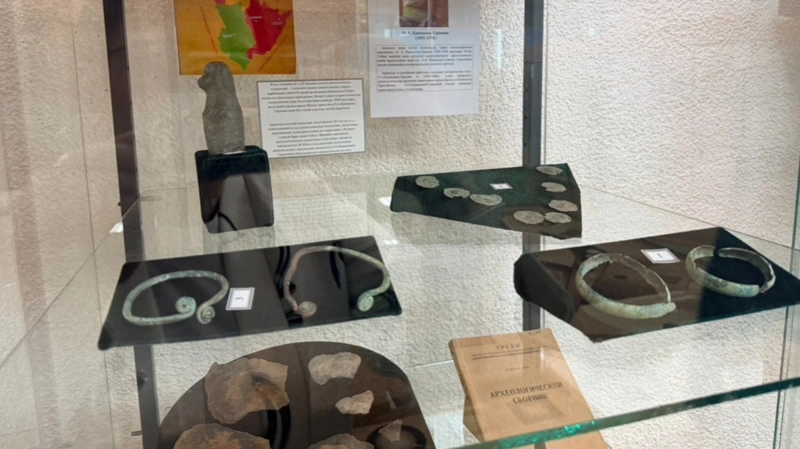
A Bronze Age woman buried in northern Kazakhstan would have towered over almost everyone around her.
Standing close to two meters tall, she was dramatically taller than the other individuals found in the same cemetery, whose estimated heights were generally between 1.3 and 1.4 meters. Her exceptional stature brings to mind Brienne of Tarth, the imposing noblewoman from Game of Thrones whose height makes her instantly recognizable in a world where she stands apart from those around her.
The comparison is physical rather than literal. Nothing found in the grave identifies the woman as a warrior. Yet her height, the central position of her burial and the unusual way she was laid to rest suggest that she was not treated as an ordinary member of her community.
Her grave forms part of the Alekseevka archaeological complex near Rudny in Kazakhstan’s Kostanay Region, one of the most unusual Bronze Age sites discovered on the Eurasian steppe.
A Woman Placed at the Heart of the Cemetery
The woman was buried near the center of the Alekseevka cemetery, a position that archaeologists believe may have reflected status or social importance.
Her burial also differed from the others around her. Most of the dead were placed on their left sides, while she rested on her right. Eight ceramic vessels accompanied her, with four arranged near her head and four near her feet.
The combination of her extraordinary height, central grave and distinctive burial treatment has led researchers to suggest that she occupied a special place within the community. She may have belonged to an influential family, held a ceremonial role or simply been remembered as a striking individual whose physical appearance carried social meaning.
Whatever her position, the burial was carefully arranged. The vessels placed beside her indicate that her funeral followed a deliberate ritual rather than a simple interment.
Her skull was later taken to Moscow, where renowned anthropologist Mikhail Gerasimov reconstructed her face. Gerasimov developed a method of rebuilding a person’s probable appearance from the shape of the skull, allowing the woman’s features to be visualized thousands of years after her death.
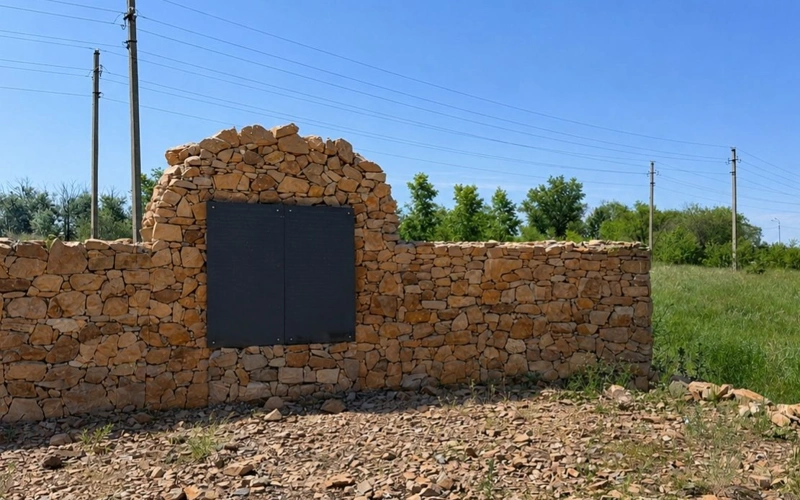
A Site First Revealed by the Tobol River
The Alekseevka complex was discovered in 1921 after geology student Sokolov noticed pottery fragments and ancient tools emerging from sandstone along the Tobol River.
Systematic excavations began in 1931 under archaeologist Olga Krivtsova-Grakova. Her work uncovered 21 graves, traces of a prehistoric dwelling, and a large ceremonial mound.
The site is associated with the Andronovo cultural tradition, which spread across a vast area of the Eurasian steppe during the Bronze Age. Communities linked with this archaeological world lived across parts of present-day Kazakhstan, southern Russia, the Urals and Siberia.
Alekseevka is unusual because three different parts of Bronze Age life survived together in one place: a settlement where people lived, a cemetery where they buried their dead and a ceremonial area where communal rituals were performed.
This combination allows archaeologists to examine not only how the community treated its dead, but also how its members lived, produced objects and gathered for ceremonies.
Ritual Offerings and Skilled Craftsmanship
Excavations produced jewelry made from bronze, silver, and gold, as well as weapons and large quantities of pottery.
The ceremonial mound was especially rich in evidence. Archaeologists found more than 50 vessels arranged around its edge. Some contained traces of food offerings, including meat from both wild and domesticated animals.
These remains suggest that ceremonies at Alekseevka may have involved shared meals, sacrifices or offerings to the dead. The vessels themselves were handmade, but their durability and craftsmanship demonstrate a high level of technical knowledge.
The mound reportedly once reached a height of around nine meters, making it a prominent feature in the surrounding steppe landscape. Only a small portion of it survives today.
A Rare Portrait of Bronze Age Society
The tall woman has become the most memorable figure connected with Alekseevka, but her grave gains much of its importance from the wider archaeological setting.
The settlement, burials and ceremonial remains together preserve a detailed picture of a Bronze Age community. They show people who raised animals, hunted, made durable pottery, worked metal and followed carefully organized funerary traditions.
At the center of that picture stands a woman whose height would have made her exceptional in almost any ancient population.
Like Brienne of Tarth, she must have been difficult to overlook. Yet unlike the fictional character, her real identity remains hidden beneath the archaeological evidence. Her grave offers no name and no written account of her life—only her extraordinary stature, the vessels placed beside her, and the prominent position chosen for her burial.
Those details are enough to show that, within her community, she mattered.
