
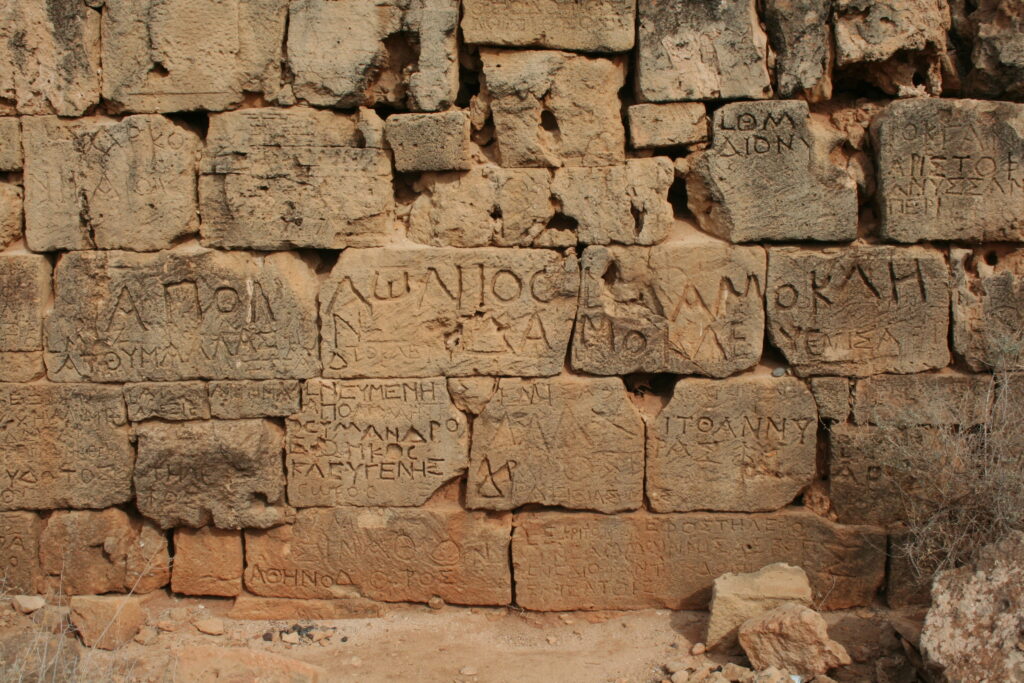
For more than two thousand years, hundreds of letters and monograms have remained visible across the weathered stones of a monumental Greek gateway on Libya’s Mediterranean coast. They were easy to dismiss as simple builders’ marks—practical symbols with little meaning beyond the ancient construction site.
A new study suggests they tell a much richer story.
Archaeologist Anna Urszula Kordas of the University of Warsaw examined 626 marks carved into the towers of the Tauchira Gate at Ptolemais, an ancient city in Cyrenaica. Her research indicates that the symbols recorded who worked on the gate, how individual teams were organized, how payments may have been controlled, and even who helped finance the project.
Ancient Marks Hidden in Plain Sight
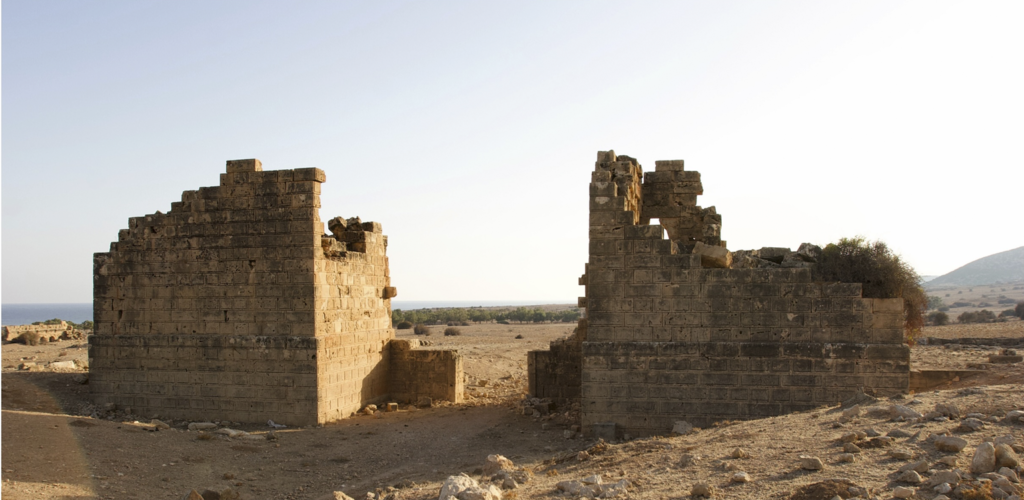
The Tauchira Gate is the best-preserved section of Ptolemais’ fortifications. Its two imposing towers stand on either side of a central passage, preserving one of the city’s most striking Hellenistic monuments.
Kordas identified 27 different types of marks on the structure. Some consist of individual Greek letters, while others form linked letters, abbreviations and elaborate monograms.
Their appearance was not random.
Large and roughly carved symbols were found on unfinished blocks, sometimes positioned sideways or upside down. This suggests they were added before the stones were placed in the wall, possibly to track quarry work, transportation or early payments.
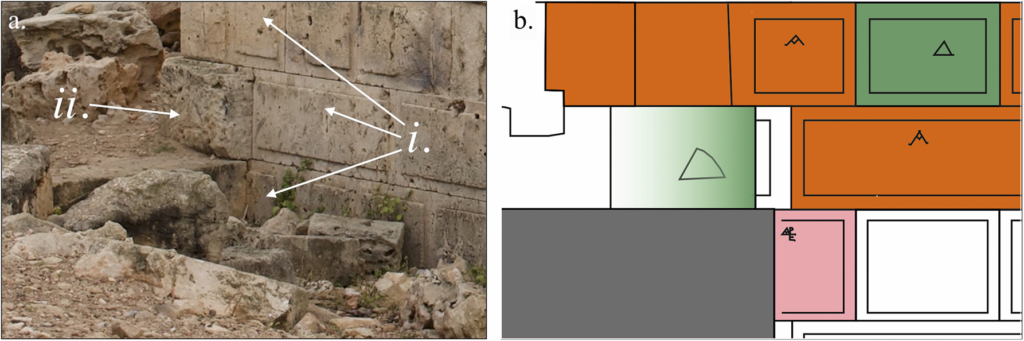
The symbols on the outer façades were very different. They were carefully engraved at the center of finished stone surfaces and always appeared upright. The masons therefore seem to have carved them only after the blocks had been installed and dressed.
Most importantly, these marks were intended to remain visible.
On many ancient Greek buildings, comparable signs disappeared when stoneworkers completed the final surface treatment. At the Tauchira Gate, however, the letters and monograms were deliberately preserved. No close parallel is currently known among other Hellenistic fortifications.
A Construction Ledger Carved in Stone
The marks may have served as a permanent system of accountability.
By placing a symbol on each finished block, supervisors could record which team had prepared it, calculate payments and identify responsibility for the quality of the work. The consistent marking of consecutive stones suggests that nearly every finished block may once have carried such a sign.
The study identifies at least seven teams represented by Greek letter labels. Another 14 teams, contractors or individual craftsmen may have been recorded through more complicated monograms.
One symbol, known as AP/E, appears 92 times on the northern tower. Its frequency suggests that it may have represented a workshop owner, contractor or sponsor rather than a single mason.
Some blocks even carry two different marks. These may record cooperation between workshops or show that different specialists handled separate stages of the same stone’s preparation.
The stone itself probably came from a limestone quarry less than 500 metres from the gate. Workers appear to have transported the blocks largely unfinished and completed the detailed surface treatment after placing them in the walls.
Were Wealthy Sponsors Advertising Their Support?
The more elaborate monograms may also preserve evidence of private funding.
Greek cities often relied on wealthy citizens to contribute money, materials or workers to major public projects. This practice, known as epidosis, could help finance fortifications and other civic buildings.
Kordas proposes that some monograms on the Tauchira Gate may have belonged to workshop owners or private patrons. Their prominent position would have publicly acknowledged those who supported the construction—and perhaps encouraged competition among donors seeking recognition.
The gate may therefore have functioned as both a defensive monument and a public record of civic participation.
A Monument from the Age of Ptolemy VIII
Ptolemais developed from the coastal harbour of inland Barka and later became an important Hellenistic and Roman city, known for its planned streets, public buildings and wealthy residences.
The monumental towers of the Tauchira Gate appear to have been added during a later reconstruction of the city’s older defensive system. Letter forms and comparisons with dated inscriptions place this work in the second century BCE, most likely during the reign of Ptolemy VIII Physcon.
What survives at Ptolemais is therefore more than a wall covered with mysterious symbols. It is a rare glimpse into an ancient building site—where labor, money, ambition, and public reputation were permanently written into the stones.
Kordas, A. U. (2026). Life on a Hellenistic Construction Site: Stonemasons’ Marks on the Tauchira Gate at Ptolemais in Cyrenaica. European Journal of Archaeology, 1–22. doi:10.1017/eaa.2026.10038
Cover Image Credit: Public Domain
