
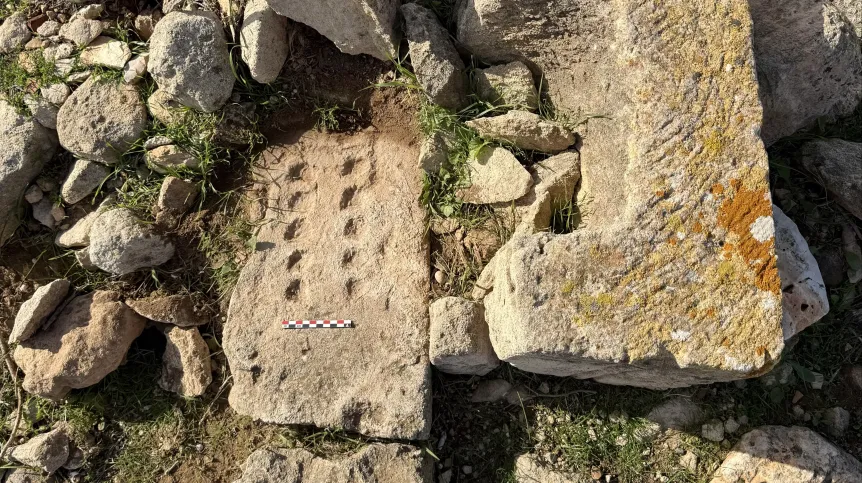
In the ruins of Ptolemais, archaeologists are uncovering something unexpectedly human. Not grand temples or monumental inscriptions, but the quiet traces of leisure. More than 100 stone-carved game boards, etched into the remains of an abandoned city, are offering a rare glimpse into how people passed time long after Ptolemais had fallen into ruin.
The discovery, led by Zofia Kowarska of the University of Warsaw, is reshaping how researchers understand everyday life in post-classical antiquity. These simple grids, carved into limestone blocks and ancient walls, point not to imperial power or elite culture, but to the routines of shepherds who once occupied the site.
A City Revisited After Years of Silence
Located in the historical region of Cyrenaica, Ptolemais was founded in the late 4th or early 3rd century BCE under the rule of Hellenistic Egyptian kings. It grew into one of the largest urban centers in the region before declining and eventually being abandoned following the Arab conquest in the 7th century CE.
Modern excavations resumed in 2023 after a long interruption caused by instability linked to the Libyan Civil War. Since then, Polish archaeologists have been working across multiple sectors of the site, including the acropolis and nearby underwater zones where remnants of ancient shipwrecks have also been identified.
But among these large-scale investigations, it is the small, repetitive carvings scattered across the ruins that are drawing increasing attention.
Grids in Stone: Mapping Forgotten Games
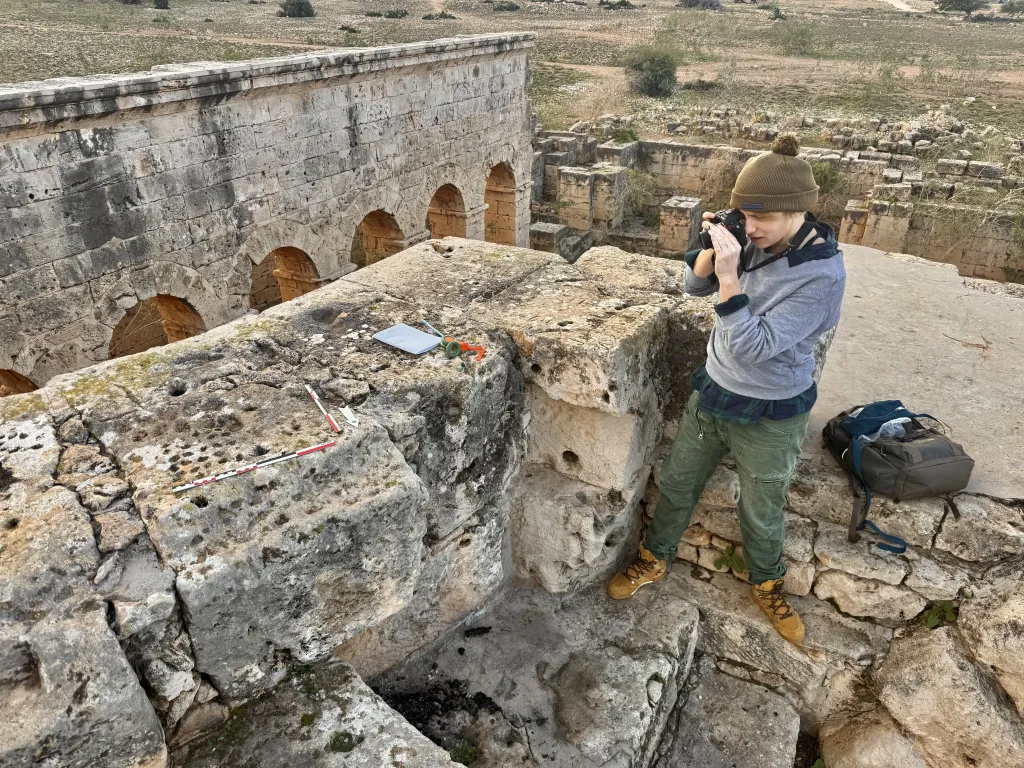
The boards themselves are deceptively simple. Each consists of a series of small, circular depressions arranged in square or rectangular patterns. Some are as basic as a three-by-three grid, while others expand into five-by-five, six-by-six, or even seven-by-seven layouts. Rectangular variants, such as four-by-six grids, also appear.
Their size varies. Some measure just 15 centimeters across, while others extend to several dozen centimeters. The boards are carved into whatever surface was available—blocks of limestone, fragments of marble columns, or the exposed walls of ancient buildings.
Kowarska initially expected to document only a handful. Instead, within days, the number exceeded 100. In certain areas, multiple boards cluster together, sometimes twenty or more in a single spot. This density suggests that these were not isolated carvings, but part of a widespread and habitual activity.
Dating the Undatable
One of the key challenges is chronology. Unlike coins or ceramics, these carvings lack clear stratigraphic context. There are no associated layers or datable materials that can anchor them to a specific century.
However, one conclusion is widely accepted. The boards were carved after the city had already lost its original function. In other words, these games were played not in a thriving Greek metropolis, but among its ruins.
This shift in context is critical. It transforms Ptolemais from a classical urban center into a landscape of reuse, where later populations adapted the abandoned architecture to their own needs.
Echoes of Games Across Continents
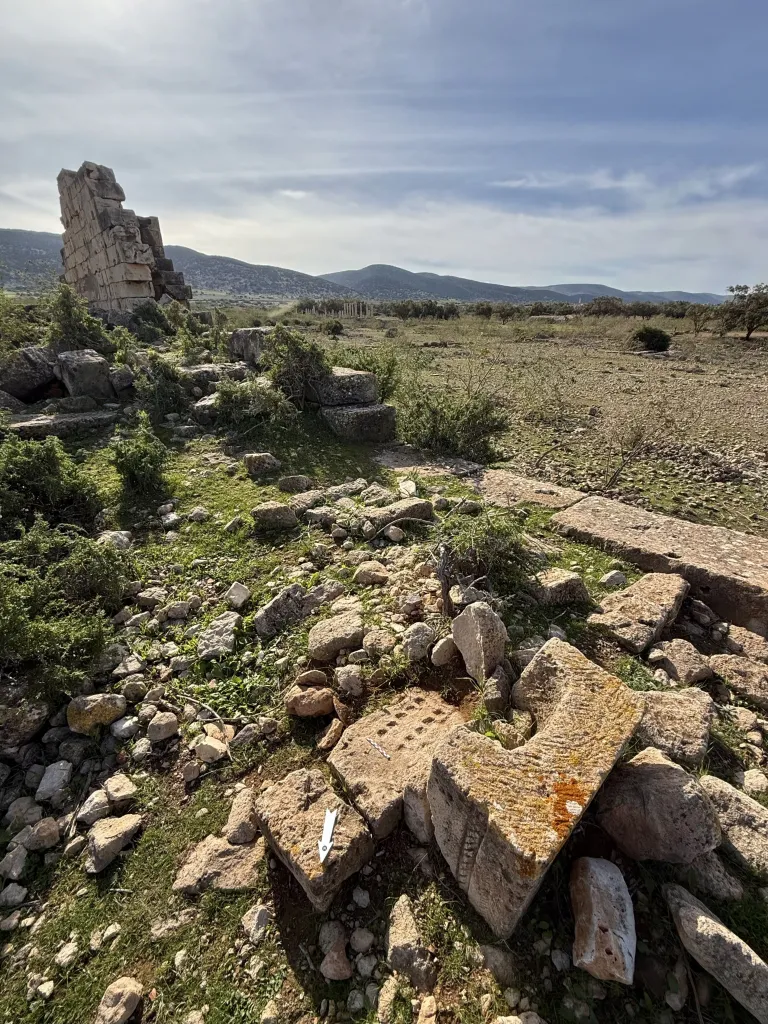
The patterns carved into the stone are not unique to Libya. Similar game boards have been documented across North Africa, Central Africa, and parts of the Middle East. Some resemble variants of mancala, a widely distributed family of strategy games.
Others appear closer to familiar formats. One type, played on a three-by-three grid, mirrors the logic of tic-tac-toe. Another involves capturing opposing pieces, echoing the mechanics of checkers.
These parallels suggest a shared gaming culture that transcended regional boundaries. As noted in reporting by La Brujula Verde, such finds reinforce the idea that simple, portable game systems spread easily across mobile populations, adapting to local conditions while preserving core rules.
Living Memory in Tolmeita
Today, the modern town of Tolmeita sits near the ancient site. While most residents no longer recognize the games once played on these boards, fragments of knowledge persist.
An elderly local, interviewed during the research, described two surviving game types. In one, two players each control three pieces on a nine-square grid, aiming to align them in a row. In another, players attempt to capture each other’s pieces, with victory determined by the number of captures.
The materials used were never standardized. Stones, pottery fragments, seeds, or any small distinguishable objects could serve as game pieces. Function mattered more than form.
Shepherds and the Landscape of Play
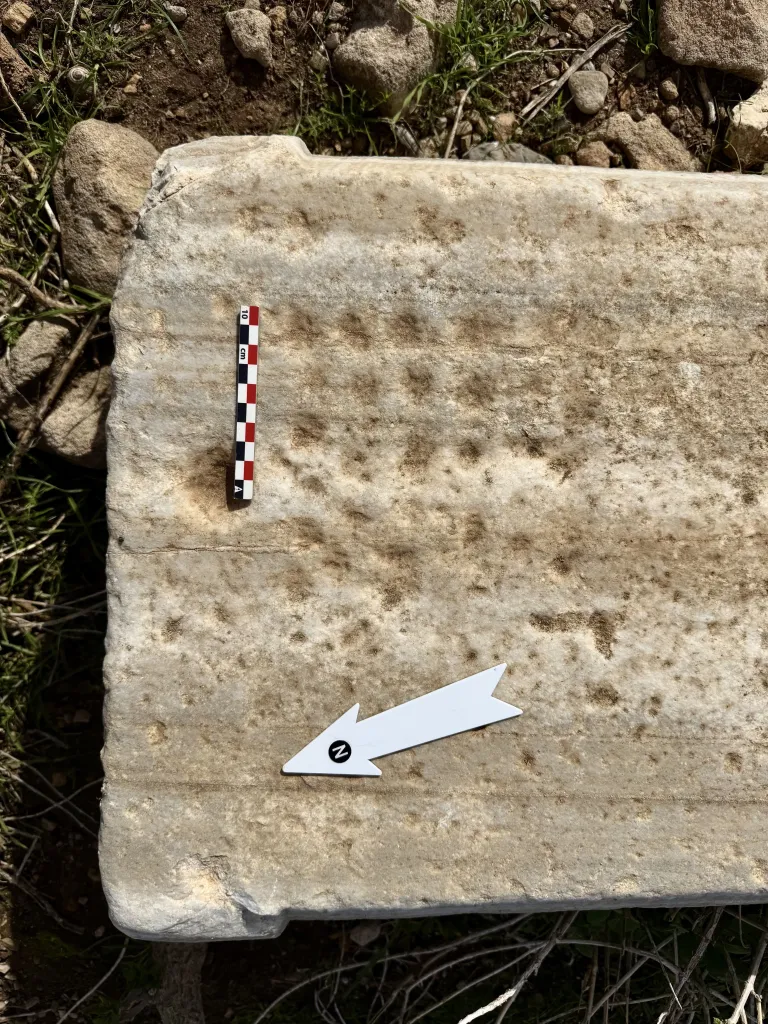
Archaeologists believe the primary users of these boards were shepherds. The area surrounding Ptolemais remains ideal for grazing, with wide open land suitable for goats and sheep.
The placement of the boards supports this theory. Many are located on elevated sections of ruins or at the corners of buildings, positions that offer clear vantage points over the surrounding terrain. These would have been ideal spots for monitoring herds.
In this setting, the boards take on a practical dimension. They were not just recreational tools, but part of a daily rhythm. While animals grazed, shepherds waited, watched, and played.
A Quiet Layer of History
The discovery adds a new dimension to archaeological interpretation. It shifts attention from monumental architecture to the subtle imprints of daily life. These carved grids, easily overlooked, document a form of continuity. Even as cities collapse and political systems change, human habits endure.
Perhaps most striking is the temporal contrast. A once-grand Hellenistic city becomes, centuries later, a pastoral landscape dotted with improvised game boards. The stones remain the same, but their meaning evolves.
As research continues, the number of documented boards is expected to grow. Each new example reinforces the same idea. History is not only written in inscriptions and monuments. Sometimes, it is scratched into stone by those who had time to spare.
Cover Image Credit: Game board carved into a stone block discovered in the eastern part of the city. Zofia Kowarska
