
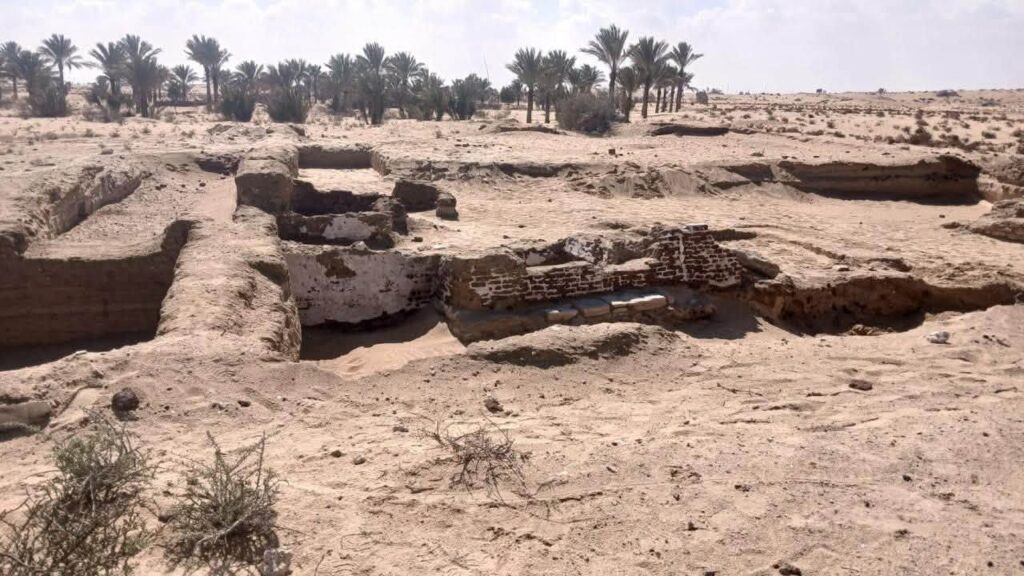
Egypt’s Ministry of Tourism and Antiquities has announced a significant archaeological discovery in North Sinai: the remains of a caravanserai, or khan, in the long-buried city of Asila.
The find sheds new light on one of the most important overland routes in Islamic-era Egypt — the Sultani Road, better known as the Egyptian Pilgrims’ Road (Darb al-Hajj al-Masri) — which once linked the Nile Valley to the Arabian Peninsula and the Levant.
A Structure Built to Serve Travelers
The discovery was made by a mission from the Supreme Council of Antiquities’ North Sinai Islamic and Coptic Antiquities department. Excavators uncovered the foundations of a substantial building believed to have functioned as a caravanserai, a fortified rest stop where merchants, pilgrims, soldiers, and postal couriers could shelter, trade, and resupply along their journey.
Tourism and Antiquities Minister Sherif Fathy described the find as an important addition to a growing string of discoveries that are helping researchers reconstruct Sinai’s history and the civilizations that once flourished there. He noted that the site had lain buried under sand for centuries before excavation work, which began last year, started bringing its features back to light. According to the minister, the discovery opens a window onto the historic road network that connected Egypt to the Arab East, along with the movement of pilgrims, traders, armies, and mail that depended on it. He added that the ministry places particular emphasis on excavation, documentation, and restoration work across Sinai as a way of preserving the peninsula’s heritage.
Architecture That Points to a Major Trading Post
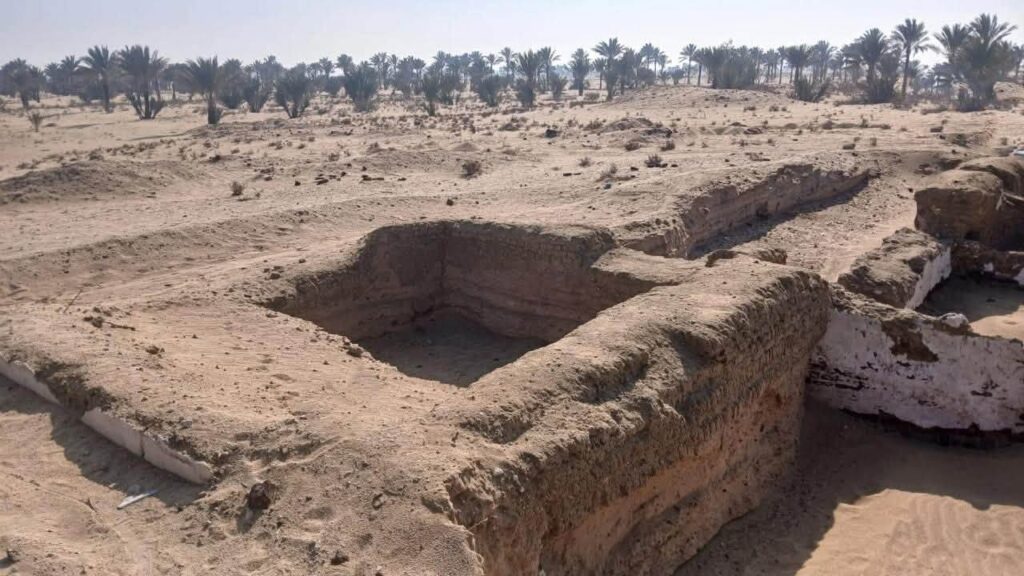
Dr. Hisham El-Leithy, Secretary-General of the Supreme Council of Antiquities, explained that the excavation revealed walls built from mudbrick and red brick, reinforced at their base with large limestone blocks — a construction technique commonly used for major buildings during the Islamic era. The walls extend to the north, east, and south, forming a layout with several interior rooms, some of which are thought to have served as shops attached to the inn.
El-Leithy noted that the overall plan closely resembles that of Khan al-Khuwaynat, another significant trading station in North Sinai, though the Asila site is smaller in scale. That size difference supports the idea that the building functioned specifically as a resting point for pilgrims and merchants traveling the Sultani Road, rather than as a larger commercial hub.
Everyday Life Along the Pilgrim Route
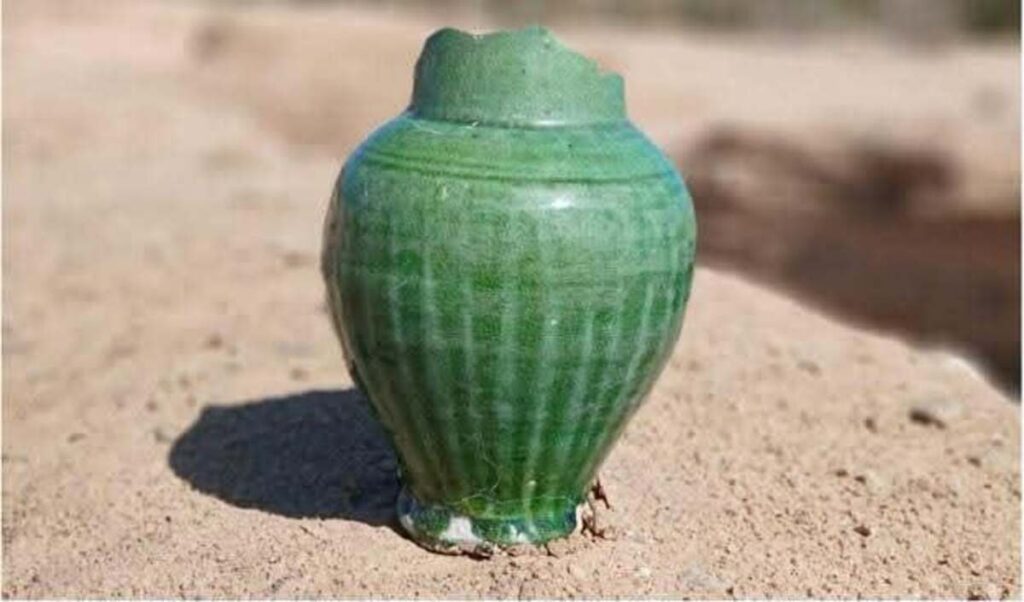
Dr. Diaa Zahran, head of the Islamic and Coptic Antiquities sector, reported that the team recovered artifacts offering a glimpse into daily life at the site. These included large storage jars once used to hold water and provisions, vessels coated in olive-green glaze, pieces finished in red and white, and fragments of oil lamps used for lighting.
Zahran pointed out that Asila’s proximity to other historic waystations — including Khuwaynat, Amoria, and Qatia — places it within a broader network of stations that supported trade, pilgrimage, and travel across Sinai, underscoring the peninsula’s role as a civilizational and commercial bridge between Egypt and the Levant.
Mohamed Khalil and Saddam Hussein, co-directors of the excavation mission, said the find helps researchers better understand the infrastructure that once supported trade caravans, pilgrim convoys, and military movements during the Islamic period, as well as the wider network of strategic stations built along Sinai’s roads to serve travelers.
Dating the Site to the Mamluk Era
Based on artifacts recovered so far, the mission believes the site dates to the Mamluk period. Among the finds are vessels with olive-green glaze characteristic of that era, along with glazed pottery sherds bearing decorative motifs that may be linked to the reign of Sultan al-Nasir Muhammad ibn Qalawun, during the Bahri Mamluk era. Some fragments carry Arabic lettering that could form part of the word “al-Nasir,” though further study is needed to confirm the precise dating and the exact function of the site’s buildings.
Excavation work is continuing, with the mission aiming to uncover further architectural details of the building and its surrounding structures, which could help confirm its identification as a caravanserai, alongside ongoing documentation and restoration efforts.
The Sultani Road: Egypt’s Historic Pilgrimage Route
The Sultani Road, also known as the Egyptian Pilgrims’ Road, was for centuries one of the most vital overland routes in the region, carrying pilgrims bound for Mecca alongside trade caravans and postal traffic between Egypt, the Levant, and the Arabian Peninsula. Historical sources indicate the route remained in continuous use for hundreds of years, until political and military upheaval in the region — most notably the Crusader threat in the eastern Mediterranean during the 11th century CE — led to its decline. Pilgrimage traffic subsequently shifted southward, moving instead through the Aidhab–Jeddah route across the Red Sea.
