
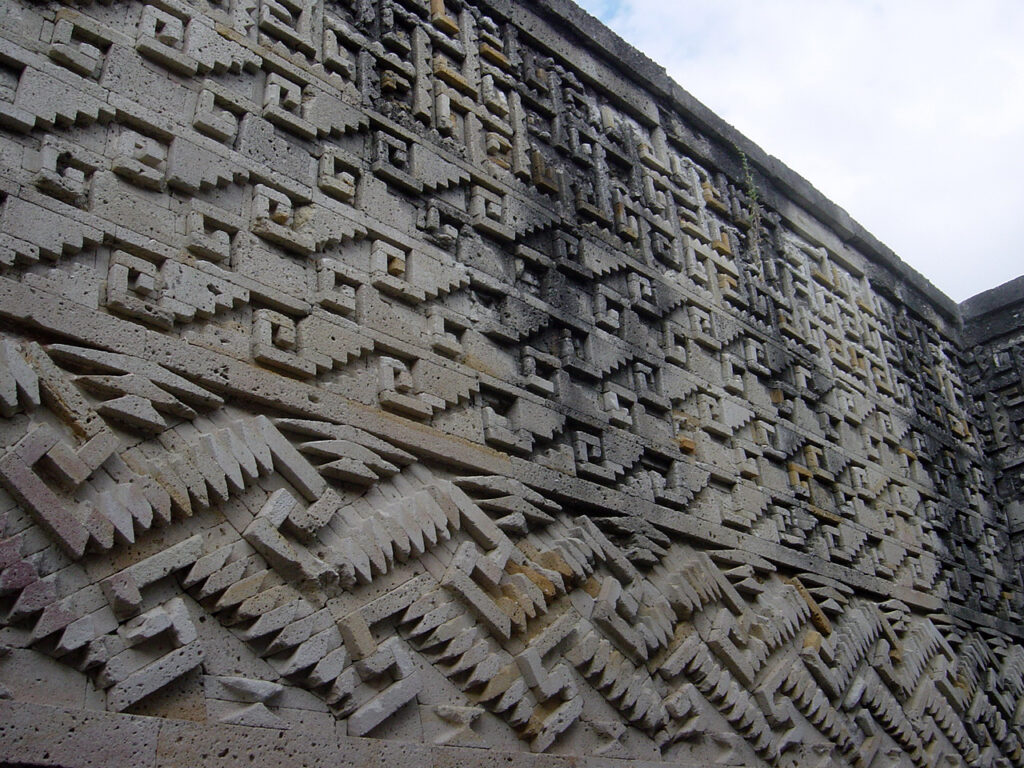
The stone structures of the ancient city of Mitla in Mexico may have hidden a mathematical order unknown for centuries. A new study reveals that Zapotec architects used a distinctive system of measurement when designing their buildings. Furthermore, it appears that these measurements did not merely determine the dimensions of the structures but also reflected the cycles of time, beliefs regarding death, and the order of the universe within the architecture.
The study, published in the journal Ancient Mesoamerica by Cambridge University Press, was conducted by Genevieve Lucet from the National Autonomous University of Mexico (UNAM). By analyzing the doorways, columns, courtyards, and tombs of Mitla, Lucet reconstructed a previously undefined Zapotec measurement system. The findings suggest that variations previously interpreted as architectural irregularities may actually have been part of a deliberate plan.
An Architectural System Born from Eight Centimeters
At the core of the system used by Zapotec architects lies a remarkably simple unit of measure: approximately eight centimeters, corresponding to the width of four fingers held side by side.
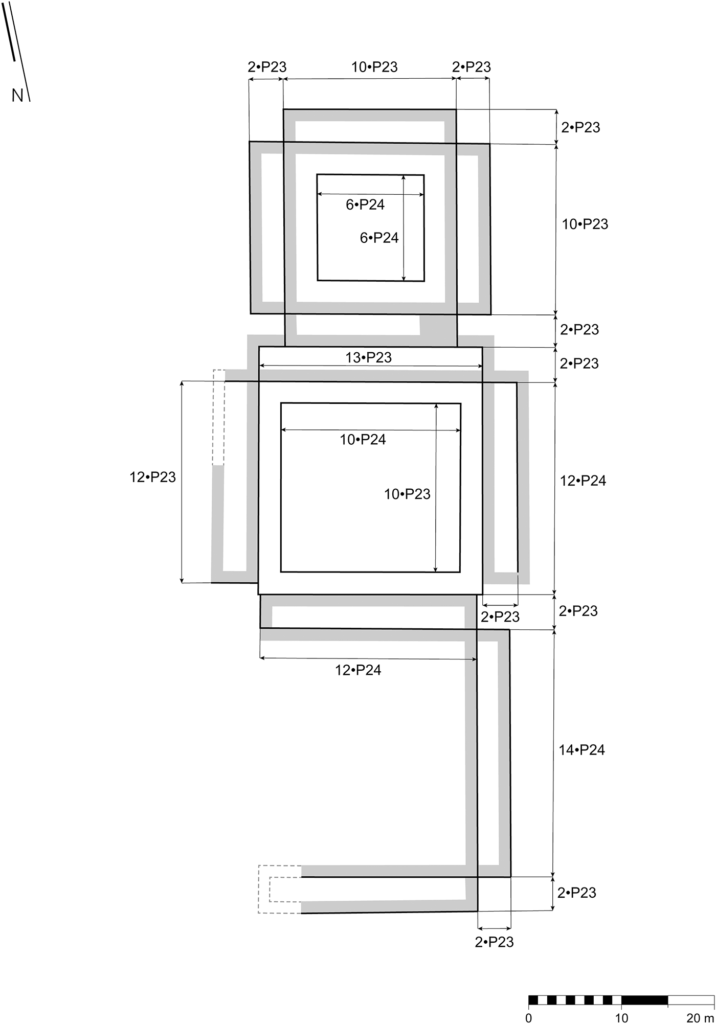
Lucet determined that larger structural units emerged from multiplying this small base measure by various numbers. In particular, units of 1.84 and 1.92 meters appear repeatedly in the doorways, columns, and structural plans of Mitla.
The researcher compared three architectural groups known as the Church, the Arroyo, and the Columns. By examining the doorway openings, columns, courtyards, and other architectural elements across nine structural complexes, she demonstrated that different spaces were designed according to specific measurement rules.
This finding also offers a new perspective on a debate about Mitla that has continued for more than a century. Earlier researchers interpreted differences in the buildings’ dimensions as evidence that no precise measurement system existed. According to Lucet, however, these variations reflected deliberate choices based on the function and significance of each architectural space.
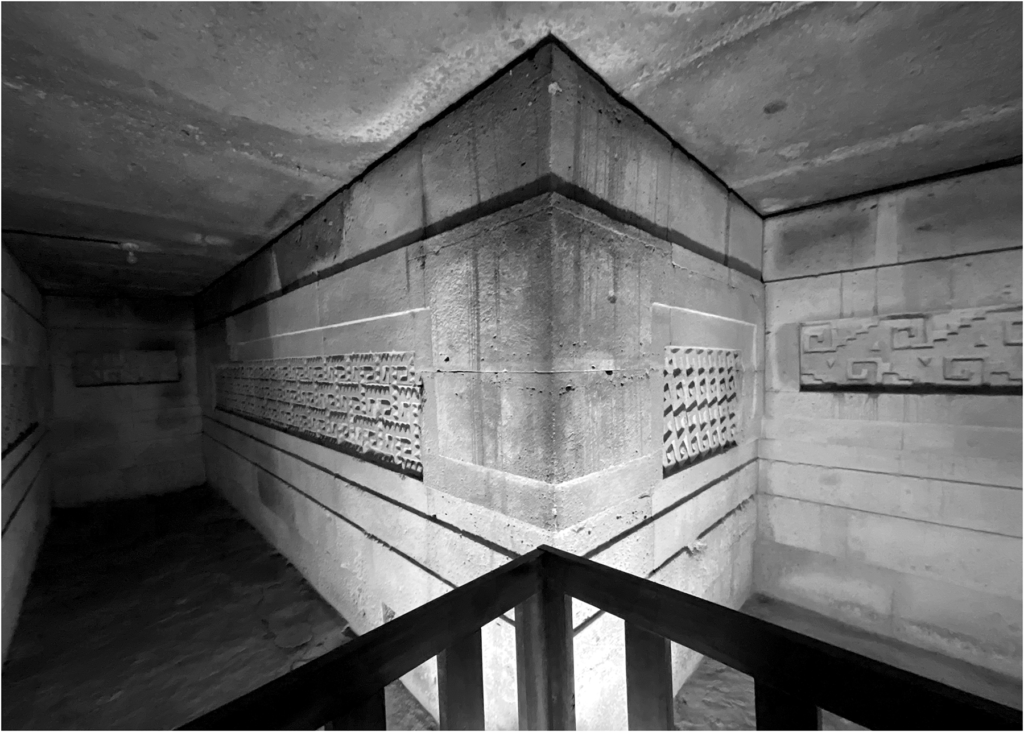
The 52-Year Time Cycle Etched in Stone
The most striking results of the research emerge from the potential links between the recurring numbers in the architectural measurements and Mesoamerican calendars.
In ancient Mesoamerican societies, the 52-year period was a time cycle of immense importance. The 365-day solar calendar and the 260-day ritual calendar would realign in the same starting sequence after 18,980 days. This period was associated with the renewal of time and the continuation of cosmic order.
Lucet identified a notable relationship on the facade of Hall 21 in the Columns Group. The total width of the doorway openings and the columns corresponds to 156 times the eight-centimeter unit identified in the study. This number is exactly three times the 52-year cycle.
Similar numerical relationships are observed in courtyards and other architectural elements. According to the researcher, the repetition of these numbers across different structures indicates that architects may have intentionally embedded their conceptions of time into the measurements of the buildings.
However, this connection does not definitively prove the intentions of the ancient architects. The strength of the study lies not in a single numerical coincidence, but in the recurring patterns of measurement across different spaces.
Death, Rebirth, and the Order of the Cosmos
Mitla was more than just a settlement. The city, which the Zapotecs called Lyobáa—meaning “the place where the souls rest”—held particular importance for religious ceremonies and funerary architecture.
The research suggests that this sacred function may have been reflected in the measurements of the structures. The Columns Group, in particular, contains larger and different measurement units not seen in other architectural areas. Lucet believes this choice emphasizes the ceremonial significance of these spaces.
A striking example is the position of the altar in Complex E. The altar is not located exactly in the center of the courtyard. According to the researcher’s calculations, its distances to the north and south are based on measurement units associated with the numbers 9 and 13, respectively.
In some Mesoamerican traditions, these numbers are linked to the nine lords of the night and the thirteen lords of the day. They also appear in cosmological thought explaining the different layers of the universe.
According to Lucet, this arrangement suggests that architects may have considered not only symmetry but also the cycles of time, ritual practices, and thoughts on the afterlife when designing sacred spaces.
Does the Architectural Secret of Mitla Exist in Other Cities?
The measurement system in Mitla may not be an isolated tradition. The researcher identified traces of similar measurement units in other archaeological sites in the Oaxaca region, such as Atzompa and Suchilquitongo. Specifically, similarities in funerary architecture suggest that certain measurement traditions may have been used across different settlements and periods.
Nevertheless, a system as detailed and consistent as the one in Mitla has not yet been uncovered in other Zapotec settlements. Furthermore, it remains impossible to determine the exact meaning of every numerical relationship.
Lucet’s research demonstrates that ancient architecture is not just about how stones were placed, but about the ideas with which the structures were conceived. In Mitla, the width of a door, the dimensions of a courtyard, or the position of an altar may carry the traces of how the ancient Zapotecs understood time and the universe.
Lucet, G. (2026). Measurement as Cultural Practice: Cosmogonic Order in the Architecture of Mitla, Oaxaca. Ancient Mesoamerica, 1–23. doi:10.1017/S0956536126101102
