
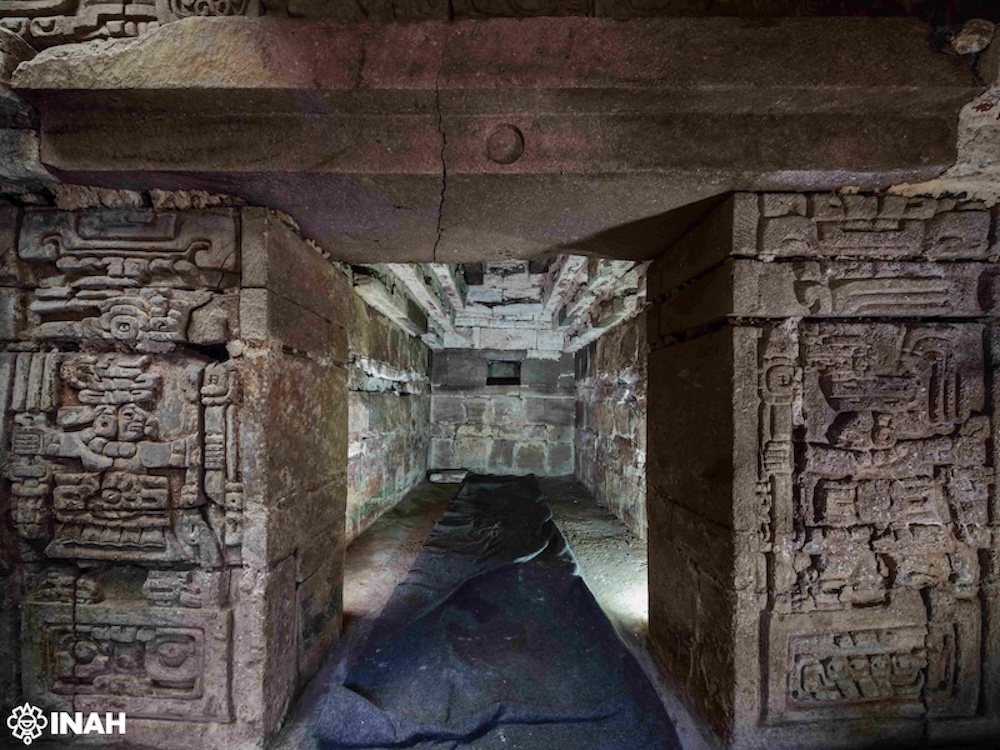
An extraordinary polychrome mural uncovered in a 1,400-year-old Zapotec tomb in Oaxaca reveals new insights into ancient rituals, art, and Zapotec cosmology.
The Government of Mexico has announced the discovery of a remarkably well-preserved Zapotec tomb dating back to 600 CE, marking what experts describe as the most significant archaeological find in the country in the last decade. The discovery was revealed during the federal government’s morning press conference by President Claudia Sheinbaum Pardo.
The tomb is located on Cerro de la Cantera, in the municipality of San Pablo Huitzo, within the Central Valleys of Oaxaca, a region widely recognized as the heartland of the ancient Zapotec civilization. The find was made by the National Institute of Anthropology and History (INAH), under the Ministry of Culture.
“This is the most important archaeological discovery of the last decade in Mexico due to its extraordinary state of preservation and the wealth of information it provides,” President Sheinbaum stated. She emphasized that the tomb is a powerful testament to Mexico’s millennia-old cultural legacy.
A Window into Zapotec Society and Beliefs
Archaeologists report that the tomb offers invaluable insights into Zapotec social organization, funerary rituals, and cosmology. Its architectural complexity and rich pictorial decoration place it among the most important Zapotec funerary structures ever documented.
The Zapotecs were one of Mesoamerica’s earliest complex civilizations, flourishing in Oaxaca from at least 500 BCE. They developed sophisticated systems of writing, calendrics, urban planning, and religious symbolism, with Monte Albán serving as their most prominent political and ceremonial center.
Symbolism of Power and the Afterlife
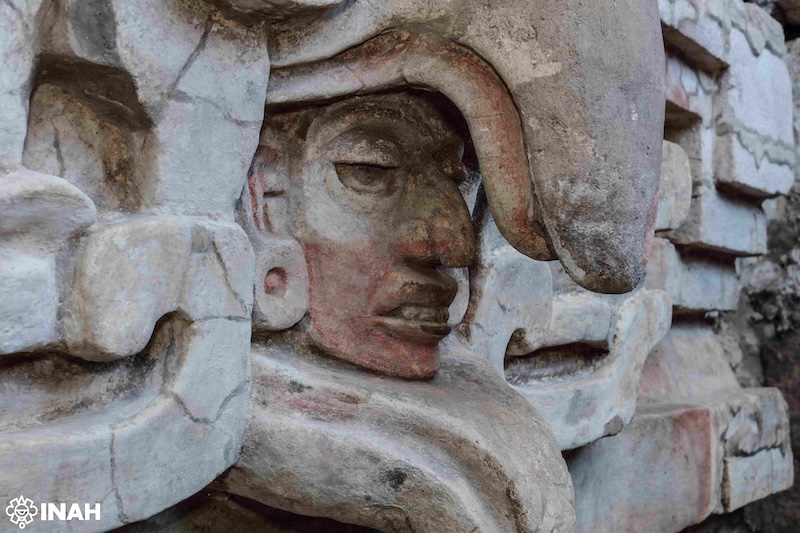
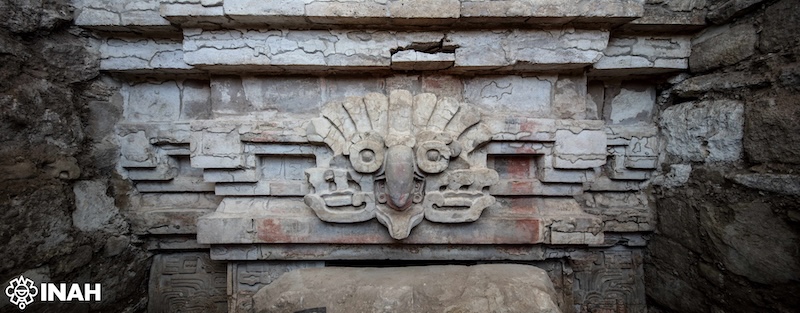
One of the most striking features of the newly discovered tomb is its elaborate iconography. At the entrance to the antechamber, researchers identified a sculpted owl, an animal associated in Zapotec belief with night, death, and the underworld. The owl’s beak partially covers the painted and stuccoed face of a Zapotec nobleman, believed to represent a revered ancestor.
According to INAH specialists, the figure may have functioned as a spiritual intermediary, invoked by descendants to communicate with divine forces—an idea consistent with known Zapotec ancestor veneration practices.
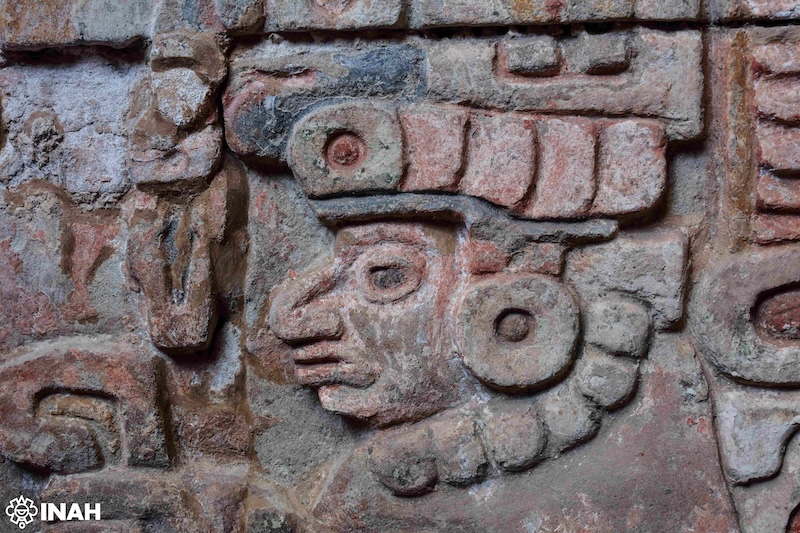
The tomb’s threshold is framed by a stone lintel topped with a frieze of carved slabs bearing calendar names, a key element of Zapotec identity and ritual life. Flanking the entrance, carved into the stone jambs, are the figures of a man and a woman adorned with headdresses and ritual objects, possibly representing guardians of the sacred space.
Exceptional Mural Paintings
Inside the funerary chamber, archaeologists uncovered in situ sections of an extraordinary polychrome mural, rendered in shades of ochre, white, green, red, and blue. The mural depicts a procession of figures carrying bags of copal, a sacred incense widely used in Mesoamerican religious ceremonies, moving toward the entrance of the tomb.
Experts believe the scene represents a funerary rite or offering ceremony, reinforcing the tomb’s ritual significance and providing rare visual evidence of Zapotec ceremonial practices.
Conservation and Ongoing Research
An interdisciplinary team from INAH Oaxaca is currently working on the conservation and stabilization of the structure. The mural paintings are particularly fragile, having been affected by plant roots, insects, and sudden environmental changes.
In parallel, researchers are conducting ceramic, iconographic, epigraphic, and physical anthropology analyses to deepen understanding of the individuals buried in the tomb and the symbolic universe they inhabited.
A Discovery of National and Global Importance
Due to its construction quality and decorative richness, the tomb is already being compared to other high-status Zapotec funerary complexes in the region. Specialists agree that the find significantly enhances knowledge of Zapotec artistic achievement, social hierarchy, and religious thought.
Mexico’s Secretary of Culture, Claudia Curiel de Icaza, described the discovery as “exceptional,” noting that it preserves, investigates, and shares the enduring legacy of the Zapotec civilization with society.
As research continues, the tomb is expected to become a key reference point for understanding one of Mesoamerica’s most influential ancient cultures, reaffirming Oaxaca’s central role in the history of the Americas.
Cover Image Credit: Luis Gerardo Peña Torres INAH.
