
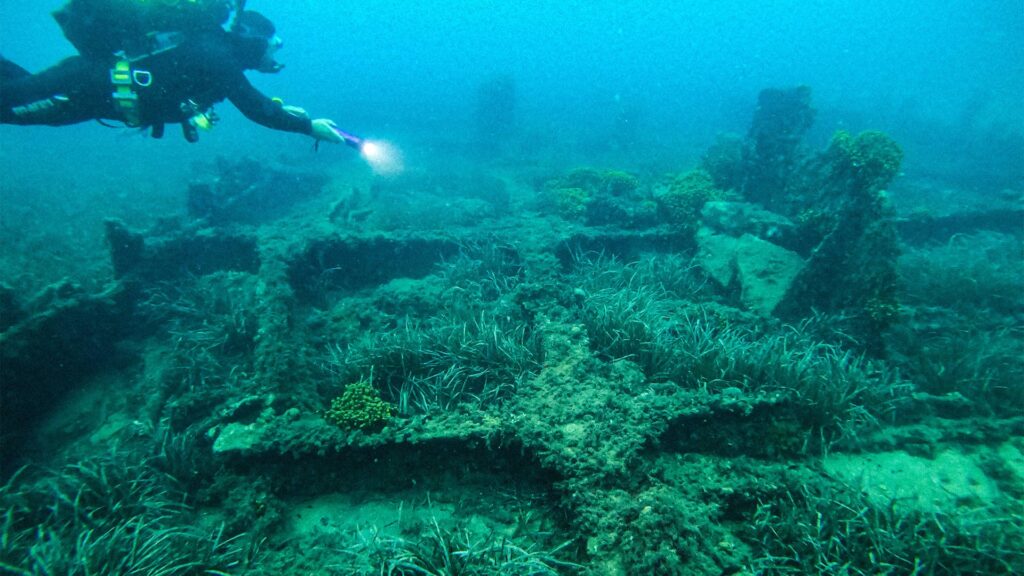
Beneath the calm, sun-drenched waters of the Dardanelles Strait lies a secret world most sunbathers walking the beaches of Çanakkale never suspect exists: an entire graveyard fleet of World War I warships, now transformed into one of the most extraordinary diving destinations on Earth.
At first glance, northwestern Türkiye’s Gallipoli coastline looks like nothing more than a postcard-perfect summer escape. The Dardanelles — a legendary 70-kilometer channel connecting the Aegean Sea to the Sea of Marmara — glitters peacefully in the sunlight. But just meters below that tranquil surface, history is frozen in steel and rust.
This is Gallipoli Underwater Park, often referred to simply as the Çanakkale Underwater Park, the crown jewel of a groundbreaking initiative called Derin Miras (“Deep Legacy”), a joint effort by the Gallipoli Historical Site Directorate and the 1915 Çanakkale Bridge Consortium. The mission: turn a site once soaked in wartime tragedy into a thriving hub for adventure tourism, marine conservation, and historical remembrance.
A Battlefield Frozen in Time — Now Open for Diving
More than a century ago, between April 1915 and January 1916, the Dardanelles became one of the deadliest theaters of the First World War. British and French naval forces attempted to break through the strait to reach Istanbul and open a supply route to Russia. The campaign failed catastrophically, claiming hundreds of thousands of lives on both sides and cementing Gallipoli’s place as one of the most devastating military campaigns in modern history.
Today, that same stretch of water — now part of the Gallipoli Peninsula National Historical Park and featured on UNESCO’s Tentative List- hides more than 100 Dardanelles shipwrecks. Of these, 29 sites, including 27 sunken vessels and two reef-filled dive zones, have been opened to the public for controlled diving.
Ismail Kasdemir, president of the Gallipoli Historical Site Directorate, doesn’t hesitate to call it “one of the most important diving sites in the world” — and the numbers back him up, placing it among the most historical wreck diving sites anywhere on the planet.
From Seven Meters to the Extreme Deep: A Dive for Every Skill Level
What makes Gallipoli Underwater Park so remarkable is its accessibility. Divers of virtually any experience level can explore genuine pieces of world history.
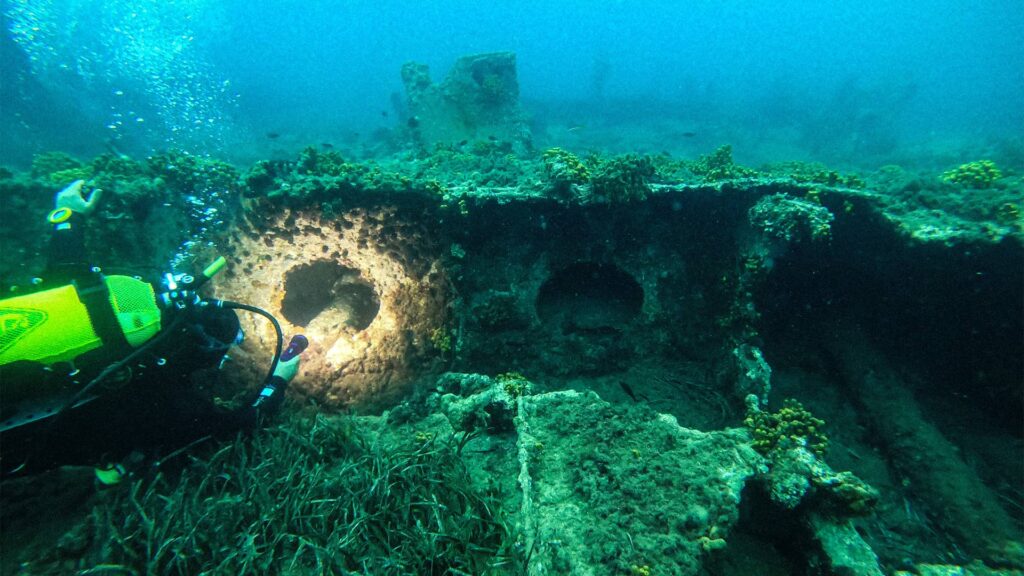
Beginners: typically start with the wreck of the SS Milo, resting at a gentle 7 meters, offering a striking first encounter with a century-old warship.
Intermediate divers: progress to the “HMS Louis”, a British destroyer lying 13 meters down, where shifting blue light illuminates a steel time capsule frozen since 1915.
Advanced technical divers: can push toward the park’s true giants — wrecks and submarines resting as deep as 72 meters — including the formidable HMS Triumph, a British battleship that demands elite skill and meticulous planning.
Other legendary vessels scattered across the strait include the HMS Majestic, the HMS Ocean (the first ship lost in the campaign after striking a mine on March 18, 1915), the Australian submarine AE2, the British submarine E14, and the massive 121-meter SS Carthage, torpedoed by a German U-boat.
According to Yusuf Kartal, head of the project’s Planning and Projects Group, these wrecks carry more than historical weight — they carry human stories from across the globe. Soldiers from Australia, Canada, Senegal, France, Ireland, and beyond all met their fate in these waters, making the site a shared piece of world heritage.
Warships Turned Living Reefs: An Unlikely Ecological Triumph
Perhaps the most surprising twist in the story of Gallipoli’s sunken fleet is its second life as a thriving marine ecosystem.
Once symbols of destruction, these steel giants now function as massive artificial reefs. Coral, algae, and countless fish species have colonized their hulls, and — remarkably — the wrecks themselves have become natural deterrents against illegal trawling, since commercial nets snag on the sunken structures and keep destructive fishing boats away. It’s one more reason WWI wreck diving here draws marine biologists as much as history buffs.
Diving instructor Riza Birkan describes the transformation vividly, noting that the protected wrecks have allowed the surrounding ecosystem to flourish into a genuine “underwater oasis of biodiversity.” To further shield the site, authorities have installed heavy anchor-free mooring systems for tourist boats, preventing damage to both marine life and the historic wrecks.
Cutting-Edge Science Keeping History Alive
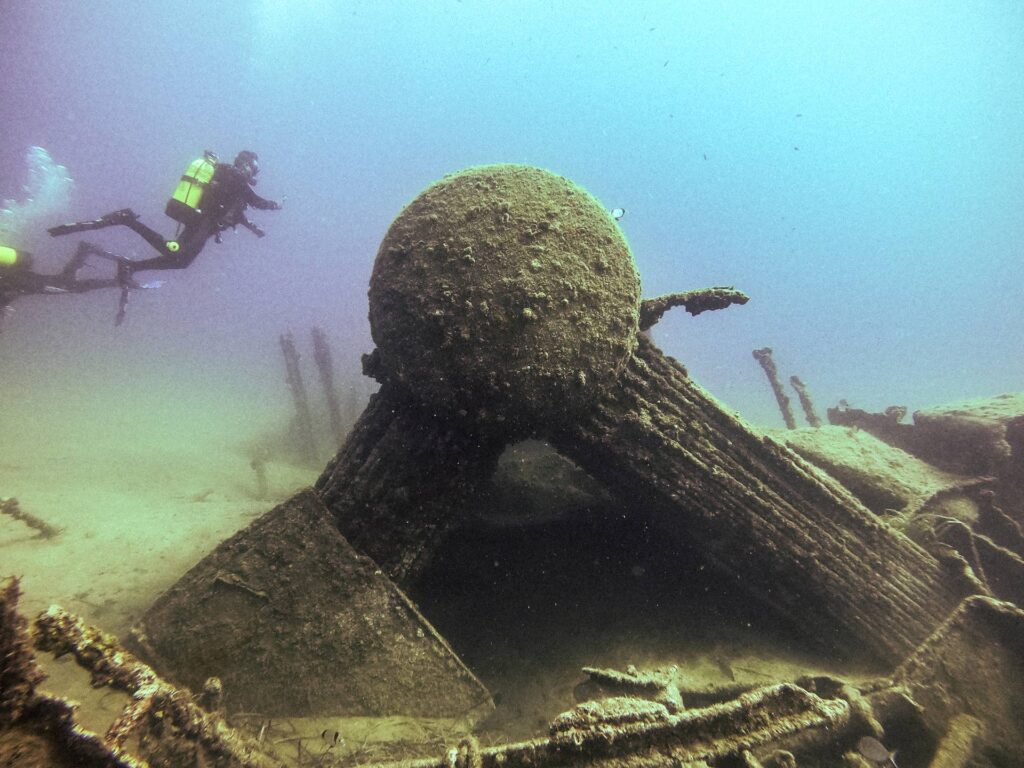
Preserving century-old steel underwater is no small feat — saltwater corrodes iron relentlessly. To combat this, engineers have deployed a method known as cathodic protection, installing “sacrificial anode” blocks made of zinc, aluminum, or copper near each wreck. These blocks corrode instead of the ships themselves, halting deterioration at a monumental scale.
The HMS Louis made history as the first wreck in the Deep Legacy project to receive this pioneering conservation system. To celebrate the milestone, award-winning Swedish underwater photographer Alex Dawson — the 2024 Underwater Photographer of the Year — documented the wreck and its new anodes firsthand. Turkish freediver Bilge Cingigiray, a Guinness World Record holder, also marked the occasion with a striking freedive to 13 meters, without any scuba equipment.
A Symbol of Peace Beneath the Waves
Beyond the adventure and the science, Gallipoli Underwater Park carries a deeper meaning. What was once a site of unimaginable global suffering has become, in Kartal’s words, a space demanding awareness of “the suffering that took place in this sea.”
That spirit of reconciliation echoes the famous words of Mustafa Kemal Atatürk, founder of the Republic of Türkiye, addressed to the families of foreign soldiers who died at Gallipoli:
“They, having lost their lives on this land, have also become our children.”
More than a century later, Gallipoli’s sunken fleet no longer represents division and war — it stands as a rare fusion of history, science, and hope: proof that even the darkest chapters of the past can be transformed into a legacy for future generations to explore, protect, and remember, and a milestone in the growing field of underwater archaeology in Türkiye.
Planning a dive trip? Gallipoli Underwater Park offers guided experiences ranging from beginner-friendly shallow wrecks to extreme technical dives for certified professionals — making it one of the world’s most unique destinations for history lovers and diving enthusiasts alike.
