
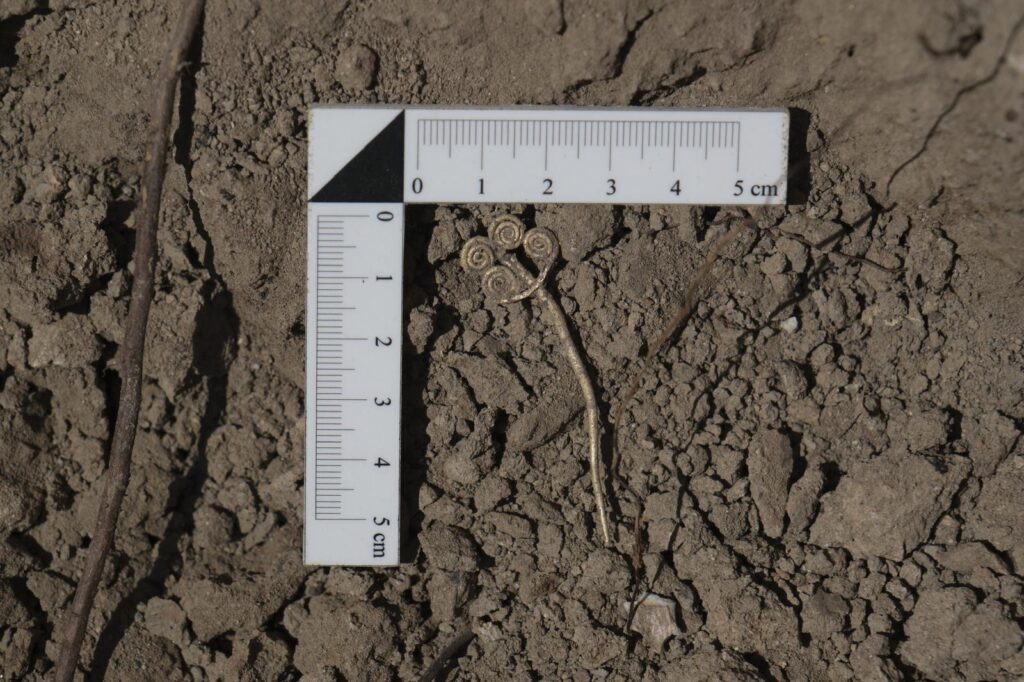
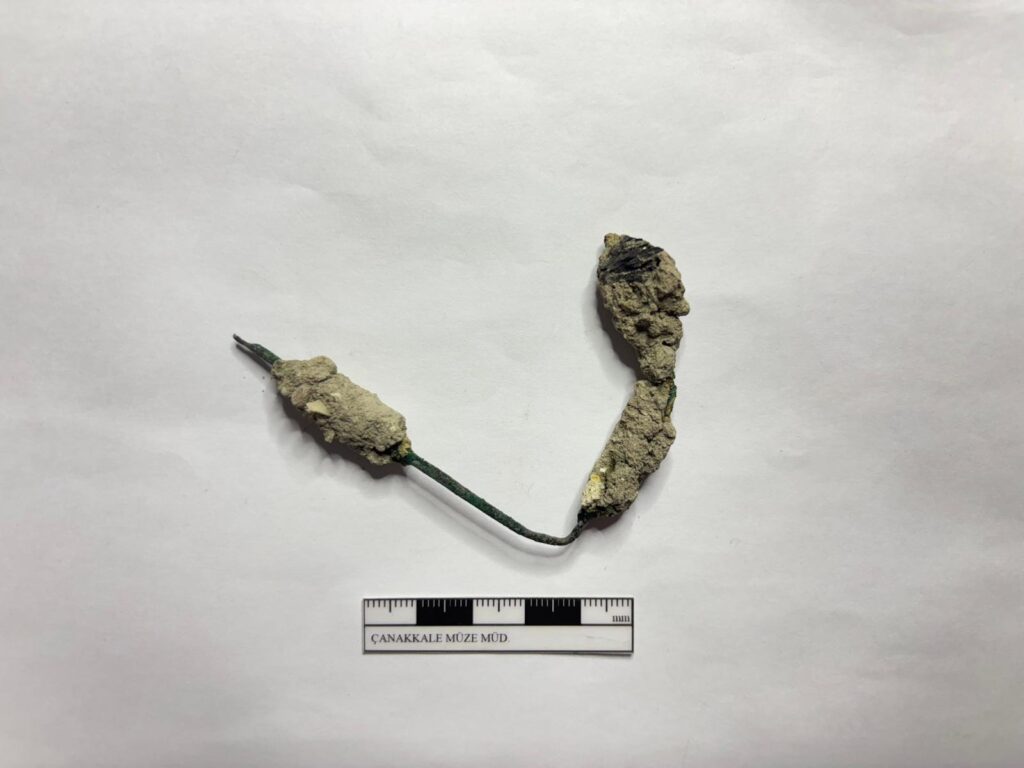
Archaeological excavations at the legendary city of Troy have once again made global headlines. In 2025, ongoing digs at the UNESCO World Heritage Site revealed a discovery that scholars are calling one of the most important archaeological finds of the past century. Among the artifacts uncovered are a 4,500-year-old gold ring-shaped brooch, a rare jade stone, and a bronze pin, all dating back to the Early Bronze Age (around 2,500 BCE).
Turkey’s Minister of Culture and Tourism, Mehmet Nuri Ersoy, emphasized the significance of the find, describing it as “among the most important discoveries of the last 100 years.” The artifacts were unearthed as part of the Ministry’s “Heritage for the Future” project, which focuses on preserving and expanding the cultural legacy of Anatolia.
A Unique Gold Brooch: One of Only Three Known Worldwide
The centerpiece of the discovery is a remarkably well-preserved gold brooch, known as a ring-shaped brooch, used in antiquity as both a functional item and a symbol of social power and prestige. Typological studies suggest that this piece is the best-preserved example of its kind, with only two other known parallels existing in the world. Its survival over millennia places it among the rarest treasures of early human civilization.
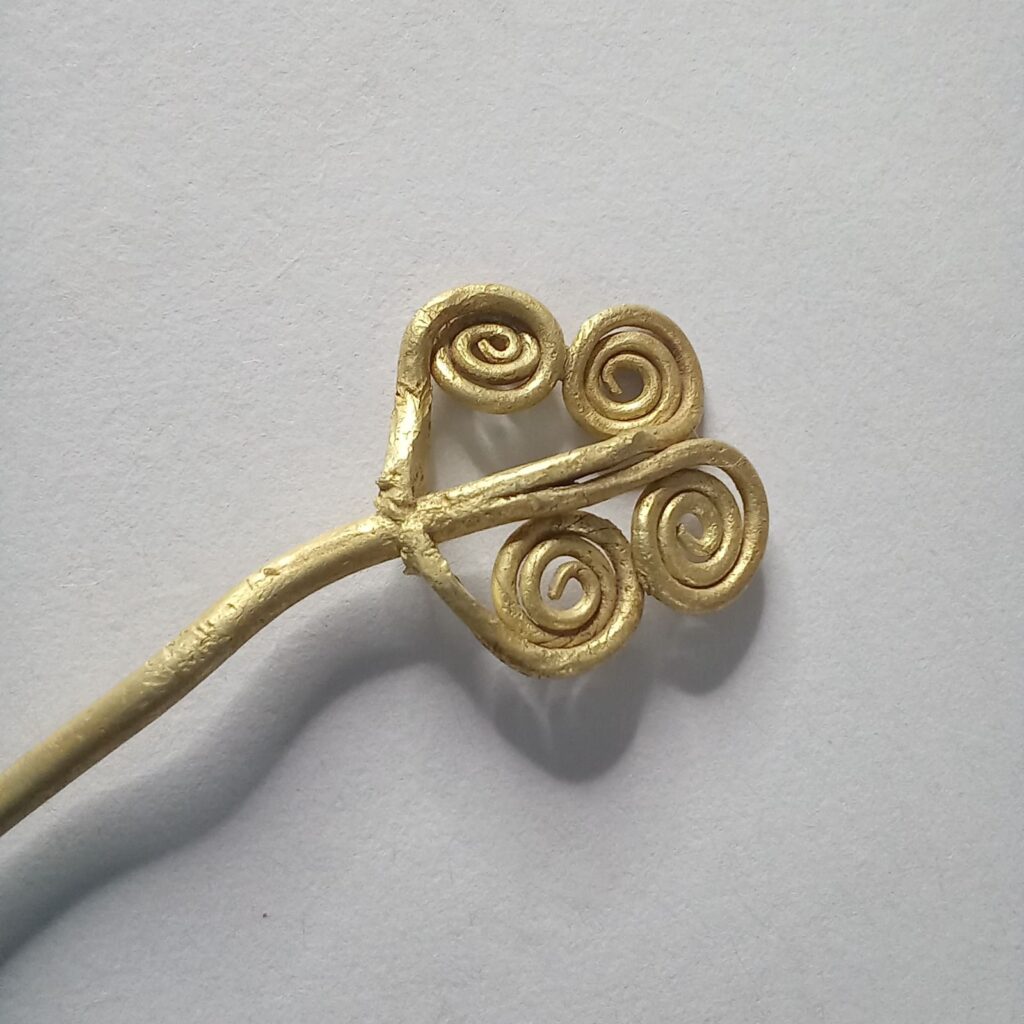
The brooch was discovered in the stratigraphic layers of Troy II, a settlement phase long debated by archaeologists regarding its exact dating. Until now, scholars argued whether Troy II began around 2300–2200 BCE or earlier. The brooch conclusively dates this cultural horizon to circa 2500 BCE, resolving decades of chronological uncertainty and providing a fixed point for the city’s Bronze Age timeline.
A Glimpse of Luxury: The 4,500-Year-Old Jade Stone
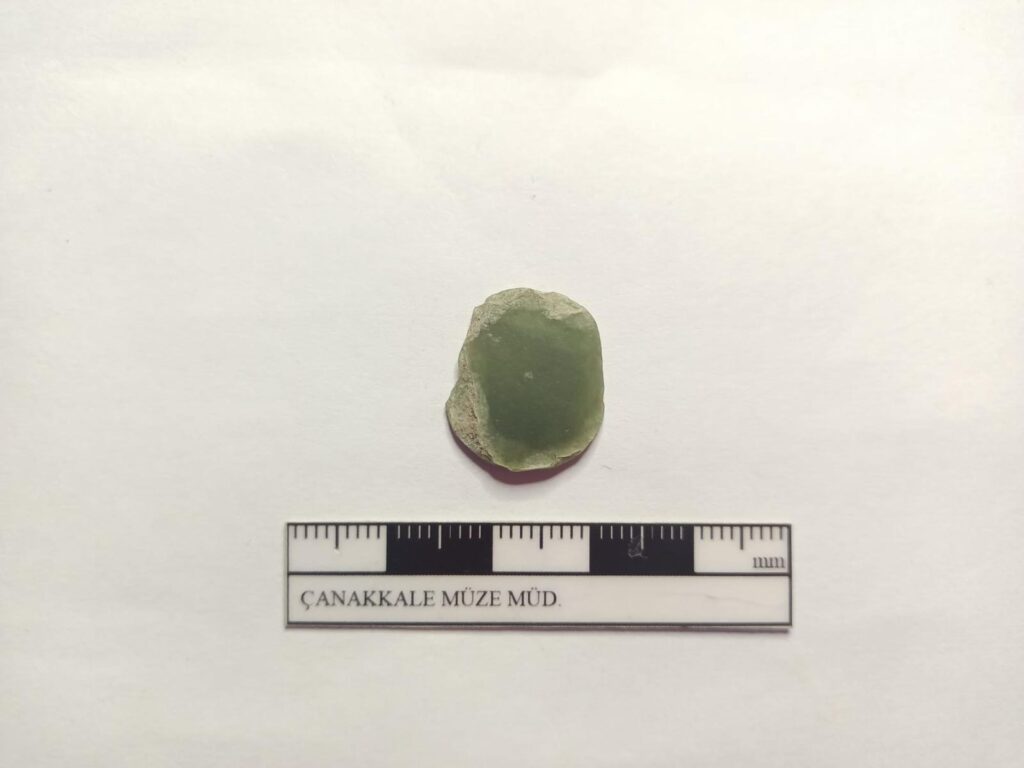
Equally intriguing is the discovery of a jade stone—an object almost never found in Troy’s archaeological record. Jade was a precious material in the ancient world, often associated with elite status, ornamentation, and ritual use. The piece uncovered in Troy may have been intended as a gemstone for a ring or pendant, highlighting the city’s role in early long-distance trade networks and the consumption of luxury goods.
The jade find sheds light on the sophistication of Troy’s inhabitants and their connections to broader cultural and economic systems in the Early Bronze Age. It stands as a rare testament to how Trojans incorporated exotic and valuable materials into their daily and ceremonial lives.
Troy: A Legendary City Bridging Myth and History
The recent discoveries add yet another layer of depth to the city’s already rich legacy. Troy, located in modern-day Çanakkale, Turkey, has been a focal point of both history and legend for thousands of years. The city’s fame is immortalized in Homer’s Iliad, which tells the story of the Trojan War—a blend of myth and historical memory that has fascinated humanity for over two millennia.
Archaeological research at Troy began more than 160 years ago, most famously with the excavations of Heinrich Schliemann in the 19th century. Since then, scholars have identified at least nine major layers of settlement (Troy I to Troy IX), spanning from the Early Bronze Age to the Byzantine period. These layers demonstrate Troy’s continuous importance as a strategic hub controlling access between the Aegean and Black Seas.
The discovery of the gold brooch and jade stone in Troy II not only enriches our understanding of the city’s Bronze Age culture but also strengthens Troy’s role as a bridge between mythological memory and archaeological fact.
From Excavation to Exhibition: The Troy Museum
In keeping with Turkey’s policy of showcasing artifacts in their place of discovery, the newly unearthed treasures will be exhibited at the Troy Museum in Çanakkale. Opened in 2018, the museum is dedicated entirely to the history of Troy and houses thousands of artifacts from different excavation periods. Visitors will soon be able to see the gold brooch and jade stone on display, offering a rare opportunity to connect with objects that shaped early human civilization.
Minister Ersoy expressed gratitude to the teams working tirelessly on the excavations:
“The 4,500-year-old golden brooch and jade stone from Troy are extraordinary additions to our cultural heritage. Thanks to the dedication of our archaeologists and specialists, these treasures will illuminate history for generations to come.”
Global Significance of the Discovery
The discovery at Troy is more than a local archaeological milestone—it represents a breakthrough for world heritage and human history. The artifacts will not only attract scholars but also enhance Turkey’s cultural tourism, drawing visitors eager to explore the roots of Western civilization.
By resolving chronological debates, providing new insights into Bronze Age luxury consumption, and presenting the most intact example of a rare artifact type, the 2025 finds at Troy firmly establish themselves as a highlight in modern archaeology.
Cover Image Credit: Artifacts from the Troy II layers, including a 4,500-year-old brooch, were published on the official X account of Culture and Tourism Minister Mehmet Nuri Ersoy.
