
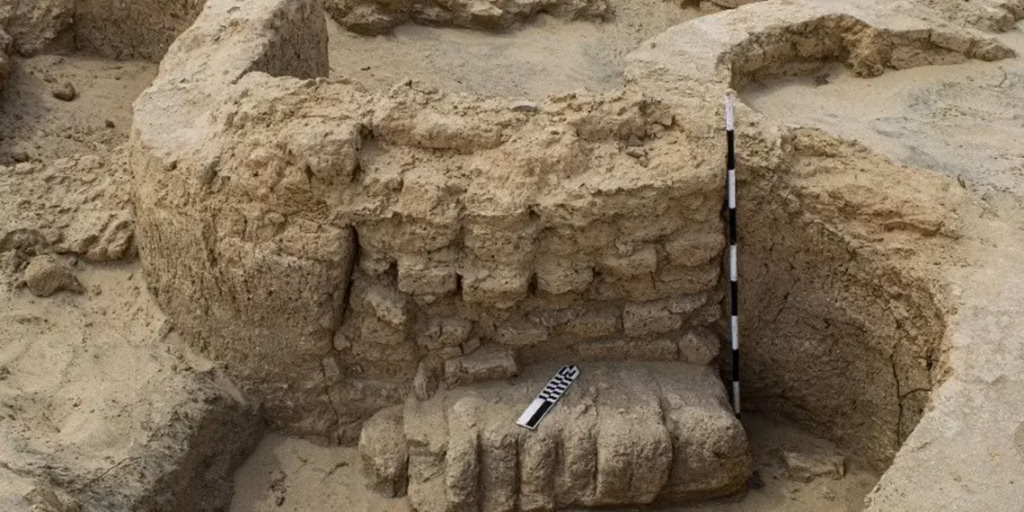
An Egyptian archaeological mission has uncovered a massive military fortress dating back to Egypt’s New Kingdom period along the ancient Horus Military Road near Tell El-Kharouba in North Sinai. This remarkable discovery sheds new light on Egypt’s sophisticated defense network that once protected its eastern borders and secured the main strategic route connecting ancient Egypt and Palestine.
The newly found fortress is one of the largest and most significant military structures ever discovered on the Horus Road — a crucial corridor that served both as a military and trade route for the pharaohs. Stretching along Egypt’s northeastern frontier, the Horus Military Road was a lifeline for communication, transport, and defense, and the latest discovery at Tell El-Kharouba offers an exceptional glimpse into the military genius and strategic planning of the New Kingdom rulers.
A Monumental Discovery
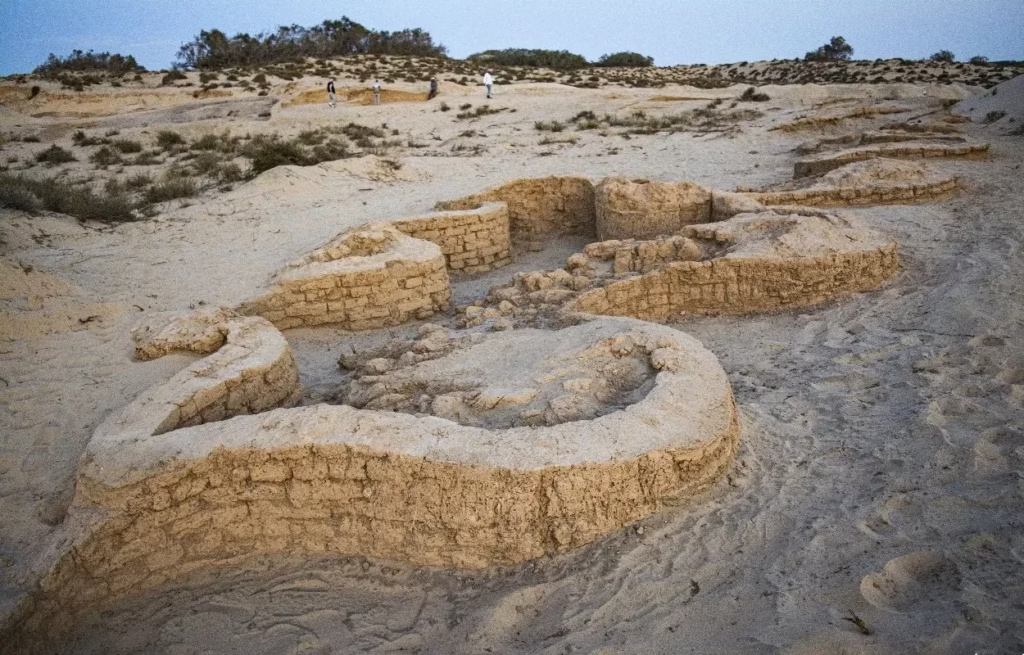
The newly discovered fortress covers an area of about 8,000 square meters, making it nearly three times larger than another fortress found nearby during excavations in the 1980s. Archaeologists revealed part of the southern wall, stretching for approximately 105 meters and measuring 2.5 meters in width, with a secondary entrance about 2.2 meters wide.
Excavations also uncovered eleven defensive towers, as well as parts of the northern and western walls, including the northwestern tower. The site posed major challenges due to shifting sand dunes that had buried large sections of the ancient structure for centuries.
Unique Military Design
One of the most remarkable features of the site is a zigzagging wall about 75 meters long that runs through the western side of the fortress. This wall divides the structure from north to south and encloses a residential area believed to have housed soldiers. The complex layout reflects the advanced architectural and military planning of the New Kingdom era, highlighting how ancient Egyptian engineers adapted to harsh desert conditions while maintaining strong defensive capabilities.
A Glimpse Into Daily Life
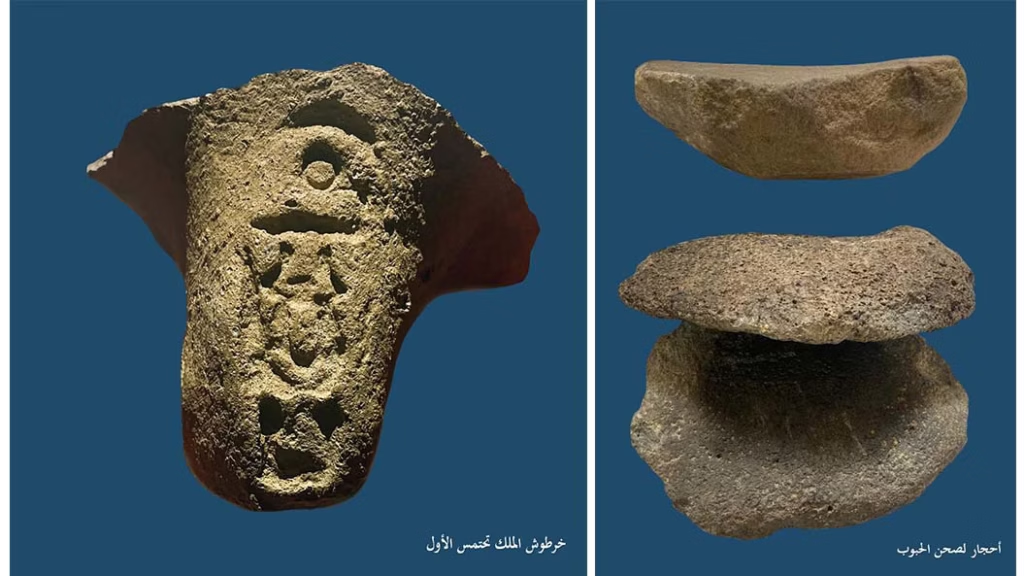
In addition to architectural remains, archaeologists discovered a range of pottery fragments and foundation deposits beneath one of the towers. These items date to the first half of the Eighteenth Dynasty and include a jar handle stamped with the name of King Thutmose I, confirming the fortress’s royal connection.
Other finds include volcanic stones that are believed to have been imported by sea from Greek islands, demonstrating the extensive trade and logistical networks that supported Egypt’s frontier defenses. A large bread oven and hardened dough remains were also found, indicating that the fortress was a self-sufficient military settlement with facilities for food preparation and daily life.
Multiple Phases of Construction
Preliminary studies show that the fortress underwent several phases of restoration and modification over time. The southern entrance, for instance, appears to have been redesigned more than once, possibly to strengthen the defensive system or adapt to new tactical needs. These architectural changes reflect Egypt’s long-term commitment to maintaining strong border defenses across generations of rulers.
Part of a Strategic Network
This newly uncovered fortress was part of a broader chain of strongholds built along the Horus Military Road, one of the most vital routes in ancient Egypt. This road connected the Nile Delta with the Levant, serving both as a trade artery and a defensive frontier. Similar fortresses have been found at sites such as Tell Hebua, Tell el-Borg, and Tell el-Abyad, all dating to the same period.
Experts believe the fortress at Tell El-Kharouba played a key role in protecting Egypt’s eastern borders and monitoring movement along the coastal highway that led toward ancient Palestine and Syria.
Future Excavations and Expectations
The archaeological team plans to continue excavations to uncover the remaining sections of the walls and explore associated facilities, including what is believed to be a military harbor near the Mediterranean coast. This harbor may have served as a supply point for troops and allowed the transport of goods and resources to the fortress.
Despite the difficult working conditions in the desert environment, archaeologists are optimistic that further discoveries will help reconstruct the full defensive network that once secured Egypt’s frontiers.
Historical and Cultural Significance
Egypt’s Minister of Tourism and Antiquities described the discovery as a living example of ancient Egyptian military genius, demonstrating how the pharaohs developed a comprehensive defensive system to safeguard the nation’s borders. The fortress not only provides insight into Egypt’s military strategy but also tells stories of the soldiers, craftsmen, and architects who lived and worked there.
The Secretary-General of the Supreme Council of Antiquities added that each new fortress unearthed helps complete the picture of Egypt’s ancient military organization, proving that the civilization’s greatness extended beyond temples and tombs to include a highly structured system of defense and administration.
A Testament to Ancient Ingenuity
The discovery of the Tell El-Kharouba fortress reinforces Sinai’s reputation as a land of unique historical and cultural heritage, carrying traces of Egypt’s long-standing role as a powerful, well-defended civilization. As excavations continue, this site is expected to become one of the most important archaeological landmarks along Egypt’s eastern frontier — a lasting testament to the brilliance, resilience, and strategic vision of the ancient Egyptians.
The Egyptian Ministry of Tourism and Antiquities
Cover Image Credit: The Egyptian Ministry of Tourism and Antiquities
