
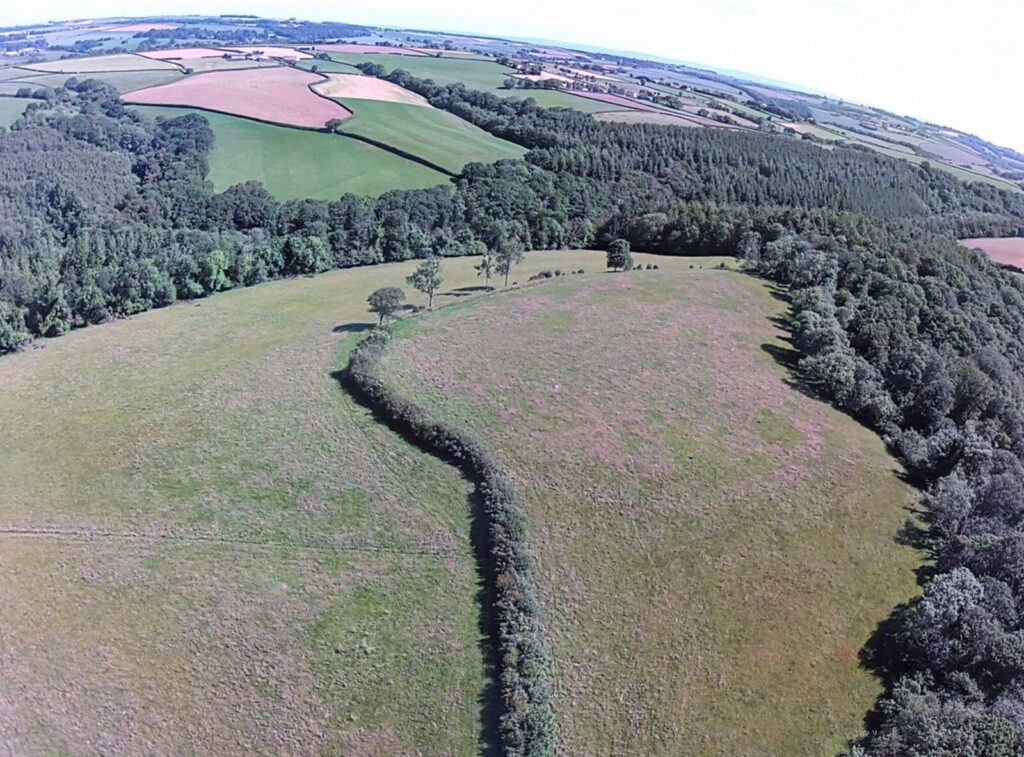
A centuries-old search for the site of one of the most consequential Viking defeats in Anglo-Saxon England may be narrowing in on an Iron Age hillfort in rural Devon.
Castle Hill, near Beaford in North Devon, has emerged as a compelling candidate for the Battle of Cynuit, fought in 878 as Wessex struggled to survive a major Viking offensive. The battle ended in a crushing defeat for the Scandinavian force and the death of its commander, traditionally identified as the Viking leader Ubbe.
The case is explored in Sons of Ragnar: Viking Warriors who Terrorised Britain and Ireland, a new book by British author Paul Harper. The book draws on research by historian and author Nick Arnold, who has spent years investigating where the battle may have taken place.
Arnold has argued for Castle Hill as a candidate for Cynuit for some time, but the new book brings together the topographical and historical evidence behind the theory.
Why Castle Hill Fits the Medieval Descriptions
One of the strongest clues comes from Asser, the ninth-century biographer of Alfred the Great, who wrote about the battle roughly 15 years after it occurred.
Asser described a fortress in Devon that was naturally protected on nearly every side but comparatively vulnerable from the east. The defenders were surrounded by Vikings, while the fort itself lacked an adjoining water supply.
Castle Hill shares several of those characteristics.
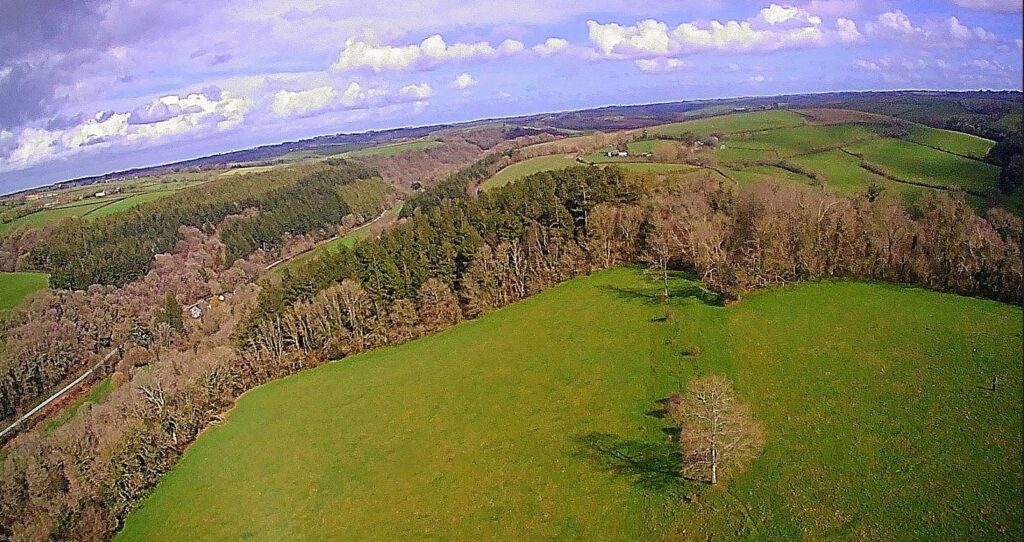
The Iron Age hillfort occupies a prominent position above the surrounding landscape and is protected by natural slopes and defensive earthworks. Its comparatively accessible eastern side is particularly significant because it matches Asser’s description of the fort being secure in every direction except the east.
Arnold also argues that Asser’s wording concerning water has been misunderstood in some translations. The Latin phrase used by the chronicler can be interpreted as meaning there was no water immediately adjoining or connected to the fort, rather than no water anywhere nearby.
A second medieval account may provide another clue.
The 12th-century chronicler Geoffrey Gaimar placed the battle at a location called “Penwood.” Arnold connects the first element of the name with the Brythonic word penn, meaning a headland or promontory.
Taken together, the descriptions of a defensible headland, woodland, and restricted access from the east appear to fit the landscape around Castle Hill unusually well.
Could the Nearby Mound Be Ubbe’s Burial Place?
The Castle Hill theory becomes more intriguing because of a large mound located nearby.
Gaimar wrote that after the Viking commander was killed, his surviving followers placed him beneath a great mound in Devon. The burial was remembered as “Ubbelawe,” or Ubba’s mound.
Near Castle Hill stands a mound measuring roughly 12 meters across and up to 2.5 meters high. Nineteenth-century maps reportedly identified it as a tumulus, an archaeological term commonly used for a burial mound.
Geophysical investigation has suggested that the feature contains stony material piled over a natural rocky outcrop.
Harper and Arnold believe the mound deserves further investigation as a possible burial connected with the battle.
There is, however, currently no archaeological evidence proving that it is Ubbe’s grave. Any identification remains a hypothesis unless future investigation produces material that can securely date or associate the mound with the events of 878.
There is another complication. The earliest surviving sources do not actually name the Viking leader killed at Cynuit as Ubbe. The Anglo-Saxon Chronicle describes him as the brother of Ivar and Halfdan. The identification with Ubbe comes from later medieval tradition.
What Happened at the Battle of Cynuit?
According to Asser, the Viking army arrived in Devon with 23 ships and trapped a West Saxon force inside the fort.
The defenders were probably led by Odda, the ealdorman of Devon, and included royal retainers and local fighting men.
The Vikings apparently expected hunger and thirst to force the Anglo-Saxons into submission. Instead, the defenders launched a sudden attack at daybreak.
The assault turned into a major Viking defeat.
The Anglo-Saxon Chronicle records that the Viking leader and around 840 of his men were killed. Asser gives an even higher figure of about 1,200 dead.
The West Saxons also captured a celebrated Viking war standard traditionally known as the Raven banner.
The battle therefore represented far more than a successful defense of a local fort. It removed a major Viking force at a moment when Wessex was under extreme pressure.
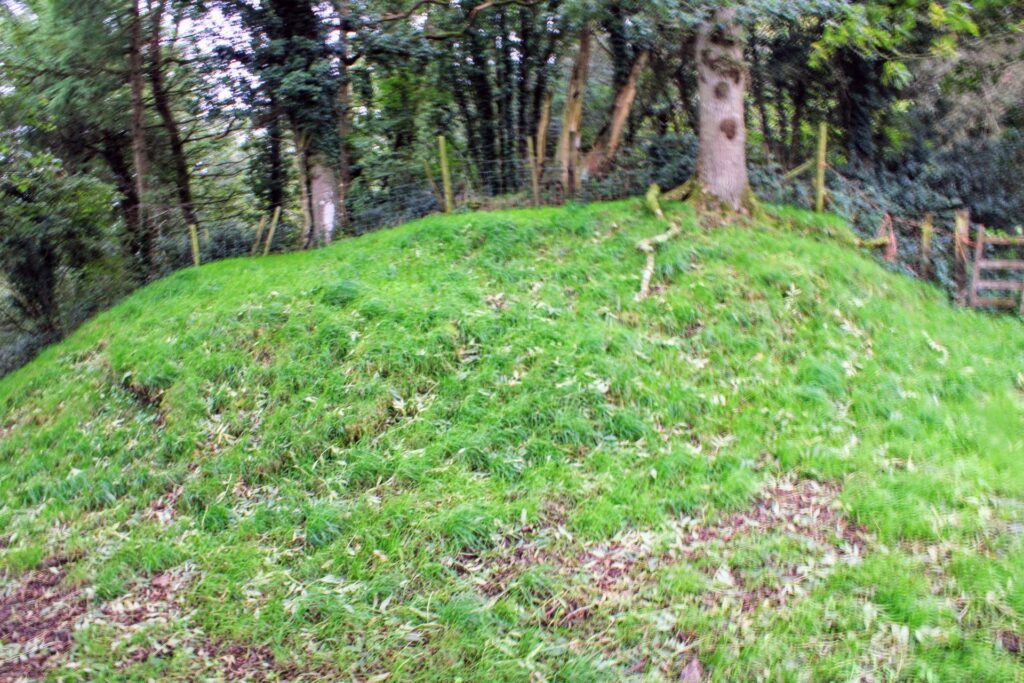
The mound near Castle Hill that has been proposed as a possible burial place of the Viking leader Ubbe. Credit: Photo courtesy of Paul Harper.
Why the Viking Defeat Mattered for Alfred and Wessex
The Battle of Cynuit took place during one of the most dangerous periods of Alfred the Great’s reign.
Northumbria and East Anglia had already fallen under Viking control, while much of Mercia had been subdued. Wessex remained the principal center of organized Anglo-Saxon resistance.
Alfred himself was not present at Cynuit. At the time, he was attempting to rebuild his position after being driven into the Somerset marshes.
Only weeks after the fighting in Devon, Alfred gathered forces from Somerset, Wiltshire and Hampshire and confronted the Viking leader Guthrum at the Battle of Edington.
His victory there became one of the defining moments of his reign.
The later settlement between Alfred and Guthrum helped establish a political division between territories controlled by Wessex and regions under Scandinavian rule. Alfred’s descendants would gradually expand their authority until his grandson Athelstan ruled a united English kingdom in the 10th century.
In that wider sequence of events, Cynuit was an important victory at a moment when the survival of Wessex was far from guaranteed.
The Search for Cynuit Is Not Over
Castle Hill is not the only proposed location for the battle.
Over the centuries, historians have suggested sites including Countisbury in Devon, Kenwith near Bideford and Cannington in Somerset. The debate has continued because the medieval descriptions are detailed enough to provide clues, but not precise enough to identify the battlefield beyond dispute.
Castle Hill nevertheless stands out because several independent elements appear to converge there: the shape of the fort, its vulnerable eastern approach, the question of its water supply, the possible meaning of “Penwood” and the presence of a substantial mound nearby.
The site is now protected as a Scheduled Monument, making unauthorized excavation or damage illegal.
For Harper, further archaeological investigation of the surrounding landscape — particularly the mound — could provide the next major step.
More than 1,100 years after the Battle of Cynuit, the location remains unproven. But Castle Hill may offer one of the strongest opportunities yet to connect a surviving Devon landscape with the battle that destroyed a Viking army at one of the most precarious moments in the history of Wessex.
