
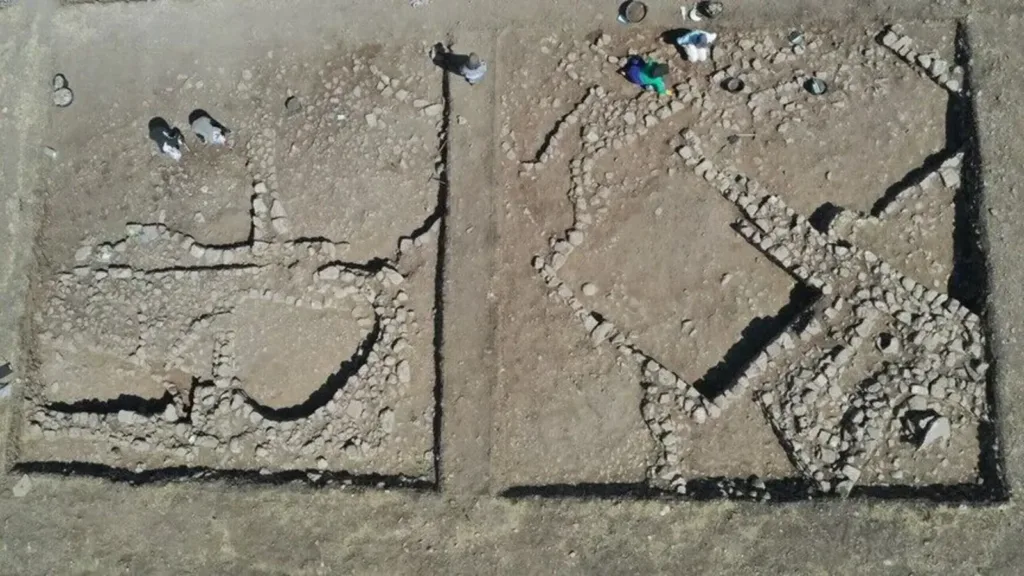
Archaeologists working at Göbeklitepe in southeastern Türkiye have uncovered rectangular buildings just beneath the surface in a newly opened excavation area, offering fresh evidence about how people may have lived at one of the world’s most important Neolithic sites.
The structures belong to what researchers describe as the second phase of occupation at Göbeklitepe. Unlike the site’s better-known monumental buildings dominated by massive T-shaped stone pillars, the newly exposed spaces contain fewer pillars and may have served a more domestic purpose.
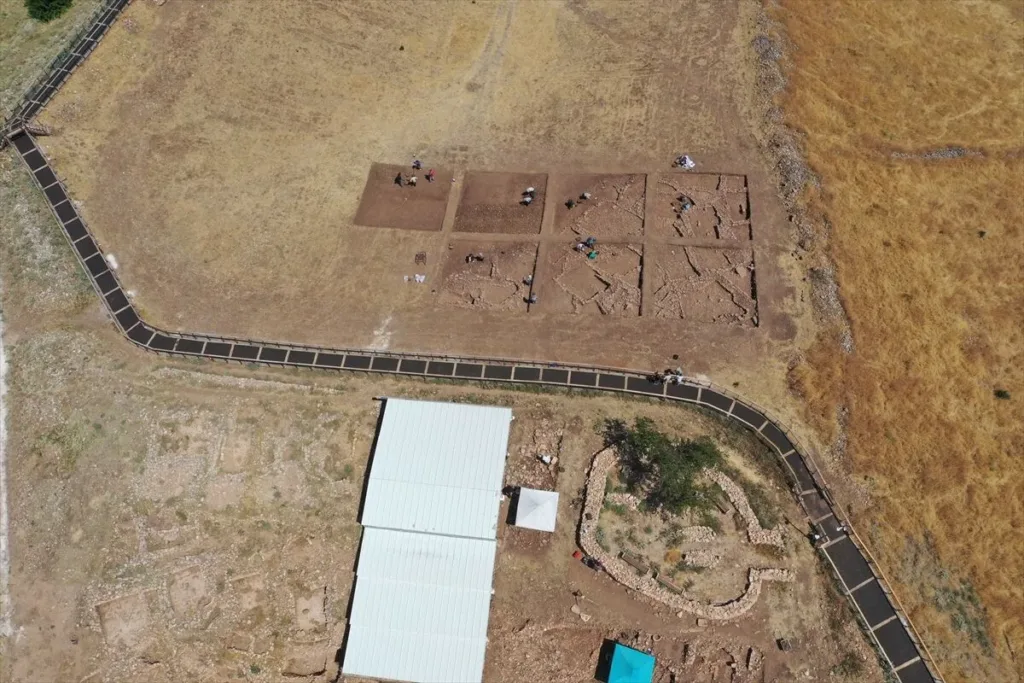
The discovery was made in a new excavation zone north of Göbeklitepe’s main protected archaeological area. According to excavation director Prof. Dr. Necmi Karul, archaeologists began working across an area of roughly 1,500 square meters after olive trees growing there were carefully relocated.
The team is excavating horizontally across a broad surface before moving into deeper archaeological layers, a strategy intended to reveal how buildings were distributed across this part of the settlement.
Almost immediately, remains began appearing.
“We started from one edge of the area and are continuing northward,” Karul said. He explained that rectangular buildings dating to Göbeklitepe’s second phase were found immediately below the modern surface, allowing archaeologists to identify their plans and spatial organization much faster than expected.
In several cases, the team has already reached the floors of the buildings.
The unusually shallow depth is partly the result of erosion. The upper sections of the ancient walls had been worn away long ago, leaving the surviving portions of the structures close to the present ground level.
Fewer pillars, a different kind of space
The newly discovered buildings resemble structures previously excavated in an area known as GT1, but their internal organization may provide important clues about changes taking place at Göbeklitepe over time.
Karul said the first evidence suggests that the tradition of erecting large stone pillars had become less prominent in these buildings. They contain fewer pillars, while the arrangement of their interiors appears more compatible with everyday domestic activity.
That has led archaeologists to consider an intriguing possibility: some of the newly uncovered rectangular structures may have been houses.
For now, however, the interpretation remains preliminary.
Walls and architectural plans alone cannot establish how a Neolithic building was used. Researchers will therefore examine soil and sediment samples collected from inside the structures, particularly material taken from their floor levels.
Microscopic remains, traces of food preparation, plant material and other residues preserved within these deposits could help determine what kinds of activities took place inside the buildings.
“Our first impression is that they were used as residences,” Karul said, while stressing that further analysis will be required before their function can be established with confidence.
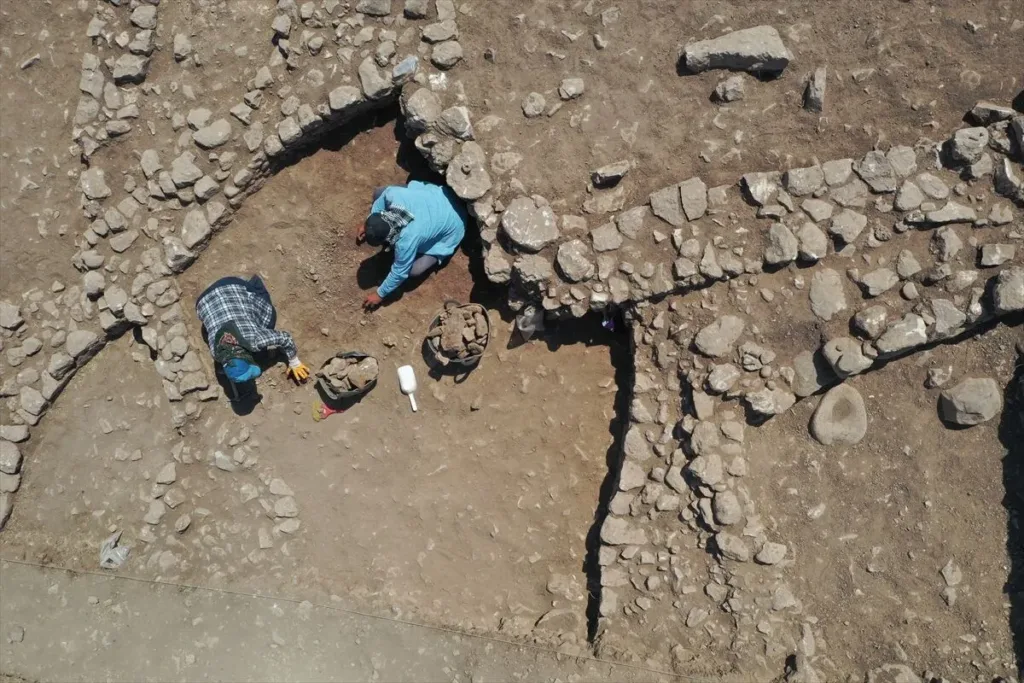
The discovery was made in a new excavation zone north of Göbeklitepe’s main protected archaeological area. Credit: Müslüm Etgü / AA
Göbeklitepe was more than a monumental center
The possibility of additional domestic buildings is important because Göbeklitepe was once widely presented primarily through its monumental architecture.
Its enormous T-shaped pillars, circular or oval enclosures, and elaborate animal carvings transformed archaeological discussions about early Neolithic communities. Yet excavations in recent years have increasingly revealed a more complicated settlement.
Researchers have previously identified domestic buildings existing alongside larger communal structures, suggesting that people were not simply gathering periodically at Göbeklitepe for ceremonies.
They were also living there.
According to Karul, the coexistence of communal buildings and residences indicates that Göbeklitepe should be understood not merely as a ritual center but as a settlement containing different types of architecture used at the same time.
Comparable patterns are also emerging from other Neolithic sites investigated through the wider Taş Tepeler project, which encompasses Göbeklitepe and a series of prehistoric settlements across the Şanlıurfa region.
The new excavation area could now provide archaeologists with a much larger sample for reconstructing this settlement pattern.
A large area remains to be exposed
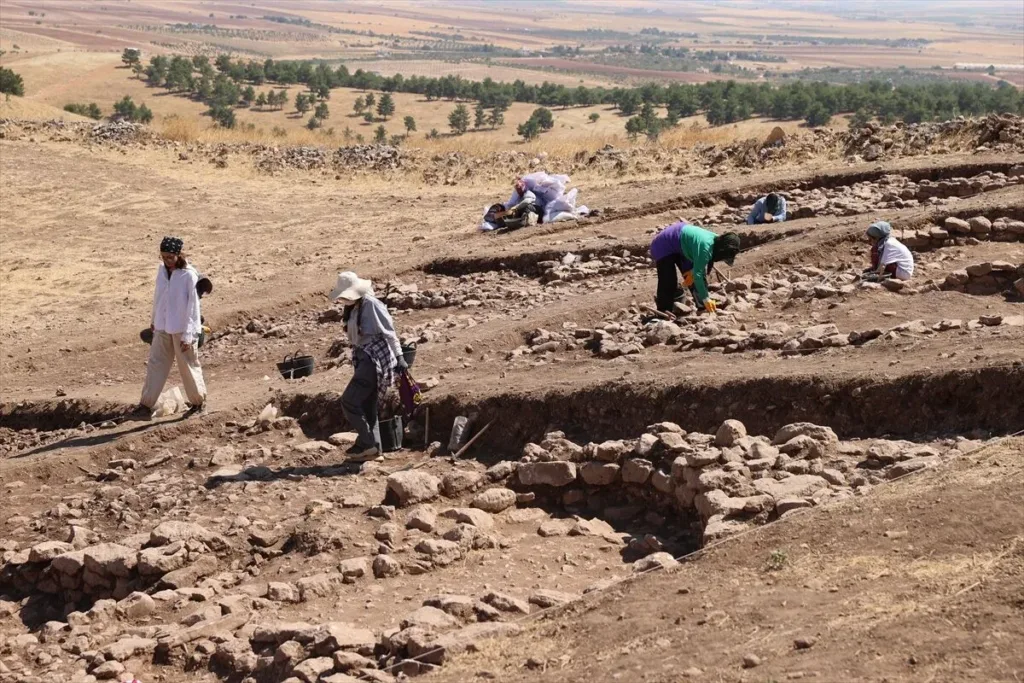
Work this season will concentrate on removing the surface layer across the wider excavation zone and exposing the structures lying immediately underneath it.
The team also found that the olive trees formerly growing in the area had caused far less archaeological damage than initially feared. Their relocation nevertheless made systematic excavation possible across ground that would otherwise have remained inaccessible.
Elsewhere at Göbeklitepe, archaeological and conservation work is continuing simultaneously. Excavations are still underway around the circular buildings on the slope, while stabilization efforts have shifted from the largely completed Structure C to Structure D, one of the site’s most prominent monumental enclosures.
The newly uncovered rectangular buildings are still at an early stage of excavation, and their floors have yet to reveal their full archaeological record.
But if further analysis confirms that they were domestic spaces, the discovery could add another important piece to a changing picture of Göbeklitepe: not simply a landscape of monumental pillars, but a Neolithic community where ceremonial architecture and everyday life existed side by side.
