
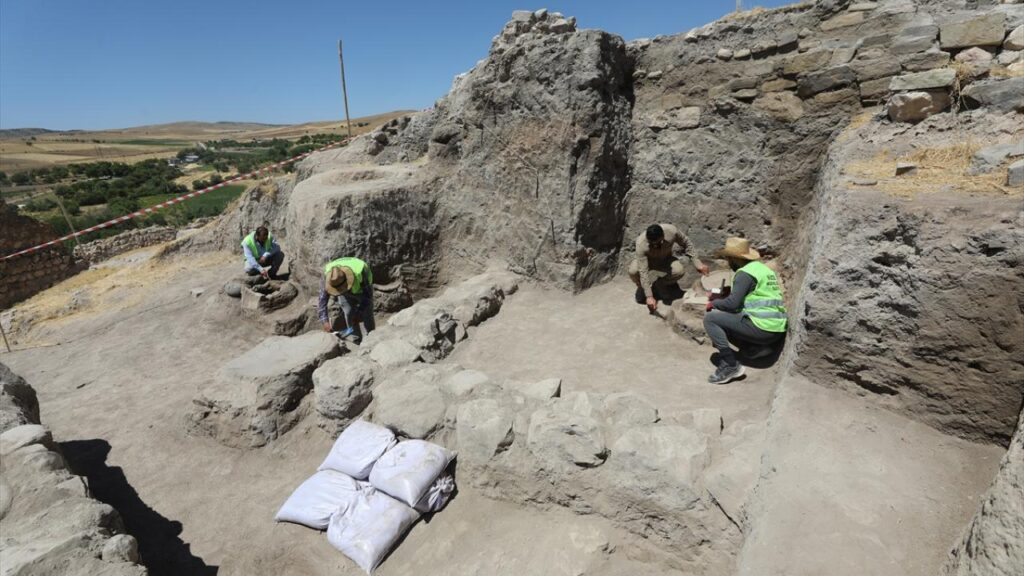
Archaeologists excavating Tadım Fortress and Mound in eastern Türkiye have uncovered a 5,000-year-old temple complex containing two altars and three sacred hearths, offering new evidence of Bronze Age ritual practices in the Upper Euphrates region.
The sanctuary, discovered in Elazığ Province, has been dated to around 3000 BCE. Archaeologists believe the architectural arrangement was created specifically for worship, offerings and ceremonies rather than ordinary domestic activities.
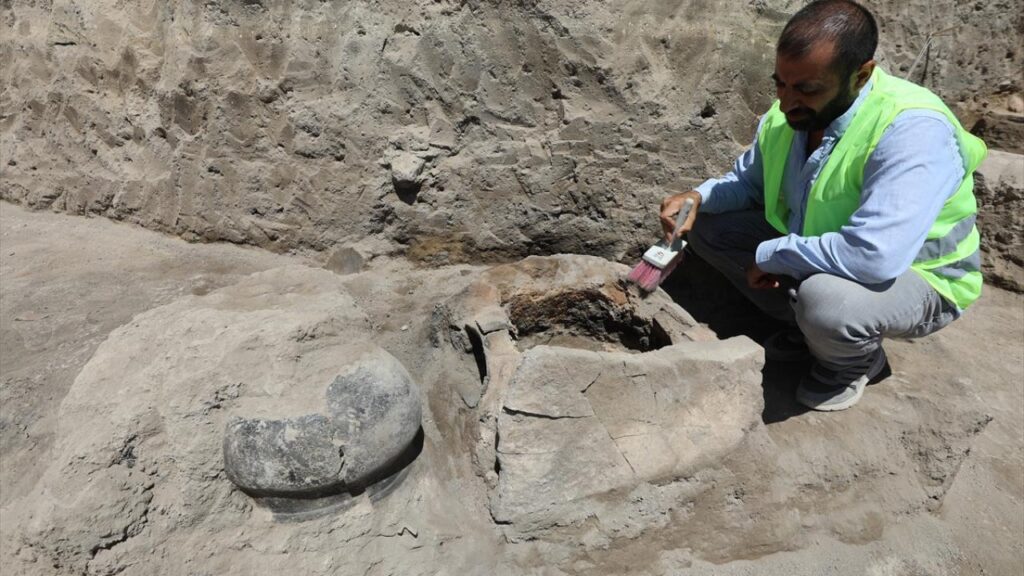
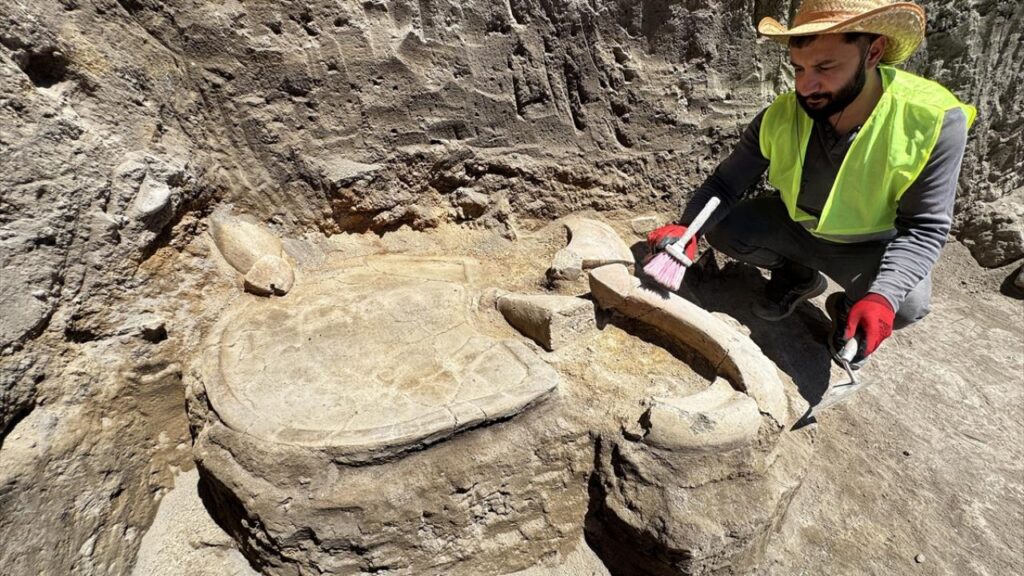
The newly exposed complex includes a defined cult area, two structures interpreted as altars and three hearths that may have held ceremonial fires. Their concentration within the same space suggests that fire, offerings and communal ritual were closely connected within the religious life of the settlement.
A Window into Bronze Age Beliefs
Emre Çayır, the archaeologist supervising work at the site, said the discovery could help researchers understand how religious traditions developed in the Elazığ region five millennia ago.
According to Çayır, the hearths and offering areas “shed light on the belief system of the period.” He added that the finds could occupy an important place in archaeological discussions of Bronze Age ritual architecture.
The precise ceremonies conducted inside the sanctuary remain unknown. However, altars were commonly associated with the presentation of food, liquids, animals or symbolic objects, while specially constructed hearths could have been used to maintain ritual fires, burn offerings or prepare substances used during ceremonies.
Further archaeological analysis will be needed to determine whether the installations contain ash, animal remains, plant material or other traces capable of identifying the activities performed there.
Second Temple Discovered at Tadım Höyük
The latest find brings the total number of temple areas identified at Tadım to two. Six sacred hearths have now been recorded across the site.
During an earlier excavation season, archaeologists uncovered another ritual area estimated to be approximately 6,000 years old. That discovery included distinctive sacred hearths decorated with stylized human and bull figures, dating to the Late Chalcolithic and Early Bronze Age, between approximately 4000 and 3200 BCE.
The figures on the earlier hearths were interpreted as representations of adults and children, possibly expressing ideas connected with family identity, fertility or household protection. Bull imagery may have carried associations with strength and abundance, although its exact meaning at Tadım has not yet been established.
Together, the two ritual complexes indicate that the mound remained an important ceremonial center across several prehistoric phases rather than serving only as a residential settlement.
Karaz Pottery and Long-Distance Connections
Previous excavations at Tadım have also produced 12 examples of Karaz pottery dating from approximately 4000 to 3000 BCE, as well as a painted vessel decorated with mountain-goat imagery and dated to around 3200 BCE.
Karaz pottery is generally identified by its dark, carefully burnished surface and is associated with cultural networks extending across eastern Anatolia and the South Caucasus. Its presence at Tadım suggests that the inhabitants participated in wider systems of communication, exchange and shared material traditions.
The combination of imported or regionally connected ceramic styles, formal ritual architecture and specialized ceremonial objects presents Tadım as a socially complex settlement positioned within the cultural landscape of prehistoric eastern Anatolia.
A Mound Containing Thousands of Years of History
Tadım Höyük lies within the modern village of Tadım, approximately 10 to 15 kilometers southwest of Elazığ. The east–west-oriented mound covers an area of roughly 120 by 130 meters and rises about 20 meters above its surroundings.
The remains of a medieval fortress, including sections of defensive walls and towers, stand on its summit. Surface investigations and excavations have identified material associated with the Bronze Age, Iron Age and later historical periods.
Archaeological layers at the site extend from the Neolithic and Chalcolithic periods through the Bronze and Iron Ages, followed by Eastern Roman, Seljuk and Ottoman occupation. Wall remains and large quantities of pottery show that the location was repeatedly inhabited and rebuilt over thousands of years.
The upper levels preserve evidence of comparatively recent settlement, while deeper trenches take archaeologists into prehistoric phases. The team is currently concentrating on the Bronze Age deposits where the newly discovered sanctuary was found.
Excavations Continue under the Legacy to the Future Project
The excavation is being conducted under the direction of the Elazığ Museum, in coordination with the Provincial Directorate of Culture and Tourism. The project is supported by Türkiye’s Ministry of Culture and Tourism, the Elazığ Governorship and the Provincial Special Administration as part of the country’s Legacy to the Future initiative.
The current team consists of four specialists and seven workers. Conservation and restoration work is proceeding alongside the excavations to protect fragile architectural features and objects immediately after they are exposed.
Researchers expect continued excavation of the Bronze Age levels to clarify how the sanctuary was organized, who used it, and whether its rituals were associated with individual households, a local community or a larger regional religious tradition.
With two temple areas and six sacred hearths now identified, Tadım Höyük is emerging as one of the most significant prehistoric ritual sites presently under investigation in the Elazığ region.
AA
