
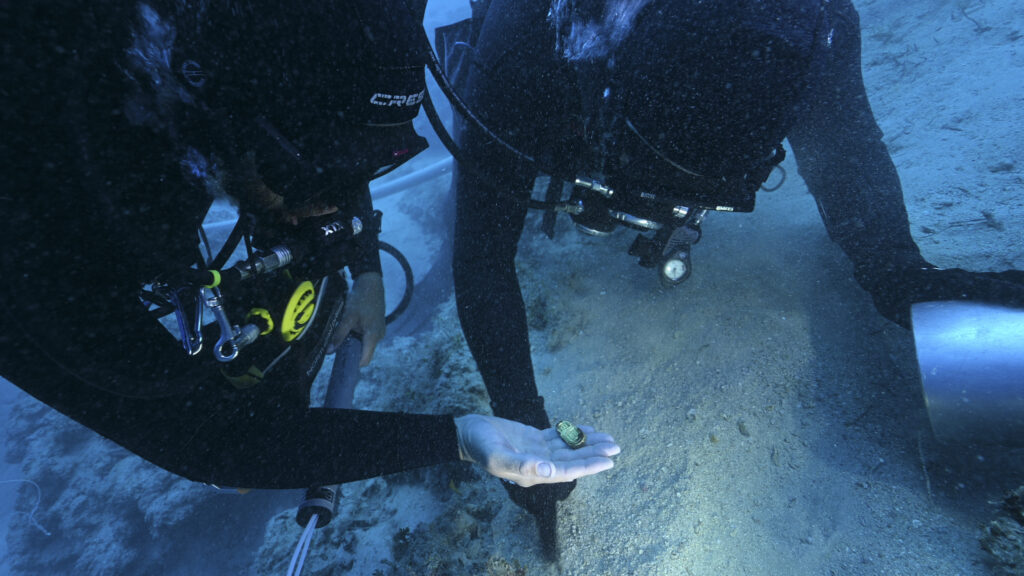
A Byzantine shipwreck resting near Croatia’s island of Mljet has yielded more than 600 grams of gold, jewel-encrusted belt fittings, imperial coins and a rare signet ring that may have belonged to one of the empire’s highest-ranking officials.
Archaeologists believe the vessel sank during the late 7th or early 8th century while carrying an elite passenger—possibly a senior military commander, imperial administrator or diplomatic representative—alongside a substantial commercial cargo.
The Croatian Conservation Institute describes the wreck as one of the most important underwater archaeological discoveries from the Byzantine period anywhere in the Mediterranean. According to Igor Miholjek, who leads the archaeological investigation, the cleaned and restored gold objects weigh more than 600 grams, making them the largest concentration of gold yet recovered from a Mediterranean shipwreck.
Gold Buckles Set With Emeralds, Rubies and Pearls
The shipwreck lies near Polače on Mljet, an island off Croatia’s southern Adriatic coast. Archaeological investigation of the site began in 2015, and nine underwater excavation campaigns have since been conducted by the Croatian Conservation Institute’s Department of Underwater Archaeology.
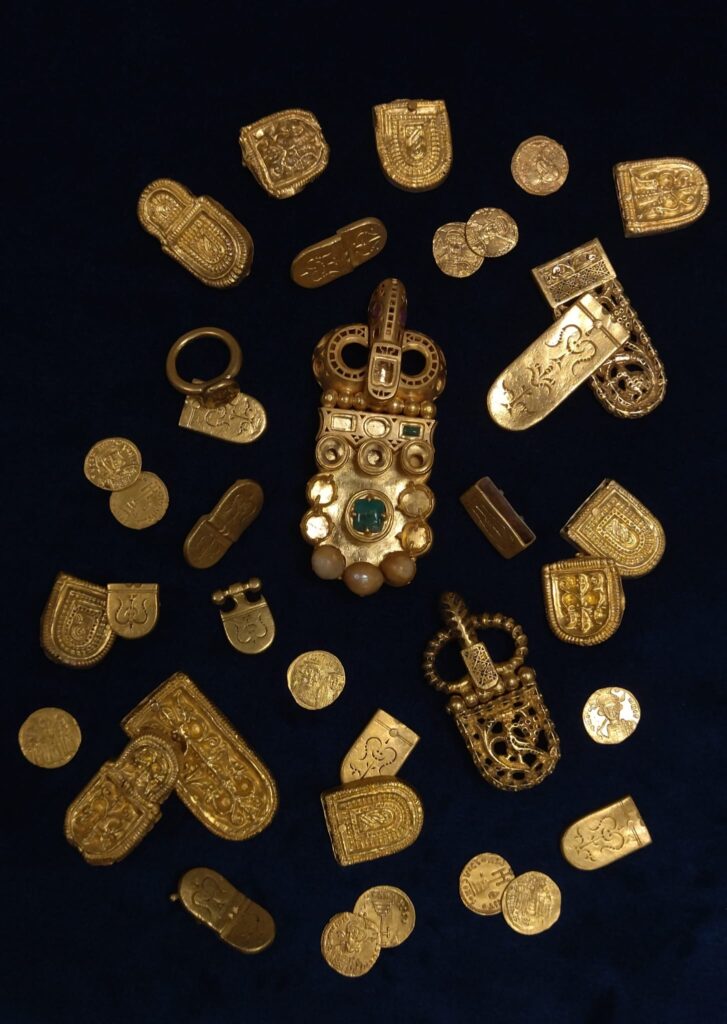
The most remarkable discoveries include four gold belt sets, gold buckles and decorative belt tips set with emeralds, rubies and pearls.
These were not simply pieces of personal jewelry. They formed part of elaborate leather belts worn by senior Byzantine dignitaries, whose clothing and accessories communicated their position within the imperial hierarchy.
The Croatian Conservation Institute says comparable luxury belt fittings have never previously been discovered in an underwater archaeological context in the Mediterranean. Their presence immediately suggested that the ship was not an ordinary trading vessel carrying only merchants and bulk goods.
The gold recovered from the wreck represents an unusually concentrated collection of elite Byzantine material culture. The precious stones, sophisticated metalworking and ceremonial character of the objects indicate direct links to the empire’s political or military establishment.
A Gold Ring Connected to Imperial Authority
Among the most significant objects is a gold signet ring bearing the image of an emperor from the dynasty founded by Emperor Heraclius.
Researchers believe such a ring could have belonged only to someone at the highest levels of Byzantine government or the military. Its owner may have been authorized to seal imperial documents, making the ring an instrument of political authority as well as a personal status symbol.
The artifact may have been presented as a diplomatic gift, or it may have been the personal possession of a senior official travelling on imperial business.
Pavle Dugonjić, head of the Croatian Conservation Institute’s Department of Underwater Archaeology, told Reuters that the emperor’s image made it clear that the ring “certainly wouldn’t be worn by just anyone.”
The ring strengthens the theory that a high-ranking individual was aboard the vessel when it sank. The gold belts and precious stones may have belonged to the same passenger, members of an accompanying delegation or several officials travelling together.
Imperial Coins Help Date the Disaster
Archaeologists also found gold coins issued under four emperors of the Heraclius dynasty during the late 7th century.
Because coins provide closely datable evidence, they have helped researchers narrow the likely date of the wreck to the late 7th or early 8th century. This was a period of profound political and military pressure for the Byzantine Empire.
Once the dominant power of the eastern Mediterranean, Byzantium was losing territory and struggling to maintain communication between distant coastal regions. Despite these pressures, the Mljet ship demonstrates that people, luxury goods and commercial cargo continued to move through Adriatic maritime routes.
Stanford University archaeology professor Justin Leidwanger, whose team is collaborating with the Croatian researchers, described the site as “the most important shipwreck of its period.”
For Leidwanger, the wreck offers rare evidence for understanding how Mediterranean maritime connections survived—or began to fragment—during the transformation from the late Roman world to medieval Europe.
A Luxury Voyage With Commercial Cargo
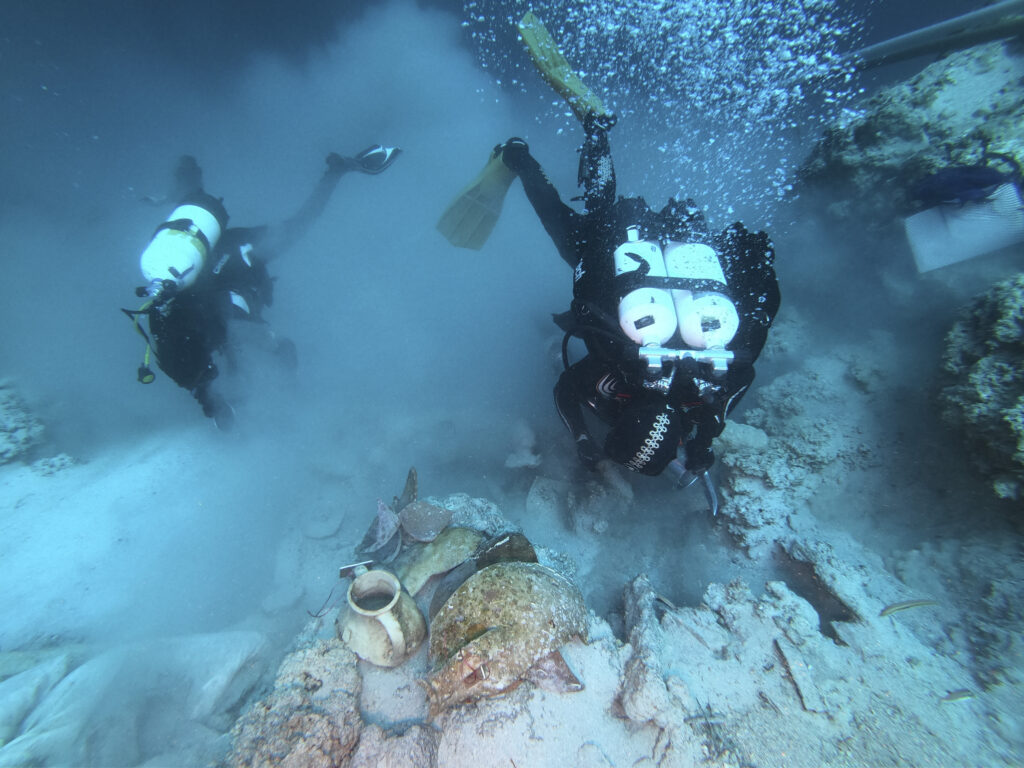
Although the gold objects have attracted the greatest attention, the ship was also carrying a substantial commercial load.
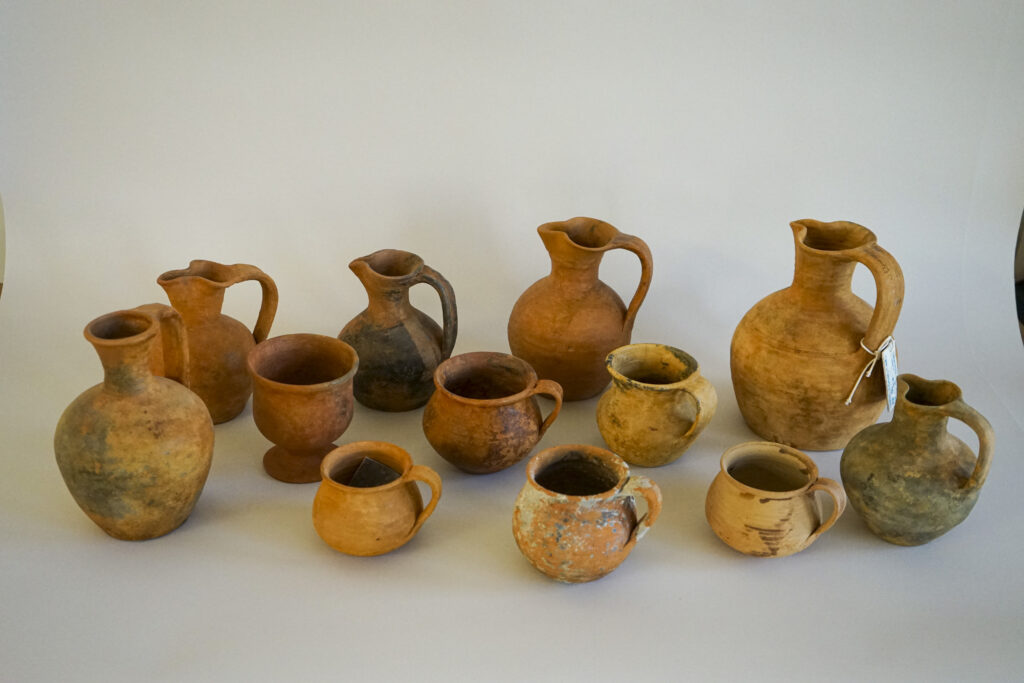
Divers recovered amphorae, trade scales, ivory tokens and ceramic vessels, including bowls, plates, jugs and other tableware. These objects show that the voyage combined elite travel with more conventional trade or logistical activity.
The mixture raises several possibilities. The senior passenger may have been travelling on official business aboard a commercial vessel. Alternatively, the ship may have been transporting supplies, payments and valuable gifts connected to a diplomatic or military mission.
Researchers from Stanford University are now studying the amphorae and ceramic cargo to determine where the containers were produced, what they carried and which ports the ship may have visited before reaching the Adriatic.
Specialists Falko Daim and Levante Samu are examining the manufacturing technology and decorative motifs of the gold belt sets, while numismatist Željko Demo is analysing the imperial coins.
The Ship May Have Been Seeking Shelter
Mljet stood beside one of the major sea routes connecting the eastern and western Mediterranean. Vessels travelling between Constantinople, the Adriatic coast and Italy regularly passed through these waters.
Researchers suspect that the Byzantine ship may have attempted to take shelter in Polače Bay before it sank. Protected by the surrounding landscape, the bay had served as a natural refuge for ships during bad weather for centuries.
Its importance was reinforced by a major Late Antique palace complex constructed beside the harbor. The sheltered anchorage, monumental architecture and location along a strategic maritime corridor made Polače a natural stopping point for ships crossing the Adriatic.
Exactly why the Byzantine vessel failed to reach safety remains unknown. A sudden storm, navigational mistake, structural failure or another maritime accident may have sent the ship and its prestigious passengers to the seabed.
Nineteen Years of Underwater Exploration
The discovery forms part of a much larger underwater archaeology program around Mljet.
Over the past 19 years, teams led by Miholjek and Dugonjić have identified 20 previously unknown shipwrecks around the island. Together, the sites range in date from the 2nd century BCE to the 16th century, revealing Mljet’s long role in Mediterranean navigation and trade.
The Byzantine wreck stands apart because of the rarity and status of its cargo. Its gold fittings, imperial coins and signet ring provide direct evidence of the individuals who travelled through the Adriatic during one of the least understood periods of Mediterranean history.
Rather than showing a sea cut off by the collapse of Roman power, the vessel reveals a world in which imperial officials, precious objects and commercial goods still moved across long-distance maritime networks.
More than 1,300 years after the ship disappeared beneath the Adriatic, its cargo is beginning to identify the people aboard—and to illuminate the fragile routes that continued to hold the Byzantine Mediterranean together.
Cover Image Credit: Hrvatski Restauratorski Zavod
