
An ancient Scythian tomb in southern Siberia has yielded more than 1,400 cannabis seeds and chemical traces of cannabis compounds in preserved human hair. Researchers believe the discoveries provide some of the earliest direct evidence that people used the plant for its mind-altering effects nearly 2,800 years ago.
The findings come from Tunnug 1, a monumental burial mound in Russia’s Tuva Republic. An international research team led by archaeologist Gino Caspari of the University of Bern combined archaeological evidence with laboratory analyses to investigate how cannabis may have featured in ancient Scythian society.
Cannabis Seeds Inside an Ancient Royal Tomb
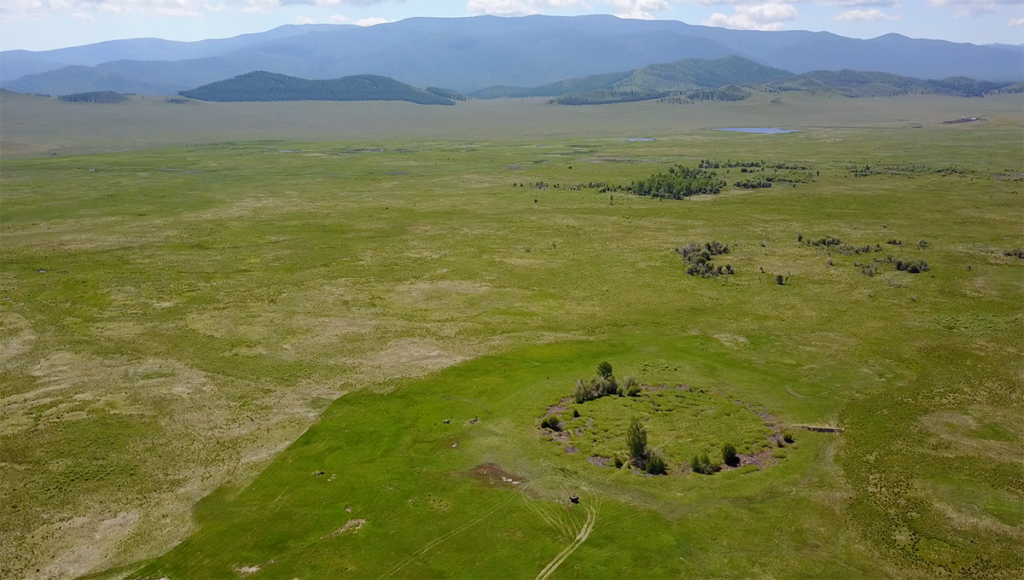
Tunnug 1 lies in the Uyuk Valley, a region of southern Siberia sometimes called the Siberian Valley of the Kings because of its numerous monumental burial mounds. The site dates to the early Scythian period, when horse-riding communities occupied large areas of the Eurasian steppe.
The burial mound measures approximately 140 meters across and contains elaborate wooden burial structures. Excavations revealed human remains, numerous horse sacrifices, and objects associated with funerary ceremonies.
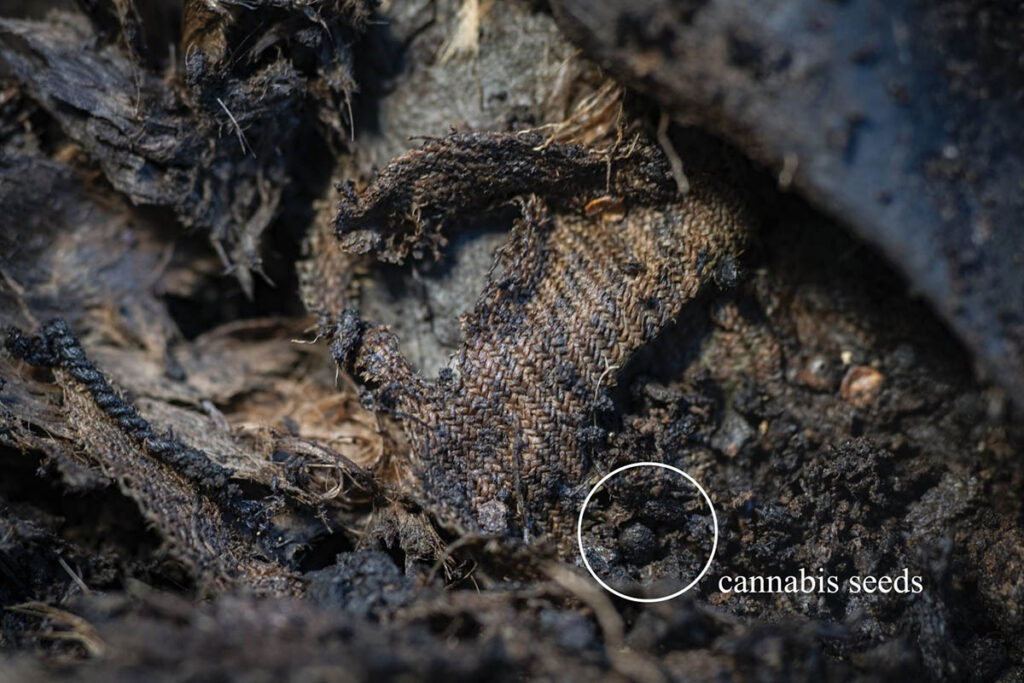
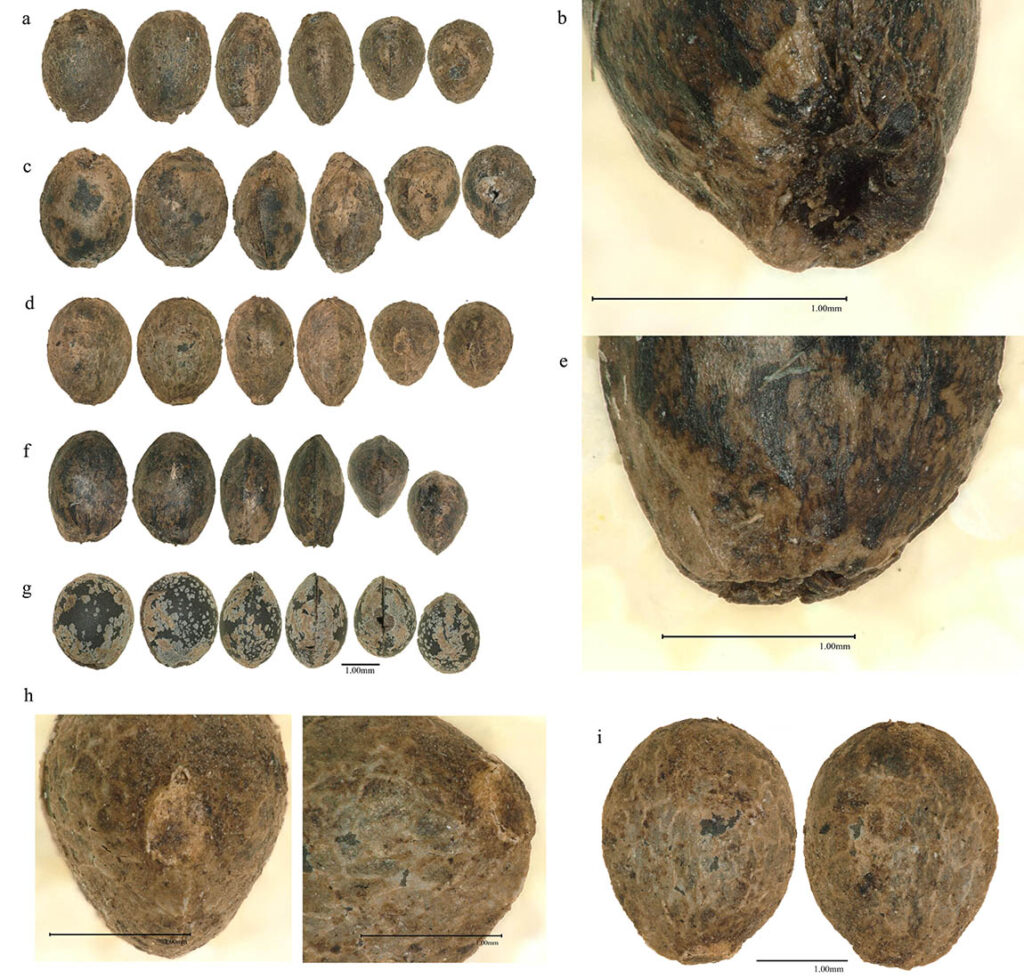
Among the discoveries were more than 1,400 cannabis seeds and additional fragments. Archaeologists recovered them from wooden burial chambers, near human skeletons, and within the folds of preserved textiles and fur.
Their location suggests that people deliberately placed cannabis inside the tomb. However, seeds alone cannot establish whether the Scythians cultivated the plant for food, fibers, medicinal purposes, or its psychoactive effects.
Researchers directly radiocarbon-dated six seeds. Their analysis places the deposits around the beginning of the eighth century BC, approximately 2,800 years ago.
Ancient Human Hair Provides the Crucial Evidence
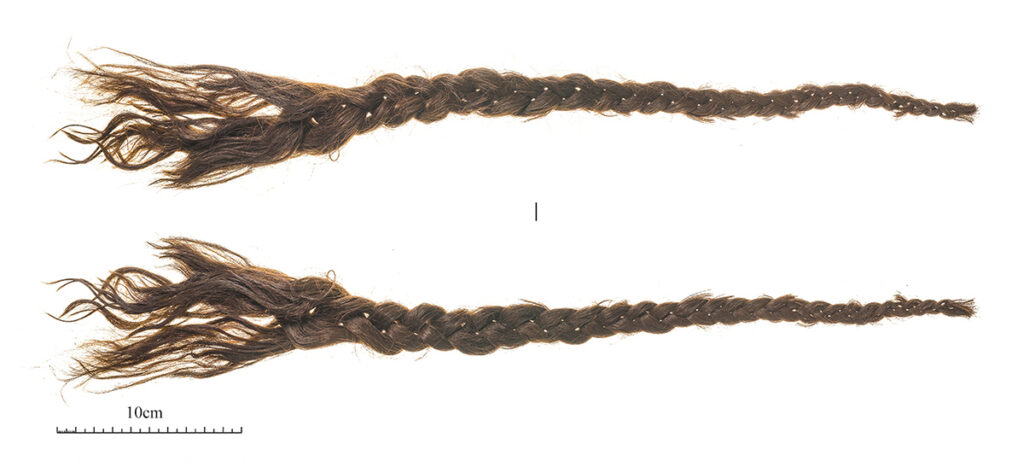
The most intriguing evidence came not from the seeds but from preserved human hair recovered from the burial chambers.
Scientists used advanced mass spectrometry to examine the samples for chemical compounds associated with cannabis. They detected cannabinol, or CBN, a substance that can form when tetrahydrocannabinol (THC), the principal psychoactive compound in cannabis, undergoes oxidation.
The analyses also produced weaker signals consistent with THC. Researchers interpreted the combination of chemical findings and cannabis seeds within the same burial environment as evidence that people may have consumed the plant for its intoxicating properties.
Caspari emphasized the importance of examining both the plant remains and human tissue. According to the University of Bern, this combination provides a stronger basis for investigating ancient cannabis use than archaeological seeds alone.
However, the findings do not establish how people consumed cannabis or how much they absorbed. The researchers could not determine whether individuals smoked the plant, inhaled its vapors, or consumed it in another form.
The interpretation also faces scientific scrutiny. Independent forensic toxicologist Volker Auwärter has questioned whether the chemical traces necessarily indicate consumption, since cannabis compounds can contaminate hair through external contact. The laboratory results therefore support the researchers’ interpretation but do not eliminate every alternative explanation.
Cannabis and the Rituals of the Scythians
The burial context adds another dimension to the discovery. Tunnug 1 was not an ordinary grave, and archaeologists have uncovered extensive evidence of ceremonies surrounding the dead.
Earlier excavations identified the remains of 18 horses associated with the burial mound. Subsequent investigations revealed several dozen additional sacrificed horses and scattered human bones, raising the possibility that some ceremonies also involved human sacrifice.
Researchers suspect cannabis may have played a role in these rituals, although its precise purpose remains unknown. The plant might have accompanied funerary offerings or formed part of ceremonies involving altered states of consciousness.
Ancient written accounts offer an interesting comparison. The Greek historian Herodotus described Scythians inhaling vapors produced by heating cannabis on hot stones, suggesting that the plant held a place in certain Scythian practices.
Yet the Siberian discovery predates Herodotus by several centuries. The archaeological evidence does not demonstrate that the people buried at Tunnug 1 followed the same practices he later described.
New Clues to the History of Cannabis
Archaeologists already knew that prehistoric communities across Eurasia used cannabis for different purposes, including its nutritious seeds and durable fibers. Evidence from Central Asian archaeological sites has also suggested that people deliberately exploited its psychoactive properties.
In 2019, researchers identified chemical residues associated with cannabis in wooden burners from approximately 2,500-year-old graves in the Pamir Mountains. Those findings pointed toward ritual inhalation but lacked direct evidence from human tissues.
The Tunnug 1 study potentially pushes the evidence for psychoactive cannabis use several centuries further into the past. Nevertheless, it cannot establish when people first discovered the plant’s intoxicating effects or whether the practice originated in a single region.
The research team is now investigating the genetic material preserved in the ancient seeds. Caspari reports that the DNA is exceptionally well preserved, potentially allowing scientists to examine the early history of cannabis domestication and its spread across Eurasia.
Gino Caspari et al. Direct evidence for psychoactive cannabis use 2800 years ago. Science 394, 649-653(2026). DOI:10.1126/science.aeg3800
