
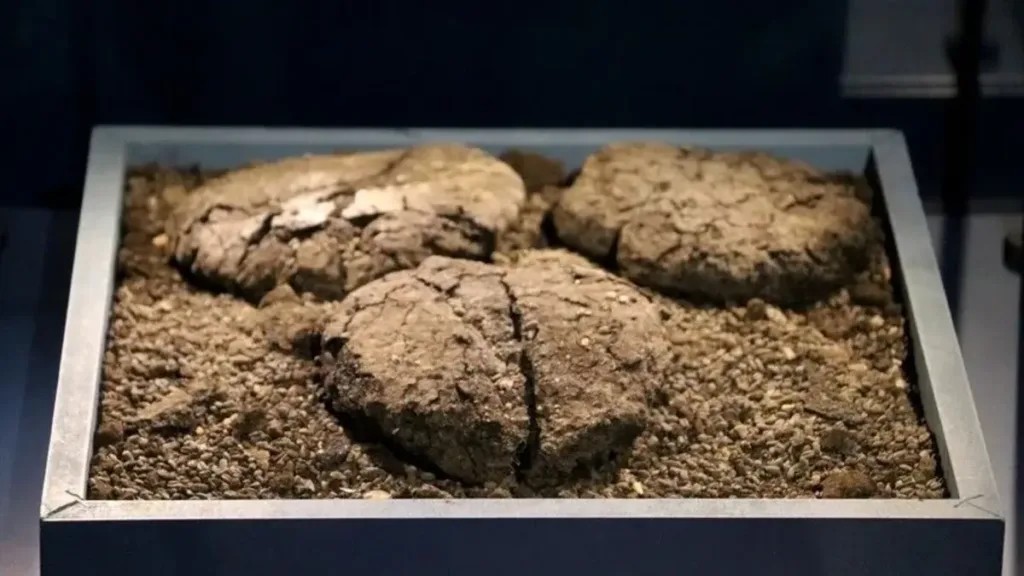
Archaeologists at Seyitömer Höyük in Kütahya, a province in western Türkiye, have discovered eight loaves of bread that were preserved through carbonization during a fire approximately 5,000 years ago.
Dating back to the Early Bronze Age, these loaves—found alongside wheat and lentil remains in the same room—provide concrete evidence regarding the dietary habits and food storage methods of the period.
Bread Preserved by Fire
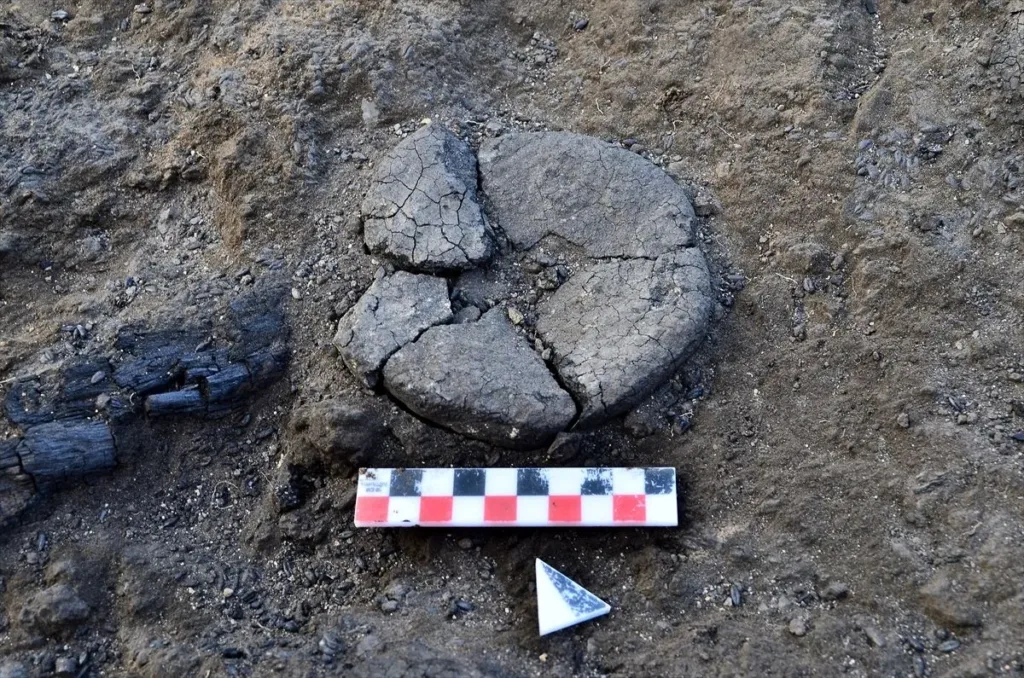
During rescue excavations conducted by the Kütahya Museum Directorate, an oven and shelf remains along a wall were identified within a room in 2025. Between the shelf legs, the excavation team encountered eight carbonized loaves of bread, as well as wheat and lentil residues.
According to Dr. Sevgi Gürdal, head of the excavation and Director of the Kütahya Museum, the shelf along the wall held bread and various agricultural products before the fire. The collapse of the shelf during the fire caused the food items to scatter across the same area.
The process that allowed the bread to survive until today is directly linked to this fire. The high temperatures carbonized the organic structure of the food, preventing the remains from completely decomposing. Consequently, the contents of a storage area used thousands of years ago have entered the archaeological record.
The presence of grains and legumes near the bread suggests that the space was used not only for preparing food but also for storage. However, detailed laboratory analysis regarding the production methods, shapes, and ingredients of the bread has not yet been shared with the public.
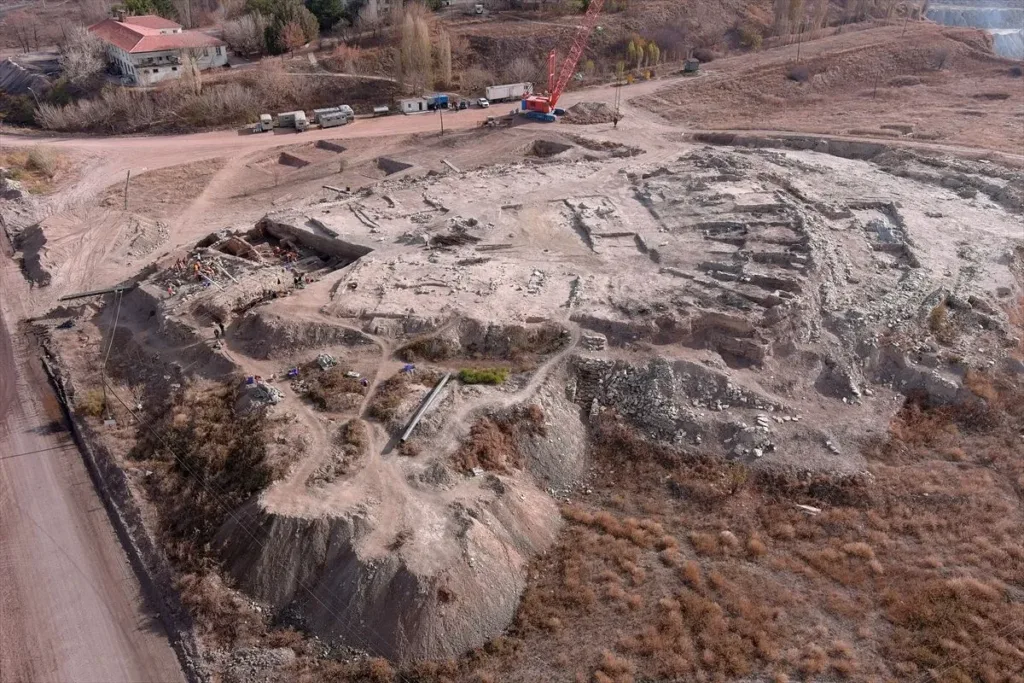
Aerial view of Seyitömer Mound in Kütahya, Türkiye, where archaeological excavations have revealed settlement remains dating back to the Early Bronze Age. Credit: Anadolu Agency.
Thousands of Years of Settlement at Seyitömer Mound
Located approximately 25 kilometers northwest of Kütahya city center, the Seyitömer Mound is one of the longest-inhabited archaeological sites in Anatolia. The settlement’s history dates back to the 3rd millennium BCE, and excavations have revealed structural layers from the Early and Middle Bronze Ages, as well as the Achaemenid, Hellenistic, and Roman periods.
The architectural remains at the mound provide opportunities to research not only the region’s settlement history but also its construction techniques and daily life. A study by Semra Kaygısız, published in the Dumlupınar University Journal of Social Sciences in 2026, specifically examines Middle Bronze Age architecture and door arrangements within the settlement. The research also notes that the preserved carbonized wooden remains in the mound are archaeologically significant.
In this regard, the new bread findings offer a different type of evidence that complements the previously uncovered architectural traces. Remains showing how structures were built are now accompanied by the foods that were stored within those buildings.
Excavations in the Coal Mine Site Since 1989
The Seyitömer Mound is located within the lignite field of a thermal power plant. Due to the coal reserves beneath the archaeological site, rescue excavations began in 1989; in subsequent years, various museum directorates and Kütahya Dumlupınar University took over the work.
During the excavations, archaeologists delivered more than 17,000 artifacts to the Kütahya Museum Directorate. The Kütahya Museum Directorate has been conducting rescue operations since 2019, currently led by Dr. Sevgi Gürdal and supported by Çelikler Holding.
The approximately five-thousand-year-old bread, along with the wheat and lentil remains, is now on display for visitors at the Kütahya Archaeology and Mining Museum.
