
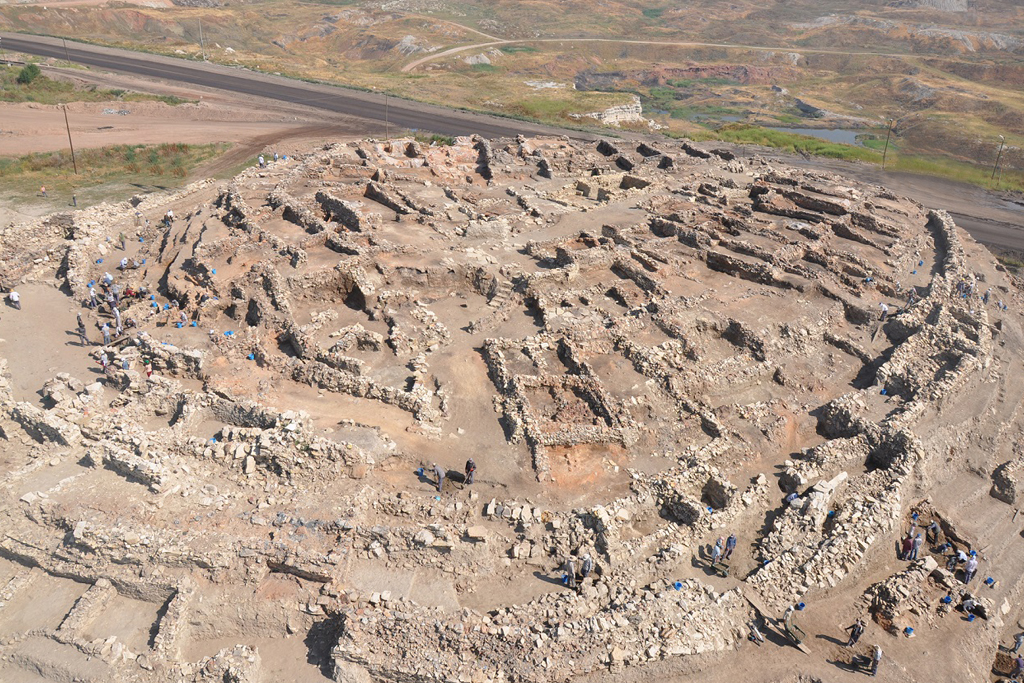
Archaeologists working at Seyitömer Höyük (Seyitömer Mound) in western Türkiye have identified a rare group of carbonized wooden remains that may represent actual Middle Bronze Age wooden doors, offering an unusual glimpse into how people entered, secured, and organized their homes nearly four millennia ago.
The study, authored by archaeologist Semra Kaygısız and published in the Dumlupınar University Journal of Social Sciences, focuses on charred wooden fragments found on the floors of structures in Layer IV of Seyitömer Höyük, a settlement located about 25 kilometers northwest of Kütahya. While doorways, thresholds and pivot stones are familiar features in Bronze Age architecture, surviving wooden door leaves are exceptionally rare because organic materials usually decay before they can enter the archaeological record.
A rare survival of Bronze Age wood
The discovery is important because ancient doors are usually reconstructed from indirect evidence. Archaeologists often rely on wall openings, threshold stones, post holes, pivot stones and architectural traces to understand where doors once stood. At Seyitömer Höyük, however, researchers were able to examine the carbonized remains of possible door leaves themselves.
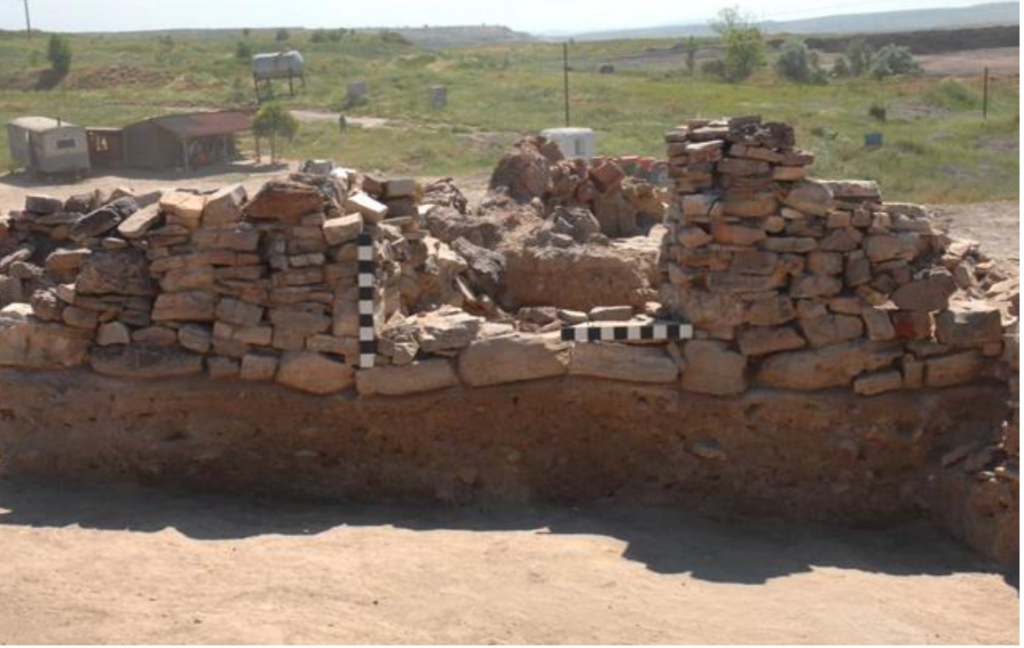
The article, written by Semra Kaygısız, suggests that a group of wooden remains from three Middle Bronze Age structures may have belonged to single-leaf wooden doors. These remains were found in buildings identified as C70, B23 and B36. Their positions, dimensions and relationship to nearby door openings support the interpretation that they once closed the entrances of these rooms.
The wooden remains were not preserved as complete, usable doors. They were fragmented and carbonized, probably after fire events affected parts of the settlement. Yet their rectangular form, plank-like structure and close alignment with architectural entrances allowed researchers to propose a reconstruction.
A key Bronze Age settlement in western Anatolia
Seyitömer Höyük has been excavated since 1989. The site has revealed several major occupational layers, including Roman, Hellenistic, Iron Age, Middle Bronze Age and Early Bronze Age phases. The Middle Bronze Age layer, known as Layer IV, is divided into four phases: D, C, B and A.
This long sequence makes Seyitömer Höyük especially valuable for understanding settlement planning in inland western Anatolia. The mound preserves houses, streets, fortification walls, ovens, hearths, storage areas and production spaces. Researchers have also documented signs of weaving and metalworking in some buildings.
The newly studied wooden door remains add another layer to this picture. They show not only how buildings were planned, but also how daily life moved through them. A door is a simple object at first glance. In archaeology, however, it can speak about privacy, security, household organization and social hierarchy.
Three buildings, three possible doors
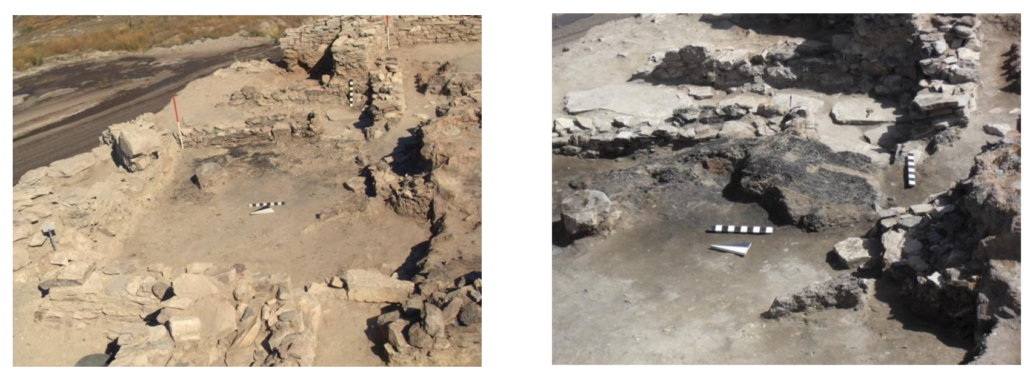
The first example comes from Building C70, a rectangular two-room structure in the northern part of the settlement. A carbonized wooden remain measuring about 0.64 meters wide and 1.44 meters long was found near a doorway. A pivot stone was also discovered at one corner, strengthening the idea that the wooden element functioned as a door leaf.
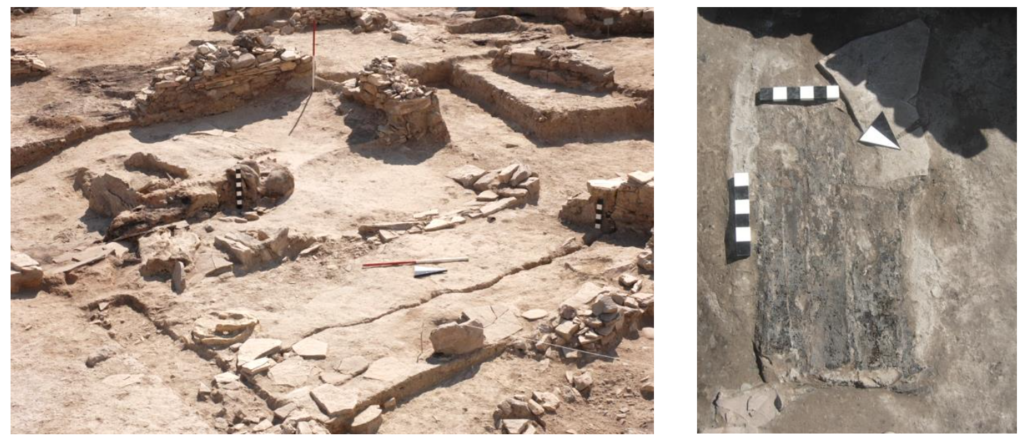
The second example was found in Building B23, a single-room rectangular structure. Inside the building, researchers identified a rectangular block made from wooden pieces. It measured about 0.86 meters wide and 1.59 meters long. Since the size matched the building’s doorway, the remains were interpreted as a possible wooden door.
The third example comes from Building B36, a two-room structure that contained in-situ finds such as loom weights, pottery fragments and architectural features including a horseshoe-shaped hearth. A carbonized wooden remain measuring about 0.68 meters wide and 1.47 meters long was discovered near the southwestern wall. Its shape and similarity to the other examples support the interpretation that it also belonged to a door leaf.
Clues from fire, floors and entrances
One of the most striking details is that the possible doors were found inside the buildings, lying on the floors. This suggests they may have opened inward before eventually collapsing or falling from their fittings.
The doors appear to have been made from multiple rectangular wooden blocks or planks. No metal pins were found nearby, which may mean that wooden pegs or another organic fastening method was used to join the pieces. Their widths, ranging between 0.68 and 0.86 meters, fit the scale of single-leaf doors.
Small differences between the preserved door remains and the original doorway widths may be explained by the natural shrinkage of organic material, the spreading of remains after collapse, or damage to the entrances over time.
The study also notes that not all buildings preserved such remains. Out of 174 Middle Bronze Age structures identified at Seyitömer Höyük, only three produced possible wooden door leaves. That rarity makes the find especially significant.
A window into everyday architecture
The survival of wooden remains at Seyitömer Höyük is part of a broader pattern of unusual organic preservation at the site. Previous discoveries include textile and leather shoe remains, as well as brain tissue preserved in skulls from a fire-affected Bronze Age layer. The study suggests that soil chemistry and the interruption of reuse practices may have helped some organic materials survive.
The wooden doors also connect Seyitömer Höyük to wider Anatolian architectural traditions. Door-related features are known from sites such as Kültepe, Beycesultan and Acemhöyük, but direct evidence for wooden door leaves is limited. Comparable examples are known from the Old Hittite levels at Boğazköy, where wooden remains from house floors have also been interpreted as door elements.
What makes the Seyitömer Höyük examples valuable is their archaeological setting. They were not isolated fragments. They were found in relation to floors, entrances, threshold stones and pivot stones. That combination gives researchers a stronger basis for reconstructing how these Bronze Age buildings worked.
Ancient doors with a surprisingly familiar form
The article also draws attention to a subtle but fascinating continuity. Some rural wooden doors still used in parts of western Anatolia share formal similarities with the Seyitömer examples. This does not mean the same tradition remained unchanged for thousands of years, but it does show how practical architectural solutions can persist when they work.
At Seyitömer Höyük, the possible doors were part of modest but carefully organized homes. They separated rooms from streets, protected interior spaces and shaped the movement of daily life. Their preservation turns an ordinary architectural feature into an extraordinary archaeological clue.
For Bronze Age Anatolia, where wood is usually lost, these carbonized remains are more than fragments. They are rare evidence of a vanished material world, one in which stone walls, clay floors and wooden doors formed the lived environment of a community in western Türkiye.
Kaygısız, S. (2026). Seyitömer Höyük Orta Tunç Çağı kapıları [Middle Bronze Age doors from Seyitömer Höyük]. Dumlupınar Üniversitesi Sosyal Bilimler Dergisi, (89), 329–342. https://doi.org/10.51290/dpusbe.1879137
Cover Image Credit: Public Domain
