
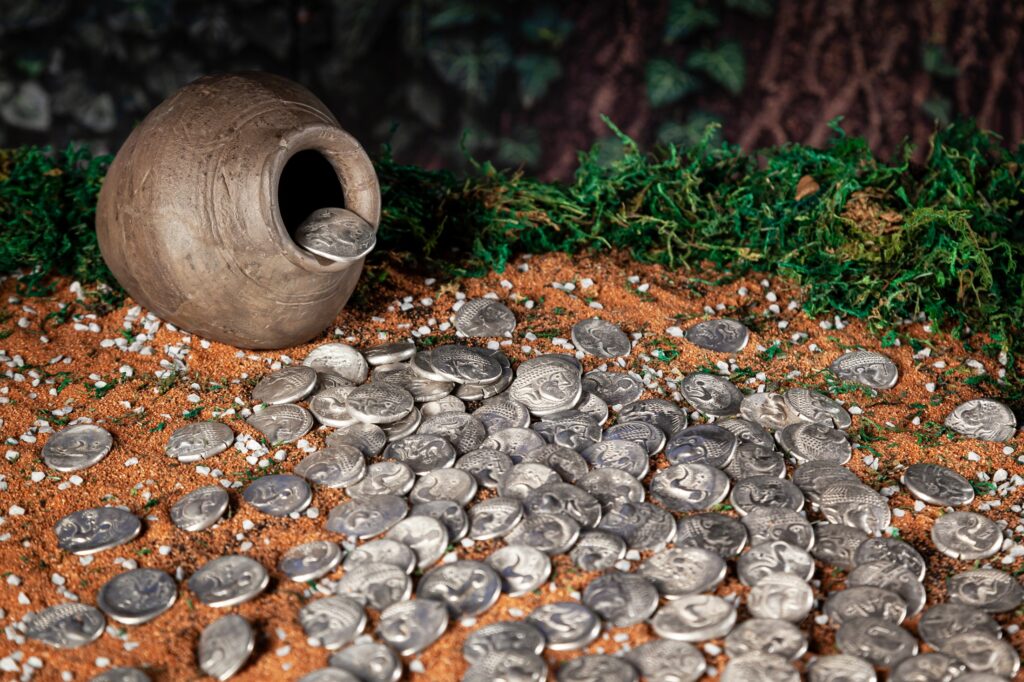
A treasure of 208 Celtic silver coins, dating back over 2,000 years, has been discovered during the construction of an electrical facility in Szombathely, western Hungary. Weighing more than two kilograms, the coins were found just 30–40 centimeters below the surface. According to Hungarian archaeologists, nothing comparable has been found in the country since the late 1960s.
The excavations were not limited to silver coins. Archaeologists also uncovered Iron Age graves, stone tools about 7,000 years old, and a Roman brick bearing a dog’s paw print. The energy company E.ON Hungária Group shared new details of research conducted by the National Archaeological Institute of Hungary between 2023 and 2025 on November 17, 2026.
Silver Coins Hidden Two Thousand Years Ago
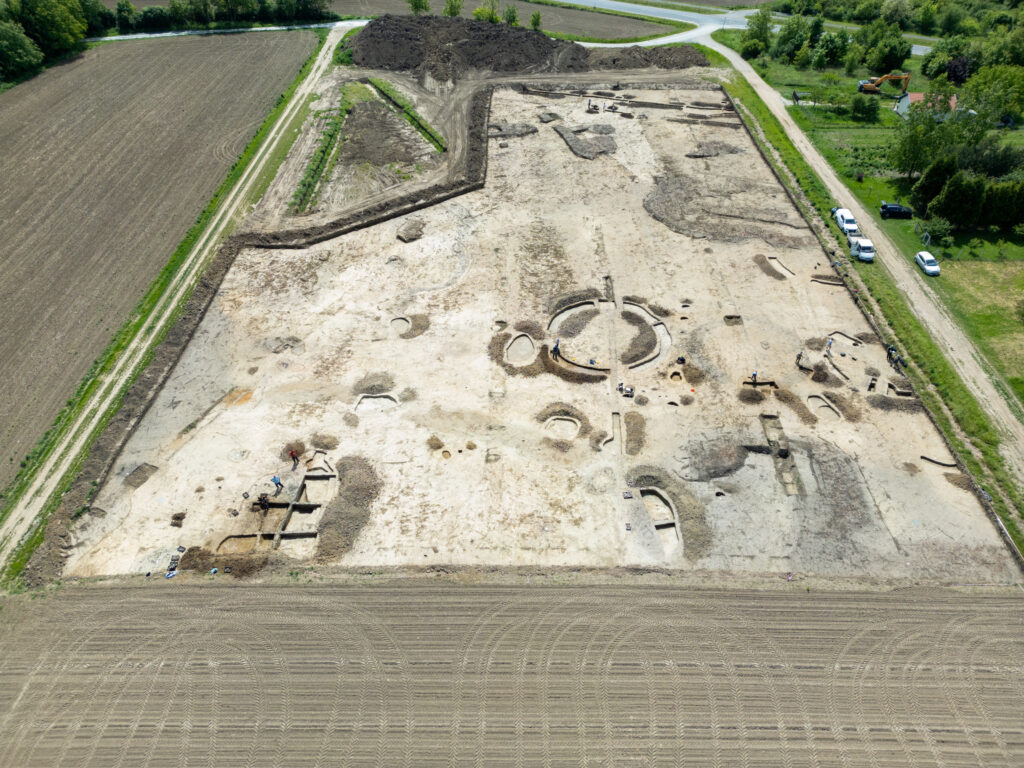
While working near Muskátli Street, north of Szombathely, archaeologists first encountered a few silver coins scattered in the soil. With the support of metal detector specialists, they expanded the search and reached a much larger collection of coins hidden within a pit.
A portion of the 208 coins had been preserved inside a small ceramic vessel. Centuries of agricultural activity had scattered some of the treasure, which was located quite close to the surface, into the surrounding soil.
The coins are Velem-type silver tetradrachms dating to the late second or early first century BCE. Each tetradrachm was equivalent in value to four drachmas, a monetary denomination widely used in the ancient Greek world. Researchers believe the coins may have been minted in the Velem–Szentvid area, about 15 kilometers west of the excavation site.
The reason why the treasure was buried remains unknown. The coins could represent wealth hidden for protection during a dangerous period, or they could be a votive offering left in the ground for ritual purposes.
A Dog’s Paw Print in a Roman Villa
The area where the silver treasure was found was also used centuries later during the Roman period. Excavations reveal that a rural villa complex once stood here. Although much of the structures were dismantled in later periods, archaeologists managed to partially reconstruct the plan of the central building, which covered approximately 300 square meters.
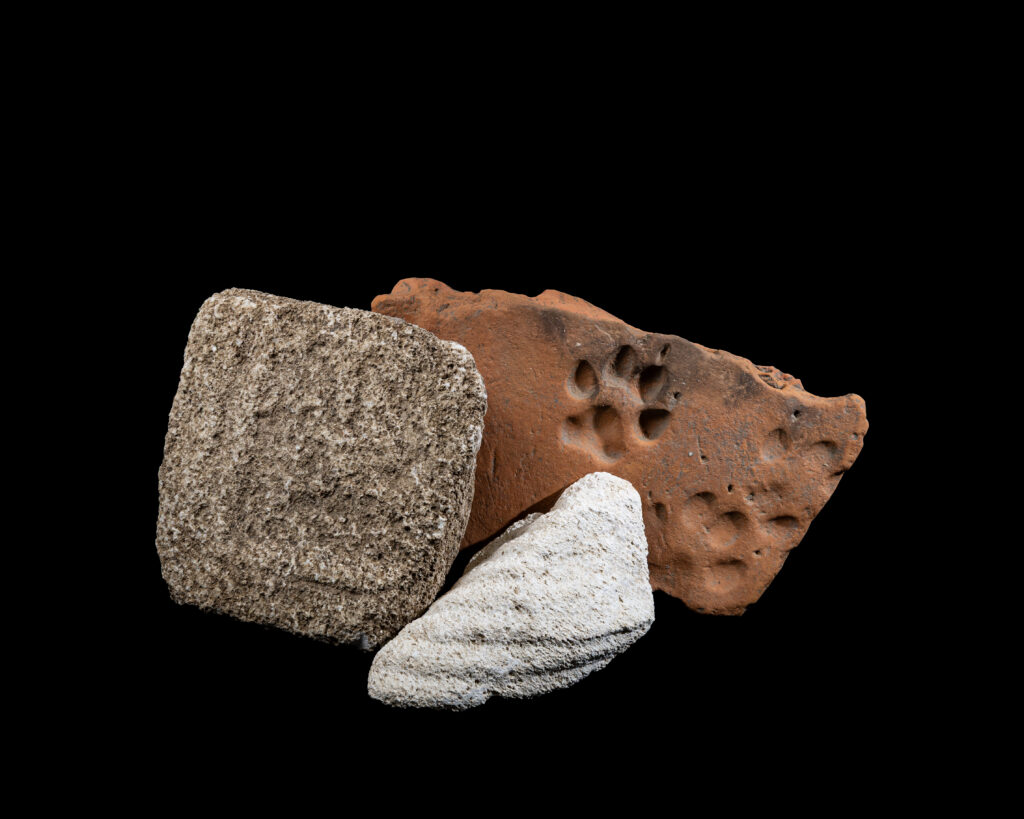
One of the most remarkable objects from the villa was a fragment of a brick featuring a dog’s paw print.
The print was likely left by a dog stepping on the brick while it was still wet. Once the clay was fired, the paw print became permanent. Researchers believe this piece may have been used in a section related to the building’s underfloor heating system.
The paw print offers a small but tangible connection to everyday life in Roman Szombathely, showing how even an ordinary building material can preserve evidence of the animals that lived alongside people.
Approximately 7,000 Years of History in One Area
The region where the excavations took place was known as an archaeological site even before the construction of the new transformer station. Experts from the National Archaeological Institute of Hungary documented approximately 400 archaeological features and thousands of finds during the construction preparations and works.
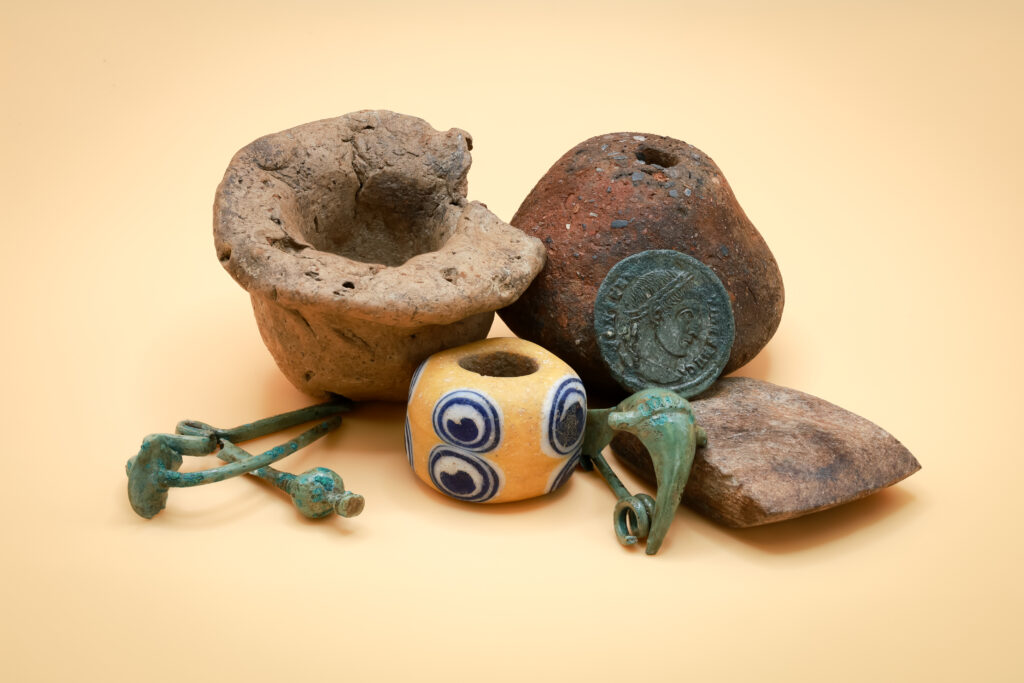
Among the oldest artifacts is a small, polished stone adze dating back to the 5th millennium BC. Artifacts from later periods provide insight into the daily activities and burial traditions of the communities that lived in the region.
Finds from the Early Iron Age include a glass bead with a peacock-eye pattern and ceramic vessels left in graves. Researchers believe some of these vessels were used to offer food and drink to the deceased.
Two hand-millstones found in a Celtic-era structure buried in the ground document grain processing activities in the area. Consequently, the site where the coins were buried can be linked not only to a treasure but also to the daily lives of people who resided there across different eras.
Today’s Szombathely was an important city known as Savaria during the Roman period. The new excavations demonstrate that the settlement and land use of the surrounding area extend much further back than the Roman era.
According to E.ON’s statement, some of the artifacts found during the excavations will be presented to visitors in a temporary exhibition at the Savaria Museum in Szombathely. The exact date of the exhibition has not yet been announced.
