
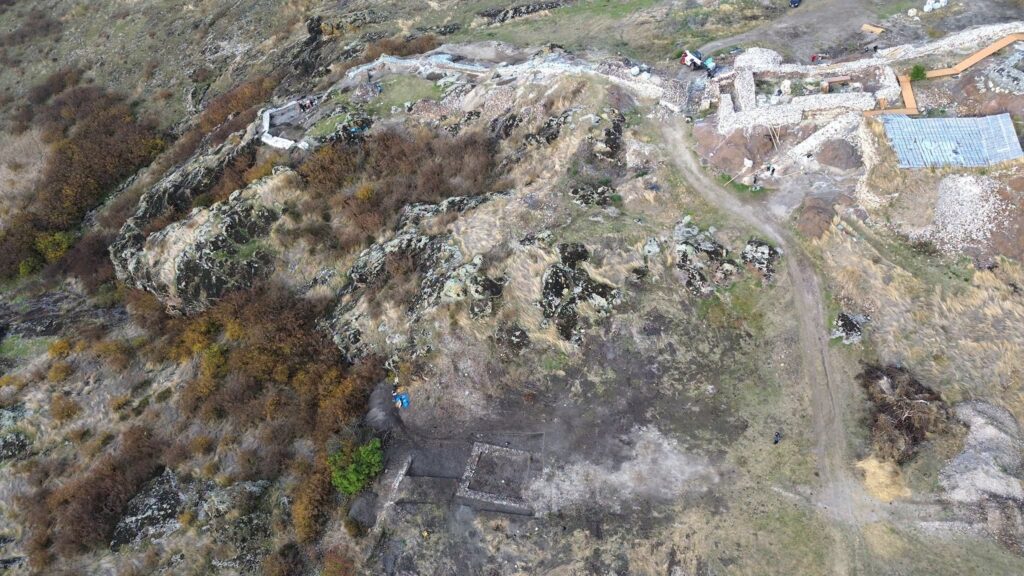
Archaeologists excavating the medieval fortress of Rusokastro in southeastern Bulgaria have discovered a monumental building with unusually thick walls coated in waterproof pink mortar. The latest excavations also yielded silver coins issued under a Bulgarian tsar who defeated the Byzantine army at the same fortress in 1332.
A massive medieval building with walls coated in pink waterproof mortar has emerged from excavations at Rusokastro, a Bulgarian fortress with a remarkable military history. Archaeologists also recovered silver coins issued during the reign of Tsar Ivan Alexander, who defeated the forces of Byzantine Emperor Andronikos III Palaiologos at Rusokastro in 1332. The discoveries connect new evidence of the fortified city’s architecture with one of medieval Bulgaria’s most significant victories.
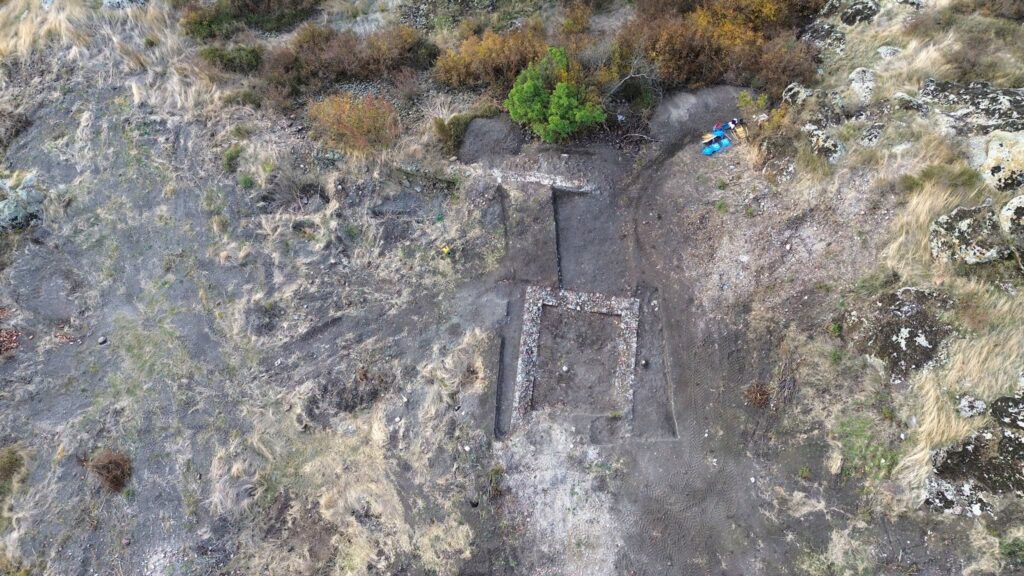
The Regional Historical Museum of Burgas announced the findings following the final stage of its 2026 excavation season. The newly uncovered building stands near the inner southern defensive wall, in what researchers identify as the central district of the medieval city. Its unusual interior coating suggests that the ground floor served a practical purpose beyond ordinary domestic use.
A Monumental Building with Waterproof Pink Walls
The building measures 7.60 meters (25 feet) across, although archaeologists have not yet established its full length. Its stone walls reach 1.10 meters (3.6 feet) in thickness, with substantial amounts of mortar binding the masonry together.
What makes the structure particularly interesting is the thick layer of pink hydrophobic mortar covering the interior faces of its walls. This water-resistant material suggests that the building may have functioned as a reservoir or a storage facility for food supplies.
The researchers believe the surviving remains most likely represent the ground floor of a larger building. They also propose that a second, residential level once stood above it, although further excavation will be necessary to clarify its original layout.
Both interpretations remain provisional. The mortar provides an important clue about the building’s possible function, but archaeologists have not yet established whether it primarily stored water, provisions, or served another purpose.
Its location near the inner defensive wall is also significant. The structure occupied part of the fortified settlement’s central district, where access to essential supplies would have mattered during periods of military conflict or prolonged occupation.
Silver Coins of a Tsar Who Defeated the Byzantines
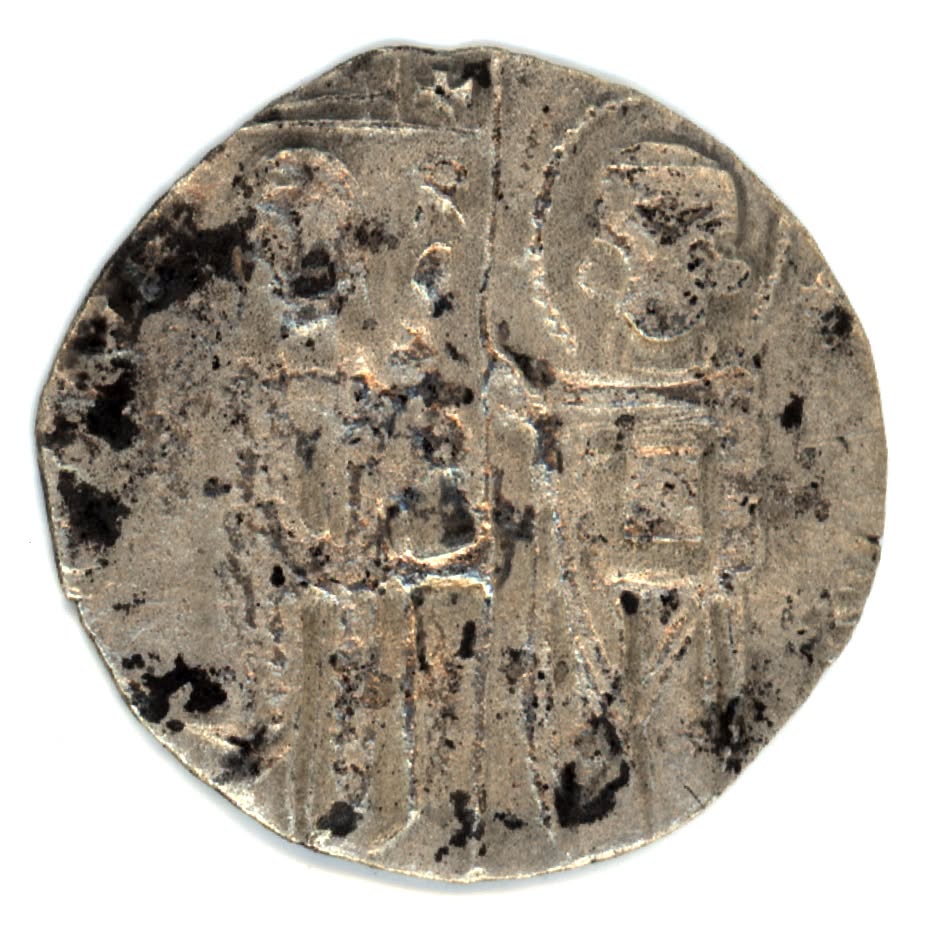
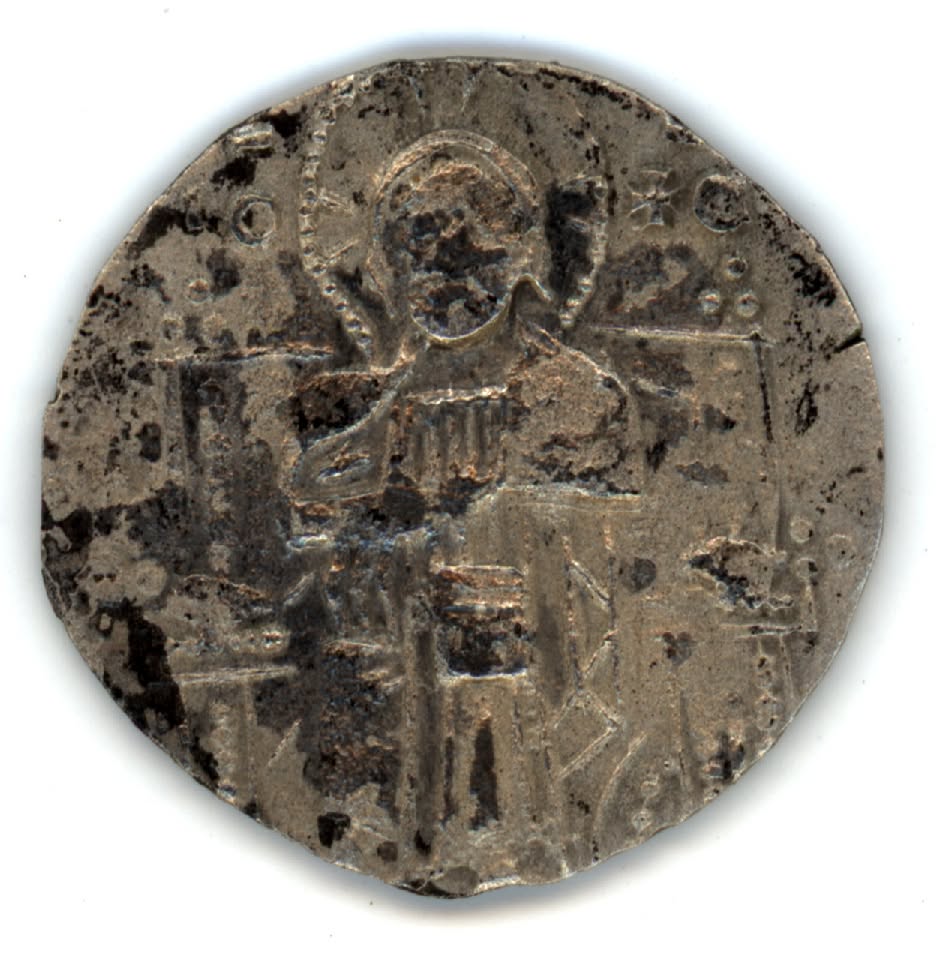
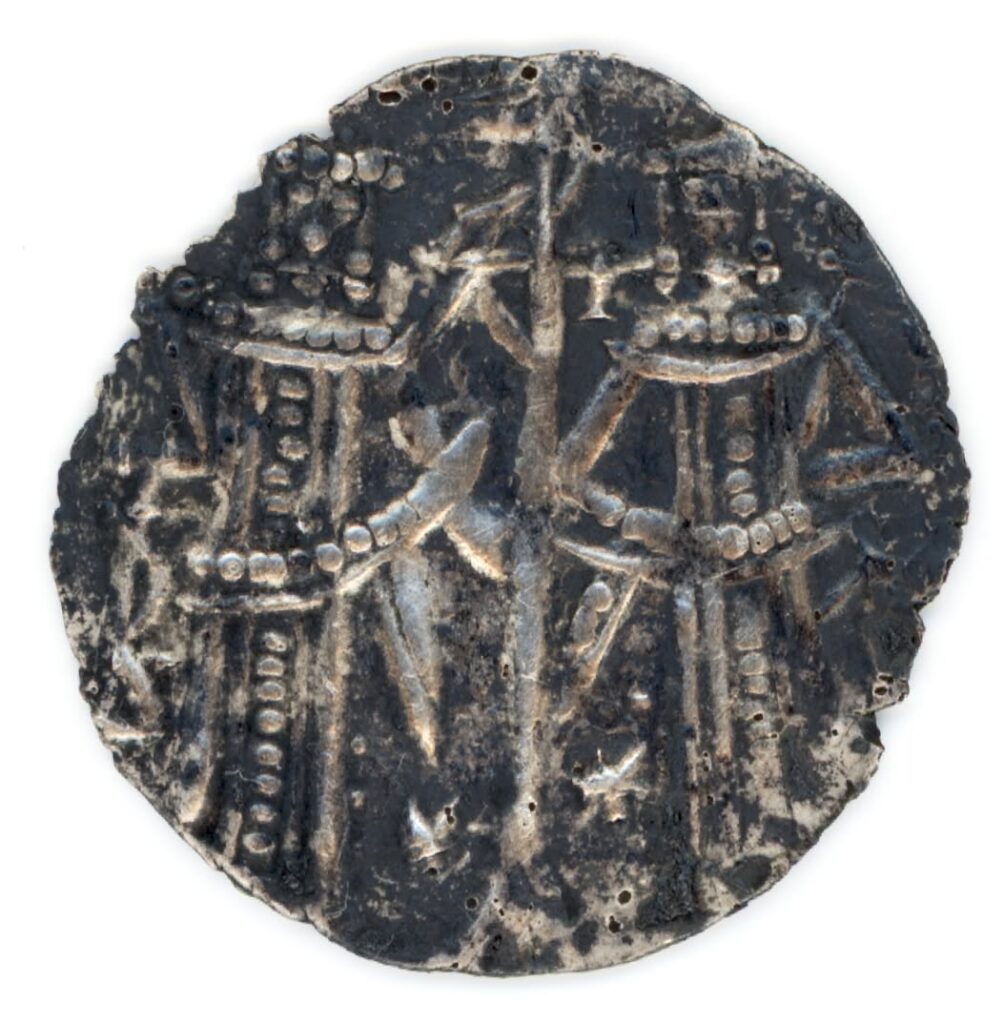
Alongside the architectural discovery, archaeologists recovered numerous portable objects, including silver coins issued during the reign of Bulgarian Tsar Ivan Alexander, Venetian silver grossi known as matapans, and copper coins.
Ivan Alexander ruled Bulgaria from 1331 to 1371, during a period marked by military conflict with Byzantium and important developments in Bulgarian religious and cultural life. One of his most consequential military successes took place at Rusokastro itself.
On July 18, 1332, Ivan Alexander defeated the Byzantine army commanded by Emperor Andronikos III Palaiologos. The Bulgarian victory strengthened the tsar’s position in the region and helped secure Bulgarian control over territories along the southern Black Sea coast.
The silver coins recovered during the excavations therefore have a particularly meaningful historical setting. They belong to the reign of a ruler whose military victory became one of the defining events in the fortress’s history.
However, the museum has not established that these particular coins were lost during the battle. Nor has it reported that they came directly from the newly discovered monumental building. Their precise archaeological contexts must be considered separately from the historical events associated with the fortress.
The Venetian silver coins provide another dimension to the discovery. Known as matapans, these widely circulating medieval coins reflect the broader monetary connections linking the Balkans with the Mediterranean world.
Their presence at Rusokastro offers material evidence relevant to studying the city’s economic contacts, although the coins alone cannot identify the people who brought them there or establish direct visits by Venetian merchants.
The museum’s conservation specialists are currently cleaning and examining the recovered coins and other objects.
Earlier Excavations Reveal a Changing Medieval Fortress
Rusokastro’s archaeological importance extends well beyond the latest discovery. Previous investigations have documented successive construction phases in its defensive system, helping researchers understand how the fortified settlement developed over time.
During the 2024 excavations, the Burgas museum team investigated the northwestern fortification wall and identified evidence of medieval rebuilding. The original construction incorporated the natural bedrock, which builders modified to support the masonry on the steep terrain.
Researchers established that part of the defensive system dated to approximately the middle of the 13th century. Several decades later, alterations created an additional entrance, demonstrating that the fortress’s layout changed during its period of occupation.
The same investigations revealed two infant burials outside the fortification wall, dating to approximately the late 14th century. One did not follow the expected Christian burial customs, while the circumstances of both interments suggested that the deaths may have occurred during a period of unusual hardship.
Archaeologists proposed an emergency, possibly an epidemic, as one explanation. However, the surviving evidence does not establish the cause of death or the precise circumstances surrounding the burials.
These earlier discoveries provide an important background for interpreting the newly documented building. They show that Rusokastro’s fortifications, entrances, and occupied areas underwent significant changes over several generations.
A Strategic Fortress with a Longer History
Rusokastro occupies a prominent position in the historical landscape of southeastern Bulgaria, near the Black Sea coast. Its medieval importance developed in a region where Bulgarian and Byzantine rulers repeatedly competed for political and territorial control.
The fortress also stands within a landscape occupied long before the Middle Ages. Earlier archaeological investigations identified evidence of Thracian activity, including a sanctuary associated with rock formations and ritual practices.
The Regional Historical Museum of Burgas records evidence of ancient settlement and religious activity around the site, along with coin finds demonstrating the area’s connections to Black Sea cities during antiquity.
This longer history adds context to the medieval fortress, but the newly discovered monumental building belongs to a later chapter of Rusokastro’s occupation.
The latest excavation season was organized and conducted by the Regional Historical Museum of Burgas, with financial support from Bulgaria’s Council of Ministers and the Municipality of Kameno. The fortress remains among the country’s priority archaeological sites for cultural heritage preservation and tourism development.
For the researchers, the immediate task is to establish the newly discovered building’s full dimensions and function. Its thick masonry, waterproof pink interior coating, and position within the fortified city offer a starting point for understanding how Rusokastro’s medieval inhabitants organized essential facilities behind their defensive walls.
