
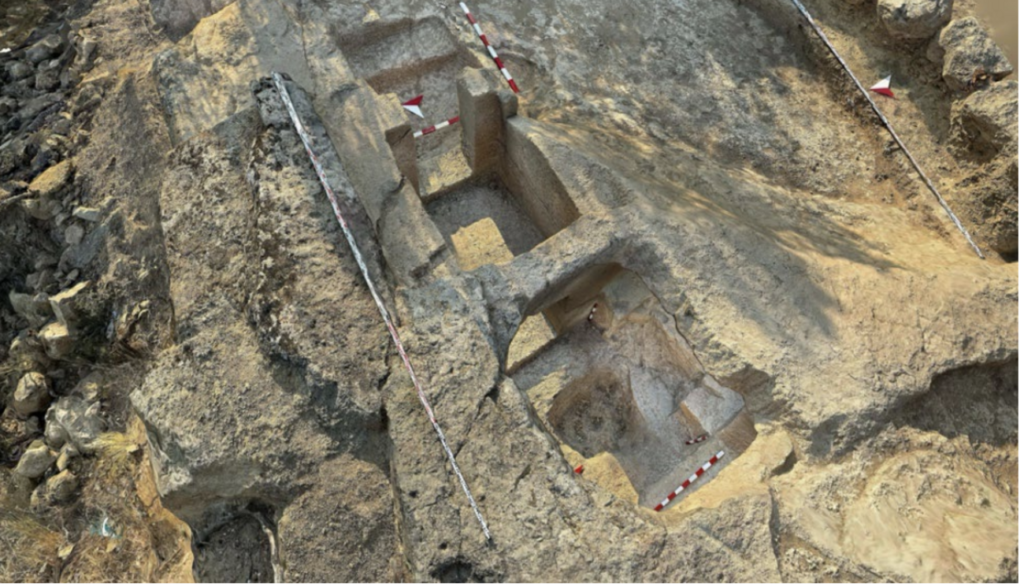
A 2,400-year-old tomb combining two distinct burial traditions has been discovered near the ancient city of Adramytteion in Balıkesir, western Türkiye.
Located in the Burhaniye district, the monument features a burial chamber carved into the rock containing three stone beds, integrated with a stepped entrance and an exterior architecture reminiscent of a tumulus. A recently published scientific study reveals that the structure, known as Reşitharmanyeri, is a hybrid monument that merges two distinct traditions of funerary architecture.
The research, conducted by Dr. Hüseyin Murat Özgen from Mimar Sinan Fine Arts University and published in the journal Cedrus, provides the first comprehensive scientific evaluation of the tomb examined as part of the 2024 Reşitköy Dam rescue excavations.
Conducted under the presidency of the Balıkesir Kuva-yi Milliye Museum with the scientific contributions of the Adramytteion Research Team, the excavations succeeded in determining the true architectural layout of the structure, which had previously been only partially visible.
The Burial Chamber with Three Stone Beds
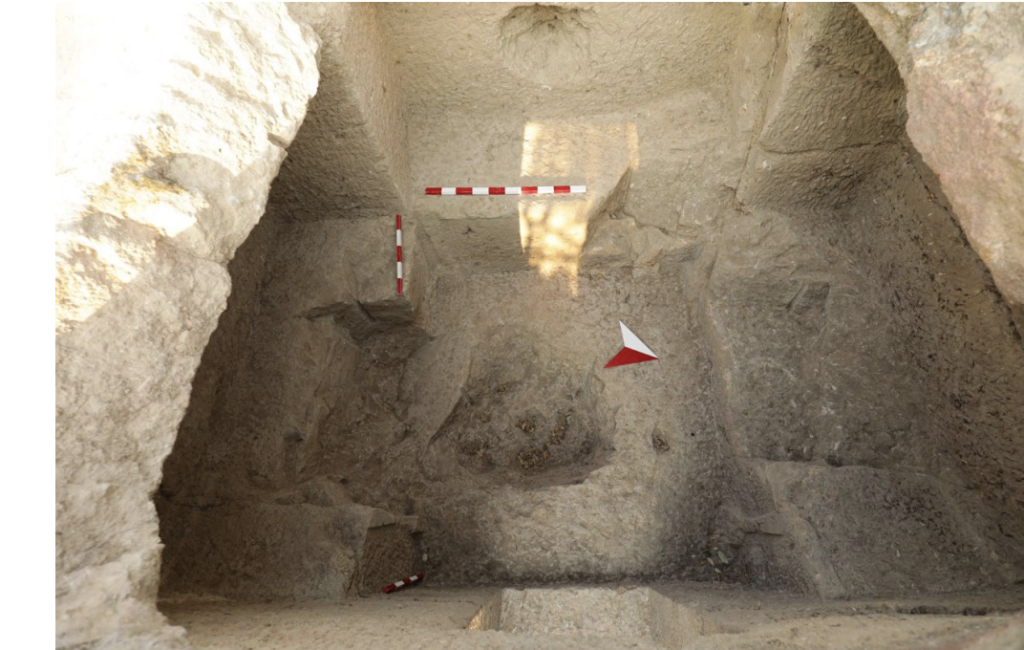
At the heart of the Reşitharmanyeri tomb is a burial chamber cut directly into the natural rock. Measuring approximately 3.5 by 2.8 metres, the room contains three stone beds arranged along its walls, leaving an open space in the centre. Although parts of the chamber have been damaged, enough survives to show how carefully its interior was designed.
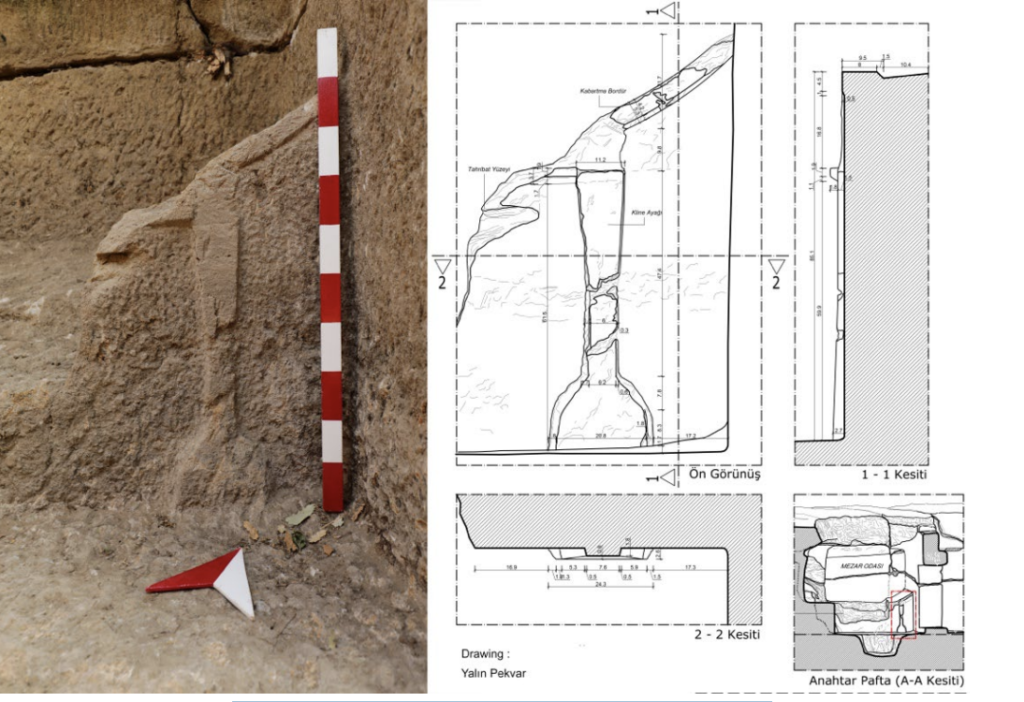
The beds were not separate pieces of furniture placed inside the tomb. They were carved from the same rock as the chamber itself, with raised sections for the head and decorative details resembling the legs of wooden furniture. Two beds face one another along the northern and southern walls, while a third occupies the western side.
These features offer a sense of how the burial chamber may originally have appeared. Known as klinai in the ancient world, such beds were associated with reclining and banqueting, but they also became part of funerary architecture. By reproducing their familiar shapes in stone, the builders created a burial space that resembled a furnished room rather than a simple chamber for the dead.
The arrangement suggests that considerable effort went into preparing the tomb. Its three beds may have accommodated multiple burials, although damage to the chamber has made it impossible to determine who was originally laid to rest there.
A Structure More Complex Than a Rock Tomb
The extraordinary nature of the tomb stems not only from the stone beds but also from the entrance system and exterior wall remains, which indicate that the structure was planned more extensively than previously thought.
Visitors approaching from the east would have descended a series of steps carved into the rock before reaching a narrow passage, approximately 80 centimetres wide, known as a dromos. A raised stone threshold marked the transition between the entrance and this passage, which led into the burial chamber. Although its original covering has disappeared, the surviving architectural traces suggest that the passage once had a built upper structure. Its exact form, however, remains uncertain.
The excavations also uncovered a curved retaining wall made of rough stones along the southern and eastern sides of the monument. Researchers believe this wall supported an earthen covering that gave the tomb an appearance similar to a burial mound, or tumulus. The wall followed the natural contours of the rocky terrain rather than forming a complete, symmetrical enclosure.
Unlike a conventional tumulus built beneath a large artificial mound, Reşitharmanyeri used the natural rock formation as part of its design. The burial chamber was carved directly into the bedrock, while the retaining wall and probable earth covering created a mound-like exterior.
This combination explains why Dr. Hüseyin Murat Özgen describes the structure as a hybrid funerary monument. Its builders brought together elements of two burial traditions, adapting both to the landscape rather than following either architectural form exactly.
History and Connection to Adramytteion
The tomb is located approximately nine kilometres southeast of the ancient city of Adramytteion, south of the Gulf of Edremit. Its position on a rocky elevation overlooking a valley is important for understanding its relationship with nearby rural settlements.
The settlement of Çingentarla is located approximately 656 meters from the tomb. About two kilometers to the north lies Hisarkale, considered one of the defense points that controlled the roads and valleys of the region during the Late Classical and Hellenistic periods.
Reşitharmanyeri stood within a landscape of rural settlements, agricultural areas and fortified sites connected to ancient Adramytteion. From its rocky position overlooking the valley, the tomb would have been visible to people moving through the surrounding countryside. Its location may have been chosen as much to commemorate the dead as to mark their presence in the landscape.
A small collection of black-glazed pottery fragments found during the excavations offers clues to the tomb’s age. Together with its architectural features, these finds suggest that the monument belongs to the Late Classical or Early Hellenistic period. Özgen considers the 4th century BCE a plausible date, although the surviving evidence does not allow a more precise chronology.
Similar burial traditions can be found elsewhere in northwestern Anatolia. Tombs around Pergamon show how burial mounds were incorporated into the landscape, while examples from the Kaikos Valley and Daskyleion feature chambers with stone beds carved directly into the rock. Reşitharmanyeri brings these architectural elements together, combining three rock-cut burial beds with an exterior designed to resemble a tumulus.
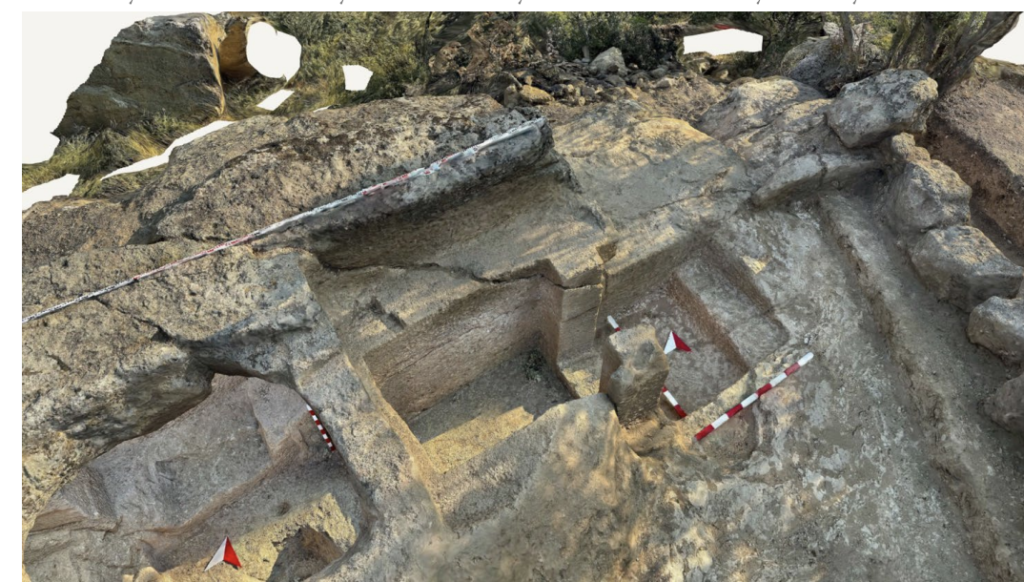
Remains of the stone retaining wall marking the eastern and northern limits of the Reşitharmanyeri tomb in Balıkesir, western Türkiye. The wall formed part of the monument’s tumulus-like exterior. Credit: Özgen, H. M. (2026), Cedrus
What Remains of a Looted Tomb
Prior to the 2024 excavations, Reşitharmanyeri was a known and registered archaeological site. However, illicit excavations had severely damaged both the interior and the upper covering of the tomb.
The rock-cut ceiling of the burial chamber was largely broken, and various sections of the three stone beds were damaged. A looting pit, approximately 1.15 meters in diameter and 55 centimeters deep, was also detected in the center of the room. Due to these interventions, the original burial arrangement has been largely lost.
It remains unknown who was buried in the tomb or what precious objects were left behind. The researcher evaluates that the architectural quality of the structure may be linked to high social status; however, without preserved human remains, inscriptions, or intact grave goods, the identities of these individuals cannot be determined.
Despite this, the rescue excavations documented the previously misunderstood architectural integrity of the tomb. The stepped entrance, the passage, the three-bed chamber, and the exterior retaining wall are now understood as complementary parts of the same structure.
Özgen, H. M. (2026). The Reşitharmanyeri Rock-Cut Tomb: A Hybrid Late Classical–Early Hellenistic Funerary Monument in the Territory of Adramytteion. Cedrus, 14, 363-390. https://doi.org/10.5281/zenodo.22956774
