

Archaeologists in southwestern Germany have uncovered a 90-metre section of a Roman road dating back around 2,000 years—directly beneath the route planned for a modern motorway project.
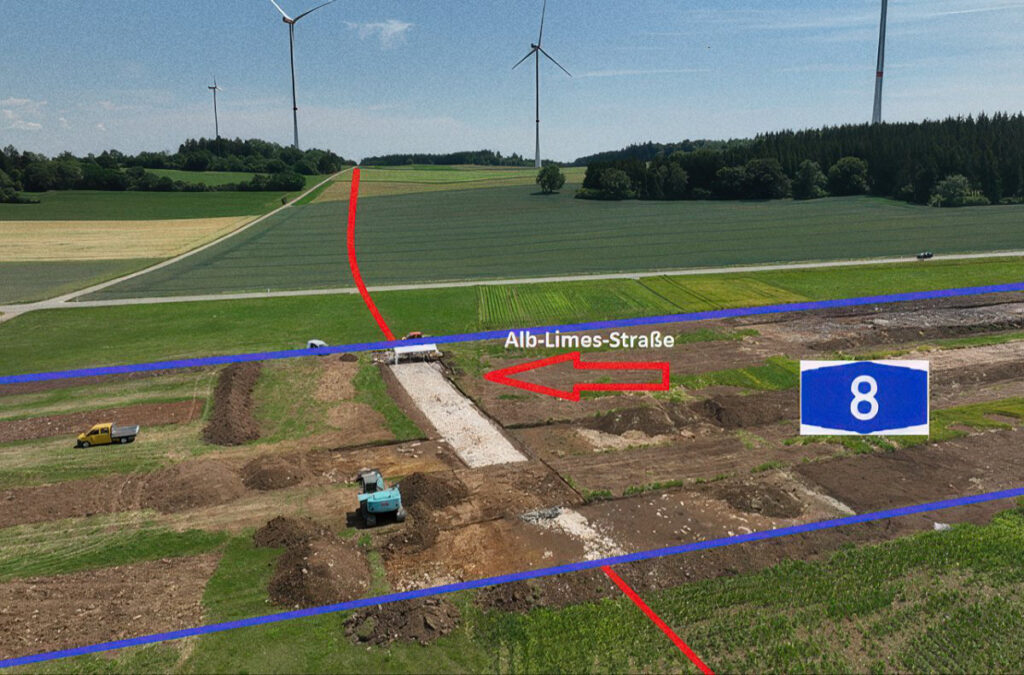
The road was discovered near Drackenstein on the Swabian Jura plateau, where construction preparations are underway for the new A8 Albaufstieg. The same landscape chosen for one of Germany’s major modern transport routes once carried one of the most important roads on the Roman Empire’s northern frontier.
The State Office for Cultural Heritage Preservation of Baden-Württemberg, known as the LAD, has overseen archaeological investigations across the construction area since August 2025. The current excavations are being conducted by specialists from fodilus and ArchaeoBW and are expected to continue until the end of 2026.
A Roman road built across the Swabian Jura
Known as the Alblimes Road, the ancient route connected the Roman centres of Rottweil and Heidenheim an der Brenz. Archaeologists believe it was probably constructed during the reign of Emperor Vespasian, who ruled from AD 69 to 79.
The exposed section shows how Roman engineers prepared the roadway using locally available white Jurassic limestone from the Swabian Jura. The stones were carefully arranged to create a stable foundation capable of supporting soldiers, carts, messengers and commercial traffic.
The road was more than a convenient transport link. It connected forts and settlements established across the high plateau and supported the economic and military organisation of Roman-controlled territory in what later became the province of Germania Superior.
For more than a century, the route also formed part of the boundary between the Roman Empire and regions of Germania that remained beyond Roman rule.
Dr René Wollenweber, who oversees linear infrastructure projects for the LAD, said the discoveries were improving researchers’ understanding of the road’s construction, importance and long period of use.
Roman traffic left behind physical traces
Objects recovered around the roadway provide a more personal view of the people who once travelled across it.
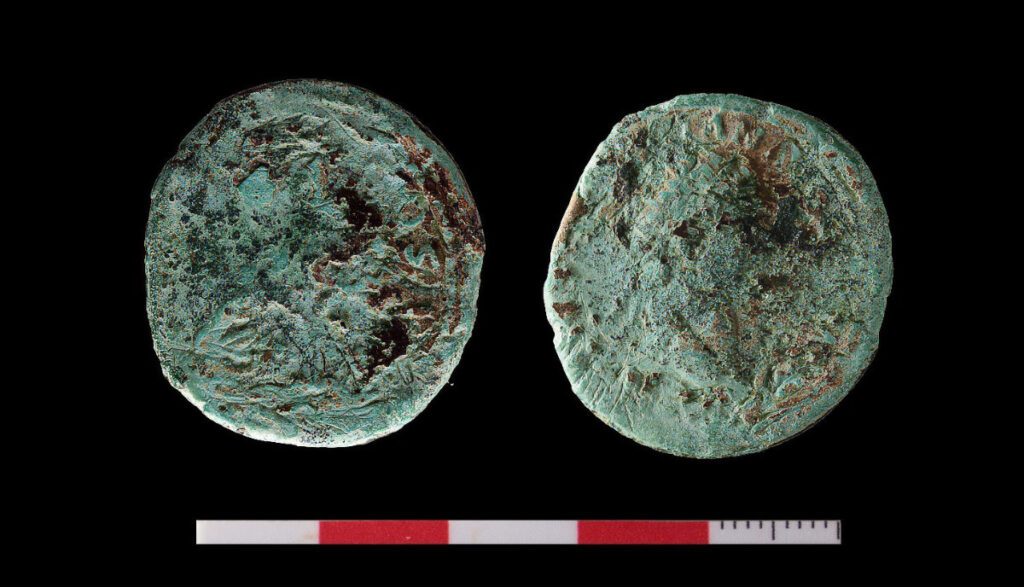
Among the finds is an unrestored bronze dupondius—a Roman coin worth half a sestertius. A faint imperial portrait remains visible on its surface and has been tentatively identified as Emperor Domitian, who ruled from AD 81 to 96.
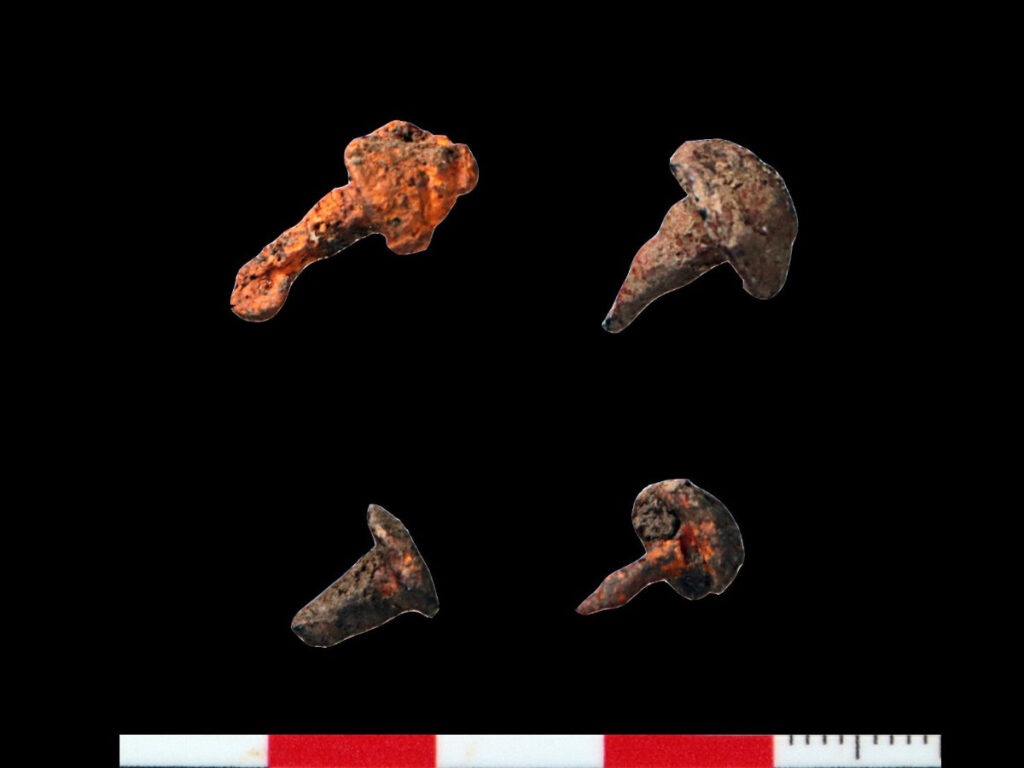
Archaeologists also found iron hobnails from Roman footwear, small objects frequently associated with the movement of soldiers and travellers along Roman roads.
The excavation has revealed evidence predating the Roman route as well. A Late Bronze Age burial urn was discovered partly beneath the road, together with a Bronze Age roll-headed pin. The finds show that people were already using and occupying this part of the Swabian Jura long before Roman engineers crossed it.
A frontier once known only through theory
The Swabian Jura forms a natural land bridge extending approximately 200 kilometres from the Rhine Falls near Schaffhausen to the Nördlinger Ries. Its geography made it an important corridor for Roman expansion during the first century AD.
The Alblimes frontier consisted primarily of forts—including those at Urspring and Donnstetten—linked by the road now being investigated near Drackenstein.
For many years, historians suspected that such a Roman frontier system had crossed the plateau, but archaeological excavations during the 19th and 20th centuries were required to confirm its existence. The Alblimes is now recognised as an archaeological monument of importance beyond the region.
At Drackenstein, the ancient road and the future A8 route intersect at almost a right angle. The unusual meeting of two transport systems, constructed nearly two millennia apart, shows that the Swabian Jura has remained a strategic corridor from the Roman period to the present day.
