
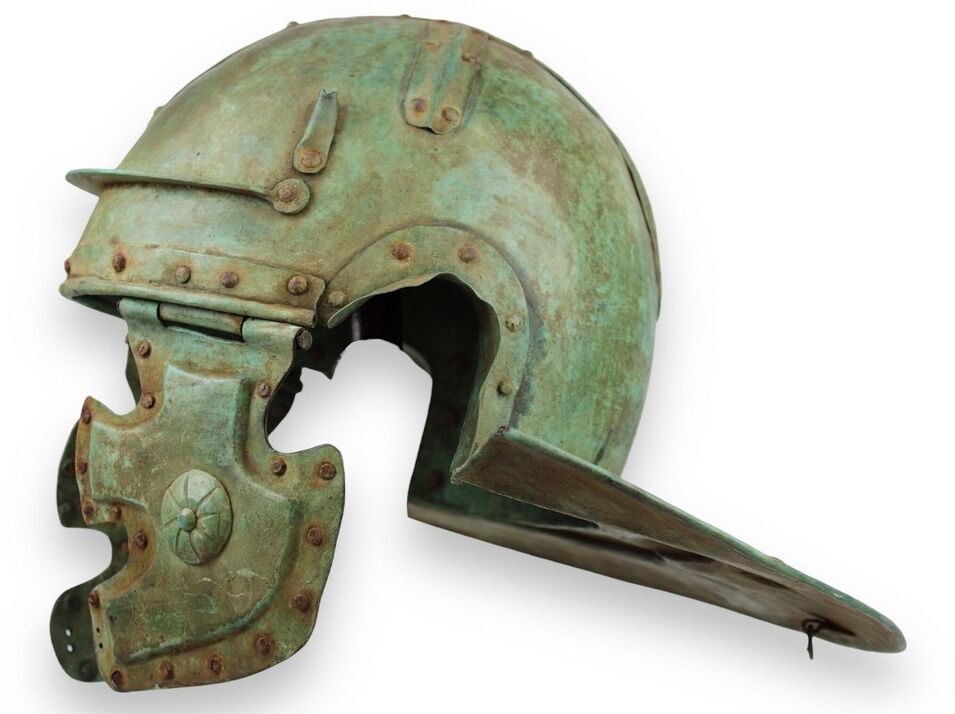
Rare Roman legionary helmet sparks international debate over cultural heritage and illicit antiquities trade
A rare Roman legionary helmet of extraordinary historical significance, reportedly unearthed near the ancient city of Sirmium in northern Serbia, has appeared for sale on a private online auction in the United States—under circumstances that Serbian experts describe as deeply suspicious.
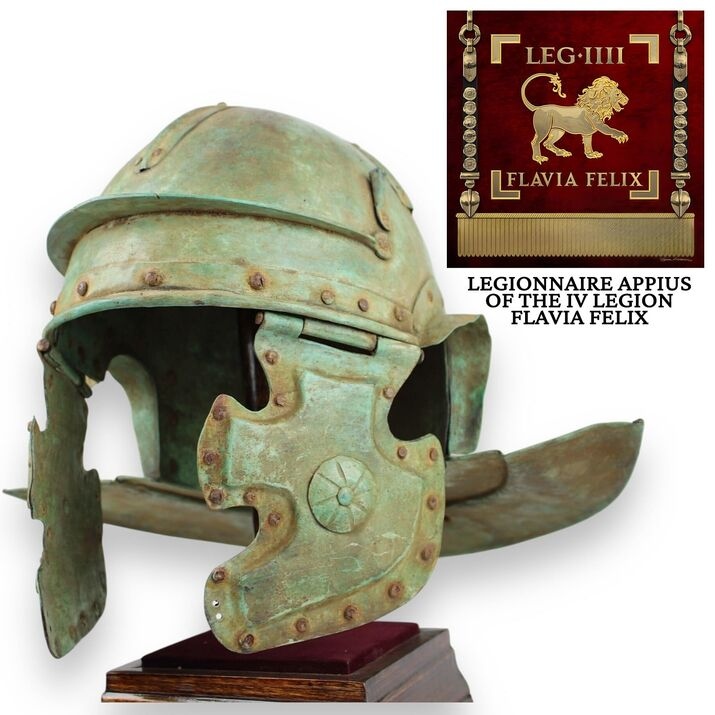
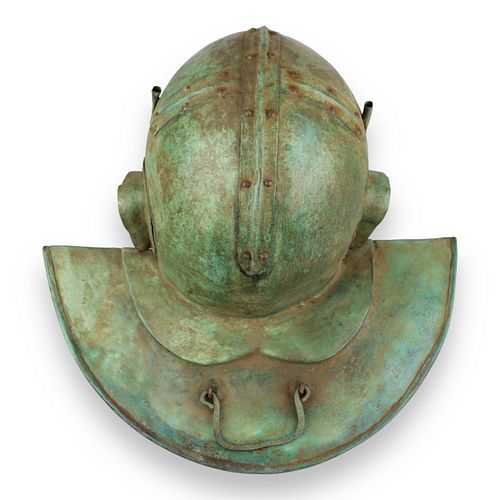
The bronze helmet, a well-preserved Weisenau-type or “Imperial-Gallic” model dating from the 2nd century A.D., features an extended neck guard and elaborately decorated hinged cheekpieces designed to balance protection and mobility. What makes it truly unique is a punched inscription on the neck guard: “APPIVS°LEG°IIII°FL,” identifying it as the personal property of a Roman soldier named Appius of Legio IV Flavia Felix, a legion once stationed at Singidunum—modern-day Belgrade.
According to the Texas-based Treasure Trove Auctions, which lists the piece with an estimated price of $15,000–$45,000, the helmet has been “professionally cleaned and temporarily preserved with conservation wax, maintaining its beautiful patina.” The auction house describes it as “museum-quality” and claims the object was legally exported after “rigorous government approval.”
However, the legal status of the helmet’s export is highly questionable.
📣 Our WhatsApp channel is now LIVE! Stay up-to-date with the latest news and updates, just click here to follow us on WhatsApp and never miss a thing!!
Protected by Law, Not for Sale
Under Serbian law, artifacts of exceptional historical and cultural value—like this Roman legionary helmet—are considered protected cultural heritage. Their sale and export are strictly prohibited without official authorization, meaning they cannot legally enter private collections abroad. These regulations exist to prevent the loss of irreplaceable objects and to ensure that such heritage remains accessible for scholarship, public education, and national identity. The helmet, with its unique inscription linking it to a specific Roman soldier and legion, falls squarely into this category, making any private sale or export legally questionable at best, and illicit at worst.
Doubtful Provenance and Context
Treasure Trove Auctions states that the helmet was a “metal detector ground find near Sirmium,” one of the most important Roman cities in the Balkans and today a protected archaeological site of exceptional importance. If that claim is accurate, removing it from the ground would already constitute a violation of Serbian law, which prohibits private excavation or trade of archaeological material.
This case highlights a broader and troubling pattern. Serbia, like many countries rich in archaeological heritage, faces ongoing losses of ancient artifacts through illicit digs and cross-border smuggling. Many of these objects vanish quietly into private collections around the world while institutions and the public remain largely indifferent.
The author who first reported the case expressed frustration that officials appear passive as priceless heritage disappears in silence. “Each time such an object leaves the country, it takes part of our history with it,” they wrote, urging the Serbian state and cultural authorities to intervene and secure the helmet’s return.
“Every time an item like this disappears into the private market, we lose part of our cultural DNA,” adds Vesna Djordjevic, curator at the National Museum in Belgrade. “A helmet like this should be in a museum, accessible to scholars and the public—not hidden behind the paywall of an online auction.”
From a Roman Warrior to a Modern Legal Battlefield
The Legio IV Flavia Felix, to which the helmet allegedly belonged, was a prestigious Roman legion established by Emperor Vespasian in 69 A.D. and stationed in the Balkans for centuries. The inscription “APPIVS°LEG°IIII°FL” provides a rare personal connection to a named soldier who once patrolled the Danubian frontier. For historians, such artifacts are invaluable not only for their craftsmanship but also for the human stories they carry.
Yet that same historical richness is what makes them targets of the global antiquities market—where demand among collectors often outweighs ethical considerations.
Serbian authorities have yet to issue an official statement regarding the helmet’s provenance, and it remains unclear whether its export was legally authorized. Cultural heritage NGOs are calling for clarification and hope that U.S. officials will temporarily suspend the auction until the item’s legal status is confirmed.
A Call for Responsibility
The appearance of this Roman helmet on a U.S. auction site serves as a stark reminder that cultural heritage is not a commodity. Each unregulated sale erodes the world’s shared understanding of the past and fuels a shadow economy of looting and smuggling.
In my view, this Roman legionary helmet rightfully belongs in a museum in Belgrade, where it can be preserved, studied, and appreciated by the public. Its historical significance, unique inscription, and connection to a specific Roman soldier make it an irreplaceable part of Serbia’s cultural legacy, and I believe it deserves proper protection rather than private ownership or sale abroad.
I also hope that Serbian authorities will provide positive news soon regarding the helmet’s status, taking the necessary steps to ensure it returns to its rightful home.
Until then, the fate of the helmet remains uncertain—caught between two worlds: one of history, and one of commerce. This tension underscores the urgent need for stronger protections, international cooperation, and public awareness to safeguard cultural heritage from disappearing into private hands.
Cover Image Credit: Roman legionary helmet on a private auction in the U.S. Treasure Trove Auctions